umanoide

X-HUMANOID Tien Kung 3.0 — Specifiche, prezzo e dove acquistare (2026)

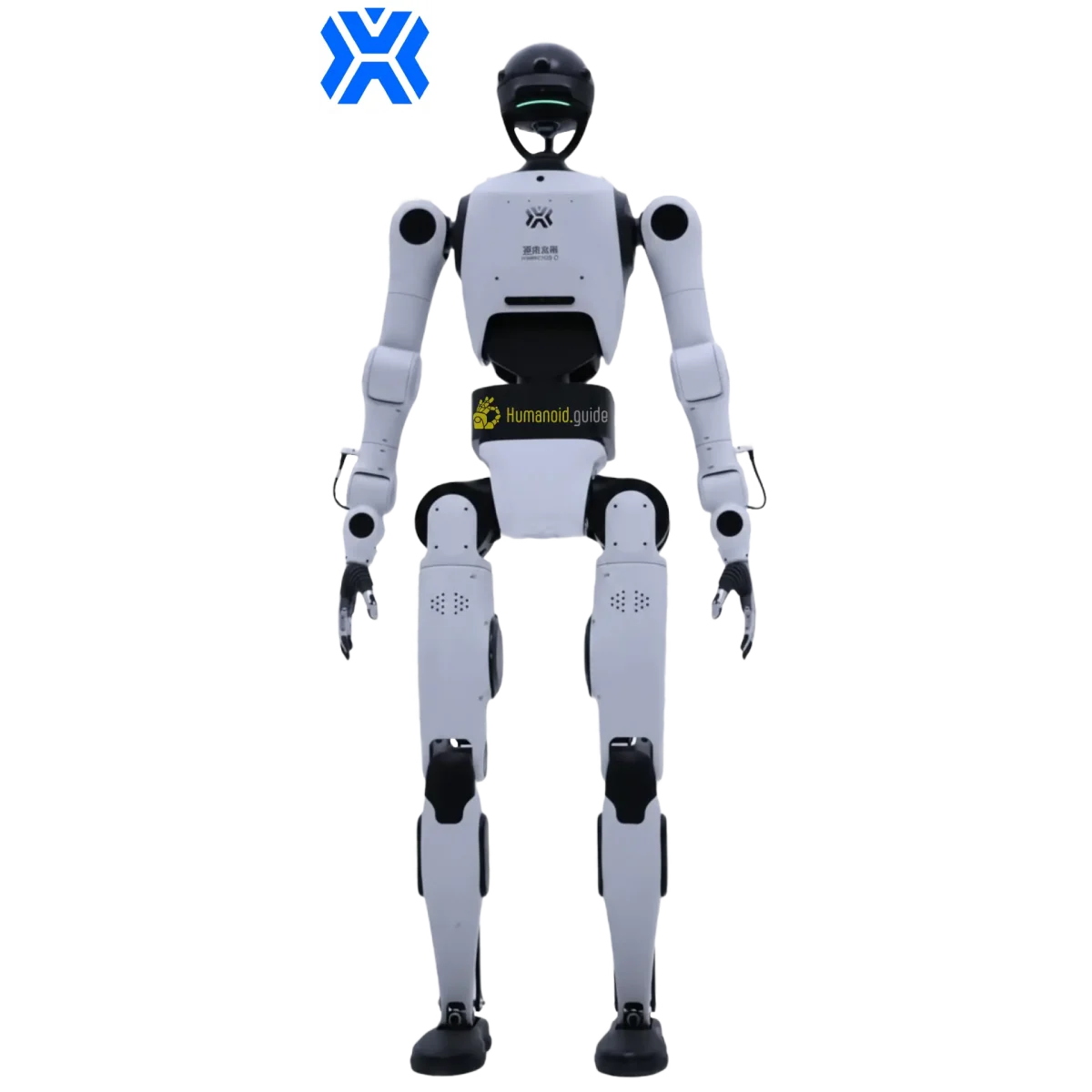
X-HUMANOID Tien Kung 3.0 is a humanoid robot developed by X-HUMANOID in Beijing, China. Price: Undisclosed (enterprise direct sales). Key specs: 169 cm tall, 62 kg, 43 degrees of freedom, 6 km/h max speed, 15 kg payload, 1.5–2 hour battery life. Currently available for purchase or lease through direct enterprise channels, not for retail sale.

💰Prezzo
$100.000
📅Prima costruzione
2025
🌍Origine
CN
📏Altezza
169 cm
⚖️Peso
62 kg
🦾Gradi di libertà
43
🏃Velocità massima
6 km/h
📦Carico utile
15 kg
🔋Batteria
2 hours
🛒Disponibilità
Solo per aziende

What is the Tien Kung 3?

The X-HUMANOID Tien Kung 3.0 is a full-scale humanoid robot developed by the Beijing Innovation Center of Humanoid Robotics (operating under the X-HUMANOID brand) in Beijing, China. Built as an open research platform, it is designed for bipedal locomotion research, whole-body manipulation, and embodied AI development. The robot features 43 degrees of freedom (including 12-DOF dexterous hands), harmonic-drive actuators, Nvidia Jetson Orin compute, and an Ubuntu/ROS 2 software stack. With a top walking speed of 6 km/h, 15 kg payload capacity, and 1.5–2 hour battery life, it targets academic labs, R&D centers, and industrial research partnerships. The platform supports LLM integration through the Hui Si Kai Wu embodied AI framework and real-time motion planning.

Specifications

Here are the full technical specifications.

SpecValue
Height169 cm
Weight62 kg
Degrees of freedom43
Battery life2 hours
Max speed6 km/h
Payload15 kg
Price (new)Undisclosed (contact manufacturer)
Price (used range)N/A

Price & Value

New MSRP: Undisclosed (direct enterprise sales)

Used range: N/A

Tien Kung 3.0 does not have a public list price; acquisition is handled through direct enterprise agreements, likely involving research partnerships or volume leasing. While no official figure is available, comparable humanoid platforms such as the Fourier GR-2 (~$100,000) and Unitree G1 ($16,000) suggest a wide possible range depending on configuration and support level. As a pre-commercial research platform, Tien Kung 3.0’s value lies in its open software stack, advanced mobility benchmarks (6 km/h, 15 kg payload), and integration with the Hui Si Kai Wu AI ecosystem, justifying premium pricing for labs needing cutting-edge locomotion research. The lack of a used market means no depreciation data exists; however, given the rapid pace of humanoid development, early units may lose value quickly as later versions or competitors arrive. Total cost of ownership will include ongoing software maintenance, actuator wear, and likely annual support contracts. For labs already invested in the X-HUMANOID ecosystem, the robot offers a streamlined path to embodied AI experiments.

Who Is It For?

Best for: - Advanced bipedal locomotion research labs that need an open-source, high-DOF platform with 43 degrees of freedom and 15 kg payload capacity for dexterous manipulation studies. - Embodied AI developers looking to integrate LLMs and whole-body control into a real humanoid hardware platform.

Not for: - Cost-sensitive education programs (no public pricing, likely high enterprise cost). - Rapid commercial deployments (enterprise-only sales, long lead times).

Alternatives & Comparison

In the 2026 humanoid research market, Tien Kung 3.0 competes against cost-effective education bots, high-DOF industrial research platforms, and mass-production designs.

ModelPriceAvailableKey Difference
Unitree G1$16,000yesLower cost, more compact, primarily for education and light research; limited payload (3 kg) and no dexterous hands.
Fourier GR-2$100,000 (est.)yesHigher payload (5.5 kg), advanced 12-DOF hand dexterity, industrial focus.
Tesla Optimus~$20,000 (est.)preorderMass-production intent, Tesla ecosystem, expected low cost but not yet available for independent purchase.

Verdict: For labs needing a fully open humanoid research platform with top-tier locomotion performance, Tien Kung 3.0 is the most capable option—but its enterprise-only availability and undisclosed pricing make it inaccessible to many. The Unitree G1 wins for budget-conscious programs, while the Fourier GR-2 offers a premium alternative with proven industrial hand dexterity. Tesla Optimus remains a wildcard with potential cost disruption but no confirmed specs or delivery timeline.

Use Cases & Capabilities

Bipedal Locomotion Research

The Tien Kung 3.0’s 6 km/h walking speed, high dynamic balancing, and open-source whole-body control stack make it ideal for studying bipedal gait, push recovery, and running gaits. Its 43 DOF, including 12 DOF in the legs, allow complex walking patterns and stair climbing. Researchers can integrate custom control algorithms via ROS 2 and modify the motion planning pipeline. The platform’s 15 kg payload capability also enables carrying sensor payloads during locomotion experiments, pushing the envelope of dynamic stability studies.

Whole-Body Manipulation

With 12-DOF dexterous hands and 14 DOF in the arms plus a 2-DOF waist, the robot can perform multi-step pick-and-place tasks, tool use, and collaborative assembly. The 6-axis force/torque sensors enable compliant object handling, and the 15 kg payload per arm allows manipulation of moderate-weight items. Its open software lets labs program complex task sequences and integrate with external sensors, making it a versatile platform for advanced manipulation research.

Embodied AI Development

Tien Kung 3.0 integrates with the Hui Si Kai Wu embodied AI platform, supporting large language model-driven task planning and vision-language action. Developers can deploy vision models on the built-in Nvidia Jetson Orin and experiment with zero-shot instruction following. The open Ubuntu/ROS 2 environment simplifies integration with modern AI frameworks, making it suitable for cutting-edge robotics and AI research where embodiment is key.

Industrial R&D Concept Validation

Manufacturers and logistics companies can use Tien Kung 3.0 to explore humanoid robot deployment for tasks like light assembly, kitting, and warehouse transport. The robot’s 15 kg payload and 6 km/h speed mirror many light industrial cycles. The open platform allows rapid prototyping of custom end-of-arm tooling and integration of enterprise software, giving R&D teams a realistic testbed before investing in fully commercial systems.

History & Background

The Tien Kung series emerged from the Beijing Innovation Center of Humanoid Robotics, founded in 2023 as a state-backed initiative to advance bipedal robotics. A first-generation prototype was built in 2024, followed by the 20-DOF Tien Kung 2.0 in early 2025, which demonstrated 10 km/h walking and was used primarily for academic research. The Tien Kung 3.0, launched on February 16, 2026, marked a generational leap with 43 DOF, an open-source whole-body control stack, and the embodied AI platform Hui Si Kai Wu. It is now sold directly to enterprises through X-HUMANOID, the commercial arm of the center, positioning it as China’s flagship research humanoid.

Buying Used — What to Check

Verify transferability of enterprise license Tien Kung 3.0 is sold under enterprise agreements; ensure software and support licenses can be transferred to second owner.

Inspect actuator and battery health Harmonic drive actuators degrade with heavy use, and lithium-ion battery capacity can drop to 80% after 500 cycles, affecting runtime.

Confirm open-source software version Future updates may alter capabilities or licensing; an older OS or ROS 2 version might not receive security patches.

Domande frequenti

No public list price is available. Tien Kung 3.0 is sold exclusively through direct enterprise channels, with pricing negotiated individually. Comparable research humanoids range from $16,000 (Unitree G1) to over $100,000 (Fourier GR-2).
It can walk dynamically at up to 6 km/h, climb stairs, carry payloads up to 15 kg, and perform dexterous manipulation with its 12-DOF hands. An open AI framework allows LLM-driven task planning and whole-body control.
Yes, but only to enterprises, research labs, and institutions via direct purchase or lease from X-HUMANOID. It is not sold through retail or online stores.
Tien Kung 3.0 offers 43 DOF, 6 km/h speed, and 15 kg payload, making it far more capable for advanced research than the Unitree G1 (base model 23 DOF, 3 kg payload, $16,000). However, the G1 is much cheaper and readily available for purchase.
Height: 169 cm, weight: 62 kg, 43 degrees of freedom, max speed 6 km/h, payload 15 kg, battery life 1.5–2 hours, Nvidia Jetson Orin compute, Ubuntu 22.04 with ROS 2.
It is built by X-HUMANOID, the commercial arm of the Beijing Innovation Center of Humanoid Robotics, based in Beijing, China. The center was founded in 2023.
The lithium-ion battery provides approximately 1.5 to 2 hours of continuous operation, depending on task intensity. Charging time and whether packs are hot-swappable have not been publicly disclosed.
Primarily research and education. Early adopters include academic robotics labs, industrial R&D centers, and public-private consortia exploring humanoid deployment in manufacturing and logistics.

X-Humanoid Tien Kung 3.0 in 3D

Loading the 3D model…
Drag to rotate · click the model, then scroll or pinch to zoom · click a part to inspectSwipe sideways to turn · pinch to zoom · tap a part to inspect3D model credit and licence

X-Humanoid Tien Kung 3.0 supply chain

Point at or select a step to light up its chain: bright lines are its direct links, softer lines the rest of the path from raw material to robot.

Swipe sideways to follow the whole chain.

ExtractionRefiningMaterialsComponentsModulesRobotsCompaniesX-Humanoid develops its joint modules itself ('自研高密度关节模组').Mined copper is smelted and refined.Camera units are built around image sensors (CMOS image sensors from makers such as Sony and OmniVision).Silicon metal is made from silica in natural forms such as quartzite (USGS).Silicon metal can be refined further into ultra-high-purity semiconductor-grade silicon, called polysilicon (USGS). Chips are made on wafers: thin slices of crystalline silicon (Wikipedia).In wire-bond packaging, fine gold or copper wire connects each die to its leadframe or substrate. ASE is gradually replacing gold wire with copper to cut material cost, though gold wire is still one of its main materials.Primary gallium is recovered mainly as a byproduct of processing bauxite (USGS).Gallium arsenide wafers are used to make optoelectronic devices, including laser diodes and photodetectors (USGS).Ouster's lidars fire light from VCSEL (vertical-cavity surface-emitting laser) arrays; Hesai says its LiDAR products depend on lasers.Ouster's lidars detect the returning light on a CMOS sensor chip with single-photon avalanche diode (SPAD) detectors; Hesai calls semiconductor chips a key component.Sony makes its CMOS image sensors in its own production facilities in Japan (Nagasaki, Kumamoto). SIA/BCG count optoelectronics and sensors in one fab group with discrete and analog chips (DAO), apart from logic.Bosch makes its MEMS sensors in its own fabs in Reutlingen and Dresden; a MEMS sensor is a MEMS element plus an evaluation chip (ASIC).A MEMS sensor is packed in a semiconductor housing, such as an LGA package (Bosch).Mined nickel ore and concentrate go to smelters and refineries. In Indonesia, laterite ore is processed into nickel pig iron and ferronickel for stainless steel, or into battery intermediates such as mixed hydroxide precipitate (IEA); the US Eagle Mine's concentrate is exported to smelters (USGS).Solder is the largest use of tin, 51% of world tin use in 2023 (International Tin Association; in the US solder took 11%, USGS). The common lead-free alloy SAC305 is 96.5% tin (AIM).Tin-lead solder is nearly half lead (PubChem), but the electronics industry has moved toward lead-free solders (USGS): 92% of solder for electronics was lead-free in 2023 (ITA).The lead-free alloy SAC305 contains 3% silver (AIM). In the US, brazing and solder took 3% of silver (USGS).The lead-free alloy SAC305 contains 0.5% copper (AIM).FR-4 laminate is woven fibreglass cloth with an epoxy binder (Wikipedia), and fibreglass is made from silica sand (Covia).A thin layer of copper foil is laminated to one or both sides of an FR-4 panel; these are called copper-clad laminates (Wikipedia; ChinaBaogao).FR-4 epoxy resin systems typically use bromine to resist fire (Wikipedia); a grade of the brominated flame retardant TBBPA is used to make epoxy resins for circuit boards (Wikipedia). Brominated flame retardants are one of bromine's two leading uses (USGS).Barite is used to make barium carbonate, which goes into dielectrics (Wikipedia). Barium titanate, the dielectric ceramic used in capacitors, can be made by heating barium carbonate with titanium dioxide (Wikipedia).Barium titanate, the ceramic in high-capacitance MLCCs, can be made by heating barium carbonate with titanium dioxide (Wikipedia); titanium dioxide comes from ilmenite and rutile (USGS).99% of MLCCs made worldwide use base-metal electrodes of nickel or copper; the industry moved from palladium and silver to cut cost (NASA, 2015). TDK replaced palladium electrodes with nickel in 1993 (Wikipedia).Platinum-group metals are used in multilayer ceramic capacitors (USGS). High-reliability MLCCs use palladium-silver electrodes (NASA, 2015).High-reliability MLCCs use precious-metal electrodes of palladium and silver (NASA, 2015).Connector contacts are copper alloys: beryllium copper is called the best copper alloy for contacts, connectors and cables (Wikipedia), and phosphor bronze (copper-tin-phosphorus) can replace it (USGS).Copper-clad laminate is the core material of circuit boards (ChinaBaogao); FR-4 is a common material for printed circuit boards (Wikipedia).Parts are soldered onto bare boards: Adafruit's BNO055 board is a "breakout PCB", and the Raspberry Pi Zero 2 W brief warns against damage to the printed circuit board.SAC305 lead-free solder is made for soldering printed circuits, by wave, hand and SMT reflow soldering (Conro; AIM).MLCCs store and release charge and absorb noise in phones, home appliances and IoT devices (Murata). The Raspberry Pi's RP3A0 package includes the decoupling capacitors that smooth its supply voltage (Raspberry Pi).Boards carry connectors: the Raspberry Pi Zero 2 W brief speaks of the board and its connectors, and Waveshare's servo adapter has a USB-C connector and a power connector.NVIDIA's Jetson Thor modules are 100 × 87 mm and plug in through a 699-pin board-to-board (B2B) connector (NVIDIA).Brass is copper and zinc: CW614N free-cutting brass is about 39% zinc. In the US, brass and bronze are the second use of zinc after galvanized steel.Brass is mostly copper: 57–59% in CW614N free-cutting brass.Free-cutting brass such as CW614N holds 2.5–3.5% lead so it machines cleanly; lead-free brasses exist.XT30 battery plugs (G1 harness, Open Duck Mini) have gold-plated brass contacts.Antimony is used in circuit boards to cut flammability further. A review lists two studies of scrap PC boards, parts and solder still on, with 0.45% and 1.97% antimony, so the share in the laminate alone is not known.Seven micro brushless joint motors in each Dex3-1 (Unitree's F-1515 series, 45 g each): six drive their joints directly, one through gears (Unitree).The Dex3-1's tactile version has 33 pressure sensors in 9 arrays (palm, finger pads and fingertips) that feel from 10 g to 2,500 g (Unitree). Unitree makes them an option.MEMS microphones are silicon chips: the diaphragm is etched into a silicon wafer (Wikipedia). Pollen's HAT uses a MEMS microphone.X-Humanoid: precision gears throughout its joints ('全系精密齿轮').An x86 processor at 4.8 GHz (spec card and photo notes); the chip is not named.Magnet wire is drawn from rod of pure electrolytic copper: Elektrisola starts from 8 mm rod with at least 99.90% copper, and most magnet wire is fully annealed, electrolytically refined copper (Elektrisola; Wikipedia).Small DC and brushless motors' coils are wound from magnet wire, usually copper (Wikipedia); maxon says its coreless windings are enamelled copper wire, a copper core with lacquer insulation (maxon). Nidec does not say what wire its coils use.ASML's DUV machines, 'the workhorses of the industry', print the majority of layers in chips, older-generation chips included (ASML annual report 2025).A 4.8 GHz main controller and a 2,070-TOPS compute module; X-Humanoid's page lists 'x86 + Nvidia Thor' as optional computing for research. Mass-production robots are to carry D-Robotics' Xuri S600 AI chip (announced June 2026).The frame, shells, caps, neck yoke and soles that make up the Tien Kung 3.0's body.31 of X-Humanoid's own joint modules: 12 in the legs, 3 at the waist, 2 in the neck and 14 in the arms (spec card and model).Two batteries, 15 Ah and 3 Ah, and battery changes without switching off (hot-swap; X-Humanoid's spec card); which pack is swapped is not stated.The x86 main controller at 4.8 GHz (spec card).Depth cameras behind the visor and in the chest (spec card and model).A 3D LiDAR under the chin (spec card and model).A high-precision IMU (spec card); the model has two IMU modules, and the simulation reads the one at the pelvis.Voice interaction with lip-movement detection (spec card), which needs microphones.Voice interaction (spec card); a speaker grille on the chest (photos).CAN FD and EtherCAT buses through the whole body (spec card), and the cables through the joints' hollow centres.Optional dexterous hands, several models (spec card, photo notes).X-Humanoid (the Beijing Humanoid Robot Innovation Center) makes the Tien Kung 3.0.Lingyi iTech's Beijing factory assembles the Tien Kung 3.0 (July 2026).Quartz and silica sandQuartz and silica sandGallium recovery (aluminabyproduct)Gallium recovery (alumina byproduct)Lithography machines (chipprinting)Lithography machines (chip printing)Mature-node chipfabrication (28 nm and…Mature-node chip fabrication (28 nm and older; analog and sensor chips)Laser diodes (VCSEL andedge-emitting)Laser diodes (VCSEL and edge-emitting)Copper smelting andrefiningCopper smelting and refiningCopper miningCopper miningBauxite miningBauxite miningSilicon metal smeltingSilicon metal smeltingChip packaging and test(OSAT)Chip packaging and test (OSAT)Precision reduction gears(heavy robot joints)Precision reduction gears (heavy robot joints)Small precision motors (DCand BLDC)Small precision motors (DC and BLDC)Processors (CPUs and SoCs)Processors (CPUs and SoCs)Image sensorsImage sensorsIMUs (motion sensors)IMUs (motion sensors)Tactile sensorsTactile sensorsAI compute modulesAI compute modulesCameras and depth camerasCameras and depth camerasLiDARLiDARNickel miningNickel miningNickel smelting andrefiningNickel smelting and refiningTitanium minerals(ilmenite and rutile)Titanium minerals (ilmenite and rutile)Tin miningTin miningLead miningLead miningSilver miningSilver miningPalladium mining(platinum-group metals)Palladium mining (platinum-group metals)Antimony miningAntimony miningBromine (from brines)Bromine (from brines)Barite mining (barium)Barite mining (barium)Solder (tin alloys:lead-free SAC and…Solder (tin alloys: lead-free SAC and tin-lead)Copper-clad laminate (FR-4glass-fibre epoxy board…Copper-clad laminate (FR-4 glass-fibre epoxy board material)Printed circuit boards(bare boards)Printed circuit boards (bare boards)Multilayer ceramiccapacitors (MLCC)Multilayer ceramic capacitors (MLCC)Connectors and wiringharnessesConnectors and wiring harnessesElectronics assembly(circuit boards with part…Electronics assembly (circuit boards with parts soldered on)Zinc miningZinc miningBrass (copper-zinc alloy)Brass (copper-zinc alloy)Copper magnet wire(enamelled)Copper magnet wire (enamelled)Dexterous handsDexterous handsMicrophonesMicrophonesSmall speakersSmall speakersX-Humanoid Tien Kung 3.0X-Humanoid Tien Kung 3.0Structure: X-Humanoid TienKung 3.0Structure: X-Humanoid Tien Kung 3.0X-Humanoid joint modules(Tien Kung 3.0)X-Humanoid joint modules (Tien Kung 3.0)Tien Kung 3.0 batteries(15 Ah + 3 Ah,…Tien Kung 3.0 batteries (15 Ah + 3 Ah, hot-swappable)Tien Kung 3.0 maincontroller (x86, 4.8 GHz)Tien Kung 3.0 main controller (x86, 4.8 GHz)X-HumanoidX-HumanoidLingyi iTechLingyi iTech