-50%
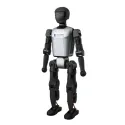
Booster T1 humanoid robot

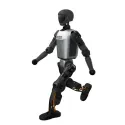
Booster T1 humanoid robot

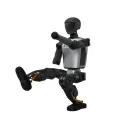
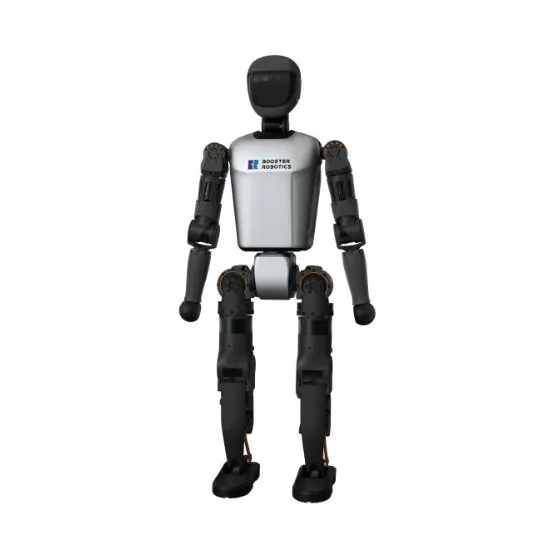
Booster T1 humanoid robot
Booster Robotics | A-000000-07535
€39,000.00
€19,500.00 VAT incl. €16,250.00 VAT excl.
Save 50%

/!\ Used robot /!\ 

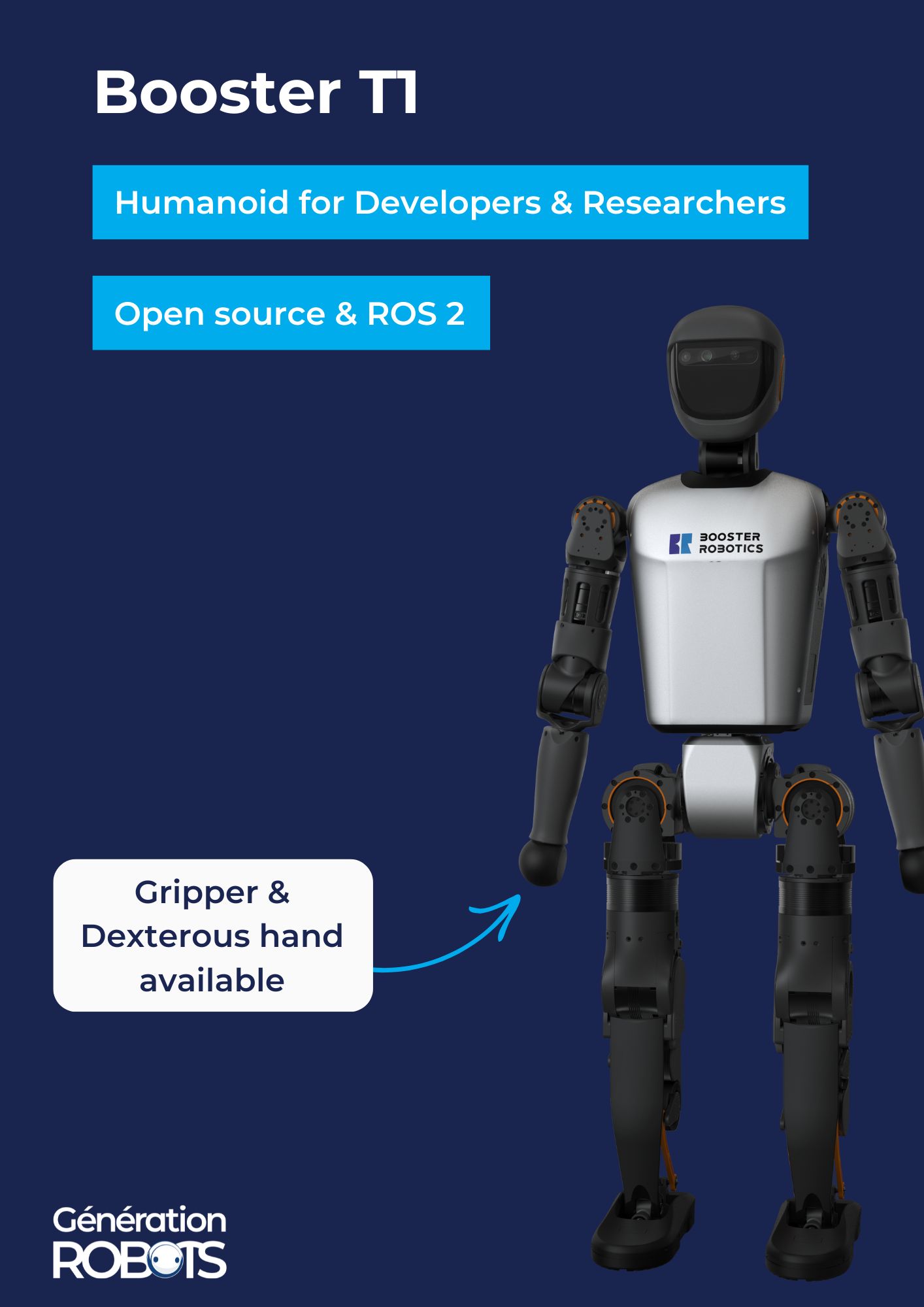
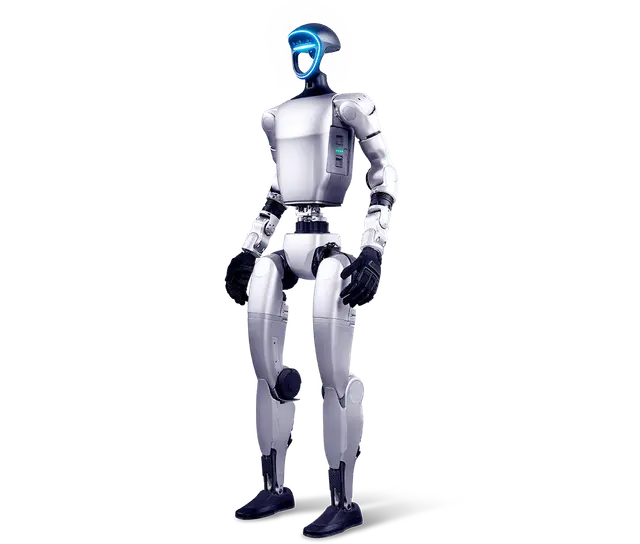
The Booster T1 is a lightweight, high-performance, open-source humanoid robot designed for developers and researchers, featuring a complete API, ROS2 compatibility, and advanced simulation and AI capabilities.

Certification CE
Version
-- Please select an item --
  • Standard
Quantity
1 Available

Get it in 24/48h! (see T&C)

Create a cart and turn it into a quote instantly!
Payment methods (see T&C)
Debit card
PayPal
Payment by invoice
Wire transfer

This item is a demonstration model, sold second-hand, and will no longer be available for purchase once stocks are exhausted.

Booster T1 humanoid robot: key points

  • An open-source humanoid robot oriented toward research and education.
  • Software and development: API, ROS2, simulation environments. Full support
  • for the communication protocol, including low-level APIs (joints/sensors) and advanced motion-control interfaces.
  • Three versions: standard, with grippers, and with robotic hands (the choice mainly depends on your grasping needs).
  • Degrees of freedom: 23 (Standard), 31 (with grippers), 41 (with dexterous hands).
  • Compute power: NVIDIA AGX Orin (200 TOPS).
  • Onboard sensors: depth camera, 9-axis IMU, microphones, speaker.
  • Battery life: 2 h walking / 4 h standing
  • Indicative lead time: 4 to 6 weeks; price on request.

The Booster T1 humanoid robot is an excellent robotics platform to develop PoCs in applied research before industrialization.

Applications and project types (locomotion, control, perception, interaction, manipulation)

The Booster T1 is designed for teams that need a large (~1.20 m) programmable humanoid robot working on applications such as: humanoid walking (balance, transitions, recovery), multimodal perception, human-machine interaction, and—depending on the version—grasping (grippers or robotic hands).

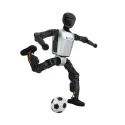
Concrete examples: RoboCup (humanoid soccer: vision, decision-making, control and strategy), warehouse automation, assistance for elderly people, or educational demonstrations.

Choosing the right Booster T1 version: Standard, with grippers, or dexterous hands

  • The standard version is suitable if your priority is locomotion, perception and interaction, without advanced manipulation goals.
  • The version with grippers targets utilitarian grasping (pick/place).
  • The version with dexterous hands is suitable for finer manipulation, typically requiring more tuning (calibration, scenarios, control).

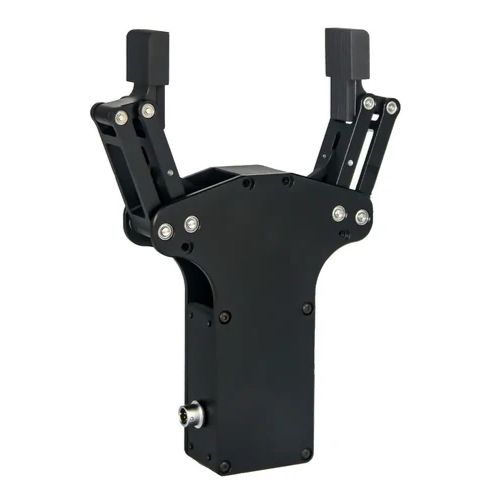
Gripper EG2-4C2

The EG2-4C electric gripper incorporates a controller and features a wide stroke, precise force and position control, as well as an automatic locking system in the event of a power cut.

  • Communication interface: RS485
  • Total stroke (both sides): 70 mm
  • Weight: 231 g
  • Grip force: 0 to 20 N
  • Grip force accuracy: ±1 N
  • Operating voltage: 24 V DC ±10%
  • Maximum speed: 70 mm/s
  • Full stroke closing time: 1.3 s
  • Protection level: IP40
  • Recommended operating temperature: 0 to 40 °C
Gripper EG2-4C2​

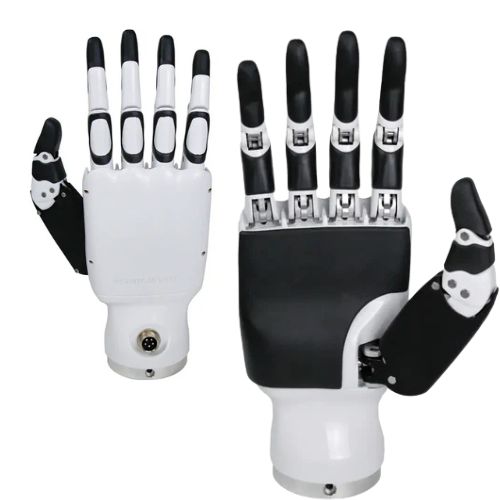
Dexterous Hands RH56DFX

The RH56DFX dextrous hand series features moderate speed, high gripping force and an integrated force sensor.
Compatible with ROS, it also has ready-to-use ROS plug-ins.

  • Active gripping force of fingertip: ≥ 3 kg
  • Tactile sensors: ≥ 17
  • Tactile data refresh rate: ≥ 30 Hz
  • Single-hand weight: 800 g
  • Power supply: DC 24V ±10%
  • Communication interface: RS485 or CAN
  • Degrees of freedom: 6
  • Number of joints: 12

What to consider before choosing

To select the most suitable version, it helps to define: the tasks your project needs to perform (locomotion, interaction, manipulation, perception, data collection, etc.), your test environment (floor type, space, access, supervision, connectivity, etc.), your software requirements (ROS2, low-level control, SDK, vision, GPU power), and your timeline.

Software ecosystem (API, ROS2, simulation)

Official resources indicate an API to control the robot and access status information, compatibility with ROS2, and simulation environments (Isaac Sim, MuJoCo, Webots) to prepare and test behaviors.

What information should you prepare for a quotation request?

Please specify: your budget (even if it’s an estimate), your project timeline (short term, awaiting funding, early study phase before the project, etc.), your address, and one sentence describing your project.

Download our brochure on the Booster T1

Brochure Booster T1

Technical specifications of the Booster T1 humanoid robot

Dimensions118 x 47 x 23 cm
Lower leg + thigh length57 cm
Arm reach45 cm
Weight30 kg
Degrees of freedom23 (standard version) / 31 (version with gripper) / 41 (version with hands)
Max. knee joint torque130 N.m
Joint encoderDual encoder
CPUHigh-performance 14-core processor
GPUNvidia AGX Orin, for 200 TOPS AI performance
Vision moduleDepth camera
IMU9-axis IMU
Voice moduleMicrophone array, speaker
Battery10.5Ah
Battery life2h (walking), 4h (standing)
Wi-Fi 6yes
Bluetooth 5.2yes
5Goptional
InterfaceUSB, Ethernet
Firmware updateyes
Edge LLMMiniCPM (optional)
Secondary developmentyes

Booster T1 robot resources

FAQ – Booster T1 humanoid robot

What level of “realistic” autonomy can I aim for right from the start?

On a research humanoid, it is generally more effective to start with constrained scenarios (motions, simple trajectories, repeatable actions), then progressively increase complexity (perception, interaction, manipulation). The right level mainly depends on your software resources, your test environment, and the time you can allocate to integration.

Which interfaces are available to control the robot (PC, smartphone, remote control)?

The Booster T1 is presented with a mobile control app via Bluetooth for certain functions (startup, basic control depending on available resources). For “project” control (tests, scenarios, automation), the most common approach is controlling from a computer over the network (Wi-Fi/Ethernet), relying on the available software interfaces.

And regarding software integration (API, ROS 2), what is planned?

Resources indicate an API (command and status feedback) as well as ROS 2 compatibility. Official repositories illustrate control via low-level exchanges (command and status feedback), and a ROS 2 SDK provides dedicated messages/services for control.

Which sensors are accessible and in what form (streams, rate, synchronization)?

For perception/AI projects, ask which outputs are exposed (depth camera, IMU, audio), at what rates, and how synchronization is handled. These details determine the feasibility of a vision/control pipeline or data collection for learning.

What workstation / network prerequisites should be anticipated?

Check the connection mode (Ethernet/Wi-Fi), the ports used, and whether your network imposes constraints (VPN, VLAN, proxy). In university or industrial environments, these can be blocking if not anticipated.

Can simulation be used for a “simulation → robot” workflow?

Yes, simulation environments are mentioned. For a project, clarify the availability of models (assets), the gap between simulation and robot (parameters, controllers), and the examples provided to accelerate setup.

What workload should be expected for manipulation (grippers or dexterous hands)?

Grasping is often the most costly part to tune: calibration, control, contact detection, repeatability. Before choosing an option, clarify your objective (pick/place vs fine gestures), target objects, and the expected level of precision.

What should be checked for real-world use (floors, space, safety)?

In practice, locomotion and stability are sensitive to the floor (friction, irregularities), available space, and supervision procedures. It is recommended to plan a safe test area and a progressive protocol (simple motions → full scenarios).

What is included in delivery (and what is optional)?

To avoid surprises, have confirmed what is included (robot, battery(ies), charger, transport elements, accessories) and what depends on the version (grippers/hands, communication options, additional parts). This is a classic pre-order checkpoint.

What support is available (documentation, examples, assistance)?

For a research/teaching team, documentation and examples often have more impact than the “spec list”. Before purchase, ask what is provided (manuals, tutorials, code samples, supervision tools) and how support is delivered (channel, response times, onboarding).

Historial de precios

Historial del precio medio

Un punto de datos por día, calculado según la fecha de observación.

Precio medio diario

Importes en USD

$21.405,05
Gráfico del historial del precio medio en USDGráfico de líneas con 61 observaciones desde 2 oct 2026 hasta 22 nov 2026.$36.000$32.000$28.000$24.000$20.0002 oct14 oct27 oct9 nov22 nov2 oct 2026: precio medio de $34.248,083 oct 2026: precio medio de $34.248,084 oct 2026: precio medio de $34.248,085 oct 2026: precio medio de $34.248,086 oct 2026: precio medio de $34.248,087 oct 2026: precio medio de $34.248,088 oct 2026: precio medio de $34.248,089 oct 2026: precio medio de $34.248,0810 oct 2026: precio medio de $34.248,0811 oct 2026: precio medio de $34.248,0812 oct 2026: precio medio de $34.248,0813 oct 2026: precio medio de $34.248,0814 oct 2026: precio medio de $34.248,0815 oct 2026: precio medio de $34.248,0816 oct 2026: precio medio de $34.248,0817 oct 2026: precio medio de $34.248,0818 oct 2026: precio medio de $34.248,0819 oct 2026: precio medio de $34.248,0820 oct 2026: precio medio de $34.248,0821 oct 2026: precio medio de $34.248,0822 oct 2026: precio medio de $34.248,0823 oct 2026: precio medio de $34.248,0824 oct 2026: precio medio de $34.248,0825 oct 2026: precio medio de $34.248,0826 oct 2026: precio medio de $34.248,0827 oct 2026: precio medio de $34.248,0828 oct 2026: precio medio de $34.248,0829 oct 2026: precio medio de $34.248,0830 oct 2026: precio medio de $34.248,0831 oct 2026: precio medio de $34.248,081 nov 2026: precio medio de $34.248,082 nov 2026: precio medio de $34.248,083 nov 2026: precio medio de $34.248,084 nov 2026: precio medio de $34.248,085 nov 2026: precio medio de $34.248,086 nov 2026: precio medio de $34.248,087 nov 2026: precio medio de $34.248,088 nov 2026: precio medio de $34.248,089 nov 2026: precio medio de $34.248,0810 nov 2026: precio medio de $32.107,5811 nov 2026: precio medio de $21.405,0512 nov 2026: precio medio de $21.405,0513 nov 2026: precio medio de $21.405,0514 nov 2026: precio medio de $21.405,0515 nov 2026: precio medio de $21.405,0516 nov 2026: precio medio de $21.405,0517 nov 2026: precio medio de $21.405,0518 nov 2026: precio medio de $21.405,0519 nov 2026: precio medio de $21.405,0520 nov 2026: precio medio de $21.405,0521 nov 2026: precio medio de $21.405,0522 nov 2026: precio medio de $21.405,05

Los promedios se calculan por día UTC a partir de todos los precios de oferta registrados.