humanoide

Unitree R1 — Especificações, preço e onde comprar (2026)

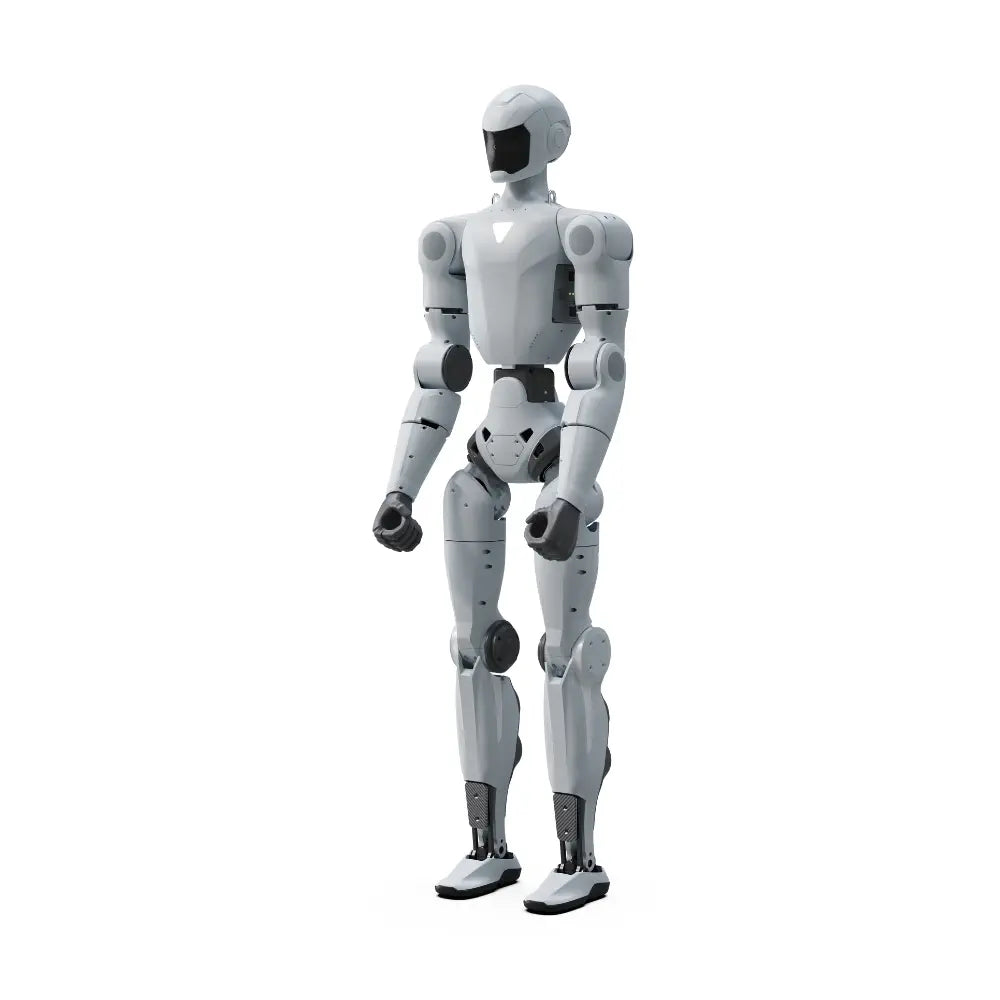
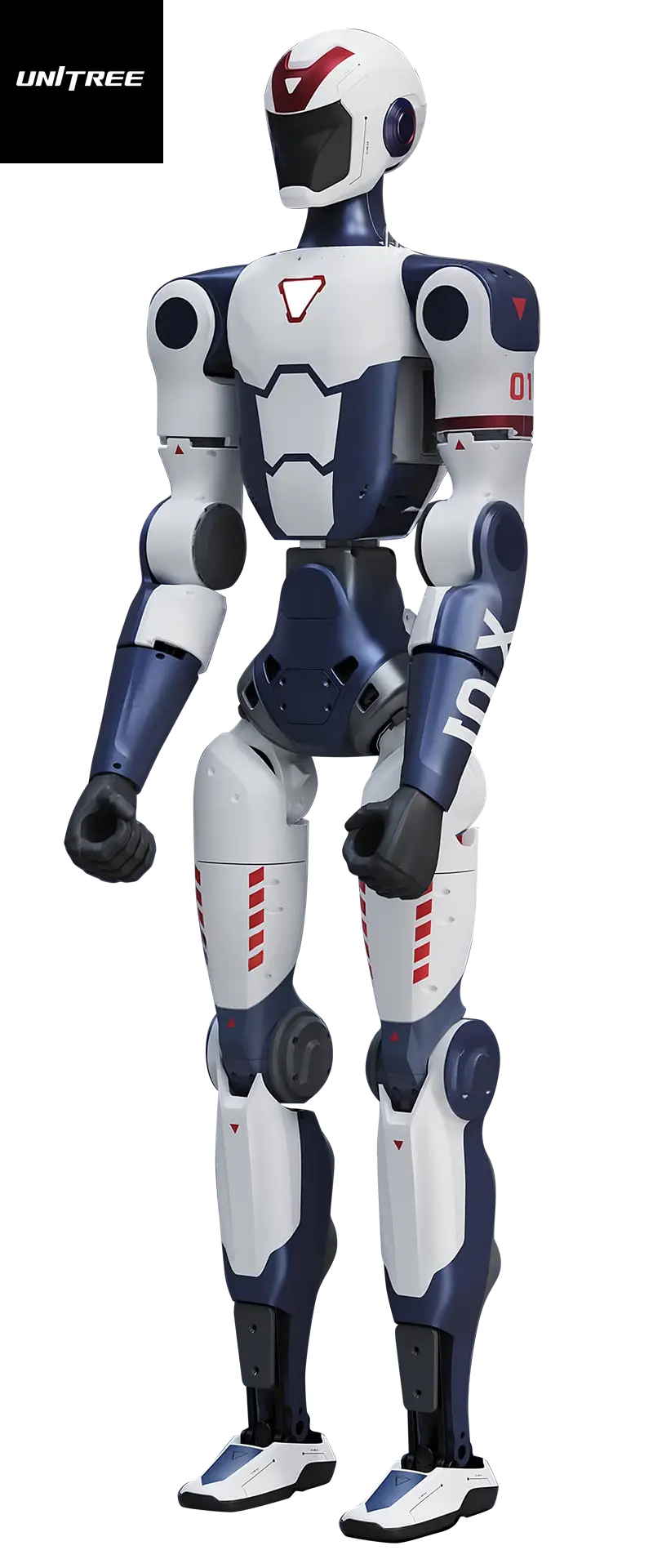
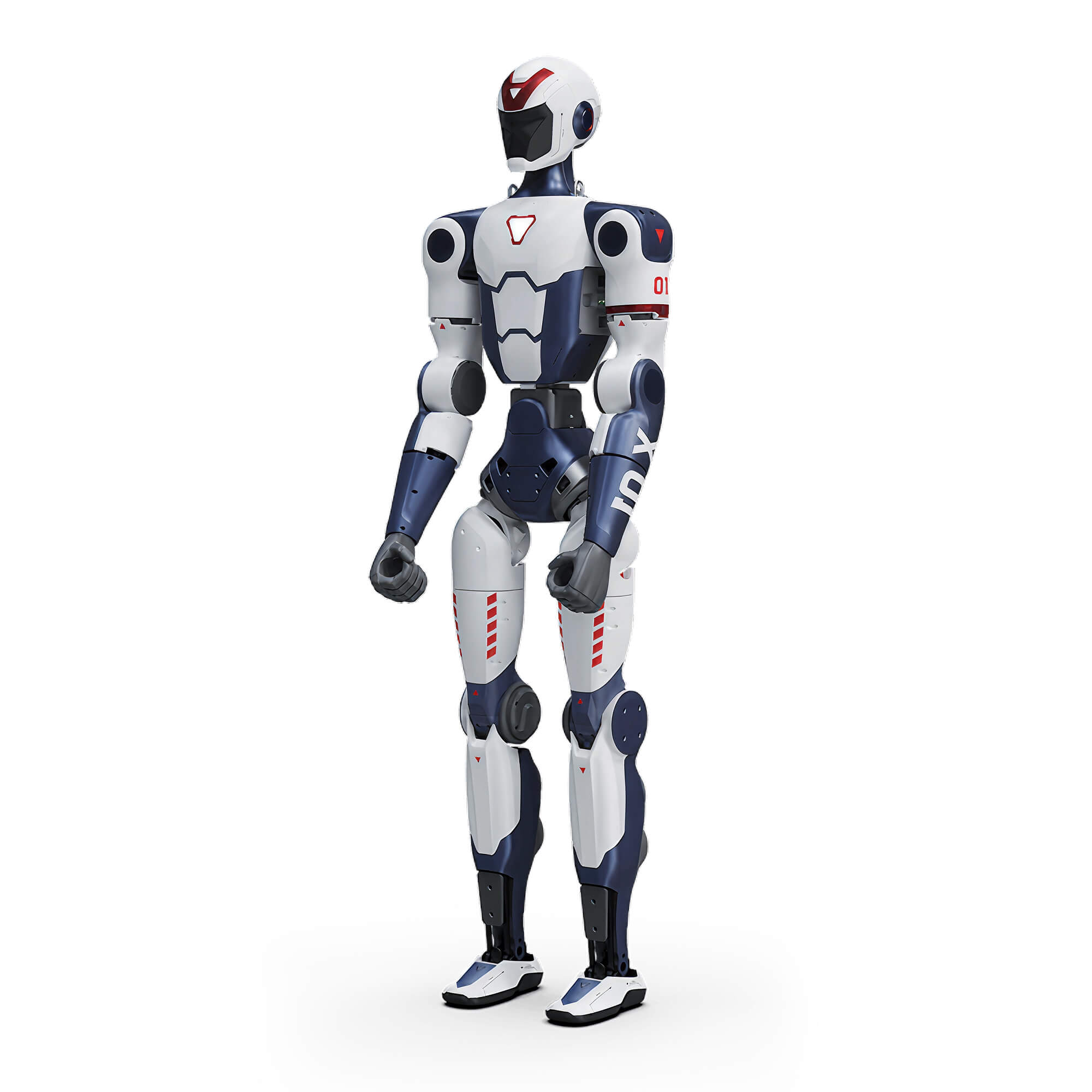
Unitree R1 is a wheeled humanoid robot made by Unitree in Hangzhou, China. Price: $4,900–$35,000. Key specs: 1230 mm tall, 25 kg, up to 26 degrees of freedom, 9 km/h top speed, 1 hour battery life with quick-swap. It performs cartwheels, flips, and sprints. Available for pre-order, shipping April 2026.

💰Preço
$4.900 – $35.000
📅Primeira fabricação
2025
🌍Origem
CN
📏Altura
1230 mm
⚖️Peso
25 kg
🦾Graus de liberdade
26
🏃Velocidade máxima
9 km/h
📦Capacidade de carga
10 kg
🔋Bateria
1 hour
🛒Disponibilidade
Pré-venda

What is the Unitree R1?

The Unitree R1 is a wheeled humanoid robot that combines a stable rolling base with a highly agile 7+7 degree-of-freedom arm system and a multimodal AI core. Manufactured by Unitree Robotics in Hangzhou, China, it targets education, research, entertainment, and service tasks in constrained spaces. The R1 departs from legged designs, embracing a 'movement first' philosophy that yielded cartwheels, handstands, front flips, and autonomous fall recovery. Configurations range from the ultra-affordable R1 Air (20 DOF) to the EDU Pro with dexterous five-finger hands (38 DOF), all powered by low-inertia internal rotor PMSMs and a smart lithium-ion battery with quick‑swap capability. At a starting price of $4,900, it redefines entry‑level humanoid robotics.

Specifications

Here are the full technical specifications.

SpecValue
Height1230 mm
Weight25 kg
Degrees of freedom26
Battery life1 hour
Max speed9 km/h
Payload10 kg
Price (new)$4,900–$35,000
Price (used range)N/A

Price & Value

New MSRP: $4,900–$35,000

Used range: N/A

The R1 Air at $4,900 undercuts every other humanoid on the market, including Unitree’s own G1. Moving up the stack, the $5,900–$8,990 Standard adds a 2‑DOF head and more computation, while EDU configurations ($10,000–$35,000) unlock dexterous hands, enhanced AI, and research‑grade sensors. Value for money is exceptional in the sub‑$10k band if dynamic mobility is the priority, though total cost of ownership climbs with required spares and optional quick‑swap batteries. Depreciation is likely sharp given the rapid pace of humanoid development, but the low initial outlay limits downside risk. For a wheeled humanoid with this acrobatic repertoire, no competitor comes close at anywhere near this price.

Who Is It For?

Best for: - University robotics labs needing an affordable, high‑agility platform for locomotion and manipulation research – 26+ DOF and full‑body motion planning library included. - Entertainment and public‑facing exhibits requiring a stable, repeatable robot that can perform cartwheels, flips, and interactive AI conversations without tethering. - AI developers and startups looking for a multimodal embodied agent (voice + vision) to deploy large language models in the physical world. - STEM educators seeking a durable humanoid that ships with SDKs and a large demo codebase, allowing students to go from unboxing to custom behaviors in days.

Not for: - Heavy industrial lifting or factory logistics – the arm payload is limited to 10 kg and the wheeled base cannot negotiate stairs. - Outdoor terrain navigation – the R1 is designed for smooth indoor surfaces; rough‑terrain capability is restricted to its legged siblings like the G1. - Long‑duration autonomous patrol – with a 1‑hour battery life and fixed‑base design, runtime extensions require frequent battery swaps or tethered power.

Alternatives & Comparison

The Unitree R1 occupies a unique wheeled‑humanoid niche at a price previously reserved for hobbyist kits. Its main competition comes from Unitree’s own legged platforms and from larger, far more expensive research humanoids.

ModelPriceAvailableKey Difference
Unitree G1$16,000preorderLarger legged humanoid (1.27 m, 35 kg) with 23–43 DOF; walks, runs, and climbs stairs but costs 3–4× more.
Tesla OptimusUndisclosed (~$20,000 expected)noFull‑size legged humanoid integrated with Tesla AI stack; not yet publicly available, expected no earlier than 2027.
Fourier GR-1$150,000yesFull‑size (1.65 m, 55 kg) research‑grade legged humanoid; offers higher payload and academic support but at 10× the price.

Verdict: If your budget is under $10,000 and you need a stable, acrobatic platform for indoors, the R1 Air or Standard has no equal. For those who require bipedal locomotion and larger payloads, the Unitree G1 is a more versatile but pricier step up. Tesla Optimus remains an aspirational bet with no firm delivery date; the Fourier GR-1 is overkill unless you need industrial‑grade research hardware and have $150k to spend. In short: budget wheeled humanoid → R1; legged mobility → G1; wait‑and‑see → Optimus; heavy‑duty research → GR-1.

Use Cases & Capabilities

Dynamic Movement Research

Researchers can exploit the R1’s wheeled base and high‑torque actuators to study dynamic balancing, fall recovery, and whole‑body motion planning. The robot’s ability to perform cartwheels, handstands, and autonomous fall recovery provides a rich dataset for reinforcement learning and model‑predictive control. Because the lower body is fixed, experiments can isolate arm and torso dynamics without the complexity of leg control, accelerating algorithm iteration. The open SDK and OTA update pipeline allow labs to push new controllers to the robot within hours, making it an ideal testbed for advanced mobility research at a fraction of the cost of legged alternatives.

AI Interaction and Service Demonstrations

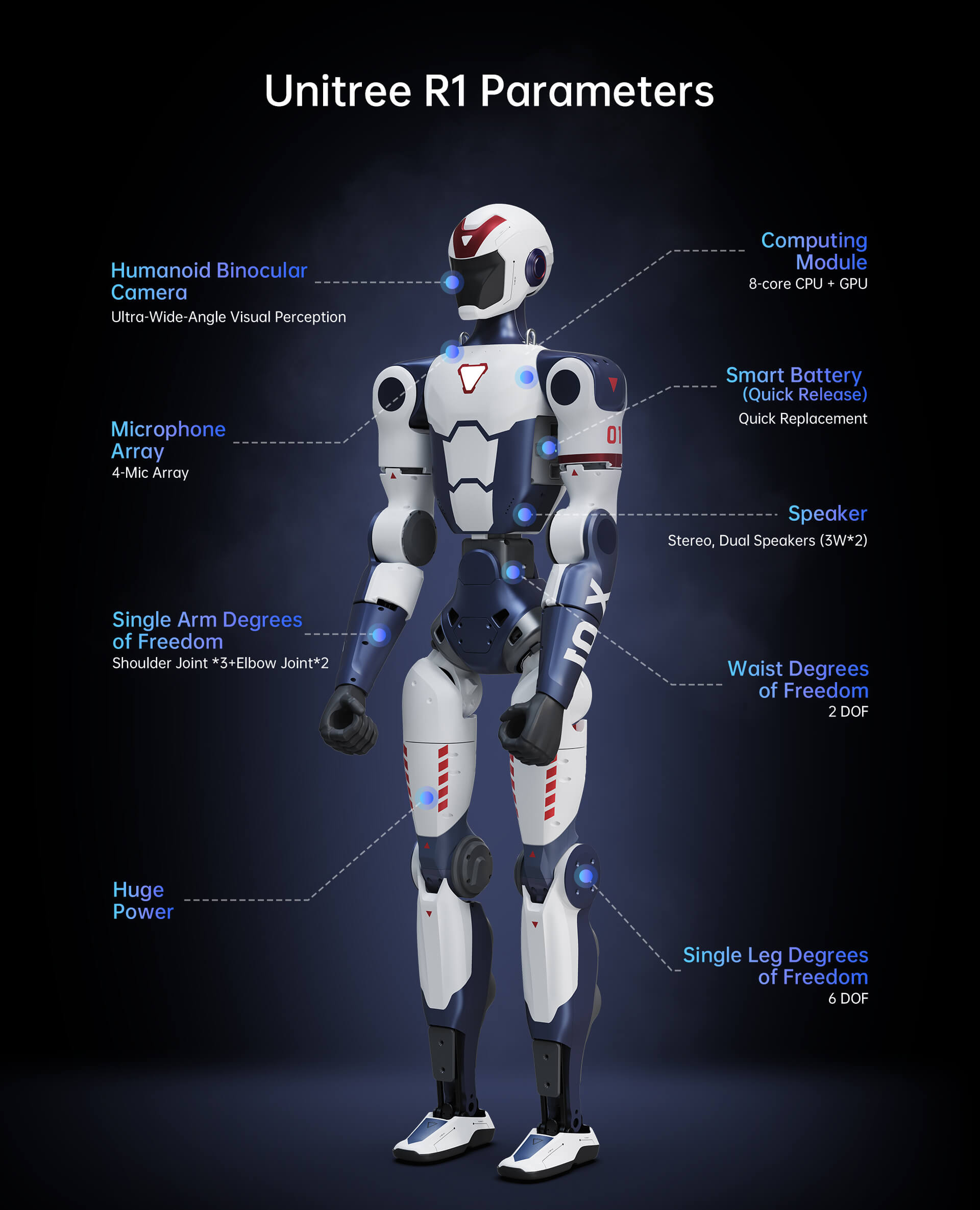
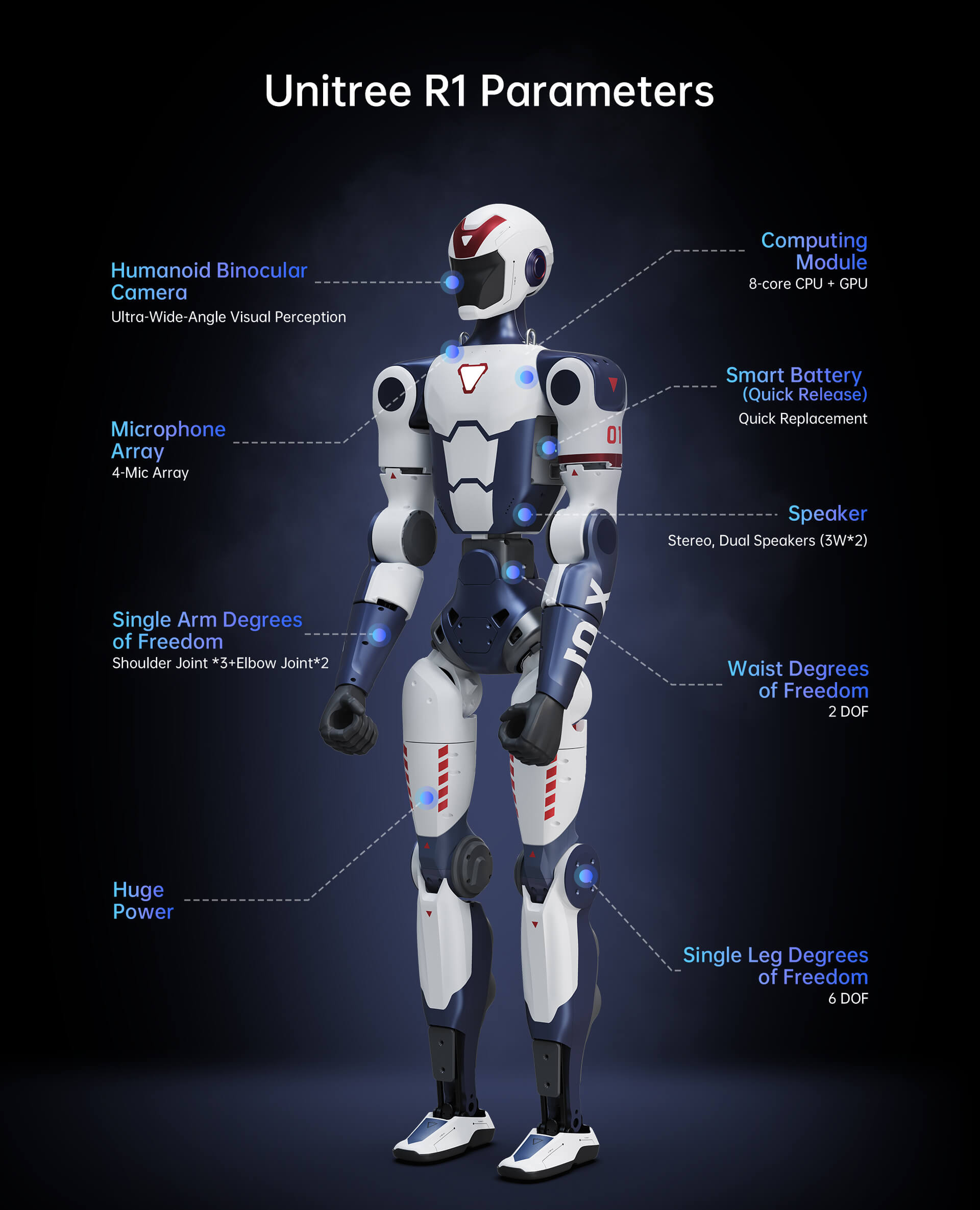
Equipped with a stereo binocular camera, microphones, speakers, and an on‑board multimodal large language model, the R1 excels as a conversational service agent. It can recognize speech, understand visual scenes, and respond with natural dialog while gesturing with its arms. Retail stores, hotel lobbies, and museums can deploy it to guide visitors, answer questions, and even perform short choreographed routines. The wheeled stability ensures consistent positioning, and the quick‑swap battery means it can run continuously through a full‑day event with minimal downtime.

Education and Robotics Curriculum

At $4,900, the R1 Air brings humanoid robotics within reach of high‑school and university programs that previously could only afford basic kits. Students can immediately program the robot using the provided Linux‑based SDK and a rich set of example behaviors. The 26‑DOF configuration in the Standard model offers enough complexity to teach kinematics, inverse kinematics, path planning, and computer vision. Moreover, the large multimodal model integration introduces undergraduates to cutting‑edge AI‑to‑robot interfaces, preparing them for careers in intelligent systems. The robust aluminium‑alloy frame withstands frequent student handling and minor collisions.

Entertainment and Public Performance

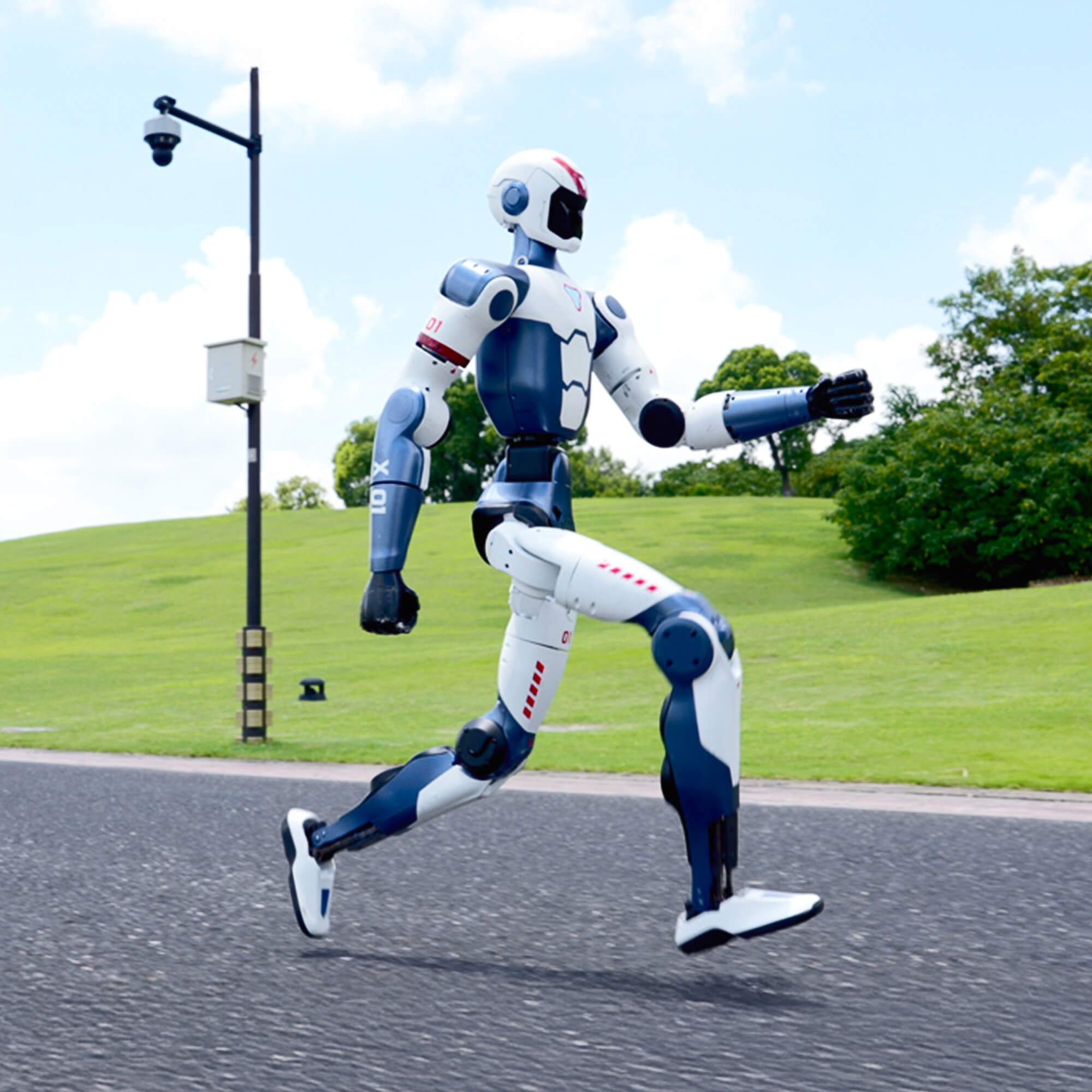
Theatres, theme parks, and live events can leverage the R1’s show‑stopping acrobatics – front flips, downhill sprints, and handstands – to draw crowds. Because the robot recovers autonomously from falls, performances remain safe and uninterrupted. The compact footprint (357 × 190 mm) allows it to navigate tight backstage areas, while the OTA updates let choreographers modify routines remotely. Paired with the integrated audio system, it can deliver scripted dialogue and sound effects in sync with motion, creating a fully automated, repeatable show that rivals far more expensive animatronics.

Prototyping and Customization Platform

Startups and R&D teams can use the R1 as a base for rapid prototyping of new grippers, sensors, or AI modules. The modular arm architecture and open mounting points on the chassis facilitate custom end‑effectors or additional cameras. Unitree’s smart actuator ecosystem means third‑party developers can replace or augment joints with minimal redesign. The EDU Pro configuration with 5‑finger hands provides a complete dexterous manipulation baseline, while the lower‑cost Air variant offers a stripped‑down core for custom builds. This flexibility reduces time‑to‑market for experimental service‑robot concepts.

History & Background

Unitree Robotics was founded in 2016 in Hangzhou, China, by Wang Xingxing. The company first gained international attention with affordable quadruped robots like the Go1 and B2. In 2023, Unitree entered the humanoid market with the full‑size bipedal H1 and later the general‑purpose G1. The R1, introduced in late 2025 and named to TIME’s Best Inventions list that year, represents Unitree’s first wheeled humanoid – a deliberate departure from legged designs to maximize dynamic upper‑body agility. Pre‑orders opened shortly after the September 2025 reveal, with customer shipments slated for April 2026. It is a first‑generation platform built entirely on Unitree’s in‑house actuator technology and the same multimodal AI framework used in its other robots.

Buying Used — What to Check

Verify battery health Li‑ion packs degrade over cycles; a 1‑hour runtime is heavily dependent on battery condition. Pre‑order units will be new, but future used deals must include cycle‑count data.

Confirm configuration and DOF EDU and Air variants look similar; a used Standard could be advertised as an EDU Pro. Always request the original order invoice or check the joint count on the arms and head.

Inspect for structural damage Acrobatic stunts like front flips and handstands stress the aluminium‑alloy frame and actuators. Look for hairline cracks around the waist and hip joints.
Perguntas frequentes

The lineup starts at $4,900 for the R1 Air and scales to $35,000 for the EDU Pro with dexterous hands. R1 Standard ranges $5,900–$8,990, EDU Standard $10,000–$12,000, and EDU Smart $15,000–$19,000. All prices new from Unitree; used market likely to emerge after April 2026.
It performs dynamic whole‑body movements including cartwheels, handstands, front flips, and autonomous fall recovery. It can run at 9 km/h and integrates a multimodal AI for voice‑and‑image interaction. Arms offer 10 kg payload capacity, and the wheeled base glides smoothly on indoor surfaces.
Yes, pre‑orders are open. Customer shipments are scheduled to start in April 2026. You can place an order directly via Unitree’s website or through authorized distributors.
The R1 is wheeled, shorter (123 cm vs 127 cm), and significantly cheaper (from $4,900 vs $16,000). The G1 is a legged bipedal humanoid with 23–43 DOF, can walk and climb stairs, but sacrifices the R1’s extreme acrobatics and low price.
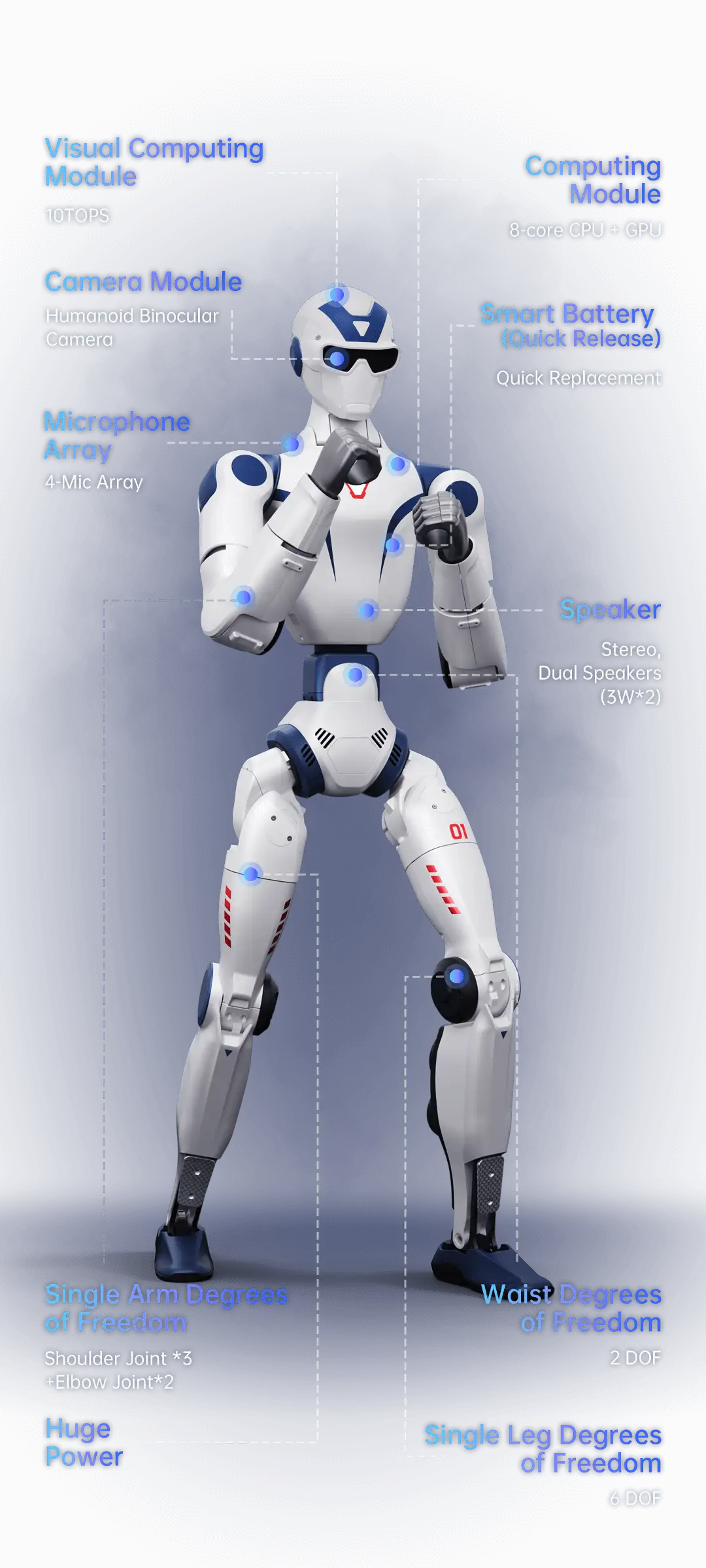
Height 1230 mm, weight 25 kg (Air) / 29 kg (Standard/Edu), 26 DOF (up to 38 on Pro), 9 km/h top speed, 1‑hour battery, 10 kg arm payload, Wi‑Fi 6 and Bluetooth 5.2, stereo binocular camera, and on‑board 8‑core CPU+GPU.
Unitree Robotics, founded in 2016 in Hangzhou, Zhejiang, China. The company is world‑renowned for quadruped and bipedal humanoid robots like the Go1, H1, and G1. The R1 is their first wheeled humanoid platform.
Around 1 hour of mixed use. The smart lithium‑ion pack is quick‑swappable, and an included charger allows continuous operation by swapping packs during extended sessions.
Target sectors include education (STEM curricula), research (mobility and AI labs), entertainment (theme parks, live shows), and service (retail, hospitality). Its low cost also makes it attractive to AI startups building embodied conversational agents.
Yes. The open SDK, standard mounting points, and Unitree’s smart actuator ecosystem allow custom end‑effectors, sensors, and software. The EDU Pro’s 5‑finger hands are themselves a modular upgrade, and the aluminium‑alloy frame can support additional payloads.
No formal safety certification has been published yet. The 25‑29 kg weight, high‑speed arms, and acrobatic moves mean it should be operated with a safety exclusion zone until compliance data becomes available. Its autonomous fall recovery, however, reduces tip‑over risks.

Unitree R1 in 3D

Loading the 3D model…
Drag to rotate · click the model, then scroll or pinch to zoom · click a part to inspectSwipe sideways to turn · pinch to zoom · tap a part to inspect3D model credit and licence

Unitree R1 supply chain

Point at or select a step to light up its chain: bright lines are its direct links, softer lines the rest of the path from raw material to robot.

Swipe sideways to follow the whole chain.

ExtractionRefiningMaterialsComponentsModulesRobotsCompaniesUnitree designs its joint motors and gearboxes and assembles them itself from custom-made parts; the integrator manual calls the R1's 'self-developed'.Unitree designs its joint motors and gearboxes and assembles them itself from custom-made parts; the integrator manual calls the R1's 'self-developed'.Unitree designs its battery packs and their BMS, buys the housings and cells, and assembles the packs itself (said for its robots in general).Lithium compounds (carbonate, chloride, hydroxide) are produced from mined lithium.Lithium is produced from brine and mineral operations.Mined copper is smelted and refined.Primary aluminium from smelters.Bauxite is refined to alumina for aluminium.6061 aluminium contains 0.8–1.2% magnesium.6061 aluminium contains 0.40–0.8% silicon.A lithium-ion cell has a cathode (positive electrode), typically a metal oxide or phosphate. IEA tracks the 2025 mix of LFP and nickel-based cathodes in electric-car batteries.Silicon metal is made from silica in natural forms such as quartzite (USGS).Silicon metal can be refined further into ultra-high-purity semiconductor-grade silicon, called polysilicon (USGS). Chips are made on wafers: thin slices of crystalline silicon (Wikipedia).Magnesium is recovered from dolomite, serpentine, magnesium-bearing evaporite minerals and brines (USGS).In wire-bond packaging, fine gold or copper wire connects each die to its leadframe or substrate. ASE is gradually replacing gold wire with copper to cut material cost, though gold wire is still one of its main materials.Steel is made from iron ore: US mines shipped 98% of their usable iron ore to the steel industry (USGS).Precision bearing rings are made of through-hardened chromium bearing steel 100Cr6 (SAE 52100) (GMN).Sony makes its CMOS image sensors in its own production facilities in Japan (Nagasaki, Kumamoto). SIA/BCG count optoelectronics and sensors in one fab group with discrete and analog chips (DAO), apart from logic.Bosch makes its MEMS sensors in its own fabs in Reutlingen and Dresden; a MEMS sensor is a MEMS element plus an evaluation chip (ASIC).A MEMS sensor is packed in a semiconductor housing, such as an LGA package (Bosch).Mined cobalt is refined further into chemicals or metal (Cobalt Institute). In 2025 DR Congo's export restrictions left refiners short of cobalt hydroxide feed and forced some to limit production, though world refined output still rose 5% to 240 kt (Cobalt Institute).Cobalt sulphate, the largest refined cobalt product, is typically used in NCM (NMC) batteries, and cobalt tetroxide often in LCO batteries (Cobalt Institute). Cobalt-free substitutes that use iron and phosphorus (LFP) held a significant market share in China (USGS).Mined nickel ore and concentrate go to smelters and refineries. In Indonesia, laterite ore is processed into nickel pig iron and ferronickel for stainless steel, or into battery intermediates such as mixed hydroxide precipitate (IEA); the US Eagle Mine's concentrate is exported to smelters (USGS).Battery cathodes need nickel sulphate, made from Class I nickel metal or from intermediates such as mixed hydroxide precipitate and nickel matte (IEA). LFP (lithium iron phosphate) cathodes contain no nickel.Stainless steel is the biggest use of nickel, 66% of demand in 2025 (Cobalt Institute). In the US, stainless and alloy steels and nickel alloys take more than 85% of nickel use (USGS). The world made 64.2 Mt of stainless steel in 2025 (worldstainless), against about 1,900 Mt of raw steel (USGS).Lithium-ion cathodes are lithium compounds, generally a layered oxide (such as lithium cobalt oxide), a phosphate (lithium iron phosphate) or a spinel (lithium manganese oxide). Batteries took an estimated 88% of world lithium in 2025 (USGS).Natural graphite flakes must be made into spherical particles, purified to over 99.95% carbon and coated before they can be used in lithium-ion battery anodes (IEA). Natural graphite is now a small part of anode supply: under 8% of China's 2025 anode shipments (GGII), and about 14% worldwide in 2022 (Rystad).Synthetic graphite is made by calcining and graphitising petroleum coke or needle coke at nearly 3,000 °C (IEA). It was 92.7% of China's 2025 anode shipments (GGII).The negative electrode (anode) of a conventional lithium-ion cell is typically graphite. IEA's 2025 data on electric-car battery anodes show only graphite and silicon-doped graphite.Solder is the largest use of tin, 51% of world tin use in 2023 (International Tin Association; in the US solder took 11%, USGS). The common lead-free alloy SAC305 is 96.5% tin (AIM).Tin-lead solder is nearly half lead (PubChem), but the electronics industry has moved toward lead-free solders (USGS): 92% of solder for electronics was lead-free in 2023 (ITA).The lead-free alloy SAC305 contains 3% silver (AIM). In the US, brazing and solder took 3% of silver (USGS).The lead-free alloy SAC305 contains 0.5% copper (AIM).FR-4 laminate is woven fibreglass cloth with an epoxy binder (Wikipedia), and fibreglass is made from silica sand (Covia).A thin layer of copper foil is laminated to one or both sides of an FR-4 panel; these are called copper-clad laminates (Wikipedia; ChinaBaogao).FR-4 epoxy resin systems typically use bromine to resist fire (Wikipedia); a grade of the brominated flame retardant TBBPA is used to make epoxy resins for circuit boards (Wikipedia). Brominated flame retardants are one of bromine's two leading uses (USGS).Barite is used to make barium carbonate, which goes into dielectrics (Wikipedia). Barium titanate, the dielectric ceramic used in capacitors, can be made by heating barium carbonate with titanium dioxide (Wikipedia).Barium titanate, the ceramic in high-capacitance MLCCs, can be made by heating barium carbonate with titanium dioxide (Wikipedia); titanium dioxide comes from ilmenite and rutile (USGS).99% of MLCCs made worldwide use base-metal electrodes of nickel or copper; the industry moved from palladium and silver to cut cost (NASA, 2015). TDK replaced palladium electrodes with nickel in 1993 (Wikipedia).Platinum-group metals are used in multilayer ceramic capacitors (USGS). High-reliability MLCCs use palladium-silver electrodes (NASA, 2015).High-reliability MLCCs use precious-metal electrodes of palladium and silver (NASA, 2015).Connector contacts are copper alloys: beryllium copper is called the best copper alloy for contacts, connectors and cables (Wikipedia), and phosphor bronze (copper-tin-phosphorus) can replace it (USGS).Copper-clad laminate is the core material of circuit boards (ChinaBaogao); FR-4 is a common material for printed circuit boards (Wikipedia).Parts are soldered onto bare boards: Adafruit's BNO055 board is a "breakout PCB", and the Raspberry Pi Zero 2 W brief warns against damage to the printed circuit board.SAC305 lead-free solder is made for soldering printed circuits, by wave, hand and SMT reflow soldering (Conro; AIM).MLCCs store and release charge and absorb noise in phones, home appliances and IoT devices (Murata). The Raspberry Pi's RP3A0 package includes the decoupling capacitors that smooth its supply voltage (Raspberry Pi).Boards carry connectors: the Raspberry Pi Zero 2 W brief speaks of the board and its connectors, and Waveshare's servo adapter has a USB-C connector and a power connector.Brass is copper and zinc: CW614N free-cutting brass is about 39% zinc. In the US, brass and bronze are the second use of zinc after galvanized steel.Brass is mostly copper: 57–59% in CW614N free-cutting brass.Free-cutting brass such as CW614N holds 2.5–3.5% lead so it machines cleanly; lead-free brasses exist.XT30 battery plugs (G1 harness, Open Duck Mini) have gold-plated brass contacts.Antimony is used in circuit boards to cut flammability further. A review lists two studies of scrap PC boards, parts and solder still on, with 0.45% and 1.97% antimony, so the share in the laminate alone is not known.Unitree: crossed roller bearings and double-groove ball bearings at the joint outputs (its Chinese page; the English page calls the second kind 'Double Hook Ball Bearings'); the bearing makers are not named.The joint motors are permanent-magnet synchronous motors (Unitree), and Unitree buys the magnets as a raw material. The magnet type is not stated.Unitree's co-founder says the joint motors' only outside suppliers sell raw materials, such as copper wire and magnets.Unitree lists 'Dual + single encoder' for the R1's joints, and the integrator manual says the joint motors have dual encoders; which joints have only one is not stated. Unitree designs its driver and encoder boards, buys the parts and has the boards soldered by outside firms.Unitree: crossed roller bearings and double-groove ball bearings at the joint outputs (its Chinese page; the English page calls the second kind 'Double Hook Ball Bearings'); the bearing makers are not named.The joint motors are permanent-magnet synchronous motors (Unitree), and Unitree buys the magnets as a raw material. The magnet type is not stated.Unitree's co-founder says the joint motors' only outside suppliers sell raw materials, such as copper wire and magnets.Unitree lists 'Dual + single encoder' for the R1's joints, and the integrator manual says the joint motors have dual encoders; which joints have only one is not stated. Unitree designs its driver and encoder boards, buys the parts and has the boards soldered by outside firms.Lithium battery (Unitree); Unitree buys its cells. The cell model and count are not published.A built-in battery-management board protects the cells from overcharge, deep discharge and short circuits (Generation Robots).The computing module is a circuit board with the processor soldered on; Unitree says it buys the core boards of its computing modules.An '8-Core High-Performance Processor' (Unitree); the chip is not named.The binocular camera has two image sensors with a global shutter (integrator manual; R1 AIR: one camera).The 'Visual Computing Module' (10 TOPS) is a computer board in the head (Unitree's labelled picture).MEMS microphones are silicon chips: the diaphragm is etched into a silicon wafer (Wikipedia). Pollen's HAT uses a MEMS microphone.Heat sinks are often aluminium: the Go2's main board has two fans blowing over an aluminium heat sink (Simplexity).In the Unitree G1, the heat pipe and heat spreaders that teardowns show are copper: a copper heat pipe presses against a motor (a published teardown), and copper heat-spreader plates cool its knees (China Post Securities).Magnet wire is drawn from rod of pure electrolytic copper: Elektrisola starts from 8 mm rod with at least 99.90% copper, and most magnet wire is fully annealed, electrolytically refined copper (Elektrisola; Wikipedia).ASML's DUV machines, 'the workhorses of the industry', print the majority of layers in chips, older-generation chips included (ASML annual report 2025).Unitree Robotics makes this robot.Unitree's 3D model has an IMU board in the front of the pelvis ('imu_in_pelvis_link'); the chip is not published.The frame, shells and covers that make up the Unitree R1's body.Fourteen 60 N·m joints: both hips' pitch, roll and yaw, both knees, the waist's roll and yaw, and both shoulders' pitch and roll (Unitree's 3D model).Twelve 33 N·m joints: both shoulder yaws, elbows and wrists, the neck's pitch and yaw, and two motors in each calf that drive the ankle (Unitree's 3D model and component drawing).One quick-release battery: 6,000 mAh, ~33 V.Main computing module: an 8-core processor (Unitree).Head camera (two lenses on the R1 and R1 EDU, one on the R1 AIR) and the visual computing module.Circuit boards besides the modules: power distribution, the IMU board and the back panel's electronics (integrator manual; Unitree's 3D model has the IMU board).Cables run inside the hollow joints ('Hollow + Internal Routing', Unitree), and the back panel has USB-C, XT30, RJ45 and GH1.25 connectors (integrator manual).A 4-microphone array at the top of the chest (Unitree).Two 3 W stereo speakers (Unitree's labelled picture).'Local air cooling' (Unitree). How many fans it has and where is not published.Quartz and silica sandQuartz and silica sandMagnesium ores and brinesMagnesium ores and brinesOil, gas and coal(plastics feedstock)Oil, gas and coal (plastics feedstock)Steel (gear, bearing andstainless grades)Steel (gear, bearing and stainless grades)Lithography machines (chipprinting)Lithography machines (chip printing)Mature-node chipfabrication (28 nm and…Mature-node chip fabrication (28 nm and older; analog and sensor chips)Aluminium alloysAluminium alloysBattery-grade lithiumcompoundsBattery-grade lithium compoundsPermanent magnets (typeundisclosed)Permanent magnets (type undisclosed)Lithium chemicalconversionLithium chemical conversionCopper smelting andrefiningCopper smelting and refiningAlumina refining andaluminium smeltingAlumina refining and aluminium smeltingLithium miningLithium miningCopper miningCopper miningBauxite miningBauxite miningIron ore miningIron ore miningMagnesium smeltingMagnesium smeltingSilicon metal smeltingSilicon metal smeltingChip packaging and test(OSAT)Chip packaging and test (OSAT)Precision bearingsPrecision bearingsProcessors (CPUs and SoCs)Processors (CPUs and SoCs)Image sensorsImage sensorsIMUs (motion sensors)IMUs (motion sensors)Lithium-ion cellsLithium-ion cellsUnitree R1Unitree R1UnitreeUnitreeCobalt miningCobalt miningCobalt refining (chemicalsand metal)Cobalt refining (chemicals and metal)Nickel miningNickel miningNickel smelting andrefiningNickel smelting and refiningNatural graphite miningNatural graphite miningBattery anode graphite(spherical natural and…Battery anode graphite (spherical natural and synthetic)Cathode active material(NMC, NCA, LCO, LFP)Cathode active material (NMC, NCA, LCO, LFP)Titanium minerals(ilmenite and rutile)Titanium minerals (ilmenite and rutile)Tin miningTin miningLead miningLead miningSilver miningSilver miningPalladium mining(platinum-group metals)Palladium mining (platinum-group metals)Antimony miningAntimony miningBromine (from brines)Bromine (from brines)Barite mining (barium)Barite mining (barium)Solder (tin alloys:lead-free SAC and…Solder (tin alloys: lead-free SAC and tin-lead)Copper-clad laminate (FR-4glass-fibre epoxy board…Copper-clad laminate (FR-4 glass-fibre epoxy board material)Printed circuit boards(bare boards)Printed circuit boards (bare boards)Multilayer ceramiccapacitors (MLCC)Multilayer ceramic capacitors (MLCC)Connectors and wiringharnessesConnectors and wiring harnessesElectronics assembly(circuit boards with part…Electronics assembly (circuit boards with parts soldered on)Structure: Unitree R1Structure: Unitree R1Zinc miningZinc miningBrass (copper-zinc alloy)Brass (copper-zinc alloy)Copper magnet wire(enamelled)Copper magnet wire (enamelled)Unitree R1 joint module,60 N·m classUnitree R1 joint module, 60 N·m classUnitree R1 joint module,33 N·m classUnitree R1 joint module, 33 N·m classR1 battery pack (6,000mAh, ~33 V)R1 battery pack (6,000 mAh, ~33 V)R1 main computer (8-coreprocessor)R1 main computer (8-core processor)R1 head camera and visualcomputing moduleR1 head camera and visual computing moduleMicrophonesMicrophonesSmall speakersSmall speakersCooling fans and heatsinksCooling fans and heat sinks

Fotos19

Unitree R1 photo 1
Unitree R1 photo 2
Unitree R1 photo 3
Unitree R1 photo 4
Unitree R1 photo 5
Unitree R1 photo 6
Unitree R1 photo 7
Unitree R1 photo 8
Unitree R1 photo 9
Unitree R1 photo 10
Unitree R1 photo 11
Unitree R1 photo 12
Unitree R1 photo 13
Unitree R1 photo 14
Unitree R1 photo 15
Unitree R1 photo 16
Unitree R1 photo 17
Unitree R1 photo 18
Unitree R1 photo 19