휴머노이드 로봇

AgiBot Expedition A3 — 사양, 가격 및 구매처 (2026)

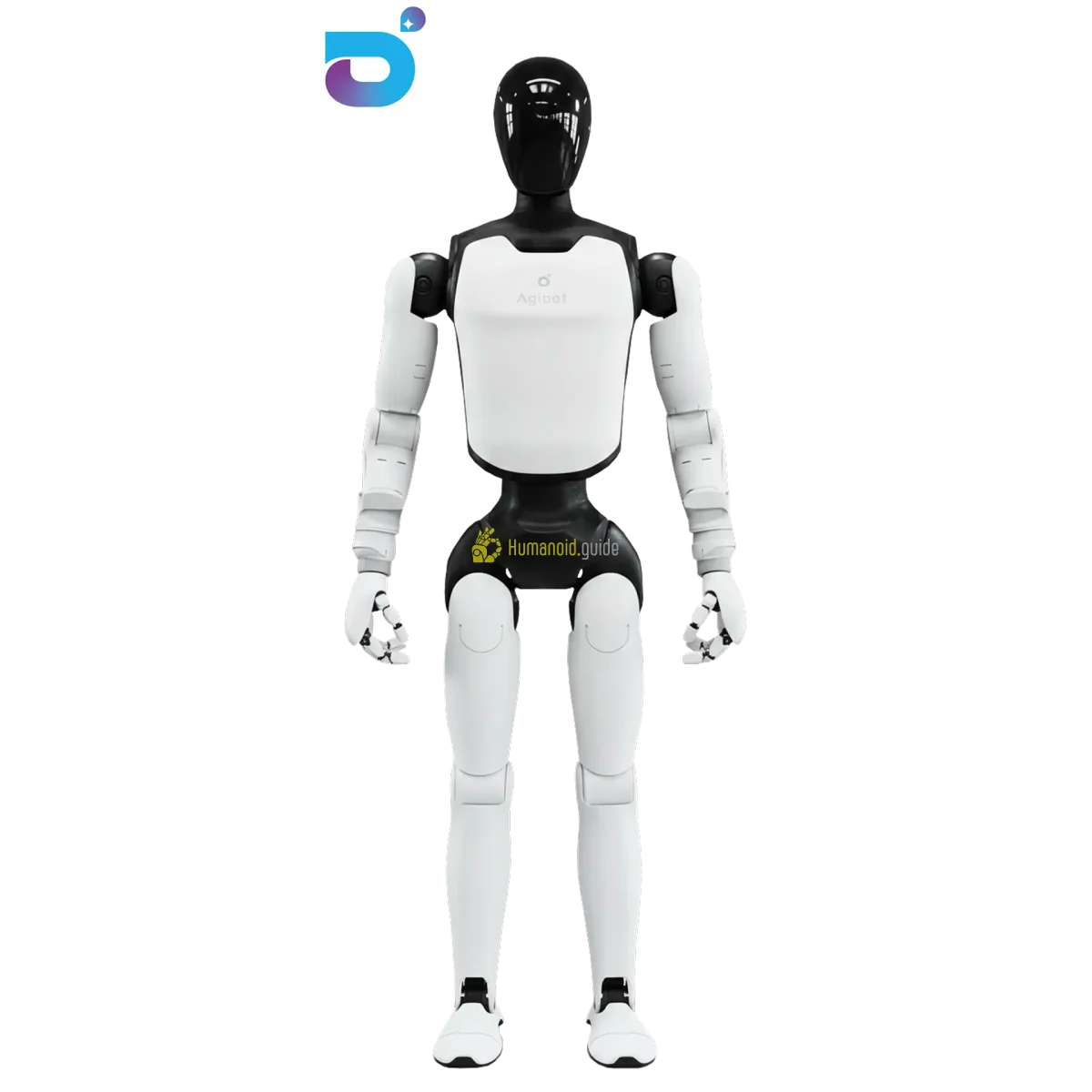
The AgiBot Expedition A3 is a small, outdoor-rated humanoid robot by AgiBot in Shanghai, China. Priced at an expected $45,000, it features 28 degrees of freedom, stands 1.42 m tall, weighs 25 kg, and runs up to 6 hours at 1 m/s. It is currently pre-release and not yet commercially available.

💰가격
$45,000
📅최초 제작
2026
🌍원산지
CN
📏높이
1.42 m
⚖️무게
25 kg
🦾자유도
28
🏃최대 속도
3.6 km/h
📦적재 용량
5 kg
🔋배터리
6 hours
🛒구매 가능 여부
기업 전용

What is the Agibot Expedition A3?

The AgiBot Expedition A3 is a compact, outdoor-rated humanoid robot created by AgiBot (Shanghai) specifically for service, retail, and hospitality roles. Unveiled at WRC 2024 in August 2024, it stands at 1.42 m and weighs only 25 kg, making it a lightweight, approachable presence for public-facing tasks. Powered by 28 electric harmonic drive actuators, it carries an RGB-D camera, IMU, and torque sensors, connecting via Wi-Fi and 5G. With a 5 kg payload and 1 m/s walking speed, it is optimized for safe, slow-paced interaction rather than heavy manipulation. The $45,000 expected price positions it as one of the most affordable humanoids in development, aiming to democratize robotic assistance in indoor and sheltered outdoor environments.

Specifications

Here are the full technical specifications.

SpecValue
Height1.42 m
Weight25 kg
Degrees of freedom28
Battery life6 hours
Max speed3.6 km/h
Payload5 kg
Price (new)$45,000
Price (used range)N/A (pre-commercial)

Price & Value

New MSRP: $45,000 (expected)

Used range: N/A

The $45,000 price tag is widely cited but has not been officially confirmed by AgiBot. It emerged from early reseller listings and WRC 2024 coverage. At this price, the Expedition A3 undercuts full-size humanoids like the Unitree H1 ($90,000) and the Fourier GR-1 (undisclosed but likely higher). The low cost stems from a smaller build and lower payload capacity. However, until commercial distribution begins, buyers should treat the price as a target and request formal quotes from the manufacturer. Total cost of ownership will depend on warranty, software updates, and any required accessories, which remain undefined. Given AgiBot's nascent support network, depreciation and resale value are highly uncertain.

Who Is It For?

Best for: - Retail and hospitality venues seeking a small, safe humanoid for customer interaction - Exhibition organizers wanting an affordable, interactive guide robot

Not for: - Heavy lifting or industrial tasks (payload limited to 5 kg) - High-speed patrol or rugged outdoor use (max speed 1 m/s, no IP rating)

Alternatives & Comparison

In the growing field of affordable humanoid robots, the Expedition A3 competes primarily with the Unitree H1 and Fourier GR-1, which offer different trade-offs in size, capability, and price.

ModelPriceAvailableKey Difference
Unitree H1$90,000yesTaller (1.8 m), heavier, 40+ DOF, 15 kg payload, better suited for industrial tasks
Fourier GR-1UndisclosedpreorderAlso a lightweight humanoid (1.42 m, 25 kg), but uses different actuator technology and boasts 44 DOF

Verdict: The AgiBot Expedition A3 is the most price-competitive option for businesses that prioritize low cost and safe design over raw strength or speed. If your use case requires heavy lifting or fast movement, the Unitree H1 justifies its higher price with significantly greater payload and DOF. Those who need maximum dexterity and are willing to wait for a product with unknown pricing may lean toward the Fourier GR-1.

Use Cases & Capabilities

Customer Service Host

The Expedition A3 can greet visitors, answer common questions, and guide them to specific areas in a retail store or hotel lobby. Its small, friendly stature reduces intimidation compared to larger humanoids. With 6-hour battery life and Wi-Fi/5G, it can operate throughout a business day without recharging. The RGB-D camera and obstacle avoidance allow it to navigate crowded environments safely. However, its 5 kg payload limits the ability to carry items, so it's strictly an information role.

Exhibition and Event Guide

At trade shows and museums, the A3 provides interactive tours and product demonstrations. Its 28 DOF enable natural gestures and pointing, enhancing audience engagement. The 1 m/s walking speed is adequate for slow-paced crowds, and the robot can be programmed to follow predefined routes. The outdoor rating permits deployment in covered outdoor areas, widening event possibilities. The lack of a rugged IP rating, though, means it should be sheltered from rain.

Retail Shelf Monitoring

AgiBot's expedition background hints that the A3 could perform light retail tasks like checking shelf inventory or monitoring product displays. Using its cameras and sensors, it could scan barcodes or detect out-of-stock items and alert staff. The modest payload allows it to carry a small scanner module, though not heavy restocking items. Its quiet operation and safe interaction design prevent disruption to shoppers. However, AgiBot has not officially confirmed retail-specific software for this model.

Entertainment and Promotion

With its approachable look and expressive capabilities, the A3 can serve as a brand ambassador at promotional events. It can dance, wave, and interact with guests through voice and movements. The 28 DOF permit lively performances while maintaining stability. Since it is lightweight, it can be easily transported to different venues. The expected $45,000 price makes it viable for temporary marketing campaigns compared to renting more expensive robots. Still, its limited top speed and payload mean it cannot perform high-energy stunts or carry large props.

History & Background

AgiBot, short for AgiBot Innovation (Shanghai) Technology Co., Ltd., was founded in 2023 by former Huawei researchers and robotics experts in Shanghai, China. The company aimed to create affordable humanoid robots for commercial service. In August 2024, at the World Robot Conference (WRC) in Beijing, it unveiled the Expedition A3 as its first outdoor-rated humanoid, alongside the larger A2 model and the X1 wheeled robot. The A3 was positioned as a low-cost, compact alternative to full-size humanoids. As of 2026, the robot remains in pre-release status, with no confirmed customer deliveries. AgiBot continues to promote the A3 for hospitality and retail and has displayed it at various Chinese exhibitions, but official launch dates and pricing have not been finalized.

Buying Used — What to Check

Verify final release specs Promised specs may change before commercial launch; ensure delivered payload, battery, and DOF match expectations.

Request warranty and support AgiBot's global service network is unproven; confirm repair and spare parts availability before purchase.

Confirm outdoor capability The ‘outdoor-rated’ label is ambiguous without an IP certification; test in real weather conditions if outdoor use is critical.
자주 묻는 질문

The expected price is $45,000, though it has not been officially confirmed by AgiBot. Early reseller listings and WRC 2024 reports suggest this target.
It is designed for customer service, information guidance, and entertainment in retail, hospitality, and exhibition settings. It can interact with visitors, provide directions, and perform simple gestures, but its 5 kg payload limits physical tasks.
No, it is currently pre-release. AgiBot has not announced a firm commercial launch date, and no units have been delivered to customers as of 2026.
The A3 is smaller (1.42 m vs 1.8 m), lighter (25 kg), and has fewer degrees of freedom (28 vs 40+). It costs about half as much ($45,000 vs $90,000) but offers far less payload (5 kg vs 15 kg). The H1 is better suited for industrial tasks, while the A3 targets friendly service environments.
Height 1.42 m, weight 25 kg, 28 degrees of freedom, max speed 3.6 km/h (1 m/s), 5 kg payload, 6-hour battery, RGB-D camera, IMU, and torque sensors. Connectivity includes Wi-Fi and 5G.
AgiBot, officially AgiBot Innovation (Shanghai) Technology Co., Ltd., founded in 2023 in Shanghai, China. The company focuses on affordable humanoid robots for commercial service.
The robot is reported to operate for up to 6 hours on a single charge. Information on whether the battery is hot-swappable or charging time is not yet available.
Target industries include retail, hospitality, and exhibition services. Use cases focus on customer greeting, wayfinding, and promotional activities.
It is described as outdoor-rated, but AgiBot has not published an IP certification. It should be used in covered or sheltered outdoor areas and not exposed to heavy rain or standing water.
The robot was unveiled in August 2024. AgiBot has not announced a definitive commercial release date, but industry observers expect a launch between 2025 and 2026.

AgiBot Expedition A3 in 3D

Loading the 3D model…
Drag to rotate · click the model, then scroll or pinch to zoom · click a part to inspectSwipe sideways to turn · pinch to zoom · tap a part to inspect3D model credit and licence

AgiBot Expedition A3 supply chain

Point at or select a step to light up its chain: bright lines are its direct links, softer lines the rest of the path from raw material to robot.

Swipe sideways to follow the whole chain.

ExtractionRefiningMaterialsComponentsModulesRobotsCompaniesAgiBot designs the A3's joints and assembles its joint modules on its own automated line.Lithium compounds (carbonate, chloride, hydroxide) are produced from mined lithium.Lithium is produced from brine and mineral operations.Mined copper is smelted and refined.Bauxite is refined to alumina for aluminium.A lithium-ion cell has a cathode (positive electrode), typically a metal oxide or phosphate. IEA tracks the 2025 mix of LFP and nickel-based cathodes in electric-car batteries.Camera units are built around image sensors (CMOS image sensors from makers such as Sony and OmniVision).Silicon metal is made from silica in natural forms such as quartzite (USGS).Silicon metal can be refined further into ultra-high-purity semiconductor-grade silicon, called polysilicon (USGS). Chips are made on wafers: thin slices of crystalline silicon (Wikipedia).Magnesium is recovered from dolomite, serpentine, magnesium-bearing evaporite minerals and brines (USGS).In wire-bond packaging, fine gold or copper wire connects each die to its leadframe or substrate. ASE is gradually replacing gold wire with copper to cut material cost, though gold wire is still one of its main materials.Sony makes its CMOS image sensors in its own production facilities in Japan (Nagasaki, Kumamoto). SIA/BCG count optoelectronics and sensors in one fab group with discrete and analog chips (DAO), apart from logic.Bosch makes its MEMS sensors in its own fabs in Reutlingen and Dresden; a MEMS sensor is a MEMS element plus an evaluation chip (ASIC).A MEMS sensor is packed in a semiconductor housing, such as an LGA package (Bosch).Mined cobalt is refined further into chemicals or metal (Cobalt Institute). In 2025 DR Congo's export restrictions left refiners short of cobalt hydroxide feed and forced some to limit production, though world refined output still rose 5% to 240 kt (Cobalt Institute).Cobalt sulphate, the largest refined cobalt product, is typically used in NCM (NMC) batteries, and cobalt tetroxide often in LCO batteries (Cobalt Institute). Cobalt-free substitutes that use iron and phosphorus (LFP) held a significant market share in China (USGS).Mined nickel ore and concentrate go to smelters and refineries. In Indonesia, laterite ore is processed into nickel pig iron and ferronickel for stainless steel, or into battery intermediates such as mixed hydroxide precipitate (IEA); the US Eagle Mine's concentrate is exported to smelters (USGS).Battery cathodes need nickel sulphate, made from Class I nickel metal or from intermediates such as mixed hydroxide precipitate and nickel matte (IEA). LFP (lithium iron phosphate) cathodes contain no nickel.Lithium-ion cathodes are lithium compounds, generally a layered oxide (such as lithium cobalt oxide), a phosphate (lithium iron phosphate) or a spinel (lithium manganese oxide). Batteries took an estimated 88% of world lithium in 2025 (USGS).Natural graphite flakes must be made into spherical particles, purified to over 99.95% carbon and coated before they can be used in lithium-ion battery anodes (IEA). Natural graphite is now a small part of anode supply: under 8% of China's 2025 anode shipments (GGII), and about 14% worldwide in 2022 (Rystad).Synthetic graphite is made by calcining and graphitising petroleum coke or needle coke at nearly 3,000 °C (IEA). It was 92.7% of China's 2025 anode shipments (GGII).The negative electrode (anode) of a conventional lithium-ion cell is typically graphite. IEA's 2025 data on electric-car battery anodes show only graphite and silicon-doped graphite.Magnesium alloys are magnesium mixed with other metals; in the US, 69% of primary magnesium went into castings in 2025 (USGS).The most-used magnesium alloys contain 3–13% aluminium (Wikipedia).Ilmenite, rutile and their upgraded forms are the feedstocks for titanium metal as well as for pigment (USGS).The A3's body is mainly magnesium alloy, which replaced the usual aluminium alloy (AgiBot; IT之家).Titanium alloy strengthens the A3's points of highest stress (AgiBot; IT之家).Flexible TPU, a rubbery plastic, is part of the A3's build (AgiBot).Solder is the largest use of tin, 51% of world tin use in 2023 (International Tin Association; in the US solder took 11%, USGS). The common lead-free alloy SAC305 is 96.5% tin (AIM).Tin-lead solder is nearly half lead (PubChem), but the electronics industry has moved toward lead-free solders (USGS): 92% of solder for electronics was lead-free in 2023 (ITA).The lead-free alloy SAC305 contains 3% silver (AIM). In the US, brazing and solder took 3% of silver (USGS).The lead-free alloy SAC305 contains 0.5% copper (AIM).FR-4 laminate is woven fibreglass cloth with an epoxy binder (Wikipedia), and fibreglass is made from silica sand (Covia).A thin layer of copper foil is laminated to one or both sides of an FR-4 panel; these are called copper-clad laminates (Wikipedia; ChinaBaogao).FR-4 epoxy resin systems typically use bromine to resist fire (Wikipedia); a grade of the brominated flame retardant TBBPA is used to make epoxy resins for circuit boards (Wikipedia). Brominated flame retardants are one of bromine's two leading uses (USGS).Barite is used to make barium carbonate, which goes into dielectrics (Wikipedia). Barium titanate, the dielectric ceramic used in capacitors, can be made by heating barium carbonate with titanium dioxide (Wikipedia).Barium titanate, the ceramic in high-capacitance MLCCs, can be made by heating barium carbonate with titanium dioxide (Wikipedia); titanium dioxide comes from ilmenite and rutile (USGS).99% of MLCCs made worldwide use base-metal electrodes of nickel or copper; the industry moved from palladium and silver to cut cost (NASA, 2015). TDK replaced palladium electrodes with nickel in 1993 (Wikipedia).Platinum-group metals are used in multilayer ceramic capacitors (USGS). High-reliability MLCCs use palladium-silver electrodes (NASA, 2015).High-reliability MLCCs use precious-metal electrodes of palladium and silver (NASA, 2015).Indium tin oxide (ITO), which takes most of the world's indium, is the conductive coating in flat-panel displays, most commonly LCDs (USGS).Connector contacts are copper alloys: beryllium copper is called the best copper alloy for contacts, connectors and cables (Wikipedia), and phosphor bronze (copper-tin-phosphorus) can replace it (USGS).Copper-clad laminate is the core material of circuit boards (ChinaBaogao); FR-4 is a common material for printed circuit boards (Wikipedia).Parts are soldered onto bare boards: Adafruit's BNO055 board is a "breakout PCB", and the Raspberry Pi Zero 2 W brief warns against damage to the printed circuit board.SAC305 lead-free solder is made for soldering printed circuits, by wave, hand and SMT reflow soldering (Conro; AIM).MLCCs store and release charge and absorb noise in phones, home appliances and IoT devices (Murata). The Raspberry Pi's RP3A0 package includes the decoupling capacitors that smooth its supply voltage (Raspberry Pi).Boards carry connectors: the Raspberry Pi Zero 2 W brief speaks of the board and its connectors, and Waveshare's servo adapter has a USB-C connector and a power connector.Brass is copper and zinc: CW614N free-cutting brass is about 39% zinc. In the US, brass and bronze are the second use of zinc after galvanized steel.Brass is mostly copper: 57–59% in CW614N free-cutting brass.Free-cutting brass such as CW614N holds 2.5–3.5% lead so it machines cleanly; lead-free brasses exist.XT30 battery plugs (G1 harness, Open Duck Mini) have gold-plated brass contacts.Antimony is used in circuit boards to cut flammability further. A review lists two studies of scrap PC boards, parts and solder still on, with 0.45% and 1.97% antimony, so the share in the laminate alone is not known.The packs use full-tab lithium-ion cells (AgiBot); the cell maker is not named.AgiBot A3 docs: the MDU is based on the RK3588 platform and the HDU on the RK3588S2; 'refer to the Rockchip official website'.The MDU and HDU are circuit boards built around Rockchip chips, with 16 GB of memory and 128–256 GB of storage each.MEMS microphones are silicon chips: the diaphragm is etched into a silicon wafer (Wikipedia). Pollen's HAT uses a MEMS microphone.ASML's DUV machines, 'the workhorses of the industry', print the majority of layers in chips, older-generation chips included (ASML annual report 2025).AgiBot (AGIBOT Innovation (Shanghai) Technology Co., Ltd.) makes this robot.One interactive binocular (stereo) camera on the head, 1920 × 1536 at 30 fps; AgiBot's English table calls it 'Dual binocular cameras', a translation of 双目 ('two-eyed').AgiBot's 3D model has two IMU boards, in the pelvis and the torso; the chip is not named.The frame, shells and covers that make up the AgiBot Expedition A3's body.31 joint modules that AgiBot designs itself. Per AgiBot's 3D model: 2 knees (320 N·m), 7 hip and waist-yaw joints (220 N·m), shoulder pitch and roll (60 N·m), ankles and waist tilt (118.2/54.75 and 118/46 N·m; probably paired 60 N·m motors, the authors' estimate), arm joints (24 N·m) and wrist and neck joints (6 N·m).Two hot-swap battery packs, 1,152 Wh together.Two computers: the MDU for motion control and the HDU for interaction.A display in the head, behind the black face (AgiBot's component diagram; RBTX: 'curved large-format screen').Besides the computers, the A3 has an MCU board that the motion computer reaches over EtherCAT, plus power electronics for a 150 A, 12 kW peak.An 8-channel microphone array picks up sound from all around (AgiBot; RBTX datasheet).Two 5 W speakers (RBTX datasheet), left and right of the head (AgiBot's diagram).Quartz and silica sandQuartz and silica sandMagnesium ores and brinesMagnesium ores and brinesOil, gas and coal(plastics feedstock)Oil, gas and coal (plastics feedstock)Lithography machines (chipprinting)Lithography machines (chip printing)Mature-node chipfabrication (28 nm and…Mature-node chip fabrication (28 nm and older; analog and sensor chips)TPU resinTPU resinBattery-grade lithiumcompoundsBattery-grade lithium compoundsLithium chemicalconversionLithium chemical conversionCopper smelting andrefiningCopper smelting and refiningAlumina refining andaluminium smeltingAlumina refining and aluminium smeltingLithium miningLithium miningCopper miningCopper miningBauxite miningBauxite miningMagnesium smeltingMagnesium smeltingSilicon metal smeltingSilicon metal smeltingChip packaging and test(OSAT)Chip packaging and test (OSAT)Processors (CPUs and SoCs)Processors (CPUs and SoCs)Image sensorsImage sensorsIMUs (motion sensors)IMUs (motion sensors)Lithium-ion cellsLithium-ion cellsCameras and depth camerasCameras and depth camerasAgiBot A3AgiBot A3AgiBotAgiBotCobalt miningCobalt miningCobalt refining (chemicalsand metal)Cobalt refining (chemicals and metal)Nickel miningNickel miningNickel smelting andrefiningNickel smelting and refiningNatural graphite miningNatural graphite miningBattery anode graphite(spherical natural and…Battery anode graphite (spherical natural and synthetic)Cathode active material(NMC, NCA, LCO, LFP)Cathode active material (NMC, NCA, LCO, LFP)Magnesium alloys (castparts)Magnesium alloys (cast parts)Titanium minerals(ilmenite and rutile)Titanium minerals (ilmenite and rutile)Titanium alloysTitanium alloysTin miningTin miningLead miningLead miningSilver miningSilver miningPalladium mining(platinum-group metals)Palladium mining (platinum-group metals)Antimony miningAntimony miningBromine (from brines)Bromine (from brines)Barite mining (barium)Barite mining (barium)Indium refining (zincby-product)Indium refining (zinc by-product)Solder (tin alloys:lead-free SAC and…Solder (tin alloys: lead-free SAC and tin-lead)Copper-clad laminate (FR-4glass-fibre epoxy board…Copper-clad laminate (FR-4 glass-fibre epoxy board material)Printed circuit boards(bare boards)Printed circuit boards (bare boards)Multilayer ceramiccapacitors (MLCC)Multilayer ceramic capacitors (MLCC)Connectors and wiringharnessesConnectors and wiring harnessesDisplays (LCD and OLEDscreens)Displays (LCD and OLED screens)Electronics assembly(circuit boards with part…Electronics assembly (circuit boards with parts soldered on)Structure: AgiBot A3Structure: AgiBot A3Zinc miningZinc miningBrass (copper-zinc alloy)Brass (copper-zinc alloy)AgiBot A3 joint modulesAgiBot A3 joint modulesAgiBot A3 battery packs (2× hot-swap, 1,152 Wh)AgiBot A3 battery packs (2 × hot-swap, 1,152 Wh)AgiBot A3 computers (MDUand HDU)AgiBot A3 computers (MDU and HDU)MicrophonesMicrophonesSmall speakersSmall speakers

사진6

AgiBot Expedition A3 photo 1
AgiBot Expedition A3 photo 2
AgiBot Expedition A3 photo 3
AgiBot Expedition A3 photo 4
AgiBot Expedition A3 photo 5
AgiBot Expedition A3 photo 6