
NVIDIA Jetson AGX Thor Developer Kit

NVIDIA Jetson AGX Thor Developer Kit

NVIDIA Jetson AGX Thor Developer Kit
NVIDIA | A-000000-08048
€8,010.00 VAT incl. €6,675.00 VAT excl.

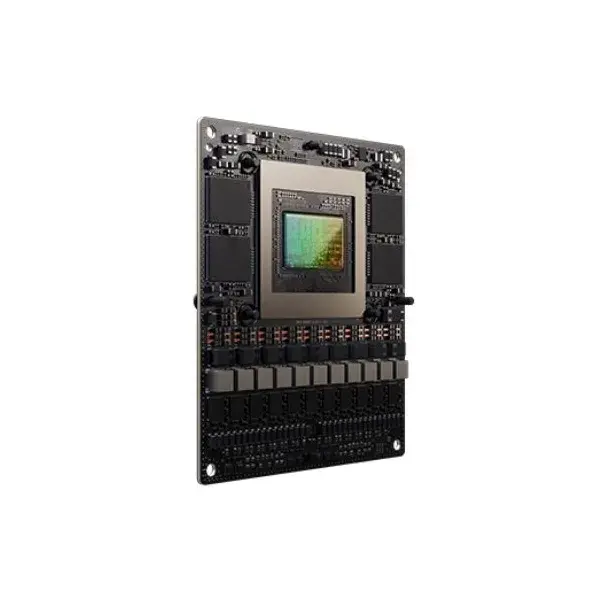
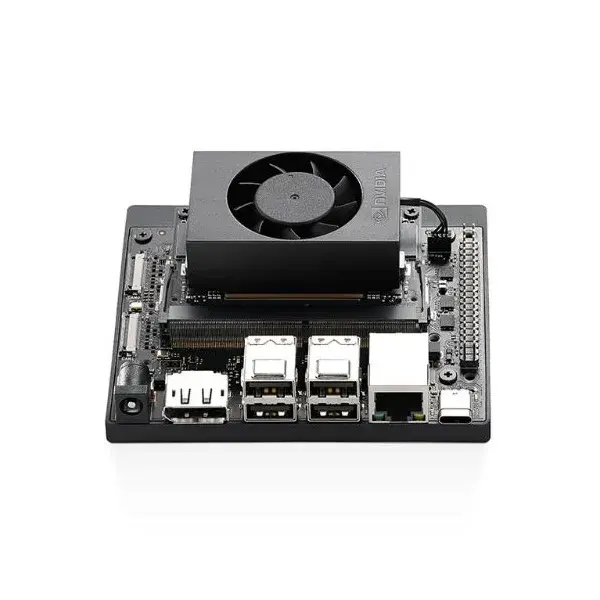
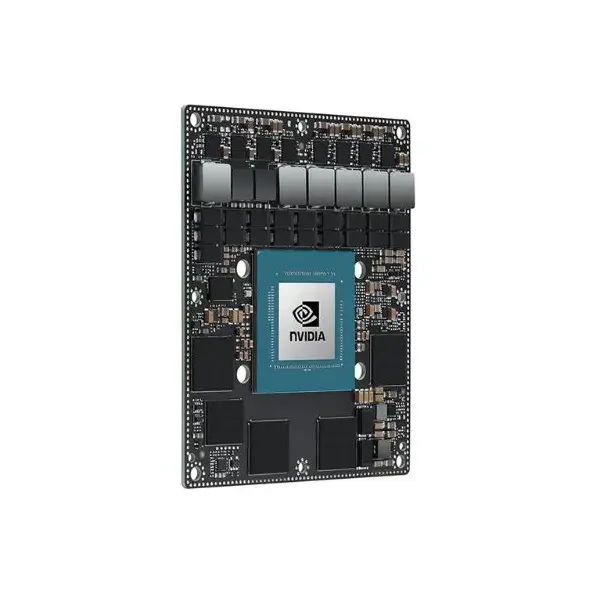
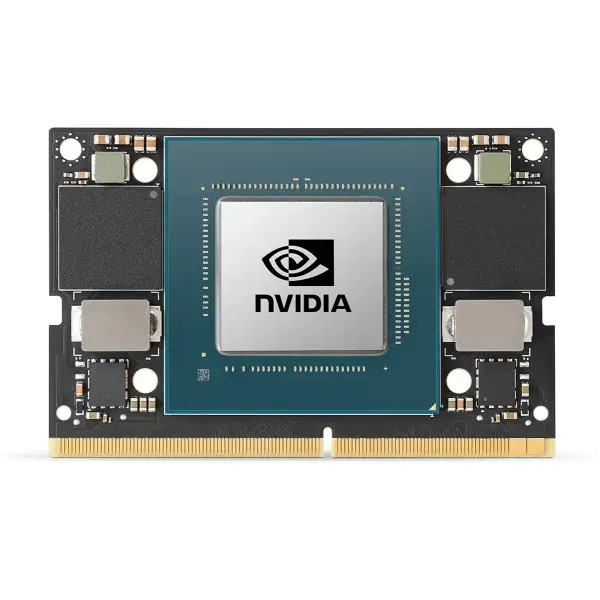
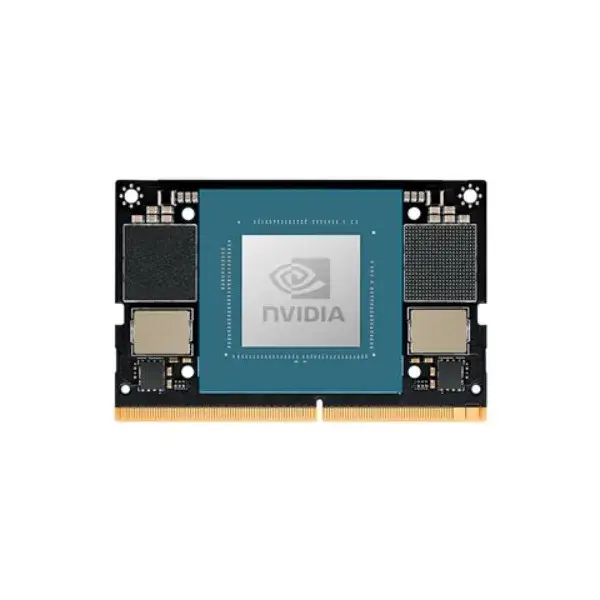
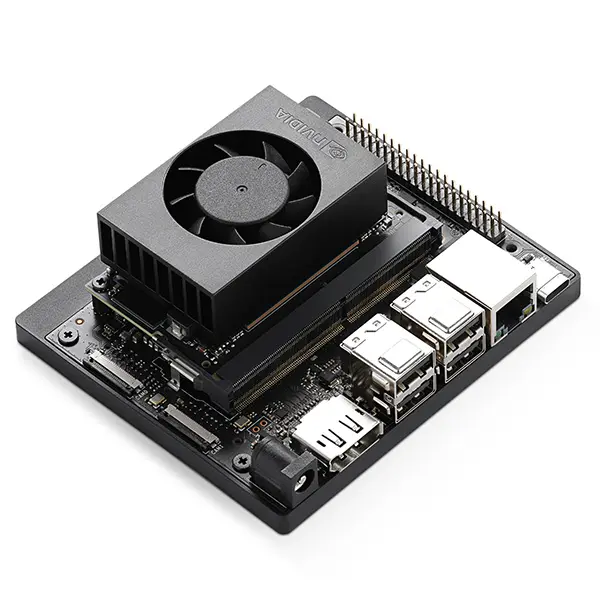
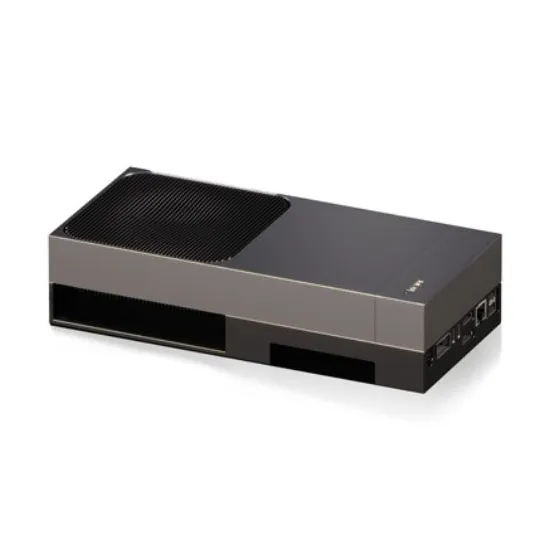
The NVIDIA Jetson AGX Thor Developer Kit is a development platform for embedded AI and robotics, based on the NVIDIA Jetson T5000 module (with heatsink) and a reference carrier board.

Quantity
Delivery within 1 to 2 weeks

Create a cart and turn it into a quote instantly!
Payment methods (see T&C)
Debit card
PayPal
Payment by invoice
Wire transfer

An embedded computing platform for real-time AI and sensor fusion

Key points

  • NVIDIA Jetson T5000 module with heatsink and reference carrier board
  • 140 W DC power supply
  • 802.11ax wireless network interface controller
  • 1 TB NVMe SSD preinstalled in the M.2 Key-M slot
  • Quick Start Guide

Overview

The kit is built around an NVIDIA Blackwell GPU paired with 128 GB of memory and up to 2070 TFLOPS in FP4 (sparse) for running AI models, including generative models. Compute is complemented by a 14-core Arm Neoverse-V3AE CPU (64-bit) and a set of accelerators dedicated to perception workloads: PVA v3, an optical flow accelerator, and hardware video encoders/decoders.

For integration, the kit targets sensor fusion and high-throughput acquisition: multi-camera support, industrial I/O (buses and serial links), and network connectivity including a 4×25 GbE link via QSFP, a RJ45 Multi-GbE connector, and a Wi-Fi 802.11ax controller. Storage is provided by a preinstalled 1 TB NVMe SSD (M.2 Key-M), with NVMe support via PCIe and SSD support via USB 3.2.

The kit includes: Jetson T5000 module with heatsink and reference carrier board, 140 W DC power supply, 802.11ax controller, 1 TB NVMe (M.2 Key-M), and a Quick Start Guide.

Lab applications and robotics projects

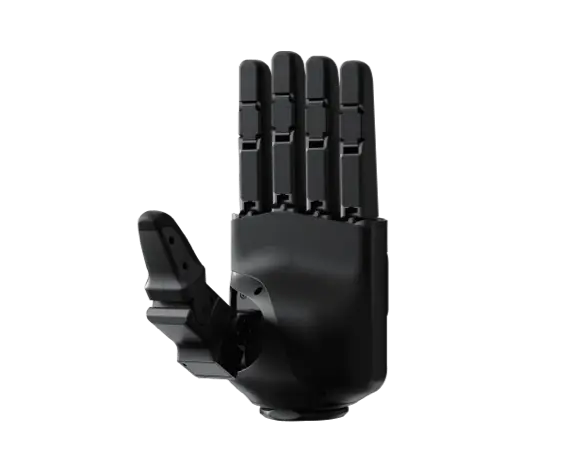
  • Humanoid robotics: prototyping perception → decision → action pipelines, local execution of VLA (Vision-Language-Action) models such as NVIDIA Isaac GR00T N.
  • Multi-camera vision: acquisition of multiple streams, synchronization, and real-time inference with hardware encode/decode (H.264/H.265) for experimental recording or streaming.
  • High-throughput sensor fusion: aggregating sensor data over 25 GbE networking and system interfaces to test fusion architectures (perception, motion estimation, tracking).
  • Sensor processing and real-time pipelines: building processing chains with NVIDIA Holoscan (sensor processing), especially when stable latency is required.
  • Embedded video analytics: developing visual agentic AI workloads with NVIDIA Metropolis and experimenting with agent workflows, including Video Search and Summarization (VSS).
  • Robot integration and field interfaces: control and instrumentation via CAN, UART, SPI, I2C, PWM signal generation, and audio (I2S/AHUB) for test benches.

Technical specifications of the NVIDIA Jetson AGX Thor Developer Kit

  • AI performance: up to 2070 TFLOPS (FP4 — sparse)
  • GPU: 2560-core NVIDIA Blackwell, 96 Tensor Cores (5th gen), MIG (Multi-Instance GPU) with 10 TPCs, max frequency 1.57 GHz
  • CPU: 14-core Arm Neoverse-V3AE 64-bit, 64 KB I + 64 KB D caches, 1 MB L2 per core, 16 MB shared L3, max frequency 2.6 GHz
  • Vision accelerator: 1× PVA v3
  • Memory: 128 GB LPDDR5X (256-bit), 273 GB/s
  • Storage: 1 TB NVMe preinstalled (M.2 Key-M); NVMe support via PCIe; SSD support via USB 3.2
  • Video encode:
    • H.265: 6× 4Kp60; 12× 4Kp30; 24× 1080p60; 50× 1080p30
    • H.264: 48× 1080p30; 6× 4Kp60
  • Video decode:
    • H.265: 4× 8Kp30; 10× 4Kp60; 22× 4Kp30; 46× 1080p60; 92× 1080p30
    • H.264: 82× 1080p30; 4× 4Kp60
  • Cameras: up to 20 via HSB; up to 6 via 16 lanes MIPI CSI-2; up to 32 using virtual channels; C-PHY 2.1 (10.25 Gbps); D-PHY 2.1 (40 Gbps)
  • PCIe: up to 8 lanes Gen5; Root port only C1 (x1), C3 (x2); Root Point/Endpoint C2 (x1), C4 (x8), C5 (x4)
  • USB: xHCI host controller with integrated PHY; 3× USB 3.2; 4× USB 2.0
  • Networking: 4× 25 GbE; RJ45 Multi-GbE; Wi-Fi 802.11ax controller
  • Display: 4× shared HDMI 2.1; VESA DisplayPort 1.4a (HBR2, MST)
  • Other I/O: 5× I2S / 2× Audio Hub (AHUB), 2× DMIS, 4× UART, 4× CAN, 3× SPI, 13× I2C, 6× PWM
  • Power: 40 W–130 W; 140 W DC power supply
  • Mechanical: 100 mm × 87 mm; 699-pin B2B connector; Integrated Thermal Transfer Plate (TTP) with heatpipe

Historique des prix

Historique des prix moyens

Un point de données par jour, calculé selon la date d’observation.

Prix moyen quotidien

Montants en USD

$8 792,54
Graphique de l’historique des prix moyens en USDGraphique linéaire de 61 observations du 2 oct. 2026 au 22 nov. 2026.$8 792,57$8 792,56$8 792,55$8 792,54$8 792,532 oct.14 oct.27 oct.9 nov.22 nov.2 oct. 2026 : moyenne de $8 792,543 oct. 2026 : moyenne de $8 792,544 oct. 2026 : moyenne de $8 792,545 oct. 2026 : moyenne de $8 792,546 oct. 2026 : moyenne de $8 792,547 oct. 2026 : moyenne de $8 792,548 oct. 2026 : moyenne de $8 792,549 oct. 2026 : moyenne de $8 792,5410 oct. 2026 : moyenne de $8 792,5411 oct. 2026 : moyenne de $8 792,5412 oct. 2026 : moyenne de $8 792,5413 oct. 2026 : moyenne de $8 792,5414 oct. 2026 : moyenne de $8 792,5415 oct. 2026 : moyenne de $8 792,5416 oct. 2026 : moyenne de $8 792,5417 oct. 2026 : moyenne de $8 792,5418 oct. 2026 : moyenne de $8 792,5419 oct. 2026 : moyenne de $8 792,5420 oct. 2026 : moyenne de $8 792,5421 oct. 2026 : moyenne de $8 792,5422 oct. 2026 : moyenne de $8 792,5423 oct. 2026 : moyenne de $8 792,5424 oct. 2026 : moyenne de $8 792,5425 oct. 2026 : moyenne de $8 792,5426 oct. 2026 : moyenne de $8 792,5427 oct. 2026 : moyenne de $8 792,5428 oct. 2026 : moyenne de $8 792,5429 oct. 2026 : moyenne de $8 792,5430 oct. 2026 : moyenne de $8 792,5431 oct. 2026 : moyenne de $8 792,541 nov. 2026 : moyenne de $8 792,542 nov. 2026 : moyenne de $8 792,543 nov. 2026 : moyenne de $8 792,544 nov. 2026 : moyenne de $8 792,545 nov. 2026 : moyenne de $8 792,546 nov. 2026 : moyenne de $8 792,547 nov. 2026 : moyenne de $8 792,548 nov. 2026 : moyenne de $8 792,549 nov. 2026 : moyenne de $8 792,5410 nov. 2026 : moyenne de $8 792,5411 nov. 2026 : moyenne de $8 792,5412 nov. 2026 : moyenne de $8 792,5413 nov. 2026 : moyenne de $8 792,5414 nov. 2026 : moyenne de $8 792,5415 nov. 2026 : moyenne de $8 792,5416 nov. 2026 : moyenne de $8 792,5417 nov. 2026 : moyenne de $8 792,5418 nov. 2026 : moyenne de $8 792,5419 nov. 2026 : moyenne de $8 792,5420 nov. 2026 : moyenne de $8 792,5421 nov. 2026 : moyenne de $8 792,5422 nov. 2026 : moyenne de $8 792,54

Les moyennes sont calculées par jour UTC à partir de tous les prix d’offre enregistrés.