
ZED X Nano Depth Stereo Camera

ZED X Nano Depth Stereo Camera

ZED X Nano Depth Stereo Camera
Stereolabs | A-000000-08189
€590.40 VAT incl. €492.00 VAT excl.

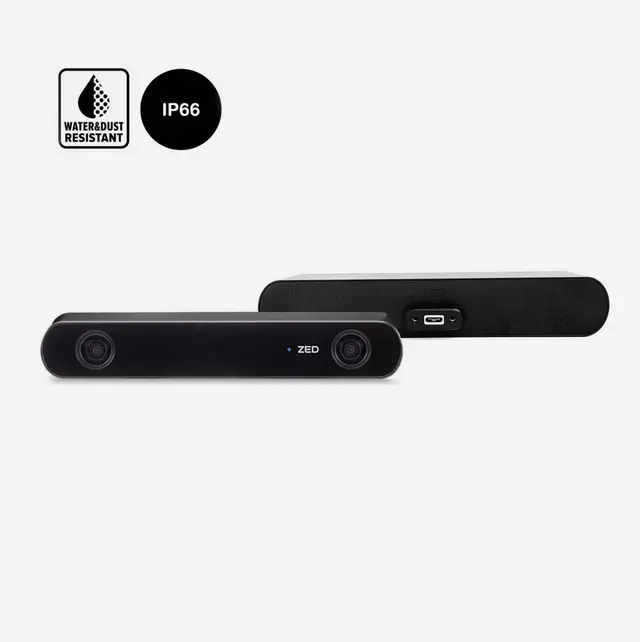
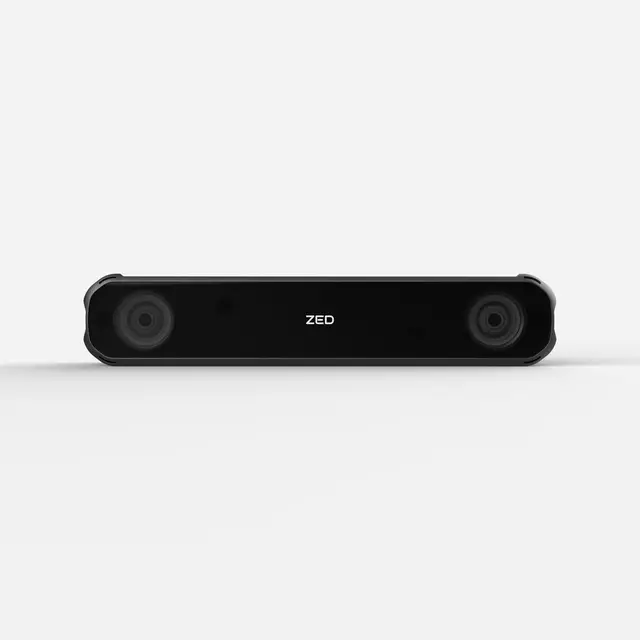
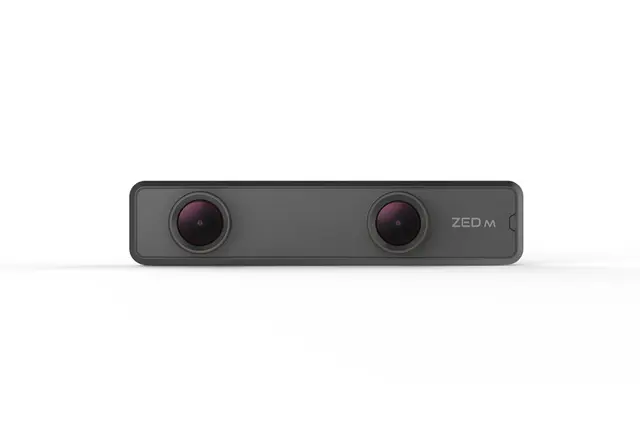
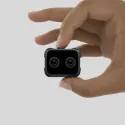
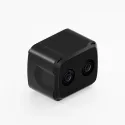
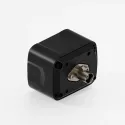
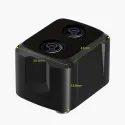
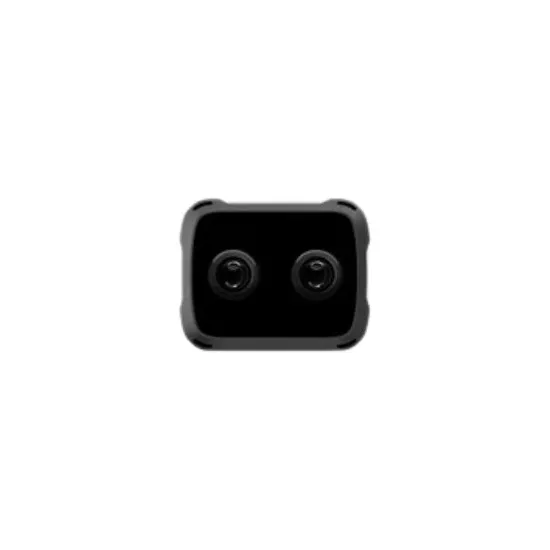
The ZED X Nano Stereo Camera by Stereolabs is a short-range depth stereo camera designed for robotic manipulation, humanoids and Physical AI projects.

Quantity
In backorder
This product is on backorder. You can place an order on our website or send us a purchase order in PDF format
to know the delivery times

Create a cart and turn it into a quote instantly!
Payment methods (see T&C)
Debit card
PayPal
Payment by invoice
Wire transfer

A compact stereo camera for short-range 3D perception and robotic manipulation

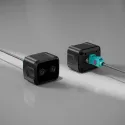
  • GMSL2 stereo camera: architecture designed for robotic environments and embedded integrations.
  • Dual 2.3 MP global shutter sensor: 1920 × 1200 resolution.
  • Up to 120 fps in 600p: low-latency capture for dynamic scenes.
  • Neural Depth Engine: AI-powered depth measurement with sub-millimeter accuracy on the Z axis.
  • Short-range perception: ideal range of 5 to 150 cm, maximum range of 3 to 200 cm.
  • Field of view: 92° (H) × 65° (V) × 102° (D).
  • Integrated 6-axis IMU: hardened against vibrations for industrial environments.
  • Zero-copy capture: direct transfer from the sensor to the GPU.
  • Multi-camera synchronization and external triggering via GMSL2.
  • Compact industrial form factor: designed for 24/7 operation.

The ZED X Nano stands out for wrist vision, pick-and-place and close-range 3D perception applications. Its compact format is designed for areas where space is limited, especially at the robot wrist, end-effector or in close mounting positions on a manipulation system. It is 40% more compact than comparable close-range depth cameras and features a GMSL2 connection better suited to the mechanical and cabling constraints found on robotic arms.

Robotic manipulation, wrist vision and data collection: relevant use cases for the ZED X Nano

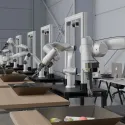
The ZED X Nano Stereo Camera is particularly well suited to projects where short-range depth, spatial accuracy and low latency are important. It can be used on a robotic arm, a humanoid or a robotic cell requiring onboard 3D perception as close as possible to the action.

  • Robotic manipulation: 3D perception for pick-and-place, part detection and grasp positioning.
  • Wrist vision: integration on an arm or end-effector to guide movements close to the work area.
  • Close-range inspection: scene reading at short distance for verification, inspection or object tracking tasks.
  • Humanoids: a sensor suited to onboard vision projects for hands, wrists or manipulation tasks.
  • Data collection for Physical AI: RGB and depth image acquisition for imitation learning and onboard data workflows.
  • Robotic software development: integration with ZED SDK, ROS 2, Isaac ROS and Isaac Sim.

In an R&D context, the ZED X Nano can serve as a basis for work on onboard perception, vision-assisted grasping, learning from demonstration or low-latency robotic vision. Its zero-copy pipeline and compatibility with the NVIDIA / ROS ecosystem make it a relevant camera for teams developing manipulation, segmentation, 3D perception or robot policy learning applications.

Technical specifications of the ZED X Nano Stereo Camera

Sensor resolution Dual 2.3 MP global shutter sensor (1920 × 1200)
Frame rate Up to 120 fps in 600p
Video pipeline Zero-copy from sensor to GPU
Depth engine Neural Depth Engine
Field of view 92° (H) × 65° (V) × 102° (D)
IMU Integrated 6-axis IMU
Ideal depth range 5 to 150 cm
Maximum depth range 3 to 200 cm
Synchronization Multi-camera hardware synchronization and external triggering via GMSL2
Design Compact industrial design, 24/7 operation
Software compatibility ZED SDK, ROS 2, Isaac ROS, Isaac Sim
Hardware compatibility ZED Box and GMSL2 capture cards
Highlighted applications Robotic manipulation, pick-and-place, depalletizing, close-range 3D perception, wrist vision, data collection for Physical AI

Resources for the ZED X Nano depth stereo camera

Prishistorik

Genomsnittligt pris över tid

En datapunkt per dag, beräknad utifrån observationsdatumet.

Dagligt genomsnittspris

Belopp i USD

$648,08
Diagram över genomsnittligt pris över tid i USDLinjediagram med 61 observationer från 2 okt. 2026 till 22 nov. 2026.$648,11$648,10$648,09$648,08$648,072 okt.14 okt.27 okt.9 nov.22 nov.2 okt. 2026: genomsnitt $648,083 okt. 2026: genomsnitt $648,084 okt. 2026: genomsnitt $648,085 okt. 2026: genomsnitt $648,086 okt. 2026: genomsnitt $648,087 okt. 2026: genomsnitt $648,088 okt. 2026: genomsnitt $648,089 okt. 2026: genomsnitt $648,0810 okt. 2026: genomsnitt $648,0811 okt. 2026: genomsnitt $648,0812 okt. 2026: genomsnitt $648,0813 okt. 2026: genomsnitt $648,0814 okt. 2026: genomsnitt $648,0815 okt. 2026: genomsnitt $648,0816 okt. 2026: genomsnitt $648,0817 okt. 2026: genomsnitt $648,0818 okt. 2026: genomsnitt $648,0819 okt. 2026: genomsnitt $648,0820 okt. 2026: genomsnitt $648,0821 okt. 2026: genomsnitt $648,0822 okt. 2026: genomsnitt $648,0823 okt. 2026: genomsnitt $648,0824 okt. 2026: genomsnitt $648,0825 okt. 2026: genomsnitt $648,0826 okt. 2026: genomsnitt $648,0827 okt. 2026: genomsnitt $648,0828 okt. 2026: genomsnitt $648,0829 okt. 2026: genomsnitt $648,0830 okt. 2026: genomsnitt $648,0831 okt. 2026: genomsnitt $648,081 nov. 2026: genomsnitt $648,082 nov. 2026: genomsnitt $648,083 nov. 2026: genomsnitt $648,084 nov. 2026: genomsnitt $648,085 nov. 2026: genomsnitt $648,086 nov. 2026: genomsnitt $648,087 nov. 2026: genomsnitt $648,088 nov. 2026: genomsnitt $648,089 nov. 2026: genomsnitt $648,0810 nov. 2026: genomsnitt $648,0811 nov. 2026: genomsnitt $648,0812 nov. 2026: genomsnitt $648,0813 nov. 2026: genomsnitt $648,0814 nov. 2026: genomsnitt $648,0815 nov. 2026: genomsnitt $648,0816 nov. 2026: genomsnitt $648,0817 nov. 2026: genomsnitt $648,0818 nov. 2026: genomsnitt $648,0819 nov. 2026: genomsnitt $648,0820 nov. 2026: genomsnitt $648,0821 nov. 2026: genomsnitt $648,0822 nov. 2026: genomsnitt $648,08

Genomsnittet beräknas per UTC-dygn utifrån alla registrerade erbjudandepriser.