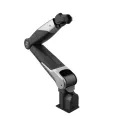
Nero 7-Axis Robotic Arm

Nero 7-Axis Robotic Arm

Nero 7-Axis Robotic Arm
AgileX | A-000000-07951
€2,400.00 VAT incl. €2,000.00 VAT excl.

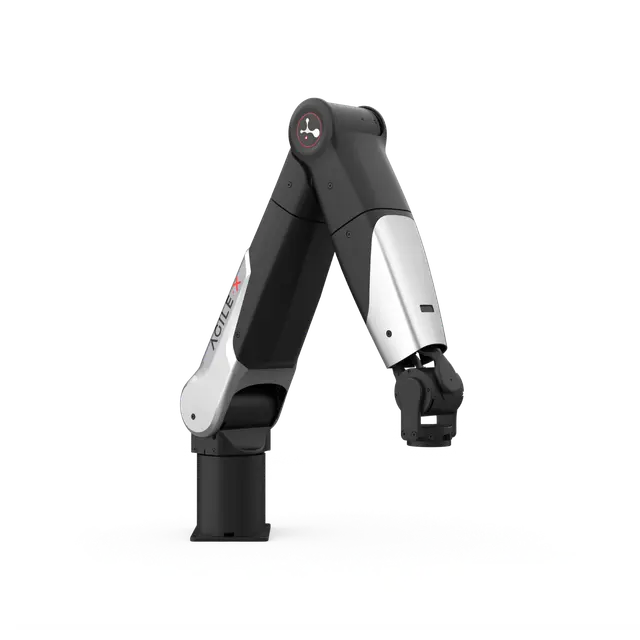
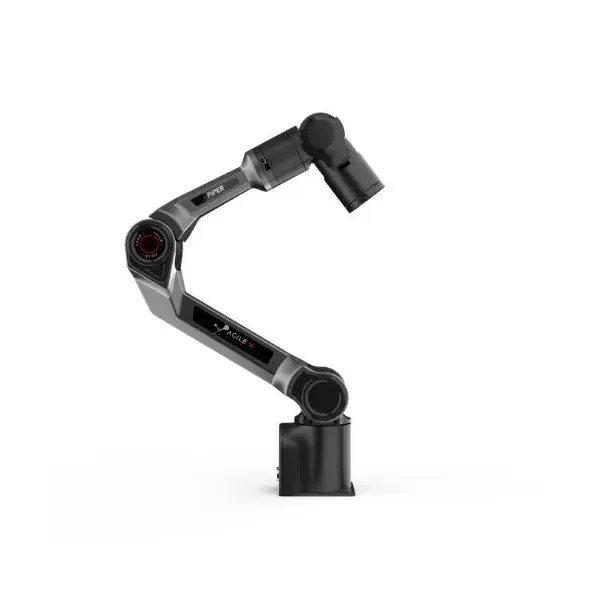
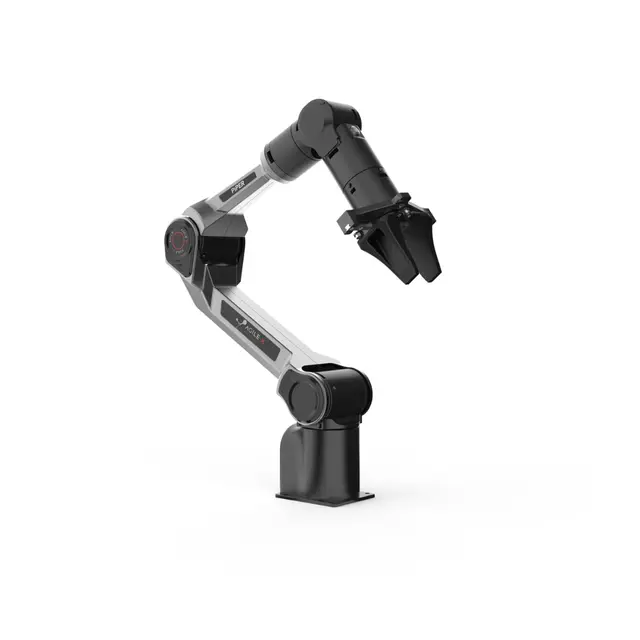
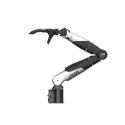
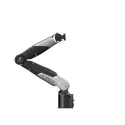
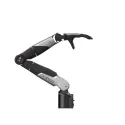
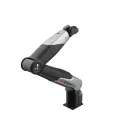
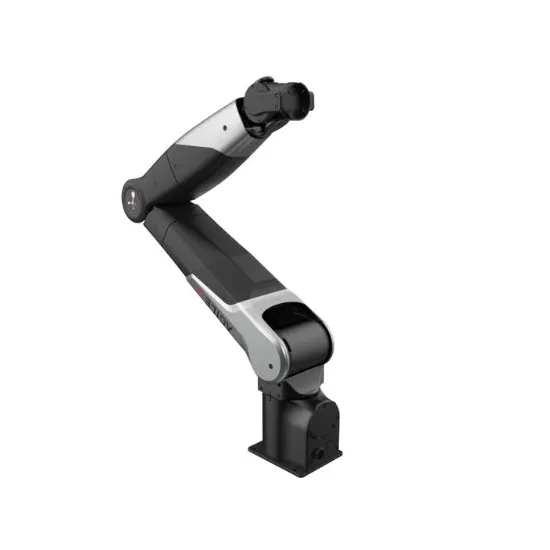
The Nero is a 7-axis (7-DoF) robotic arm designed for research work in humanoid robotics and Embodied AI. Its lightweight design and open architecture make laboratory integration, experimentation, and deployment across different setups (tabletop, side mounting, inverted) easier.

Quantity
Delivery within 6 to 8 weeks

Create a cart and turn it into a quote instantly!
Payment methods (see T&C)
Debit card
PayPal
Payment by invoice
Wire transfer

A 7-axis arm built for dexterity, precision, and software integration

7-DoF dexterity, payload and repeatability

With its 7-DoF structure, the Nero aims to provide a wide spatial workspace and wrist-like dexterity close to human motion. It relies on in-house developed motors and a body weighing around 4.8 kg, capable of handling a 3 kg payload. The ±0.1 mm repeatability supports tasks requiring reproducible execution, notably within test protocols and data collection workflows.

R&D control and software integration (CAN/HTTP/TCP, Python, ROS)

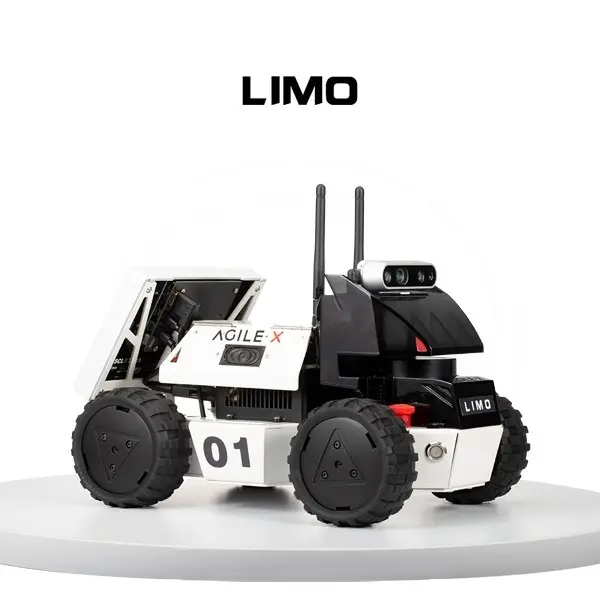
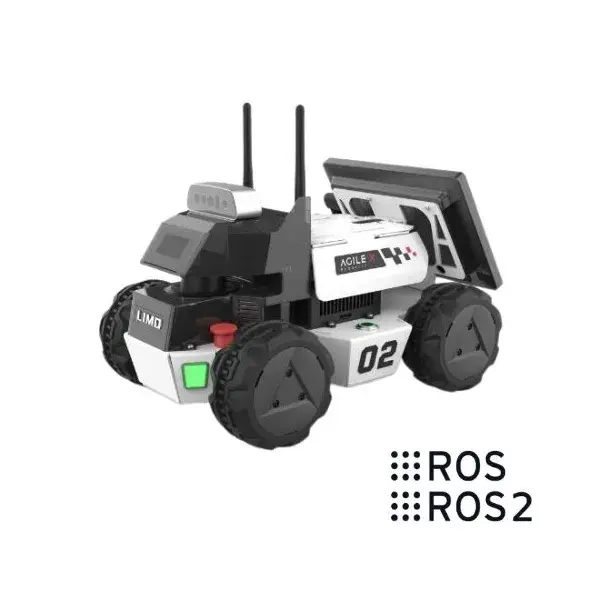
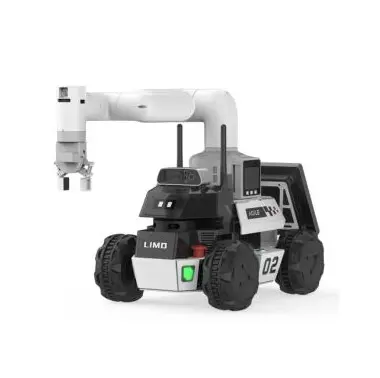
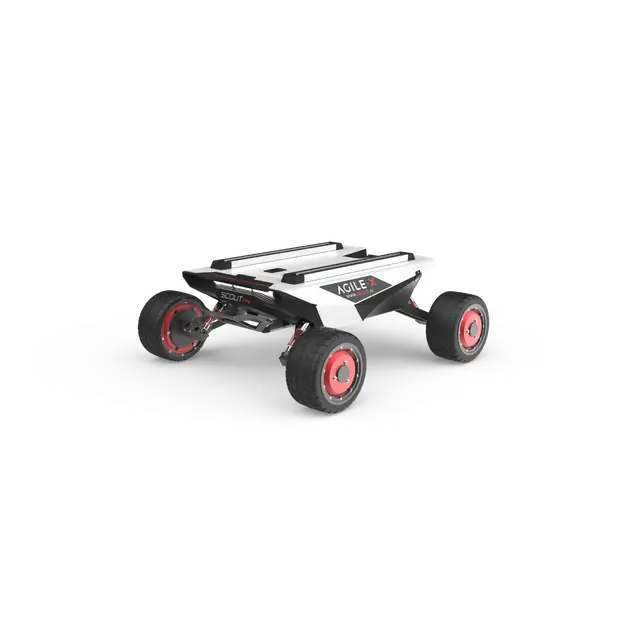
Control is designed for R&D use: CAN, HTTP and TCP interfaces, as well as multiple operation modes (for example drag teaching, offline trajectories, API, PC control). Integration with common robotics environments is streamlined via a Python SDK and ROS 1 / ROS 2 compatibility. The arm can also be combined with an AgileX mobile base to build a complete experimentation platform oriented toward an Embodied Platform.

Modular mechanical interfaces for grippers, dexterous hands and tools

On the mechanical side, the modular approach targets compatibility with various end-effectors: grippers, dexterous hands and other tools, so the system can be adapted to experimental protocol needs (physical interaction, manipulation, imitation learning, etc.).

Research use cases: humanoid robotics, learning, and capability validation

  • Embodied AI: end-to-end validation of perception → decision → action pipelines (control, execution, and evaluation).
  • Humanoid robotics: experiments on dexterity, 7-axis kinematics, and “human-like” manipulation.
  • Imitation learning: demonstrations via drag teaching, dataset creation, and policy comparison.
  • Reinforcement learning: repeatable trajectory execution, robustness testing, and interaction scenarios.
  • Physical interaction data collection: dataset generation for analysis and training (interaction quality and reproducibility).
  • ROS integration: application prototyping (ROS 1 / ROS 2) and development of experimental pipelines.
  • Mobile platform: integration with an AgileX mobile base to test mobile manipulation scenarios.

Technical specifications of the AgileX Nero arm

  • Degrees of freedom: 7
  • Reach: 580 mm
  • Weight: 4.8 kg
  • Payload: 3 kg
  • Repeatability: ±0.1 mm
  • Input voltage: DC 24 V
  • Noise: < 60 dB
  • Communication: CAN, HTTP, TCP
  • Control methods: drag teaching, offline trajectory, API, PC
  • Software compatibility: Python SDK, ROS 1, ROS 2
  • External interfaces: Power ×1, CAN ×1, Network ×1
  • Power consumption: max power < 120 W; average power < 40 W
  • Operating environment: 0–50°C; 25–85% RH, non-condensing
  • Mounting: table / side / inverted (upside down)
  • Base installation dimensions: 70 mm × 70 mm; M5 × 4
  • Max joint speed: J1 180°/s, J2 180°/s, J3 180°/s, J4 225°/s, J5 225°/s, J6 225°/s, J7 225°/s
  • Joint range of motion: J1 -157° to 157°, J2 -15° to 190°, J3 -160° to 160°, J4 -60° to 125°, J5 -160° to 160°, J6 -43° to 58°, J7 -90° to 90°

Nero robotic arm resources

Prishistorik

Genomsnittligt pris över tid

En datapunkt per dag, beräknad utifrån observationsdatumet.

Dagligt genomsnittspris

Belopp i USD

$2 634,47
Diagram över genomsnittligt pris över tid i USDLinjediagram med 61 observationer från 2 okt. 2026 till 22 nov. 2026.$2 634,50$2 634,49$2 634,48$2 634,47$2 634,462 okt.14 okt.27 okt.9 nov.22 nov.2 okt. 2026: genomsnitt $2 634,473 okt. 2026: genomsnitt $2 634,474 okt. 2026: genomsnitt $2 634,475 okt. 2026: genomsnitt $2 634,476 okt. 2026: genomsnitt $2 634,477 okt. 2026: genomsnitt $2 634,478 okt. 2026: genomsnitt $2 634,479 okt. 2026: genomsnitt $2 634,4710 okt. 2026: genomsnitt $2 634,4711 okt. 2026: genomsnitt $2 634,4712 okt. 2026: genomsnitt $2 634,4713 okt. 2026: genomsnitt $2 634,4714 okt. 2026: genomsnitt $2 634,4715 okt. 2026: genomsnitt $2 634,4716 okt. 2026: genomsnitt $2 634,4717 okt. 2026: genomsnitt $2 634,4718 okt. 2026: genomsnitt $2 634,4719 okt. 2026: genomsnitt $2 634,4720 okt. 2026: genomsnitt $2 634,4721 okt. 2026: genomsnitt $2 634,4722 okt. 2026: genomsnitt $2 634,4723 okt. 2026: genomsnitt $2 634,4724 okt. 2026: genomsnitt $2 634,4725 okt. 2026: genomsnitt $2 634,4726 okt. 2026: genomsnitt $2 634,4727 okt. 2026: genomsnitt $2 634,4728 okt. 2026: genomsnitt $2 634,4729 okt. 2026: genomsnitt $2 634,4730 okt. 2026: genomsnitt $2 634,4731 okt. 2026: genomsnitt $2 634,471 nov. 2026: genomsnitt $2 634,472 nov. 2026: genomsnitt $2 634,473 nov. 2026: genomsnitt $2 634,474 nov. 2026: genomsnitt $2 634,475 nov. 2026: genomsnitt $2 634,476 nov. 2026: genomsnitt $2 634,477 nov. 2026: genomsnitt $2 634,478 nov. 2026: genomsnitt $2 634,479 nov. 2026: genomsnitt $2 634,4710 nov. 2026: genomsnitt $2 634,4711 nov. 2026: genomsnitt $2 634,4712 nov. 2026: genomsnitt $2 634,4713 nov. 2026: genomsnitt $2 634,4714 nov. 2026: genomsnitt $2 634,4715 nov. 2026: genomsnitt $2 634,4716 nov. 2026: genomsnitt $2 634,4717 nov. 2026: genomsnitt $2 634,4718 nov. 2026: genomsnitt $2 634,4719 nov. 2026: genomsnitt $2 634,4720 nov. 2026: genomsnitt $2 634,4721 nov. 2026: genomsnitt $2 634,4722 nov. 2026: genomsnitt $2 634,47

Genomsnittet beräknas per UTC-dygn utifrån alla registrerade erbjudandepriser.