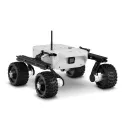
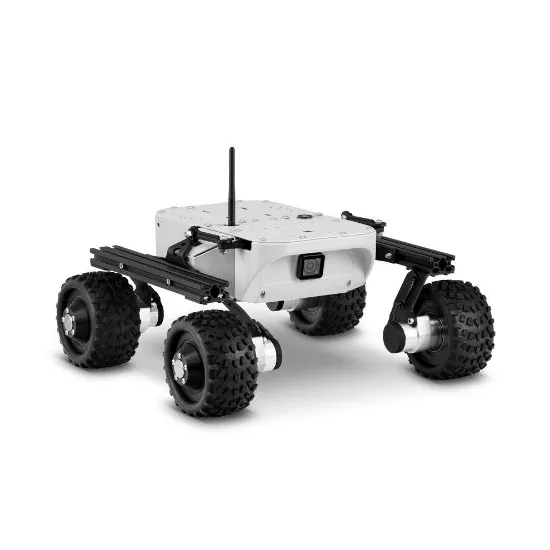
Leo Rover Mobile Robot (without arm) - assembled

Leo Rover 1.9 mobile robot – assembled

Leo Rover Mobile Robot (without arm) - assembled
Fictionlab | A-000000-04011
€6,598.80 VAT incl. €5,499.00 VAT excl.

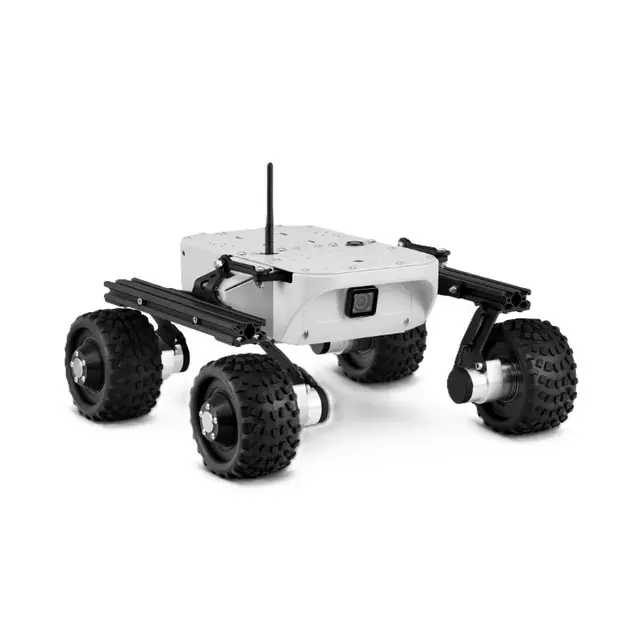
The assembled Leo Rover 1.9 by Fictionlab is an open-source 4x4 mobile robot designed for research, education, and robotics prototyping. Delivered fully assembled and tested, it provides a modular ROS 2 platform ready for developing and testing robotic applications both indoors and outdoors.

Certification CE
Quantity
1 Available

Get it in 24/48h! (see T&C)

Create a cart and turn it into a quote instantly!
Payment methods (see T&C)
Debit card
PayPal
Payment by invoice
Wire transfer

Assembled Leo Rover: an open platform for robotics R&D

  • Fully assembled 4x4 mobile robot: the platform is delivered assembled, tested, and ready for development.
  • ROS 2 Jazzy: standard environment based on Ubuntu 24.04 and ROS 2.
  • Onboard Raspberry Pi 5: quad-core Arm Cortex-A76 processor at 2.4 GHz and 4 GB of RAM.
  • Open-source platform: software and firmware released under the MIT license.
  • 12.3 MP front camera: for teleoperation, image acquisition, and computer vision applications.
  • Payload of approximately 5 kg with standard tires.
  • Maximum speed of approximately 0.4 m/s.
  • Runtime of up to 4 hours with the standard battery.
  • IP55 protection against dust and water jets.
  • Rocker suspension and 4-wheel drive for operation on different types of terrain.
  • Modular design for adding sensors, onboard computers, and custom equipment.

The assembled Leo Rover is particularly suited to laboratories, universities, engineering schools, and R&D teams looking for a functional mobile base that can be deployed quickly without spending time on the platform's initial assembly.

A mobile robot ready to use

Unlike the Leo Rover Developer Kit, the assembled Leo Rover is delivered with all its mechanical and electronic components already integrated and tested by Fictionlab.

This configuration lets users move directly to robot operation, ROS 2 development, and the integration of specific sensors or applications. It is particularly suitable for teams that want to use Leo Rover as a development platform rather than as an assembly project.

The robot retains the same open architecture and modification capabilities as the Developer Kit.

ROS 2, Raspberry Pi 5, and open-source architecture

The Leo Rover 1.9 runs on Ubuntu 24.04 with ROS 2 Jazzy. Its onboard Raspberry Pi 5 communicates with the LeoCore controller to manage the motors, odometry, IMU, and platform power supply.

The ROS 2 environment provides access to:

  • Robot motion commands
  • Wheel encoders and odometry
  • IMU data
  • Camera video stream
  • Battery information
  • Wheel and motor states

A web interface is also available to control the rover from a browser using a keyboard, gamepad, or virtual joystick, while viewing the camera stream and battery status.

A modular platform for integrating your own sensors

Leo Rover is designed to serve as a base for custom robotics projects. Its top plate and chassis profiles make it easy to add different types of equipment.

  • 2D or 3D LiDAR for SLAM, localization, and autonomous navigation
  • RGB-D or stereo cameras for 3D perception
  • GNSS for outdoor navigation projects
  • Environmental sensors for field data collection
  • Additional onboard computers for vision or artificial intelligence
  • Custom-developed actuators and equipment

The standard payload is approximately 5 kg. Fictionlab also provides CAD files and technical resources that make it possible to adapt the robot's mechanical design to the needs of each project.

A mobile base designed for real-world experiments

The Leo Rover 1.9 combines a metal structure, four-wheel drive, and a differential suspension system designed to keep the wheels in contact with the ground on uneven surfaces.

It can be used both indoors and on grass, gravel, or rough terrain. Its IP55 protection also allows it to operate in environments exposed to dust and water jets.

With a ground clearance of 108 mm and the ability to overcome obstacles of approximately 70 mm, Leo Rover is particularly well suited to projects requiring algorithms to be tested in conditions closer to the field than a perfectly flat laboratory environment.

Technical specifications of the assembled Leo Rover 1.9

ConfigurationFully assembled and tested robot
Dimensions424 × 445 × 303 mm
WeightApproximately 7 kg
PayloadApproximately 5 kg with standard tires
Maximum linear speedApproximately 0.4 m/s
Maximum angular speedApproximately 1 rad/s
Estimated obstacle clearanceApproximately 70 mm
Ground clearance108 mm
Drive system4-wheel drive
SuspensionDifferential / rocker system
Protection ratingIP55
Operating temperature-10 °C to +40 °C
RuntimeUp to 4 hours with the standard battery
Communication rangeUp to 100 m
Onboard computerRaspberry Pi 5
ProcessorBroadcom BCM2712, 64-bit quad-core Arm Cortex-A76 at 2.4 GHz
Memory4 GB LPDDR4X
Camera12.3 MP Arducam with wide-angle lens
Integrated sensorsFront camera, IMU, and wheel encoders
ConnectivityDual-band Wi-Fi, Bluetooth 5.0, Gigabit Ethernet
USB2 × USB 3.0 + 2 × USB 2.0
Operating systemUbuntu 24.04
Robotics frameworkROS 2 Jazzy
Software licenseMIT
BatteryLi-Ion 3S2P, 10.8 V, 6.8 Ah, approximately 73.2 Wh
Charging timeApproximately 4 hours

Leo Rover resources

Historia cen

Historia średnich cen

Jeden punkt danych na dzień, uśredniony według daty pomiaru.

Średnia cena dzienna

Kwoty w USD

$7243,47
Wykres historii średnich cen w USDWykres liniowy przedstawiający 61 pomiarów od 2 paź 2026 do 22 lis 2026.$7243,50$7243,49$7243,48$7243,47$7243,462 paź14 paź27 paź9 lis22 lis2 paź 2026: średnio $7243,473 paź 2026: średnio $7243,474 paź 2026: średnio $7243,475 paź 2026: średnio $7243,476 paź 2026: średnio $7243,477 paź 2026: średnio $7243,478 paź 2026: średnio $7243,479 paź 2026: średnio $7243,4710 paź 2026: średnio $7243,4711 paź 2026: średnio $7243,4712 paź 2026: średnio $7243,4713 paź 2026: średnio $7243,4714 paź 2026: średnio $7243,4715 paź 2026: średnio $7243,4716 paź 2026: średnio $7243,4717 paź 2026: średnio $7243,4718 paź 2026: średnio $7243,4719 paź 2026: średnio $7243,4720 paź 2026: średnio $7243,4721 paź 2026: średnio $7243,4722 paź 2026: średnio $7243,4723 paź 2026: średnio $7243,4724 paź 2026: średnio $7243,4725 paź 2026: średnio $7243,4726 paź 2026: średnio $7243,4727 paź 2026: średnio $7243,4728 paź 2026: średnio $7243,4729 paź 2026: średnio $7243,4730 paź 2026: średnio $7243,4731 paź 2026: średnio $7243,471 lis 2026: średnio $7243,472 lis 2026: średnio $7243,473 lis 2026: średnio $7243,474 lis 2026: średnio $7243,475 lis 2026: średnio $7243,476 lis 2026: średnio $7243,477 lis 2026: średnio $7243,478 lis 2026: średnio $7243,479 lis 2026: średnio $7243,4710 lis 2026: średnio $7243,4711 lis 2026: średnio $7243,4712 lis 2026: średnio $7243,4713 lis 2026: średnio $7243,4714 lis 2026: średnio $7243,4715 lis 2026: średnio $7243,4716 lis 2026: średnio $7243,4717 lis 2026: średnio $7243,4718 lis 2026: średnio $7243,4719 lis 2026: średnio $7243,4720 lis 2026: średnio $7243,4721 lis 2026: średnio $7243,4722 lis 2026: średnio $7243,47

Średnie obliczane są dla każdej doby UTC na podstawie wszystkich zarejestrowanych cen ofert.