хуманоиден

Unitree H1 — Спецификации, цена и къде да купите (2026)

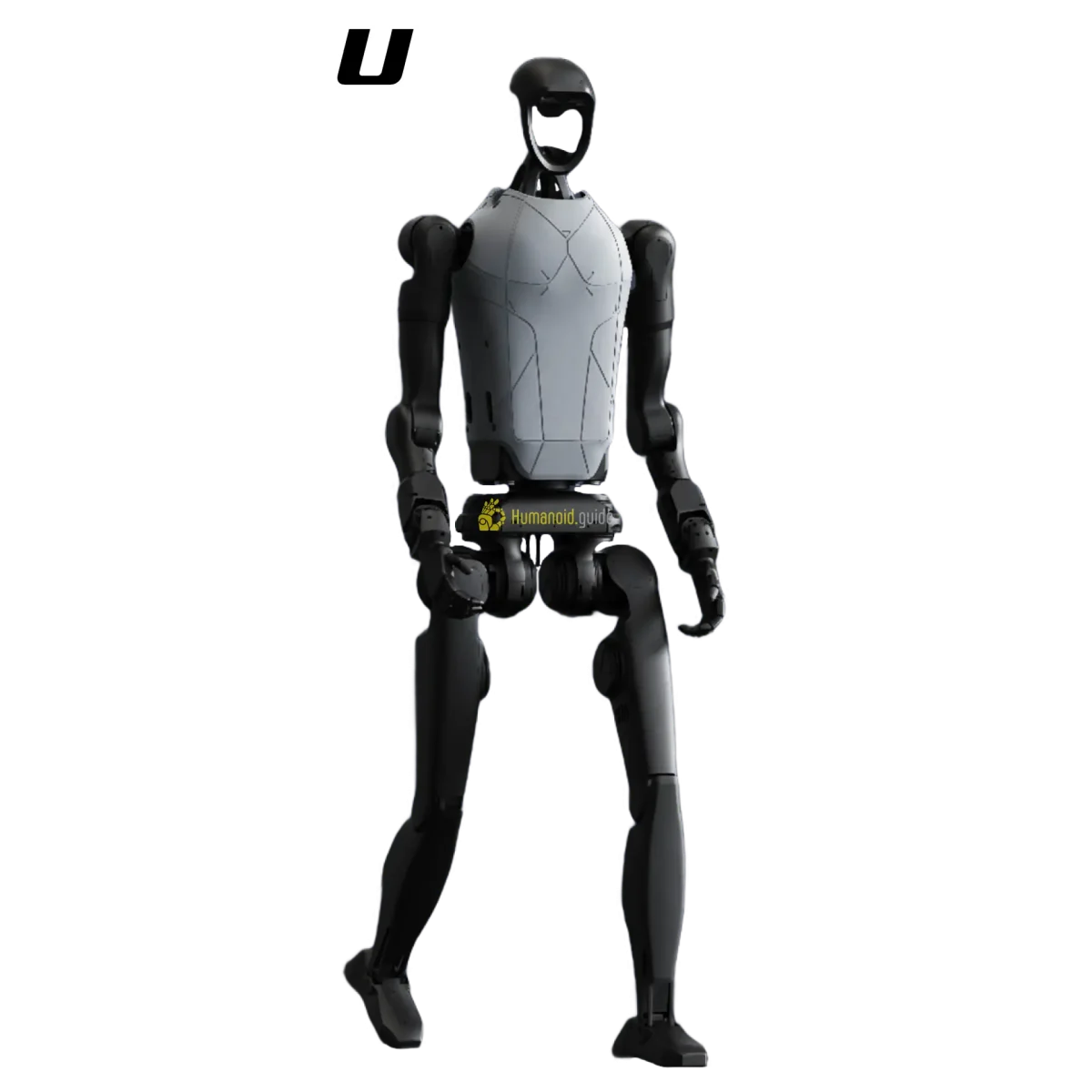
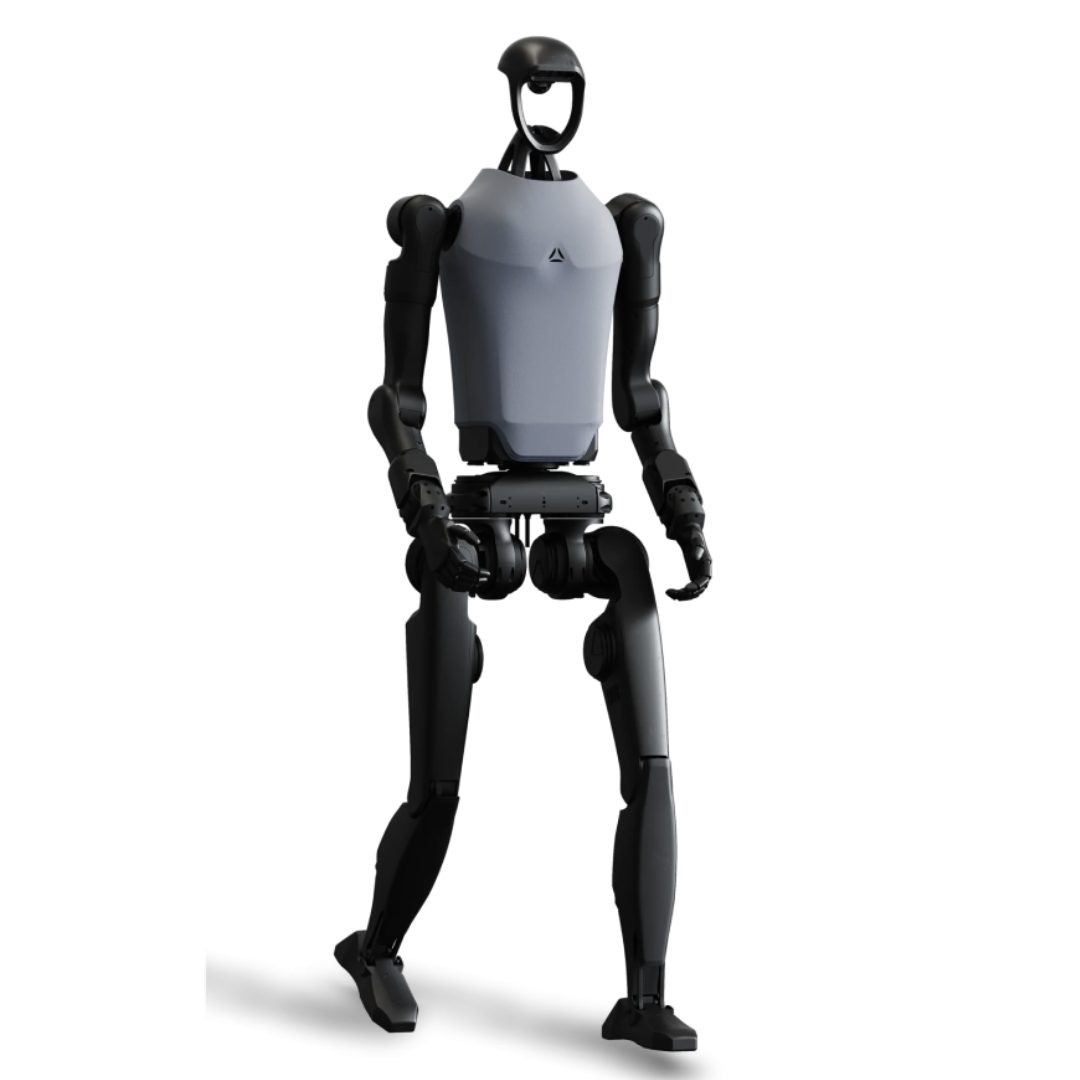
Unitree H1 is a full-size humanoid robot made by Unitree Robotics in Hangzhou, China. Price: $90,000–$150,000. Key specs: 19 DOF (27 on H1-2), 180 cm height, 47 kg weight, world-record 3.3 m/s running, backflip capability, hot‑swappable 864 Wh battery, and 2‑hour battery life. The H1 is in production and available for purchase from Unitree and select robotics resellers; used units occasionally appear on secondary markets including Robot Overflow.

💰Цена
$90 000 – $150 000
📅Първо производство
2023
🌍Произход
CN
📏Височина
180 cm
⚖️Тегло
47 kg
🦾Степени на свобода
19
🏃Макс. скорост
11.9 km/h
📦Полезен товар
7 kg
🔋Батерия
2 hours
🛒Наличност
Наличен

What is the Unitree H1?

The Unitree H1 is a full-size bipedal humanoid robot developed by Unitree Robotics (Hangzhou, China). Standing 180 cm tall and weighing 47 kg (base configuration), it is the fastest commercially available full-size humanoid, achieving 3.3 m/s walking speed and capable of running, backflips, and push recovery. Powered by a hot‑swappable 864 Wh lithium battery, it runs 1.5–2 hours depending on load. The base model has 19 degrees of freedom, while the H1‑2 variant adds 7‑DOF arms for a total of 27 DOF and a 7 kg nominal arm payload. Built for research and embodied AI, it includes a Livox MID‑360 3D LiDAR, Intel RealSense D435i depth camera, and options for Intel Core i7 or NVIDIA Jetson Orin NX compute upgrades.

Specifications

Here are the full technical specifications.

SpecValue
Height180 cm
Weight47 kg
Degrees of freedom19
Battery life2 hours
Max speed11.9 km/h
Payload7 kg (H1‑2 variant)
Price (new)$90,000 – $150,000
Price (used range)$64,000 – $120,000 (est.)

Price & Value

New MSRP: $90,000 – $150,000

Used range: $64,000 – $120,000 (est.)

At a starting price of $90,000, the Unitree H1 base model is the most affordable full‑size humanoid capable of dynamic running and backflips. The H1‑2 variant, at $128,900, introduces 7‑DOF arms and higher‑torque joints, bringing its manipulation capability in line with entry‑level service robots. Optional compute packages—an Intel Core i7 upgrade or a NVIDIA Jetson Orin NX with 100 TOPS—can push the total past $150,000, but these are essential for onboard AI workloads. Compared to the Fourier GR‑1 ($150,000) and Agility Digit ($250,000), the H1 undercuts them on price while offering superior gait speed and agility. On the secondary market, early H1 units have traded at approximately 70–80% of retail, translating to an expected used range of $64,000–$120,000. Depreciation is tempered by Unitree’s growing aftermarket for parts and software updates. Total cost of ownership over three years, factoring in battery replacements and occasional joint service, remains modest for an R&D‑class humanoid. Buyers should budget an additional 15–20% for shipping, import duties, and optional training, which Unitree provides on‑site.

Who Is It For?

Best for: - University locomotion and reinforcement learning research labs that need a fast, agile bipedal platform (3.3 m/s running, backflips, push recovery) for dynamic motion studies and sim‑to‑real transfer. - Embodied AI developers requiring a full‑size humanoid with ROS 2, Python/C++ SDK, and optional NVIDIA Jetson Orin NX (100 TOPS) to run on‑board machine learning models for navigation and interaction. - Industrial R&D teams evaluating bipedal mobility and sensor integration (360° depth perception via LiDAR and depth camera) for security patrols, outdoor logistics, or warehouse proof‑of‑concepts.

Not for: - Manipulation‑intensive tasks — the base H1 has no dexterous hands, and even the H1‑2’s 7 kg arm payload may be insufficient for heavy tool use or high‑precision assembly. - 24/7 production environments — battery life of 1.5–2 hours and lack of IP rating limit continuous, unattended operation in dusty or wet conditions. - Budget‑constrained education programs — starting price of $90,000 puts it far above typical teaching lab budgets, and full utilization requires robotics engineering expertise.

Alternatives & Comparison

The Unitree H1 competes in the sub‑$200,000 full‑size humanoid segment alongside other locomotion‑focused platforms from Fourier and Agility Robotics.

ModelPriceAvailableKey Difference
Fourier GR‑1$150,000preorder40 DOF and higher arm payload (8 kg per arm), but lower top speed (~1.5 m/s).
Agility Digit~$250,000yesBack‑facing knees optimized for logistics; higher payload (16 kg), but slower walking (1.5 m/s) and non‑humanoid proportions.

Verdict: For pure locomotion research that demands record‑breaking speed and dynamic acrobatics, the H1 is unmatched. The H1‑2 variant adds moderate manipulation capability, making it a compelling middle ground between budget research platforms and high‑payload logistics robots like Digit. Choose the H1 if gait speed and agility are the priority; opt for the Fourier GR‑1 if dexterous manipulation is the primary research focus, though at the cost of walking speed.

Use Cases & Capabilities

Reinforcement Learning & Locomotion Research

The H1 is purpose‑built for gait research, offering true bipedal running at 3.3 m/s and dynamic maneuvers like backflips. Its 19‑DOF lower body (27 with H1‑2 arms) provides ample kinematic complexity for sim‑to‑real transfer. Researchers can tap into ROS 2, Python, and C++ APIs to implement proprioceptive controllers and legged locomotion policies. The onboard Intel i7 and optional Jetson Orin NX allow real‑time on‑board policy inference. Benchmarks include push recovery and rough‑terrain traversal, making it a favorite for DRL labs comparing performance to quadruped platforms. Ongoing firmware updates ensure compatibility with the latest RL frameworks.

Embodied AI & Sensor Fusion Development

Equipped with a Livox MID‑360 3D LiDAR and Intel RealSense D435i depth camera, the H1 offers 360° depth perception suitable for SLAM and navigation research. Developers can mount additional sensors via the robot’s modular payload mounts. The H1‑2’s 7‑DOF arms enable whole‑body motion planning and AI‑driven object interaction experiments. Optional NVIDIA Jetson Orin NX (100 TOPS) accelerates on‑edge vision and transformer models. Universities have used the H1 to prototype home‑service robots, testing vision‑language models for fetch‑and‑carry tasks, though payload limits constrain the size of grasped objects.

Industrial R&D and Proof‑of‑Concept Pilots

Companies evaluating bipedal robots for warehouse or security patrols can leverage the H1’s robust outdoor mobility and long‑range perception. The hot‑swappable battery supports multi‑shift testing with minimal downtime. While the base H1 lacks arms, the H1‑2 version can demonstrate light conveyor‑to‑cart transfer tasks. The platform’s torque‑dense motors and crossed‑roller joints promise durability for thousands of cycles. However, the lack of IP rating means dusty or wet environments require protective shrouds. Early adopters report that integration with existing fleet management software is straightforward thanks to ROS 2 compatibility.

STEM Outreach and Public Showcase

With its ability to run and flip, the H1 is a crowd‑puller at tech expos and university open days. Its 180‑cm humanoid stature creates an imposing presence that sparks conversation about robotics. The SDK allows non‑experts to script simple walking patterns and gestures, though deployment requires robotics engineering oversight. Used units are occasionally repurposed for promotional campaigns, where the robot’s reliability and hot‑swap battery ensure all‑day appearance. For permanent installations, custom behavior packs can be developed by Unitree’s partner network.

Multi‑Robot Coordination & Cloud Integration

Research groups exploring heterogeneous multi‑robot systems can integrate multiple H1 units via Wi‑Fi/Ethernet and ROS 2 middleware. The onboard compute options support cloud‑offloaded processing for collaborative mapping and task allocation. Combined with Unitree’s SDK, labs can simulate warehouse replenishment scenarios where several H1‑2 robots coordinate object handovers. This use case is still emerging, with publications focusing on decentralized gait synchronization, but the platform’s open architecture makes it a promising testbed for future studies.

History & Background

Unitree Robotics was founded in 2016 in Hangzhou, China, originally gaining fame with its quadruped robots (Laikago, A1, B1, Go1, B2). The company announced the H1 humanoid in August 2023 as its first full‑size biped. The public debut video showed the H1 walking outdoors, running at a world‑record 3.3 m/s, and performing a backflip — all unprecedented for a commercially available humanoid. In early 2024, Unitree revealed the H1‑2 variant with fully articulated 7‑DOF arms, higher joint torques, and a 7 kg nominal arm payload, extending utility to light manipulation tasks. By 2025, the H1 had been shipped to research labs worldwide, and in 2026 it remains the fastest full‑size humanoid available for purchase, with continued firmware and SDK updates from Unitree. The company also offers a dexterous hand accessory and fast charger, further expanding the platform’s ecosystem.

Buying Used — What to Check

Verify battery health The 864 Wh lithium pack degrades over cycles; a heavily used unit may need immediate replacement, adding $2,000–$3,000 to the cost.

Check compute configuration Base models ship with an Intel Core i5; confirm whether the seller upgraded to i7 or Jetson Orin NX, as these compute options significantly affect performance.

Inspect arm joints (H1‑2) On H1‑2 variants, a history of high‑dynamic manipulation can wear crossed‑roller bearings or M107 actuators; request usage logs if possible.
Често задавани въпроси

The base H1 starts at $90,000. The upgraded H1‑2 with 7‑DOF arms costs $128,900. Optional compute upgrades (Intel i7 or NVIDIA Jetson Orin NX) can raise the total to around $150,000. Contact Unitree or authorized distributors for exact quotes.
The H1 can walk at up to 3.3 m/s (11.9 km/h) — a world record for commercial humanoids — run, perform backflips, traverse complex terrain, and recover from pushes. The H1‑2 variant adds light manipulation with a 7 kg arm payload, enabling simple pick‑and‑place tasks.
Yes, the H1 and H1‑2 are in production and sold directly by Unitree Robotics through their website and select robotics resellers. Contact for pricing and lead times; used units occasionally appear on Robot Overflow.
The H1 is faster (3.3 m/s vs ~1.5 m/s) and more agile (capable of backflips), while the Fourier GR-1 has 40 DOF and higher arm payload (8 kg per arm). The GR-1 is better for dexterous manipulation; the H1 excels in dynamic locomotion.
Height: 180 cm, weight: 47 kg, 19 DOF (base), 27 DOF (H1‑2), max speed 3.3 m/s, battery life up to 2 hours, 864 Wh hot‑swappable battery, 3D LiDAR + depth camera, optional Intel i7 or Jetson Orin NX compute.
Unitree Robotics, founded in 2016 and headquartered in Hangzhou, China, also known for its quadruped robots (Go1, B2). The H1 was their first full‑size humanoid, unveiled in 2023.
The H1 runs for 1.5–2 hours depending on activity level. The 864 Wh battery is hot‑swappable, allowing rapid changes in the field. A dedicated fast charger is available as an accessory.
Primarily university research labs, R&D institutions, and companies exploring embodied AI and reinforcement learning. Some are deployed for promotional events and technology demonstrations due to their dynamic physical abilities.
Yes, the H1 has full ROS 2 support, an official SDK with Python and C++ APIs, and is typically shipped with Ubuntu 20.04. Documentation is available from Unitree.
The base H1 has no rated arm payload; it is a locomotion‑first platform. The H1‑2 variant features 7‑DOF arms with a nominal payload of 7 kg per arm, suitable for light object handling in research settings.

Unitree H1 in 3D

Loading the 3D model…
Drag to rotate · click the model, then scroll or pinch to zoom · click a part to inspectSwipe sideways to turn · pinch to zoom · tap a part to inspect3D model credit and licence

Unitree H1 supply chain

Point at or select a step to light up its chain: bright lines are its direct links, softer lines the rest of the path from raw material to robot.

Swipe sideways to follow the whole chain.

ExtractionRefiningMaterialsComponentsModulesRobotsCompaniesUnitree designs its joint modules and assembles them itself from custom-made parts.Unitree designs its reducers and assembles them itself from custom-made parts it buys.Unitree designs its joint motors and gearboxes and assembles them itself from custom-made parts; it says it buys no finished motors.Unitree designs its battery packs and their BMS, buys the housings and cells, and assembles the packs itself (said for its robots in general).Lithium compounds (carbonate, chloride, hydroxide) are produced from mined lithium.Lithium is produced from brine and mineral operations.Mined copper is smelted and refined.Primary aluminium from smelters.Bauxite is refined to alumina for aluminium.6061 aluminium contains 0.8–1.2% magnesium.6061 aluminium contains 0.40–0.8% silicon.A lithium-ion cell has a cathode (positive electrode), typically a metal oxide or phosphate. IEA tracks the 2025 mix of LFP and nickel-based cathodes in electric-car batteries.Silicon metal is made from silica in natural forms such as quartzite (USGS).Silicon metal can be refined further into ultra-high-purity semiconductor-grade silicon, called polysilicon (USGS). Chips are made on wafers: thin slices of crystalline silicon (Wikipedia).Magnesium is recovered from dolomite, serpentine, magnesium-bearing evaporite minerals and brines (USGS).In wire-bond packaging, fine gold or copper wire connects each die to its leadframe or substrate. ASE is gradually replacing gold wire with copper to cut material cost, though gold wire is still one of its main materials.Steel is made from iron ore: US mines shipped 98% of their usable iron ore to the steel industry (USGS).Precision bearing rings are made of through-hardened chromium bearing steel 100Cr6 (SAE 52100) (GMN).Sony makes its CMOS image sensors in its own production facilities in Japan (Nagasaki, Kumamoto). SIA/BCG count optoelectronics and sensors in one fab group with discrete and analog chips (DAO), apart from logic.Bosch makes its MEMS sensors in its own fabs in Reutlingen and Dresden; a MEMS sensor is a MEMS element plus an evaluation chip (ASIC).A MEMS sensor is packed in a semiconductor housing, such as an LGA package (Bosch).Mined cobalt is refined further into chemicals or metal (Cobalt Institute). In 2025 DR Congo's export restrictions left refiners short of cobalt hydroxide feed and forced some to limit production, though world refined output still rose 5% to 240 kt (Cobalt Institute).Cobalt sulphate, the largest refined cobalt product, is typically used in NCM (NMC) batteries, and cobalt tetroxide often in LCO batteries (Cobalt Institute). Cobalt-free substitutes that use iron and phosphorus (LFP) held a significant market share in China (USGS).Mined nickel ore and concentrate go to smelters and refineries. In Indonesia, laterite ore is processed into nickel pig iron and ferronickel for stainless steel, or into battery intermediates such as mixed hydroxide precipitate (IEA); the US Eagle Mine's concentrate is exported to smelters (USGS).Battery cathodes need nickel sulphate, made from Class I nickel metal or from intermediates such as mixed hydroxide precipitate and nickel matte (IEA). LFP (lithium iron phosphate) cathodes contain no nickel.Stainless steel is the biggest use of nickel, 66% of demand in 2025 (Cobalt Institute). In the US, stainless and alloy steels and nickel alloys take more than 85% of nickel use (USGS). The world made 64.2 Mt of stainless steel in 2025 (worldstainless), against about 1,900 Mt of raw steel (USGS).Lithium-ion cathodes are lithium compounds, generally a layered oxide (such as lithium cobalt oxide), a phosphate (lithium iron phosphate) or a spinel (lithium manganese oxide). Batteries took an estimated 88% of world lithium in 2025 (USGS).Natural graphite flakes must be made into spherical particles, purified to over 99.95% carbon and coated before they can be used in lithium-ion battery anodes (IEA). Natural graphite is now a small part of anode supply: under 8% of China's 2025 anode shipments (GGII), and about 14% worldwide in 2022 (Rystad).Synthetic graphite is made by calcining and graphitising petroleum coke or needle coke at nearly 3,000 °C (IEA). It was 92.7% of China's 2025 anode shipments (GGII).The negative electrode (anode) of a conventional lithium-ion cell is typically graphite. IEA's 2025 data on electric-car battery anodes show only graphite and silicon-doped graphite.89.8% of the world's plastics in 2024 were made from fossil feedstock (Plastics Europe).Solder is the largest use of tin, 51% of world tin use in 2023 (International Tin Association; in the US solder took 11%, USGS). The common lead-free alloy SAC305 is 96.5% tin (AIM).Tin-lead solder is nearly half lead (PubChem), but the electronics industry has moved toward lead-free solders (USGS): 92% of solder for electronics was lead-free in 2023 (ITA).The lead-free alloy SAC305 contains 3% silver (AIM). In the US, brazing and solder took 3% of silver (USGS).The lead-free alloy SAC305 contains 0.5% copper (AIM).FR-4 laminate is woven fibreglass cloth with an epoxy binder (Wikipedia), and fibreglass is made from silica sand (Covia).A thin layer of copper foil is laminated to one or both sides of an FR-4 panel; these are called copper-clad laminates (Wikipedia; ChinaBaogao).FR-4 epoxy resin systems typically use bromine to resist fire (Wikipedia); a grade of the brominated flame retardant TBBPA is used to make epoxy resins for circuit boards (Wikipedia). Brominated flame retardants are one of bromine's two leading uses (USGS).Barite is used to make barium carbonate, which goes into dielectrics (Wikipedia). Barium titanate, the dielectric ceramic used in capacitors, can be made by heating barium carbonate with titanium dioxide (Wikipedia).Barium titanate, the ceramic in high-capacitance MLCCs, can be made by heating barium carbonate with titanium dioxide (Wikipedia); titanium dioxide comes from ilmenite and rutile (USGS).99% of MLCCs made worldwide use base-metal electrodes of nickel or copper; the industry moved from palladium and silver to cut cost (NASA, 2015). TDK replaced palladium electrodes with nickel in 1993 (Wikipedia).Platinum-group metals are used in multilayer ceramic capacitors (USGS). High-reliability MLCCs use palladium-silver electrodes (NASA, 2015).High-reliability MLCCs use precious-metal electrodes of palladium and silver (NASA, 2015).Connector contacts are copper alloys: beryllium copper is called the best copper alloy for contacts, connectors and cables (Wikipedia), and phosphor bronze (copper-tin-phosphorus) can replace it (USGS).Copper-clad laminate is the core material of circuit boards (ChinaBaogao); FR-4 is a common material for printed circuit boards (Wikipedia).Parts are soldered onto bare boards: Adafruit's BNO055 board is a "breakout PCB", and the Raspberry Pi Zero 2 W brief warns against damage to the printed circuit board.SAC305 lead-free solder is made for soldering printed circuits, by wave, hand and SMT reflow soldering (Conro; AIM).MLCCs store and release charge and absorb noise in phones, home appliances and IoT devices (Murata). The Raspberry Pi's RP3A0 package includes the decoupling capacitors that smooth its supply voltage (Raspberry Pi).Boards carry connectors: the Raspberry Pi Zero 2 W brief speaks of the board and its connectors, and Waveshare's servo adapter has a USB-C connector and a power connector.Built-in IMU, model ICM40609 (Livox).Two OmniVision OV9282 image sensors in the D430 depth module and an OmniVision OV2740 colour sensor (datasheet).Built-in IMU: a BMI055 or, in a later version, a BMI085 (datasheet).Brass is copper and zinc: CW614N free-cutting brass is about 39% zinc. In the US, brass and bronze are the second use of zinc after galvanized steel.Brass is mostly copper: 57–59% in CW614N free-cutting brass.Free-cutting brass such as CW614N holds 2.5–3.5% lead so it machines cleanly; lead-free brasses exist.XT30 battery plugs (G1 harness, Open Duck Mini) have gold-plated brass contacts.Antimony is used in circuit boards to cut flammability further. A review lists two studies of scrap PC boards, parts and solder still on, with 0.45% and 1.97% antimony, so the share in the laminate alone is not known.One planetary gear stage: Simplexity counted a 9-tooth sun and three 19-tooth planets.Hardened steel gears (Simplexity).The rotor carries precision-balanced permanent magnets (Simplexity); Unitree buys its magnets as a raw material. The magnet type is not stated.36 wound stator coils (Simplexity); Unitree's co-founder says the joint motors' only outside suppliers sell raw materials such as copper wire and magnets.Motor and gearbox sit in a custom-machined aluminium housing (Simplexity).Dual ball bearings carry the output (Simplexity).Each joint has its own driver board with a microcontroller, six MOSFETs and an encoder chip (Simplexity). Unitree designs its driver boards, buys the parts and has them assembled by others.A US reseller lists the H1's materials as 'Aluminum alloy and high-strength engineering plastic'.A US reseller lists 'high-strength engineering plastic' among the H1's materials.The H1 wears a black knitted fabric suit over its torso, arms and legs in Unitree's photos.Unitree: 'Industrial grade crossed roller bearings (high precision, high load capacity)' at the joint outputs.Permanent-magnet synchronous motor (Unitree); the magnet type is not stated. Unitree buys its magnets as a raw material.Motor windings; Unitree's co-founder says the joint motors' only outside suppliers sell raw materials such as copper wire and magnets.Unitree designs its joint drivers, buys the parts and has the boards assembled by outside firms (IPO filing).Lithium-ion cells; Unitree buys its cells and builds the packs. The H1's cell maker is not stated.Each pack has Unitree's own battery management board (BMS) (US reseller).Intel Core i5 and Intel Core i7 processors (Unitree).Unitree buys the core boards of its computers and adds its own system (IPO filing).Magnet wire is drawn from rod of pure electrolytic copper: Elektrisola starts from 8 mm rod with at least 99.90% copper, and most magnet wire is fully annealed, electrolytically refined copper (Elektrisola; Wikipedia).ASML's DUV machines, 'the workhorses of the industry', print the majority of layers in chips, older-generation chips included (ASML annual report 2025).The frame, shells, covers and suit that make up the Unitree H1's body.Nine M107 joint motors: all six hip joints, both knees and the waist (Unitree's code).Unitree's code names the motor groups of ten H1 joints (both ankles, shoulders and elbows) 'GO2HV-1' and 'GO2HV-2', after the Go2's joint motor. Whether they are the same module as the Go2's or a geared-up version is not published.Two quick-release battery packs, 0.864 kWh in all (Unitree; a US reseller).Two computers: Intel Core i5 and Intel Core i7 (Unitree).3D LiDAR in the head: a Livox MID-360. Unitree's labelled photo names it, and Unitree's 3D model has a 'mid360_link' there.Depth camera in the head: an Intel RealSense D435i. Unitree's labelled photo names it, and Unitree's 3D model has 'd435_*' frames there.Unitree's 3D model has an IMU frame ('imu_link') in the torso. The chip is not named.Unitree Robotics makes the H1.Quartz and silica sandQuartz and silica sandMagnesium ores and brinesMagnesium ores and brinesOil, gas and coal(plastics feedstock)Oil, gas and coal (plastics feedstock)Steel (gear, bearing andstainless grades)Steel (gear, bearing and stainless grades)Lithography machines (chipprinting)Lithography machines (chip printing)Mature-node chipfabrication (28 nm and…Mature-node chip fabrication (28 nm and older; analog and sensor chips)Aluminium alloysAluminium alloysBattery-grade lithiumcompoundsBattery-grade lithium compoundsPermanent magnets (typeundisclosed)Permanent magnets (type undisclosed)Lithium chemicalconversionLithium chemical conversionCopper smelting andrefiningCopper smelting and refiningAlumina refining andaluminium smeltingAlumina refining and aluminium smeltingLithium miningLithium miningCopper miningCopper miningBauxite miningBauxite miningIron ore miningIron ore miningMagnesium smeltingMagnesium smeltingSilicon metal smeltingSilicon metal smeltingChip packaging and test(OSAT)Chip packaging and test (OSAT)Precision bearingsPrecision bearingsProcessors (CPUs and SoCs)Processors (CPUs and SoCs)Image sensorsImage sensorsIMUs (motion sensors)IMUs (motion sensors)Lithium-ion cellsLithium-ion cellsUnitree Go2 joint motor(GO-M8010-6 class)Unitree Go2 joint motor (GO-M8010-6 class)One-stage planetarygearboxes (Go2 joints)One-stage planetary gearboxes (Go2 joints)UnitreeUnitreeCobalt miningCobalt miningCobalt refining (chemicalsand metal)Cobalt refining (chemicals and metal)Nickel miningNickel miningNickel smelting andrefiningNickel smelting and refiningNatural graphite miningNatural graphite miningBattery anode graphite(spherical natural and…Battery anode graphite (spherical natural and synthetic)Cathode active material(NMC, NCA, LCO, LFP)Cathode active material (NMC, NCA, LCO, LFP)Titanium minerals(ilmenite and rutile)Titanium minerals (ilmenite and rutile)Engineering plastics (ABS,PC, nylon, PEEK)Engineering plastics (ABS, PC, nylon, PEEK)Soft covers (textiles,foams, soft polymer skins)Soft covers (textiles, foams, soft polymer skins)Tin miningTin miningLead miningLead miningSilver miningSilver miningPalladium mining(platinum-group metals)Palladium mining (platinum-group metals)Antimony miningAntimony miningBromine (from brines)Bromine (from brines)Barite mining (barium)Barite mining (barium)Solder (tin alloys:lead-free SAC and…Solder (tin alloys: lead-free SAC and tin-lead)Copper-clad laminate (FR-4glass-fibre epoxy board…Copper-clad laminate (FR-4 glass-fibre epoxy board material)Printed circuit boards(bare boards)Printed circuit boards (bare boards)Multilayer ceramiccapacitors (MLCC)Multilayer ceramic capacitors (MLCC)Connectors and wiringharnessesConnectors and wiring harnessesElectronics assembly(circuit boards with part…Electronics assembly (circuit boards with parts soldered on)Livox Mid-360 3D LiDARLivox Mid-360 3D LiDARRealSense D435i depthcameraRealSense D435i depth cameraZinc miningZinc miningBrass (copper-zinc alloy)Brass (copper-zinc alloy)Copper magnet wire(enamelled)Copper magnet wire (enamelled)Unitree H1Unitree H1Structure: Unitree H1Structure: Unitree H1Unitree M107 joint motorUnitree M107 joint motorH1 battery packs (2 × 8S,15 Ah, 432 Wh)H1 battery packs (2 × 8S, 15 Ah, 432 Wh)H1 computers (Intel Corei5 and Core i7)H1 computers (Intel Core i5 and Core i7)

Снимки2

Unitree H1 photo 1
Unitree H1 photo 2