umanoid

Boston Dynamics Atlas — Specificații, preț și de unde se poate cumpăra (2026)

The Boston Dynamics Atlas is an all-electric humanoid robot manufactured by Boston Dynamics in Waltham, Massachusetts, USA. Price: $420,000 (new, enterprise-only). Key specs: 150 cm height, 89 kg weight, 56 degrees of freedom, 50 kg payload, and 4 hours battery life. It is in limited production for industrial enterprises, with the latest version unveiled at CES 2026.

💰Preț
$420.000
📅Construit inițial
2013
🌍Origine
US
📏Înălțime
150 cm
⚖️Greutate
89 kg
🦾Grade de libertate
56
🏃Viteză maximă
8 km/h
📦Sarcină utilă
50 kg
🔋Baterie
4 hours
🛒Disponibilitate
Disponibil

What is the Boston Dynamics Atlas?

The Boston Dynamics Atlas is a state-of-the-art all-electric humanoid robot developed in Waltham, Massachusetts. Standing 150 cm tall and weighing 89 kg, it features 56 degrees of freedom—the highest among production humanoids—enabling unparalleled dynamic mobility including backflips, parkour, and full 360° joint rotations. Equipped with NVIDIA Jetson Thor compute (800 TFLOPS) and a suite of sensors (LiDAR, stereo cameras, force/torque sensors), Atlas performs industrial tasks like palletizing, sorting, and disaster recovery. Its self-swappable battery system allows continuous operation, and the Boston Dynamics Orbit platform facilitates fleet management. Unveiled in its all-electric form at CES 2026, Atlas targets high-end industrial, warehousing, and logistics applications.

Specifications

Here are the full technical specifications.

SpecValue
Height150 cm
Weight89 kg
Degrees of freedom56
Battery life4 hours
Max speed8 km/h
Payload50 kg
Price (new)$420,000
Price (used range)No used market yet

Price & Value

New MSRP: $420,000

Used range: N/A (recently launched)

Atlas is priced at an estimated $420,000 per unit, based on leaked manufacturer data. This positions it well above most competitors like the Unitree H1 ($90,000) or Tesla Optimus ($20,000), but Atlas justifies its cost through unmatched dynamic performance, 56 DOF, and proven manipulation capabilities such as heavy-box handling and backflips. In the high-end humanoid market, it competes with Agility Digit ($250,000) for logistics—both are enterprise-focused, but Atlas offers broader dexterity and mobility. The total cost of ownership will be high, with complex maintenance and likely limited third-party support. Organizations must also budget for training, integration, and potential insurance, given the robot's high asset value. Depreciation is uncertain since no used market exists yet, but early-adopter enterprises may see rapid technological obsolescence. For organizations needing extreme versatility and ruggedness, Atlas delivers value no cheaper robot can match.

Who Is It For?

Best for: - Manufacturers with high-mix, low-volume production lines (56 DOF handles varied tasks without reprogramming) - Logistics centers needing heavy-goods sorting and palletizing (50 kg payload, 230 cm reach) - Disaster response agencies requiring water-resistant, terrain-capable robots (walk through rubble, teleoperate valves) - Research labs pushing humanoid locomotion and whole-body manipulation (full 360° joints enable movements beyond human range)

Not for: - Small businesses or startups (enterprise-only pricing at $420,000) - Very heavy palletizing over 50 kg (max payload limited compared to forklifts) - Low-budget automation where fixed robotic arms or simpler cobots suffice

Alternatives & Comparison

Atlas competes in the high-end humanoid niche against a growing field of industrial bipeds. Below are the most direct alternatives a buyer would evaluate.

ModelPriceAvailableKey Difference
Tesla Optimus (Gen 2)$20,000 (est.)preorderMass-market price and Tesla AI inference chip, but lower 22‑28 DOF and less dynamic mobility
Figure 02UndisclosedpreorderAdvanced multimodal AI and 16+ DOF hands for general-purpose manipulation, still pre-production
Unitree H1$90,000yesCost-effective, 19 DOF, open-source platform, but far less dynamic and rugged
Agility Robotics Digit$250,000enterprise-onlyLegged humanoid optimized for tote handling in warehouses, simpler locomotion, but 18 kg payload

Verdict: For buyers prioritizing extreme mobility and dexterity, Atlas is in a class of its own—no other humanoid can do backflips and 360° manipulation. However, at $420,000 it is out of reach for most. The Unitree H1 is the budget choice with solid performance, while Agility Digit is a better value for pure warehouse logistics. Tesla Optimus, at $20,000, promises mass-market scale but remains less capable physically. Choose Atlas if your application demands the absolute limits of humanoid robotics, and budget is not a primary constraint.

Use Cases & Capabilities

Industrial Material Handling

Atlas can lift up to 50 kg, making it suitable for moving heavy components on factory floors. Its 56 degrees of freedom and full 360° joint rotation allow it to reach into tight spaces and manipulate items with human-like dexterity. The NVIDIA Jetson Thor compute platform enables real-time object recognition and path planning. Atlas includes human detection sensors, allowing barrier-free collaboration with human workers, further enhancing flexibility on the line. With self-swapping batteries, it can operate continuously without downtime. Although initial cost is high, the reduction in human injury and increased throughput can justify the investment in high-throughput manufacturing.

Warehouse Palletizing and Sorting

Atlas can autonomously palletize and depalletize boxes using its force-sensitive limbs and integrated vision system. Its 230 cm reach lets it stack goods high, while dynamic balance recovers from slips on dusty warehouse floors. The robot's 50 kg payload capacity handles a wide range of box weights, and the self-swappable battery system ensures 24/7 operation without manual intervention. Integration with the Boston Dynamics Orbit fleet management platform enables coordinated sorting through barcode and RFID scanning. For e-commerce fulfillment centers handling diverse SKUs, Atlas's versatility offers a major advantage over fixed automation. The robot's ability to walk at speeds up to 8 km/h keeps cycle times low even in large facilities.

Disaster Response

Atlas’s water-resistant design and ability to navigate rubble and uneven terrain make it ideal for disaster zones. It can carry up to 30 kg of equipment sustainably, walk through water, and climb stairs with ease. The robot’s teleoperation mode allows a human controller to perform delicate tasks like shutting off valves or searching for survivors, using the robot’s stereo vision for depth perception. Autonomous fall recovery ensures it gets back up after being knocked over by debris. With its 56 DOF, Atlas can contort into tight spaces inaccessible to wheeled robots. While the $420,000 price tag limits fleet size, a single unit could be deployed for high-risk missions where human safety is paramount.

Research and Development

Research institutions can use Atlas to push the boundaries of locomotion and manipulation. With 56 degrees of freedom and full 360° joint rotation, researchers can explore motions impossible for humans, such as rotating joints in place while maintaining upper body tasks. Boston Dynamics’ partnership with Google DeepMind provides a foundation model for learning from demonstration, enabling rapid skill acquisition. The robot’s API allows custom control algorithms, and the NVIDIA Thor platform supports on-device AI training. While the price is prohibitive for most university labs, grants and consortiums could acquire one as a premier platform for AI-driven robotics research. The availability of a research SDK and community forums enhances its value as a development tool.

Heavy-Payload Logistics

For logistics tasks requiring sustained lifting beyond typical human ability, Atlas can carry up to 30 kg over long periods. Its strong titanium‑aluminum frame and high‑torque joints prevent fatigue during repetitive cycles. The robot’s autonomous battery swap capability eliminates charging idle time in continuous sortation lines, making it suitable for three‑shift operations. In shipping ports or freight terminals, Atlas could handle irregularly shaped cargo that traditional robots cannot. However, current payload limits (50 kg peak) may be insufficient for very heavy pallets; heavier payloads still require forklifts. Despite this, Atlas fills the gap between human workers and heavy machinery in mixed‑payload environments.

Public Engagement and Brand Demonstrations

Companies can deploy Atlas at trade shows and exhibitions to attract attention and demonstrate technological prowess. Performing backflips, dancing, or interactive demos, Atlas creates memorable brand experiences that traditional robots cannot. Its fine-tuned control and dynamic movement captivate audiences, making it a powerful marketing tool. While not a direct profit center, the PR value can justify the cost for large corporations. Atlas's safety features allow operation near crowds without barriers, enhancing show-floor utility.

History & Background

Boston Dynamics, founded in 1992 as an MIT spinoff, has pioneered dynamic legged robots for three decades. The original Atlas debuted in 2013 as a hydraulic humanoid built for the DARPA Robotics Challenge, standing 188 cm tall and weighing 150 kg. Over multiple iterations, Atlas evolved into a parkour-capable research platform, achieving fame through viral videos of backflips and acrobatics. The robot placed as a finalist in the 2015 DRC Finals, demonstrating semi-autonomous mobility in simulated disaster environments. In 2020, Hyundai Motor Group acquired Boston Dynamics for $1.1 billion, signaling a shift toward commercial products. By 2024, the company retired the hydraulic version and in 2025 unveiled an all-electric successor with 56 DOF and self-swapping batteries. The current production model was officially launched at CES 2026, marking Atlas’s transition from a research marvel to an industrial product.

Buying Used — What to Check

Battery health and cycle count Self-swappable lithium-ion packs degrade; confirm remaining capacity to ensure runtime claims.

Joint actuator wear Dynamic flips and heavy payloads stress joints; unusual noise or backlash may signal costly repairs.

Software version and update eligibility Later software releases improve autonomy and safety; ensure the unit can receive enterprise updates.
Întrebări frecvente

The Atlas is priced at approximately $420,000 per unit for new enterprise orders, based on leaked internal documents. Actual pricing may vary; contact Boston Dynamics directly for a firm quote. No used units have surfaced yet, so no secondary market price exists.
Atlas can backflip, parkour, dance, walk over rough terrain, and lift boxes up to 50 kg. It autonomously swaps its own batteries for continuous operation, uses vision to sort and palletize, and can be teleoperated for delicate tasks like valve turning. It also recovers from falls and navigates water-splashed environments.
Yes, Atlas is currently in limited enterprise production. The all-electric version launched at CES 2026, and Boston Dynamics is accepting orders from industrial clients. It is not sold through retail channels; contact Boston Dynamics directly for qualification and lead times.
Atlas boasts 56 DOF, dynamic backflips, and a $420,000 price, making it suitable for extreme mobility and research. Tesla Optimus Gen 2 (around $20,000) offers 22‑28 DOF, focuses on factory repetitive tasks, and is targeting mass production. Atlas wins on agility and payload variety; Optimus on cost and scalability.
Height: 150 cm, Weight: 89 kg, DOF: 56, Payload: 50 kg (sustained 30 kg), Reach: 230 cm, Battery life: ~4 hours (typical), Max speed: 8 km/h, Compute: NVIDIA Jetson Thor (800 TFLOPS). It features LiDAR, stereo cameras, force/torque sensors, and autonomous battery swap.
Atlas is built by Boston Dynamics, headquartered in Waltham, Massachusetts, USA. The company was founded in 1992 as an MIT spinoff and is now a subsidiary of Hyundai Motor Group. Boston Dynamics is known for BigDog, Spot, and Atlas, pioneering dynamic legged robots.
Typical battery life is around 4 hours under mixed workloads, dropping to about 2 hours under heavy use. Atlas uses a belly-mounted high-density lithium‑ion pack that the robot can self‑swap autonomously, enabling continuous operation without manual charging stops.
Primary target industries include automotive manufacturing, e‑commerce warehousing, logistics and freight, and disaster response. Research labs also use it as a humanoid platform. Deployment is currently limited to enterprise pilots and early adopter programs.
Yes, Atlas includes human detection sensors that enable barrier‑free collaborative operation. It can detect and avoid people, making it suitable for factory floors where humans and robots share space. Safety certifications are still evolving for such high‑speed dynamic robots.
Atlas walks at up to 9 km/h and can sprint up to 8 km/h with dynamic movements (running/jumping). Its maximum speed in early hydraulic versions reached 9 km/h; the electric version’s top translational speed is around 8 km/h (2.22 m/s) under typical conditions.

Boston Dynamics Atlas in 3D

Loading the 3D model…
Drag to rotate · click the model, then scroll or pinch to zoom · click a part to inspectSwipe sideways to turn · pinch to zoom · tap a part to inspect3D model credit and licence

Boston Dynamics Atlas supply chain

Point at or select a step to light up its chain: bright lines are its direct links, softer lines the rest of the path from raw material to robot.

Swipe sideways to follow the whole chain.

ExtractionRefiningMaterialsComponentsModulesRobotsCompaniesMined copper is smelted and refined.Primary aluminium from smelters.Bauxite is refined to alumina for aluminium.6061 aluminium contains 0.8–1.2% magnesium.6061 aluminium contains 0.40–0.8% silicon.Schaeffler's humanoid rotary actuators combine an electric motor, integrated power electronics and an encoder with a planetary or strain-wave gear (April 2026).Joint actuators are built around an electric motor; frameless torque motors are built directly into robot joints.Crossed-roller bearings at the joint outputs are stated by the makers of Unitree's G1, H1, H2 and R1, EngineAI's PM01 and T800, Booster's T2 and Noetix's N2; many other makers do not say.Some humanoid makers use linear actuators (which push and pull in a straight line) with planetary roller screws: Tesla showed them in its 2022 Optimus (AI Day 2022), and China Daily reports Shuanglin's screws in more than 20 joints of XPeng's IRON. Most makers do not say.Camera units are built around image sensors (CMOS image sensors from makers such as Sony and OmniVision).Some humanoids use ball-screw linear actuators: PAL says KANGAROO's linear actuators are based on ball screws, and an Apptronik patent application describes a humanoid linear actuator with a ball screw. Most makers do not say.Silicon metal is made from silica in natural forms such as quartzite (USGS).Silicon metal can be refined further into ultra-high-purity semiconductor-grade silicon, called polysilicon (USGS). Chips are made on wafers: thin slices of crystalline silicon (Wikipedia).Magnesium is recovered from dolomite, serpentine, magnesium-bearing evaporite minerals and brines (USGS).Steel is made from iron ore: US mines shipped 98% of their usable iron ore to the steel industry (USGS).The flexspline is a thin-walled steel cup and the circular spline a rigid steel ring (Harmonic Drive Systems).Nook's planetary roller screws have a screw shaft of induction-hardenable alloy steel and rollers and nut of bearing steel.isel rolls its ball screws from CF 53 steel and induction-hardens them (HRC 60±2).Precision bearing rings are made of through-hardened chromium bearing steel 100Cr6 (SAE 52100) (GMN).Sony makes its CMOS image sensors in its own production facilities in Japan (Nagasaki, Kumamoto). SIA/BCG count optoelectronics and sensors in one fab group with discrete and analog chips (DAO), apart from logic.Mined nickel ore and concentrate go to smelters and refineries. In Indonesia, laterite ore is processed into nickel pig iron and ferronickel for stainless steel, or into battery intermediates such as mixed hydroxide precipitate (IEA); the US Eagle Mine's concentrate is exported to smelters (USGS).Stainless steel is the biggest use of nickel, 66% of demand in 2025 (Cobalt Institute). In the US, stainless and alloy steels and nickel alloys take more than 85% of nickel use (USGS). The world made 64.2 Mt of stainless steel in 2025 (worldstainless), against about 1,900 Mt of raw steel (USGS).Boston Dynamics is vetting Hwashin Precision to make light aluminium structures for Atlas's legs and body (Korea Herald, June 2026).Solder is the largest use of tin, 51% of world tin use in 2023 (International Tin Association; in the US solder took 11%, USGS). The common lead-free alloy SAC305 is 96.5% tin (AIM).Tin-lead solder is nearly half lead (PubChem), but the electronics industry has moved toward lead-free solders (USGS): 92% of solder for electronics was lead-free in 2023 (ITA).The lead-free alloy SAC305 contains 3% silver (AIM). In the US, brazing and solder took 3% of silver (USGS).The lead-free alloy SAC305 contains 0.5% copper (AIM).FR-4 laminate is woven fibreglass cloth with an epoxy binder (Wikipedia), and fibreglass is made from silica sand (Covia).A thin layer of copper foil is laminated to one or both sides of an FR-4 panel; these are called copper-clad laminates (Wikipedia; ChinaBaogao).FR-4 epoxy resin systems typically use bromine to resist fire (Wikipedia); a grade of the brominated flame retardant TBBPA is used to make epoxy resins for circuit boards (Wikipedia). Brominated flame retardants are one of bromine's two leading uses (USGS).Barite is used to make barium carbonate, which goes into dielectrics (Wikipedia). Barium titanate, the dielectric ceramic used in capacitors, can be made by heating barium carbonate with titanium dioxide (Wikipedia).Barium titanate, the ceramic in high-capacitance MLCCs, can be made by heating barium carbonate with titanium dioxide (Wikipedia); titanium dioxide comes from ilmenite and rutile (USGS).99% of MLCCs made worldwide use base-metal electrodes of nickel or copper; the industry moved from palladium and silver to cut cost (NASA, 2015). TDK replaced palladium electrodes with nickel in 1993 (Wikipedia).Platinum-group metals are used in multilayer ceramic capacitors (USGS). High-reliability MLCCs use palladium-silver electrodes (NASA, 2015).High-reliability MLCCs use precious-metal electrodes of palladium and silver (NASA, 2015).Connector contacts are copper alloys: beryllium copper is called the best copper alloy for contacts, connectors and cables (Wikipedia), and phosphor bronze (copper-tin-phosphorus) can replace it (USGS).Copper-clad laminate is the core material of circuit boards (ChinaBaogao); FR-4 is a common material for printed circuit boards (Wikipedia).Parts are soldered onto bare boards: Adafruit's BNO055 board is a "breakout PCB", and the Raspberry Pi Zero 2 W brief warns against damage to the printed circuit board.SAC305 lead-free solder is made for soldering printed circuits, by wave, hand and SMT reflow soldering (Conro; AIM).MLCCs store and release charge and absorb noise in phones, home appliances and IoT devices (Murata). The Raspberry Pi's RP3A0 package includes the decoupling capacitors that smooth its supply voltage (Raspberry Pi).Boards carry connectors: the Raspberry Pi Zero 2 W brief speaks of the board and its connectors, and Waveshare's servo adapter has a USB-C connector and a power connector.NVIDIA's Jetson Thor modules are 100 × 87 mm and plug in through a 699-pin board-to-board (B2B) connector (NVIDIA).Schaeffler's humanoid actuators have electric motors with integrated power electronics (Schaeffler). In the Unitree G1, a round circuit board drives each joint motor (China Post Securities teardown).Brass is copper and zinc: CW614N free-cutting brass is about 39% zinc. In the US, brass and bronze are the second use of zinc after galvanized steel.Brass is mostly copper: 57–59% in CW614N free-cutting brass.Free-cutting brass such as CW614N holds 2.5–3.5% lead so it machines cleanly; lead-free brasses exist.XT30 battery plugs (G1 harness, Open Duck Mini) have gold-plated brass contacts.Antimony is used in circuit boards to cut flammability further. A review lists two studies of scrap PC boards, parts and solder still on, with 0.45% and 1.97% antimony, so the share in the laminate alone is not known.ASML's DUV machines, 'the workhorses of the industry', print the majority of layers in chips, older-generation chips included (ASML annual report 2025).Boston Dynamics (Hyundai Motor Group) makes this robot.Boston Dynamics (Jan 2026): Hyundai Mobis will supply the actuators for Atlas. Hyundai Motor Group: Mobis develops and supplies the precision actuators that are core Atlas components.Atlas is designing in the NVIDIA Jetson Thor computing platform (Boston Dynamics, Mar 2025; NVIDIA, Aug 2025).360° camera view plus tactile sensing (camera supplier not named).Atlas's newest hand has dense pressure tactile sensors over the fingertips and palm.The frame, shells and covers that make up the Boston Dynamics Atlas's body.Atlas swaps its own batteries at a charging station (about 3 minutes; 4 hours of work per set) (Boston Dynamics).Quartz and silica sandQuartz and silica sandMagnesium ores and brinesMagnesium ores and brinesSteel (gear, bearing andstainless grades)Steel (gear, bearing and stainless grades)Lithography machines (chipprinting)Lithography machines (chip printing)Mature-node chipfabrication (28 nm and…Mature-node chip fabrication (28 nm and older; analog and sensor chips)Aluminium alloysAluminium alloysCopper smelting andrefiningCopper smelting and refiningAlumina refining andaluminium smeltingAlumina refining and aluminium smeltingCopper miningCopper miningBauxite miningBauxite miningIron ore miningIron ore miningMagnesium smeltingMagnesium smeltingSilicon metal smeltingSilicon metal smeltingHarmonic (strain-wave)reducersHarmonic (strain-wave) reducersPlanetary roller screwsPlanetary roller screwsBall screwsBall screwsPrecision bearingsPrecision bearingsFrameless torque motorsFrameless torque motorsImage sensorsImage sensorsTactile sensorsTactile sensorsRobot joint actuatorsRobot joint actuatorsAI compute modulesAI compute modulesCameras and depth camerasCameras and depth camerasBoston Dynamics AtlasBoston Dynamics AtlasBoston DynamicsBoston DynamicsNickel miningNickel miningNickel smelting andrefiningNickel smelting and refiningTitanium minerals(ilmenite and rutile)Titanium minerals (ilmenite and rutile)Tin miningTin miningLead miningLead miningSilver miningSilver miningPalladium mining(platinum-group metals)Palladium mining (platinum-group metals)Antimony miningAntimony miningBromine (from brines)Bromine (from brines)Barite mining (barium)Barite mining (barium)Solder (tin alloys:lead-free SAC and…Solder (tin alloys: lead-free SAC and tin-lead)Copper-clad laminate (FR-4glass-fibre epoxy board…Copper-clad laminate (FR-4 glass-fibre epoxy board material)Printed circuit boards(bare boards)Printed circuit boards (bare boards)Multilayer ceramiccapacitors (MLCC)Multilayer ceramic capacitors (MLCC)Connectors and wiringharnessesConnectors and wiring harnessesElectronics assembly(circuit boards with part…Electronics assembly (circuit boards with parts soldered on)Structure: Boston DynamicsAtlasStructure: Boston Dynamics AtlasZinc miningZinc miningBrass (copper-zinc alloy)Brass (copper-zinc alloy)Atlas battery packs(swappable)Atlas battery packs (swappable)

Fotografii3

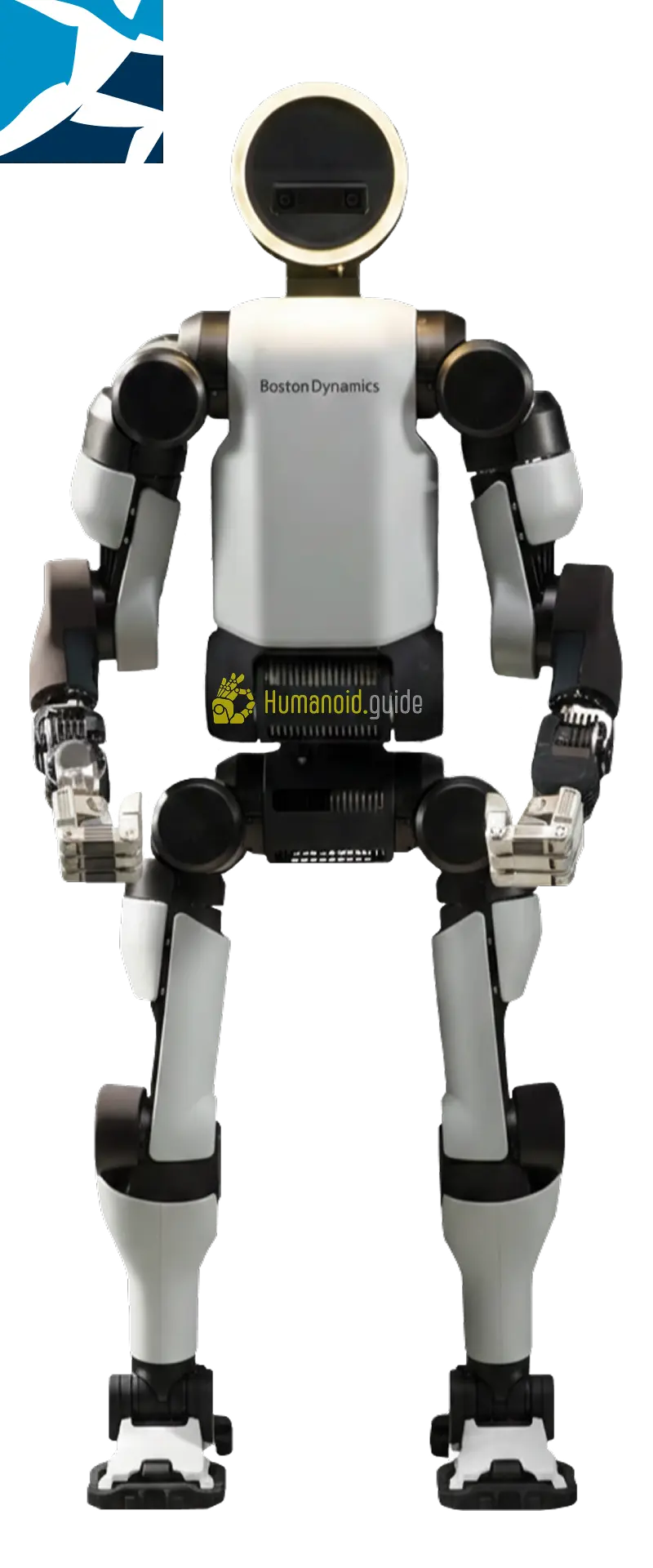
Boston Dynamics Atlas photo 1
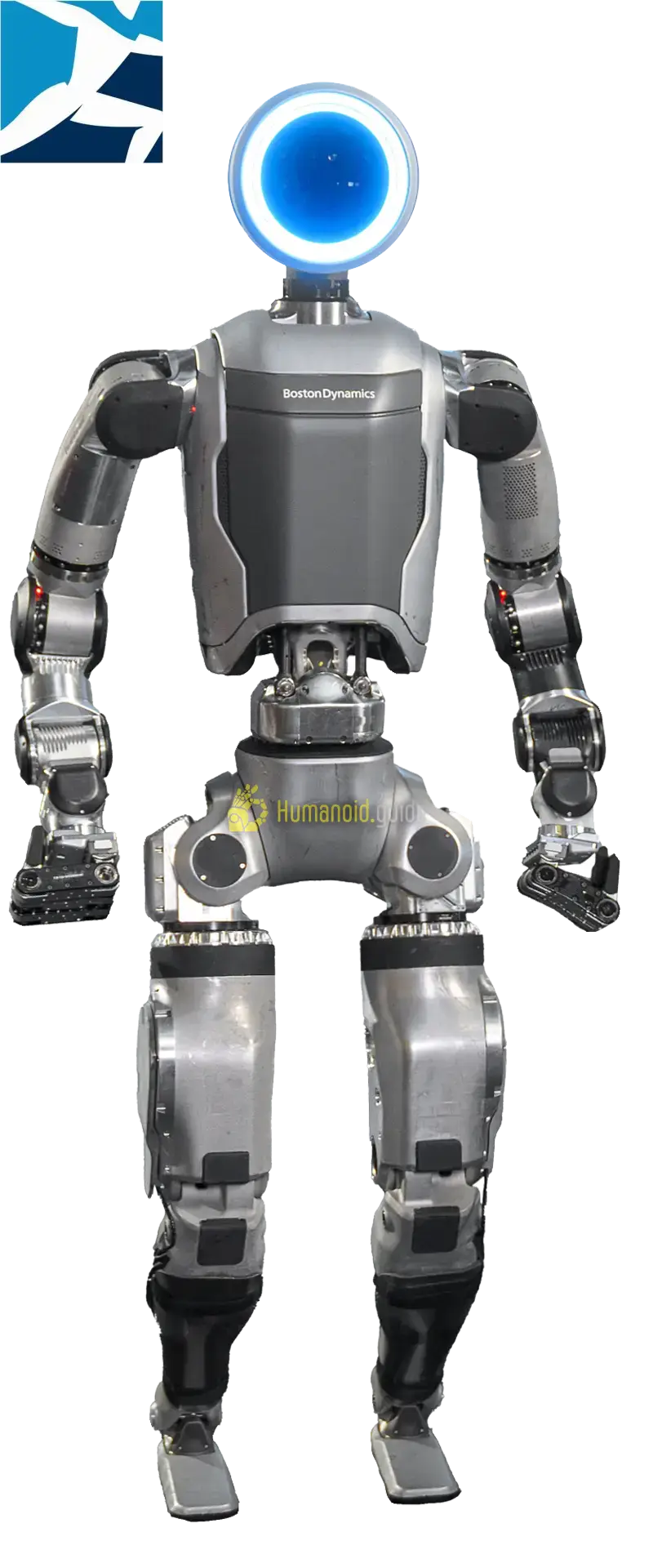
Boston Dynamics Atlas photo 2
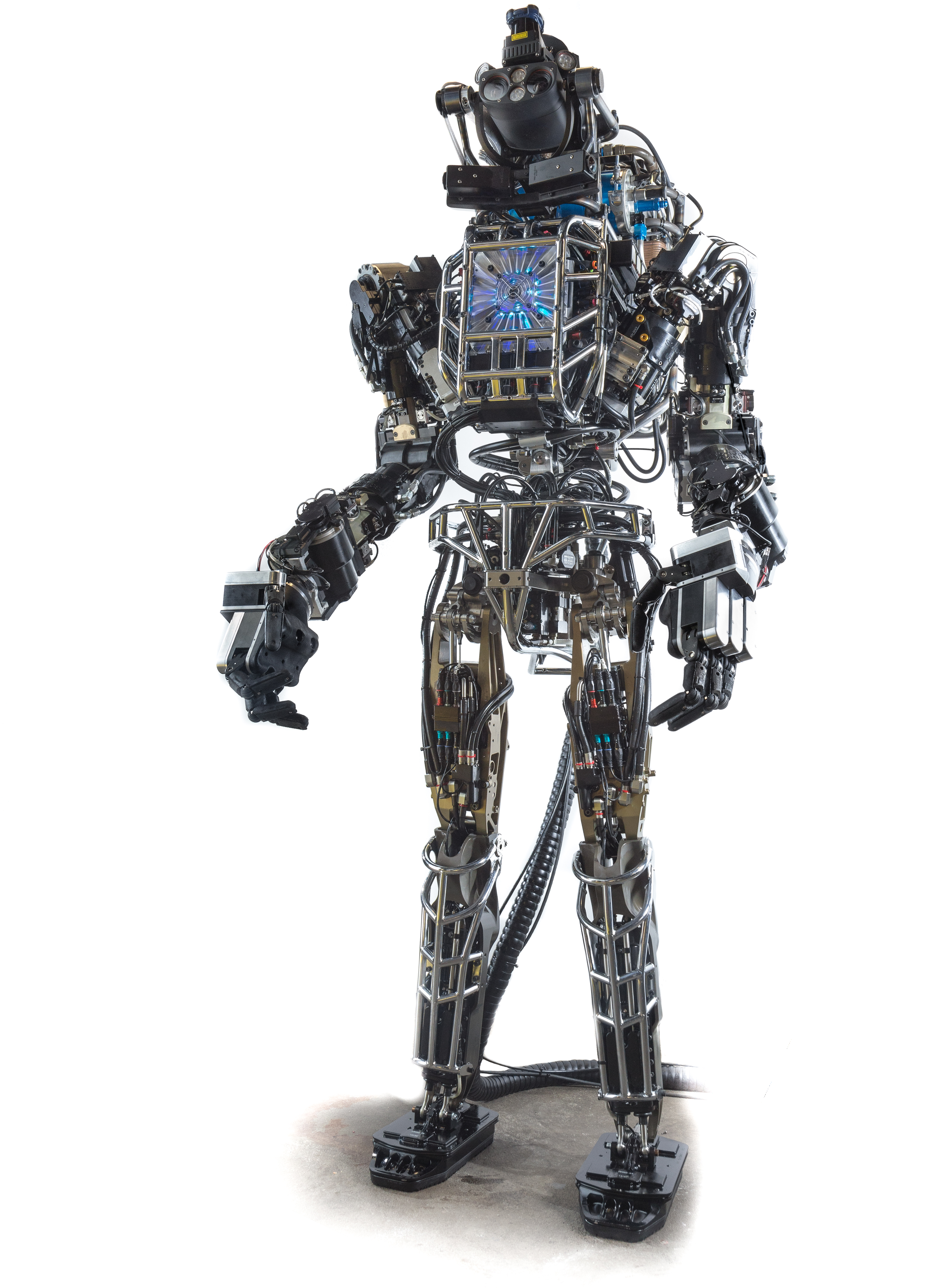
Boston Dynamics Atlas photo 3