humanoidní

Noetix Bumi — Specifikace, cena a kde koupit (2026)

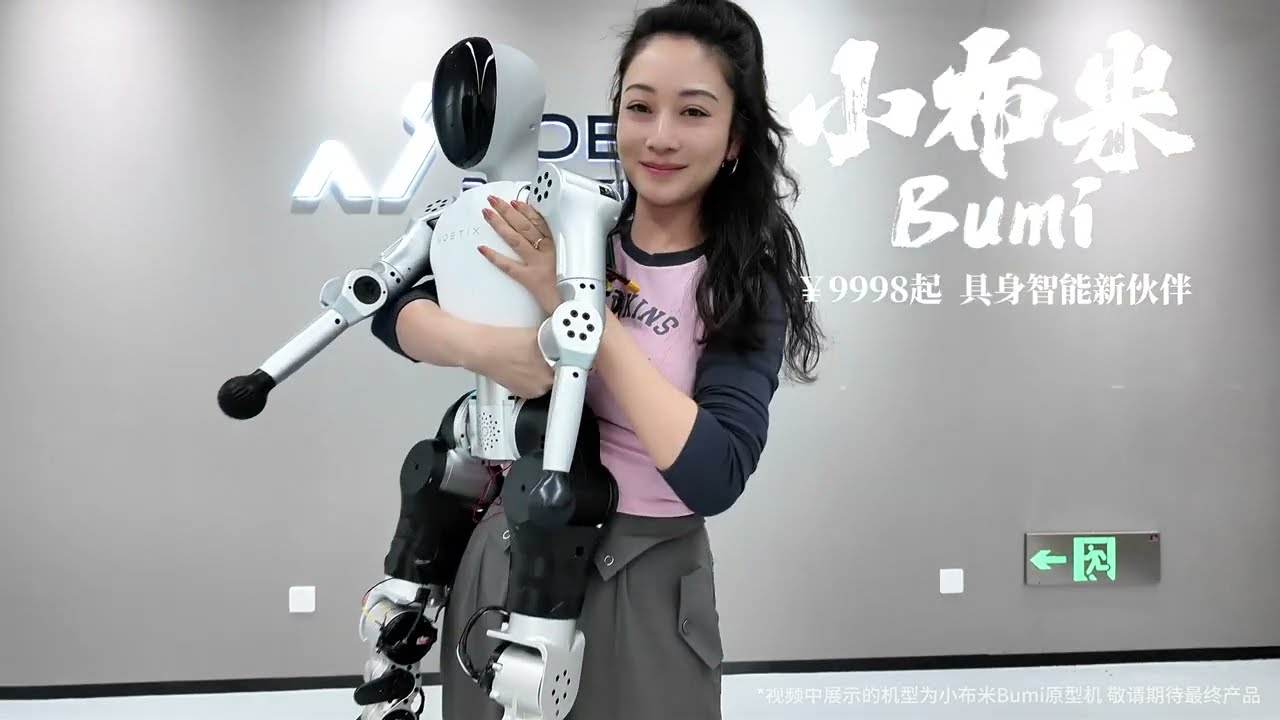
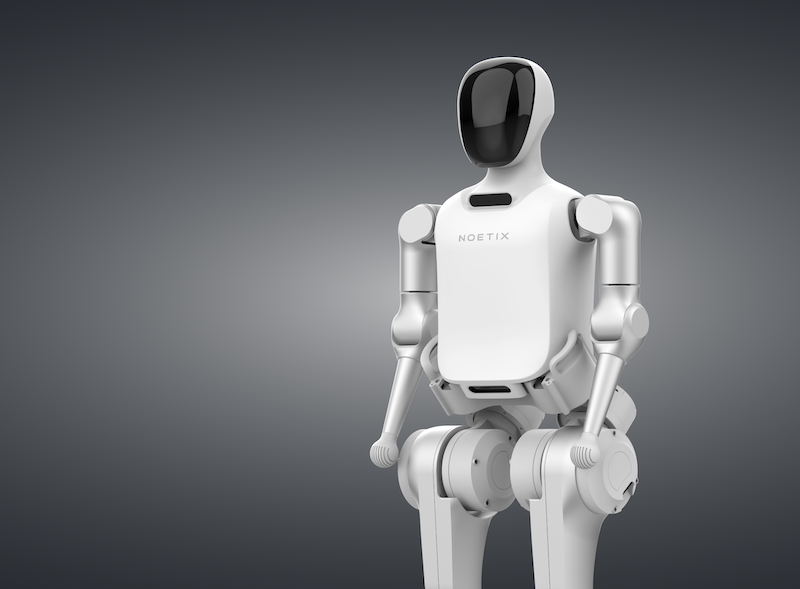
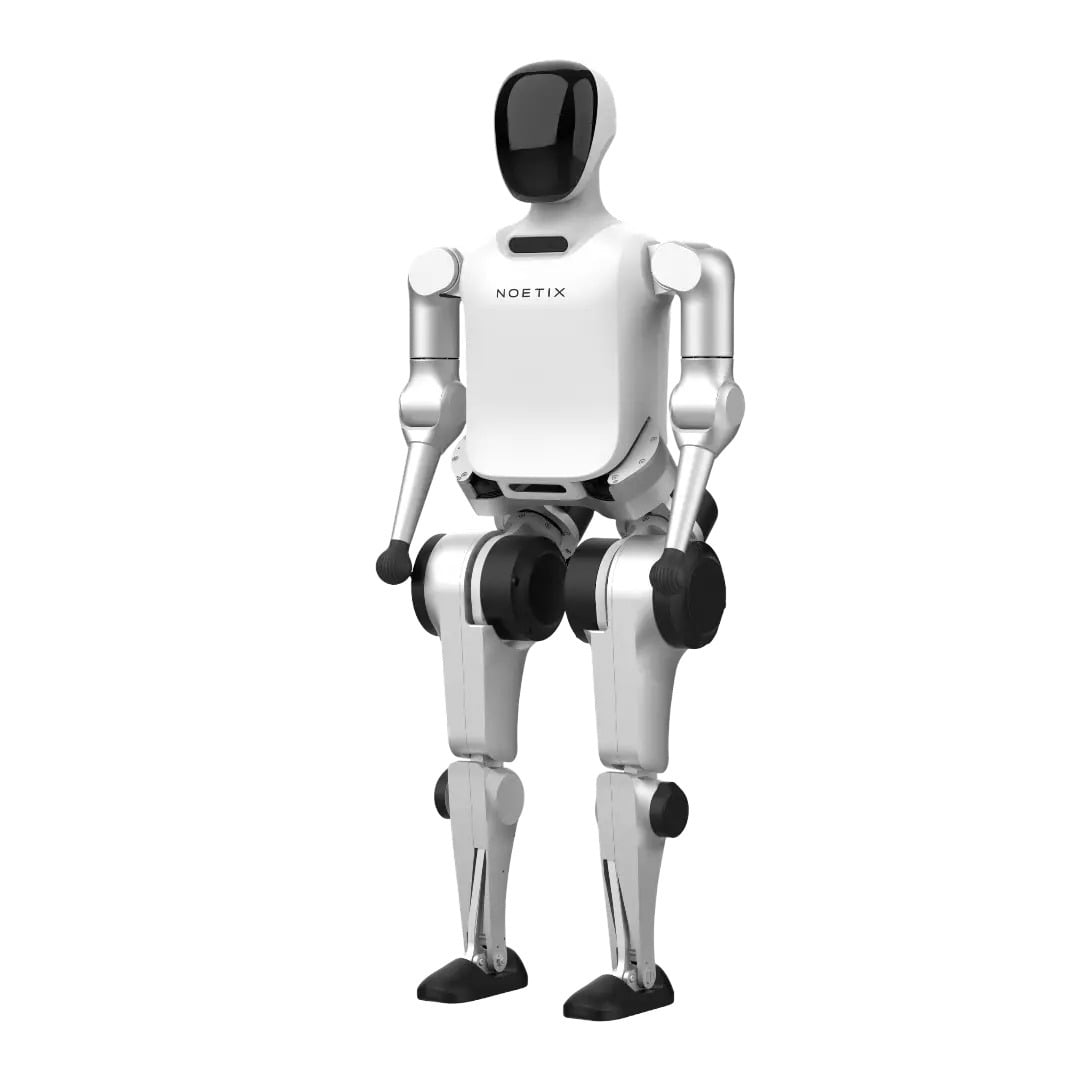
The Noetix Bumi is a child-sized education humanoid robot made by Noetix Robotics in Beijing, China. Priced at approximately $1,400 USD, it features 21+ degrees of freedom, 94 cm height, 12 kg weight, and bipedal walking over 0.5 m/s. Battery life is 1–2 hours. It was launched in October 2025 and is currently available for purchase directly and through resellers. Used units may appear on marketplace.

💰Cena
$100 – $200
📅První výroba
2023
🌍Původ
CN
📏Výška
94 cm
⚖️Hmotnost
12 kg
🦾Stupně volnosti
21
🏃Max. rychlost
1.8 km/h
🔋Baterie
1–2 hours
🛒Dostupnost
Předobjednávka

What is the Noetix Bumi?

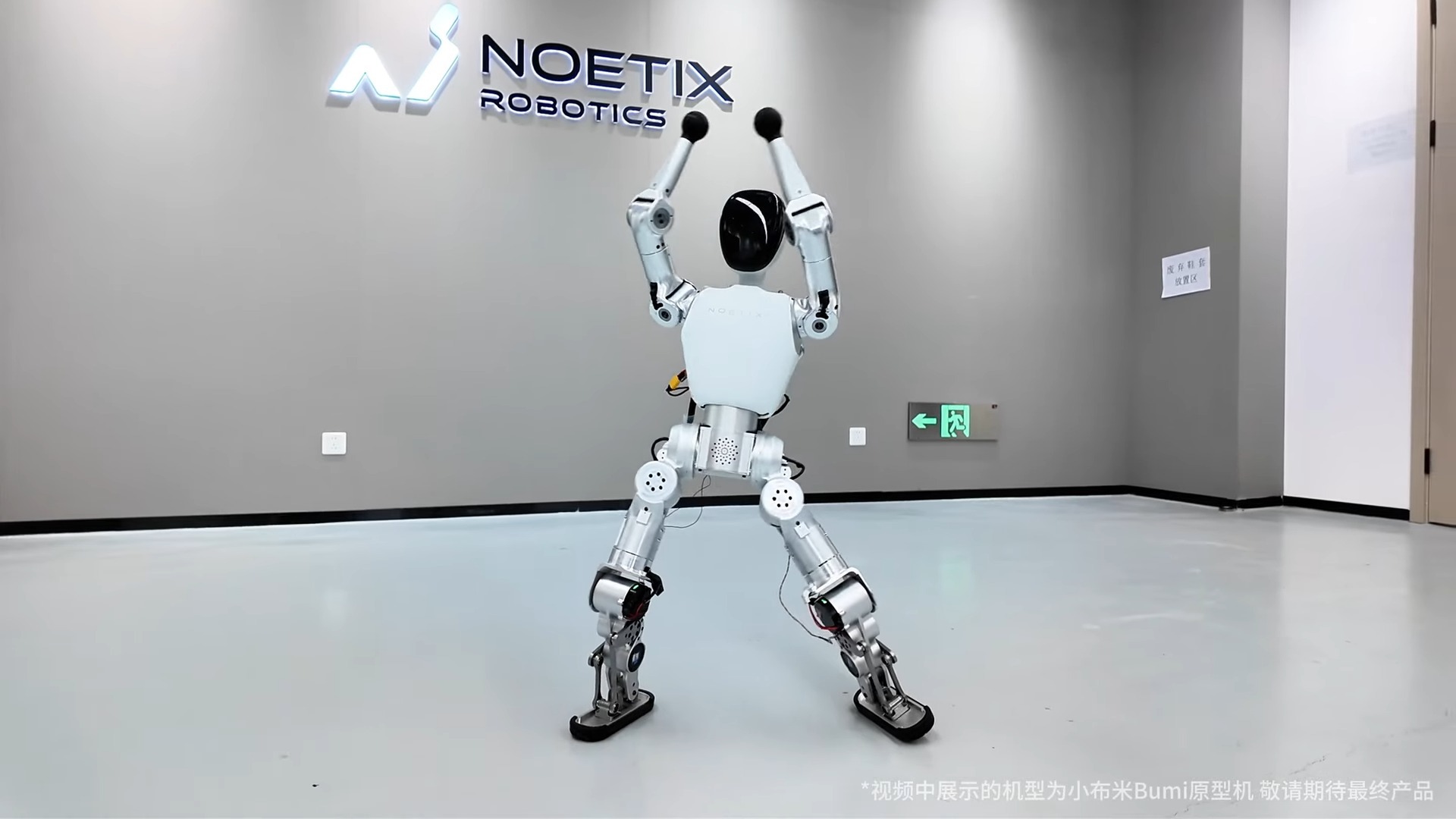
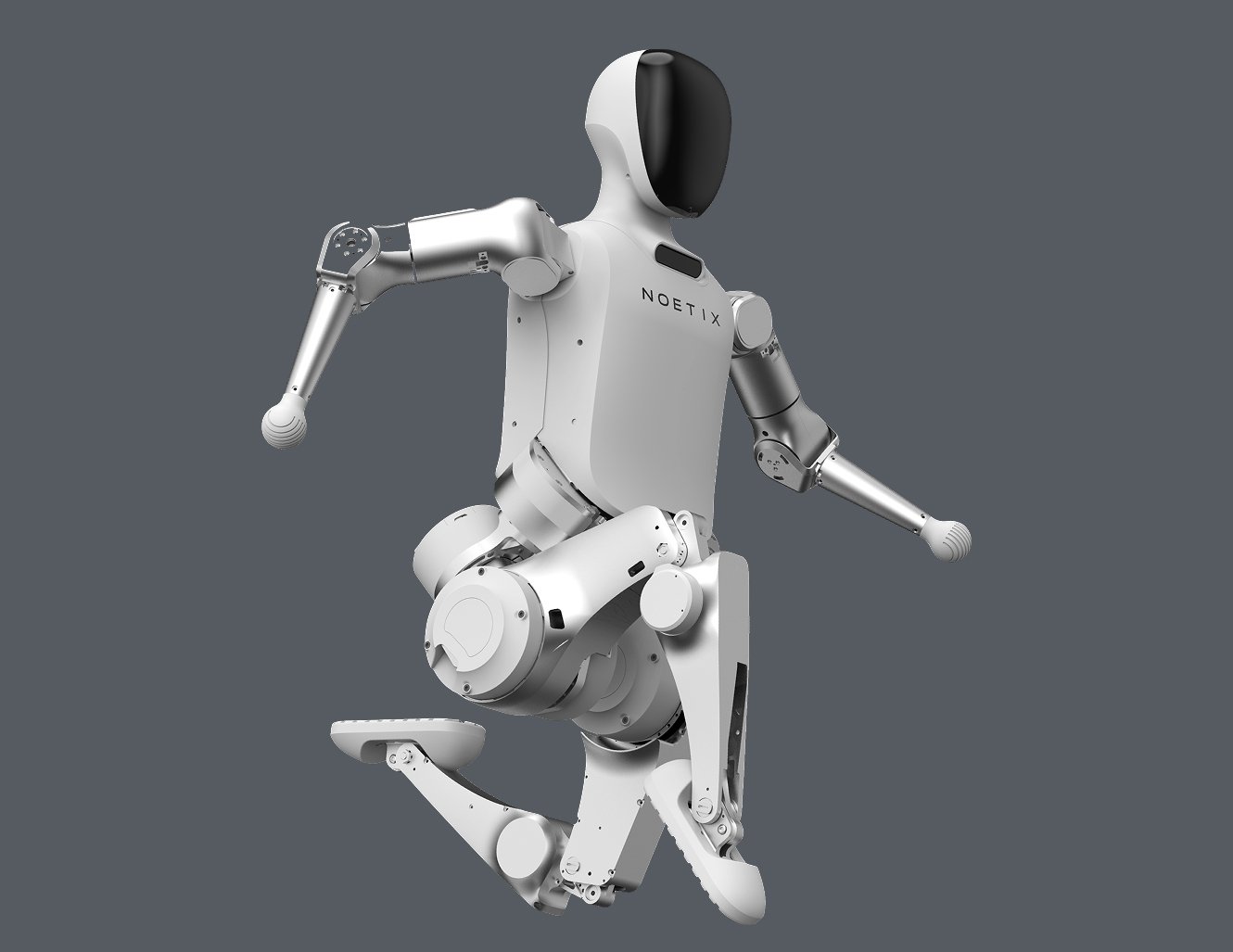
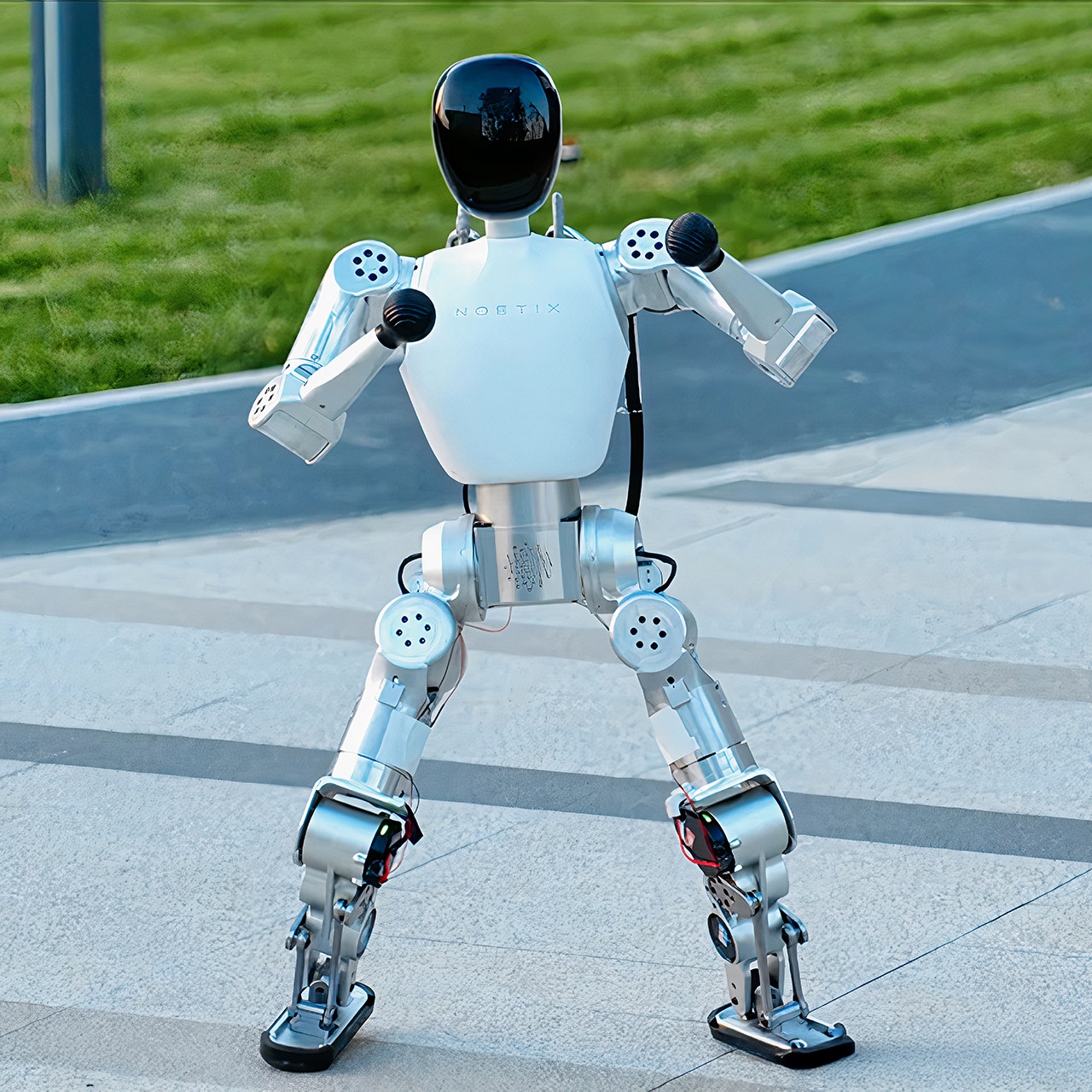
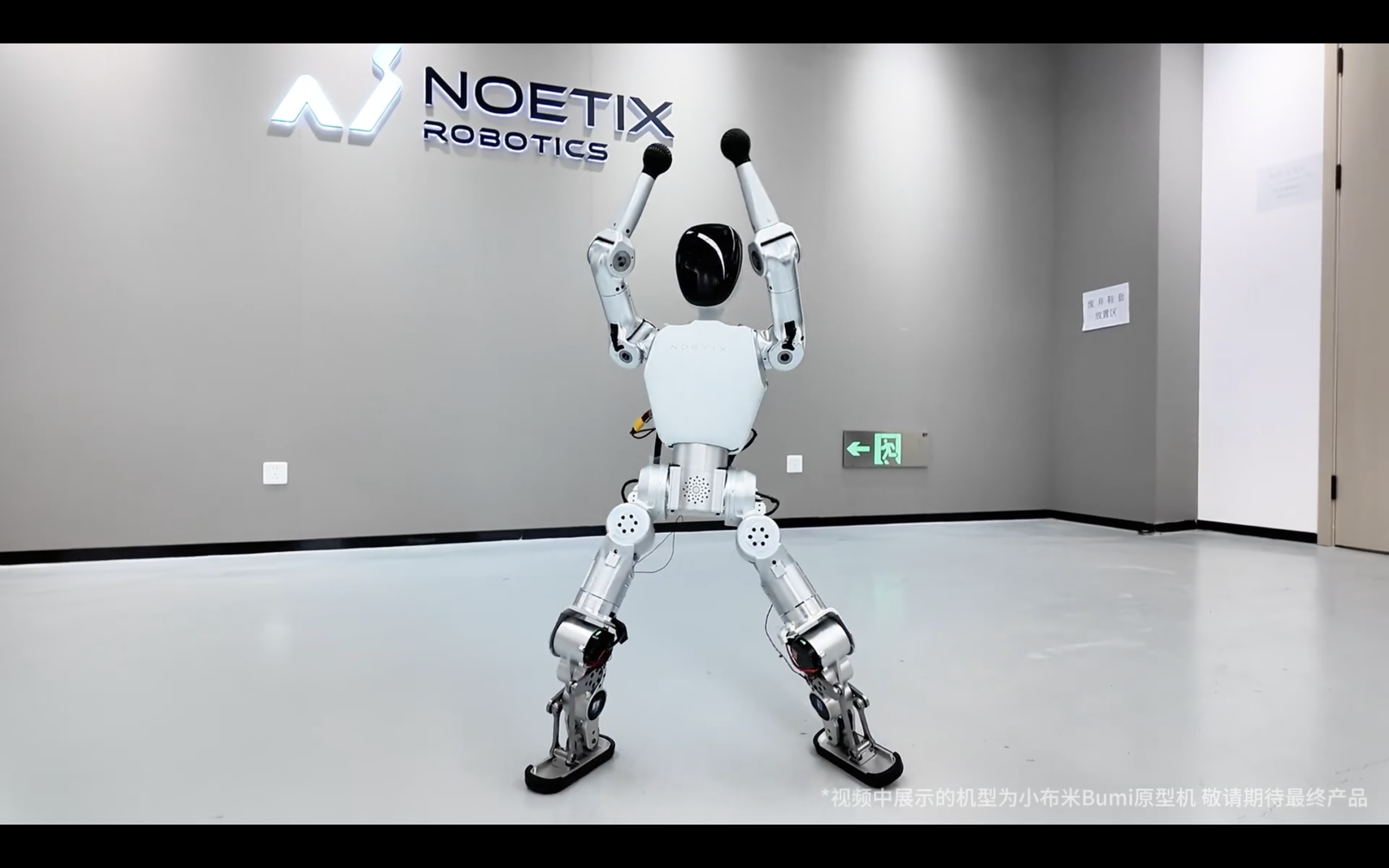
The Noetix Bumi is a child-sized (94 cm, 12 kg) bipedal humanoid robot designed by Beijing-based Noetix Robotics for STEM education and family entertainment. Launched in October 2025 as the first sub-¥10,000 consumer humanoid in China, Bumi emphasizes accessible programming via drag-and-drop interfaces and voice control. It uses force-controlled joints with up to 50 N·m peak torque, imitation learning plus reinforcement learning for natural motion, and can perform walking, running, dancing, and gymnastic gaits. The robot includes a vision-based camera for scanning and object interaction, a 48V/3.5 Ah lithium battery providing 1–2 hours of runtime, and supports secondary development through its EDU variant. Its modular composite body and internal battery exemplify a lightweight, education-focused design rather than industrial or household labor.

Specifications

Here are the full technical specifications.

SpecValue
Height94 cm
Weight12 kg
Degrees of freedom21+
Battery life1–2 hours
Max speed1.8 km/h
PayloadNot specified
Price (new)~$1,400
Price (used range)N/A (newly released)

Price & Value

New MSRP: ~$1,400

Used range: N/A (newly released)

At approximately $1,400, the Noetix Bumi is one of the most affordable bipedal humanoids on the market, undercutting many research-grade robots by an order of magnitude. Its price reflects its education-focused design, lacking heavy payload or industrial features. Compared to the Unitree G1 ($16,000) or UBTECH Alpha Mini ($800), Bumi sits in a middle niche: more capable than a toy but less robust than a lab platform. Depreciation is uncertain given the nascent consumer humanoid market; early adopters may see moderate value retention if demand grows. Total cost of ownership includes no known mandatory subscriptions, but replacement batteries and modular parts could add ~$100–$200 per year. Overall, Bumi offers strong value for schools, hobbyists, and STEM outreach programs wanting a walking robot at a consumer price.

Who Is It For?

Best for: - STEM education programs needing a programmable bipedal platform with 21+ DOF and drag-and-drop interface. - Family entertainment and hobby robotics enthusiasts (voice interaction, dancing, gymnastic gaits). - University labs exploring reinforcement learning on low-cost humanoid hardware (secondary development support).

Not for: - Industrial automation or warehouse tasks (no payload rating, not designed for labor). - Heavy-duty research requiring high torque beyond 50 N·m or robust sensor suites. - Buyers expecting long battery life (runtime limited to 1–2 hours) without frequent recharging.

Alternatives & Comparison

The Noetix Bumi competes in the emerging market of small, affordable humanoids. Its direct competition includes both smaller educational bots and larger research-grade platforms, though none match its specific combination of price, bipedalism, and programmability.

ModelPriceAvailableKey Difference
Unitree G1$16,000yesFull-sized research humanoid with 23+ DOF, 3 kg arm payload, advanced dynamics.
UBTECH Alpha Mini~$800yesCompact 24 cm desktop humanoid, fewer DOF, primarily voice/dance interaction, limited bipedalism.

Verdict: For those who need a fully walking, programmable humanoid at a consumer-friendly price, the Bumi is unmatched—it offers bipedal locomotion and 21+ DOF for under $1,500. Researchers requiring higher payload or a larger form factor should consider the Unitree G1 at $16,000. The Alpha Mini is a cheaper alternative for desktop entertainment but cannot walk continuously. Overall, Bumi wins for education, hobbyists, and low-cost locomotion research.

Use Cases & Capabilities

STEM Education

Bumi serves as an engaging tool for teaching robotics, programming, and AI in K-12 and university settings. Its drag-and-drop graphical interface lowers the barrier to entry, allowing students to create motion sequences and interactions without coding experience. The 21+ degrees of freedom enable demonstrations of bipedal locomotion, balance, and joint control, aligning with physics and engineering curricula. Teachers can use voice commands and app control for interactive classroom demonstrations. The EDU variant supports secondary development via Python and ROS, enabling advanced projects in computer science courses.

Family Entertainment

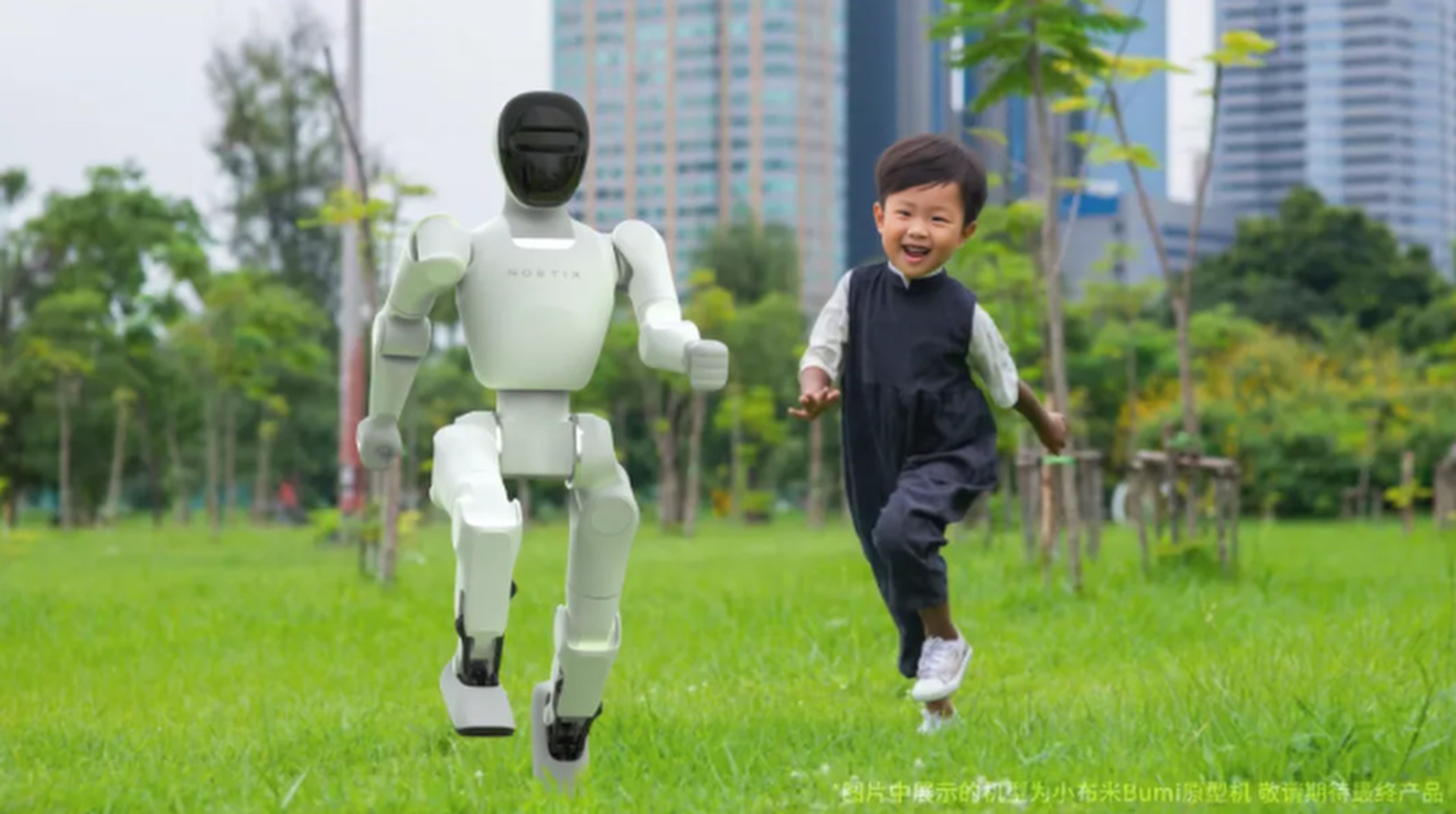
Designed as a companion bot, Bumi entertains families with dancing, gymnastic gaits, and voice interactions. Its child-like size and expressive movements make it a novel home gadget, responding to voice commands and performing choreographed routines. The robot’s internal battery and mobile app allow untethered playtime in living rooms. While not a labor-assistance device, it can gamify simple tasks like storytelling or timers. The lightweight composite build ensures safety around children during active use.

Research & Development

Academic labs exploring reinforcement learning for locomotion can use Bumi as a low-cost hardware platform. The robot’s proprietary algorithm stack—imitation plus reinforcement learning—provides a baseline for motion policy research, with joint torque data accessible via SDK. Unlike simulation-only work, Bumi offers real-world validation of walking and running gaits on a physical biped. The modular design supports hardware modifications, and the EDU variant’s Linux-based OS enables custom controller injection. However, limited sensor suite and absence of a published payload limit its use in manipulation studies.

Public Demonstrations and Events

Bumi’s eye-catching gymnastic effects and compact footprint make it ideal for trade shows, science museums, and corporate events. Operators can pre-program routines via the drag-and-drop interface and trigger them with voice commands or app controls, requiring minimal technical staff. Its 1–2 hour battery life covers short demos, and the lightweight build simplifies transportation. The robot’s friendly appearance engages audiences of all ages, effectively showcasing bipedal robotics advancements.

Hobbyist Robotics and Maker Projects

Hobbyists benefit from Bumi’s affordability and programmability for custom projects, from animatronics to interactive art. The secondary development support allows integration with Raspberry Pi or Arduino ecosystems, while the gait algorithm can be tweaked for creative movement styles. The internal 48V system and standardized battery open possibilities for power-user modifications. Community-driven modifications may extend functionalities like voice synthesis or object tracking using the onboard camera.

History & Background

Noetix Robotics was founded in 2023 in Beijing, China, with the goal of bringing affordable humanoid robots to consumers. In October 2025, the company launched the Bumi, a 94 cm child-sized humanoid, as the first sub-¥10,000 biped humanoid in China. The Bumi was introduced alongside larger models (N2, Hobbs, Dora) aimed at different sectors, but Bumi targeted mass-market education and entertainment. As of 2026, the Bumi represents the first generation of Noetix’s consumer line, with an EDU variant offering extended programmability. Noetix has not announced a successor, and the robot remains in active production.

Buying Used — What to Check

Verify battery health Battery runtime degrades over cycles; a worn unit may last under an hour.

Check for missing modular parts Modular design means limbs or torso components can be easily detached or lost.

Confirm EDU vs Standard variant EDU variant adds secondary development support; standard model may lack Python/ROS SDK.
Často kladené otázky

The Bumi Standard is priced at approximately ¥9,998, or ~$1,400 USD. An EDU variant with expanded programmability reportedly costs around $5,995 via some resellers.
Bumi can walk, run, dance, and perform gymnastic gaits using reinforcement learning. It supports voice interaction, graphical drag-and-drop programming, and object scanning via its onboard camera.
Yes, Bumi has been available since October 2025. It can be purchased directly from Noetix Robotics in China and from select international distributors. Used units are not yet widespread due to its recent release.
The Unitree G1 is a larger, research-focused humanoid with 23+ DOF, 3 kg arm payload, and a price of $16,000. Bumi is smaller (94 cm), cheaper (~$1,400), and designed for education rather than heavy-duty research. G1 offers more powerful locomotion and sensor options; Bumi is more accessible for beginners.
Height 94 cm, weight 12 kg, 21+ DOF, 1.8 km/h max walking speed, 1–2 hour battery (48V/3.5 Ah lithium), force-controlled joints with up to 50 N·m peak torque.
Noetix Robotics, founded in 2023 in Beijing, China, manufactures the Bumi as part of its humanoid line, including larger models N2, Hobbs, and Dora.
Bumi runs for 1–2 hours on a full charge with its 48V/3.5 Ah lithium battery. The battery is internal and rechargeable, but not hot-swappable.
Primarily education (STEM labs, coding bootcamps) and entertainment (home use, events). It is not designed for industrial or healthcare automation.
The EDU variant supports secondary development using Python and other languages via its Linux-based OS and SDK. The standard model uses a drag-and-drop graphical interface, but some programming access may be available.
No official payload rating is published. The robot is designed for locomotion and interaction, not object carrying or manipulation.

Noetix Bumi in 3D

Loading the 3D model…
Drag to rotate · click the model, then scroll or pinch to zoom · click a part to inspectSwipe sideways to turn · pinch to zoom · tap a part to inspect3D model credit and licence

Noetix Bumi supply chain

Point at or select a step to light up its chain: bright lines are its direct links, softer lines the rest of the path from raw material to robot.

Swipe sideways to follow the whole chain.

ExtractionRefiningMaterialsComponentsModulesRobotsCompaniesNoetix designs its own motor drivers and control boards and buys the motors (TechNode; National Business Daily).Noetix makes its own core board around a bought chip (founder, Tencent News).Lithium compounds (carbonate, chloride, hydroxide) are produced from mined lithium.Lithium is produced from brine and mineral operations.Mined copper is smelted and refined.Primary aluminium from smelters.Bauxite is refined to alumina for aluminium.6061 aluminium contains 0.8–1.2% magnesium.6061 aluminium contains 0.40–0.8% silicon.A lithium-ion cell has a cathode (positive electrode), typically a metal oxide or phosphate. IEA tracks the 2025 mix of LFP and nickel-based cathodes in electric-car batteries.Camera units are built around image sensors (CMOS image sensors from makers such as Sony and OmniVision).Silicon metal is made from silica in natural forms such as quartzite (USGS).Silicon metal can be refined further into ultra-high-purity semiconductor-grade silicon, called polysilicon (USGS). Chips are made on wafers: thin slices of crystalline silicon (Wikipedia).Memory is made on silicon wafers (Micron lists silicon wafers among its key materials); wafer silicon is refined from silicon metal (USGS).Magnesium is recovered from dolomite, serpentine, magnesium-bearing evaporite minerals and brines (USGS).In wire-bond packaging, fine gold or copper wire connects each die to its leadframe or substrate. ASE is gradually replacing gold wire with copper to cut material cost, though gold wire is still one of its main materials.Sony makes its CMOS image sensors in its own production facilities in Japan (Nagasaki, Kumamoto). SIA/BCG count optoelectronics and sensors in one fab group with discrete and analog chips (DAO), apart from logic.Bosch makes its MEMS sensors in its own fabs in Reutlingen and Dresden; a MEMS sensor is a MEMS element plus an evaluation chip (ASIC).A MEMS sensor is packed in a semiconductor housing, such as an LGA package (Bosch).Micron makes its memory in its own fabs; most of its 2026 DRAM output came from Taiwan. SIA/BCG: DRAM capacity is highly concentrated in South Korea.Micron's manufacturing runs from wafer fabrication through assembly and test, with subcontractors for some steps.The RK3576 ships in a 698-ball FCCSP package (16.1 × 17.2 mm).Mined cobalt is refined further into chemicals or metal (Cobalt Institute). In 2025 DR Congo's export restrictions left refiners short of cobalt hydroxide feed and forced some to limit production, though world refined output still rose 5% to 240 kt (Cobalt Institute).Cobalt sulphate, the largest refined cobalt product, is typically used in NCM (NMC) batteries, and cobalt tetroxide often in LCO batteries (Cobalt Institute). Cobalt-free substitutes that use iron and phosphorus (LFP) held a significant market share in China (USGS).Mined nickel ore and concentrate go to smelters and refineries. In Indonesia, laterite ore is processed into nickel pig iron and ferronickel for stainless steel, or into battery intermediates such as mixed hydroxide precipitate (IEA); the US Eagle Mine's concentrate is exported to smelters (USGS).Battery cathodes need nickel sulphate, made from Class I nickel metal or from intermediates such as mixed hydroxide precipitate and nickel matte (IEA). LFP (lithium iron phosphate) cathodes contain no nickel.Lithium-ion cathodes are lithium compounds, generally a layered oxide (such as lithium cobalt oxide), a phosphate (lithium iron phosphate) or a spinel (lithium manganese oxide). Batteries took an estimated 88% of world lithium in 2025 (USGS).Natural graphite flakes must be made into spherical particles, purified to over 99.95% carbon and coated before they can be used in lithium-ion battery anodes (IEA). Natural graphite is now a small part of anode supply: under 8% of China's 2025 anode shipments (GGII), and about 14% worldwide in 2022 (Rystad).Synthetic graphite is made by calcining and graphitising petroleum coke or needle coke at nearly 3,000 °C (IEA). It was 92.7% of China's 2025 anode shipments (GGII).The negative electrode (anode) of a conventional lithium-ion cell is typically graphite. IEA's 2025 data on electric-car battery anodes show only graphite and silicon-doped graphite.89.8% of the world's plastics in 2024 were made from fossil feedstock (Plastics Europe).Solder is the largest use of tin, 51% of world tin use in 2023 (International Tin Association; in the US solder took 11%, USGS). The common lead-free alloy SAC305 is 96.5% tin (AIM).Tin-lead solder is nearly half lead (PubChem), but the electronics industry has moved toward lead-free solders (USGS): 92% of solder for electronics was lead-free in 2023 (ITA).The lead-free alloy SAC305 contains 3% silver (AIM). In the US, brazing and solder took 3% of silver (USGS).The lead-free alloy SAC305 contains 0.5% copper (AIM).FR-4 laminate is woven fibreglass cloth with an epoxy binder (Wikipedia), and fibreglass is made from silica sand (Covia).A thin layer of copper foil is laminated to one or both sides of an FR-4 panel; these are called copper-clad laminates (Wikipedia; ChinaBaogao).FR-4 epoxy resin systems typically use bromine to resist fire (Wikipedia); a grade of the brominated flame retardant TBBPA is used to make epoxy resins for circuit boards (Wikipedia). Brominated flame retardants are one of bromine's two leading uses (USGS).Barite is used to make barium carbonate, which goes into dielectrics (Wikipedia). Barium titanate, the dielectric ceramic used in capacitors, can be made by heating barium carbonate with titanium dioxide (Wikipedia).Barium titanate, the ceramic in high-capacitance MLCCs, can be made by heating barium carbonate with titanium dioxide (Wikipedia); titanium dioxide comes from ilmenite and rutile (USGS).99% of MLCCs made worldwide use base-metal electrodes of nickel or copper; the industry moved from palladium and silver to cut cost (NASA, 2015). TDK replaced palladium electrodes with nickel in 1993 (Wikipedia).Platinum-group metals are used in multilayer ceramic capacitors (USGS). High-reliability MLCCs use palladium-silver electrodes (NASA, 2015).High-reliability MLCCs use precious-metal electrodes of palladium and silver (NASA, 2015).Connector contacts are copper alloys: beryllium copper is called the best copper alloy for contacts, connectors and cables (Wikipedia), and phosphor bronze (copper-tin-phosphorus) can replace it (USGS).Copper-clad laminate is the core material of circuit boards (ChinaBaogao); FR-4 is a common material for printed circuit boards (Wikipedia).Parts are soldered onto bare boards: Adafruit's BNO055 board is a "breakout PCB", and the Raspberry Pi Zero 2 W brief warns against damage to the printed circuit board.SAC305 lead-free solder is made for soldering printed circuits, by wave, hand and SMT reflow soldering (Conro; AIM).MLCCs store and release charge and absorb noise in phones, home appliances and IoT devices (Murata). The Raspberry Pi's RP3A0 package includes the decoupling capacitors that smooth its supply voltage (Raspberry Pi).Boards carry connectors: the Raspberry Pi Zero 2 W brief speaks of the board and its connectors, and Waveshare's servo adapter has a USB-C connector and a power connector.NVIDIA's Jetson Thor modules are 100 × 87 mm and plug in through a 699-pin board-to-board (B2B) connector (NVIDIA).Two OmniVision OV9282 image sensors in the D430 depth module and an OmniVision OV2740 colour sensor (datasheet).Built-in IMU: a BMI055 or, in a later version, a BMI085 (datasheet).Brass is copper and zinc: CW614N free-cutting brass is about 39% zinc. In the US, brass and bronze are the second use of zinc after galvanized steel.Brass is mostly copper: 57–59% in CW614N free-cutting brass.Free-cutting brass such as CW614N holds 2.5–3.5% lead so it machines cleanly; lead-free brasses exist.XT30 battery plugs (G1 harness, Open Duck Mini) have gold-plated brass contacts.Antimony is used in circuit boards to cut flammability further. A review lists two studies of scrap PC boards, parts and solder still on, with 0.45% and 1.97% antimony, so the share in the laminate alone is not known.MEMS microphones are silicon chips: the diaphragm is etched into a silicon wafer (Wikipedia). Pollen's HAT uses a MEMS microphone.Heat sinks are often aluminium: the Go2's main board has two fans blowing over an aluminium heat sink (Simplexity).In the Unitree G1, the heat pipe and heat spreaders that teardowns show are copper: a copper heat pipe presses against a motor (a published teardown), and copper heat-spreader plates cool its knees (China Post Securities).High-strength plastic with glass fibre for the shells; plastic for the body (Noetix's FAQ); high-strength plastic for the torso and shells (Synced).High-strength aluminium alloy at the main load points (Noetix, via Synced and Jiemian).Rubber dummy hands (Noetix's parts picture: '橡胶假手') and shaped hands (FAQ).Noetix designs its own motor drivers and control boards (TechNode); apart from the motors, the parts are its own designs (National Business Daily).Lithium cells, 13 in series: the pack's model number, GRP6752097-13S1P, ends in 13S1P (13 in series, 1 in parallel), and it gives 48 V (Noetix's documentation).The pack has a built-in protection circuit, which discharges a stored full pack to 95% after 24 hours and to about 60% after 120 hours (Noetix's FAQ).The motion-control board's processor is a Rockchip RK3576 (6 TOPS; Noetix's documentation lists 2.4 GHz, Rockchip's own page up to 2.2 GHz). Noetix's earlier robots used the RK3588S; for this one it chose another RK-series chip (a news feature).8 GB of memory and 64 GB of storage on the motion-control board (Noetix's documentation).Noetix buys the computing chip and makes its own core board (founder, Tencent News).DUV machines, which ASML also makes, print most of the layers in microchips, and ASML's EUV machines (the NXE:3800E) are being adopted by advanced DRAM makers (ASML annual report 2025).ASML's DUV machines, 'the workhorses of the industry', print the majority of layers in chips, older-generation chips included (ASML annual report 2025).The shells, frame parts and metal parts that make up the Bumi's body (Noetix's 3D model; FAQ).21 joint modules: 6 per leg, 4 per arm and 1 in the waist; two of each leg's six work the ankle together through push rods (Noetix's documentation and 3D model).One quick-release battery in the back (Noetix's documentation).The motion-control board with its Rockchip RK3576, on every version (Noetix's documentation).EDU-Pro: an NVIDIA Jetson Orin Nano Super (67 TOPS); EDU-Max: a Jetson Orin NX (117 TOPS); the EDU-Air has none (spec sheet; documentation).Standard versions: a DC_V93 camera, 1080p at 30 frames a second, without depth (Noetix's documentation and FAQ).EDU versions, except the EDU-Air: an Intel RealSense D435i depth camera, wired to the developer computer (Noetix's documentation and FAQ).An IMU (Noetix lists 'IMU, camera' as the Bumi's sensors).A ring microphone array on top of the head, standard on every version (Noetix's documentation and FAQ).A speaker in the head, standard on every version (Noetix's documentation and FAQ).Circuit boards besides the computers: Noetix designs its own control boards and motor drivers (TechNode); its power light and the joints' EtherCAT and CAN FD links (Noetix's documentation).Cables join the joints, the battery and the computers over EtherCAT and CAN FD; the back has one Ethernet, two USB 3.0 and one HDMI port (Noetix's documentation).Noetix's parts picture marks cooling vents in the chest's sides, the forearms and the upper back; its 3D model has a square fan about 46 mm across behind the chest (by the authors' reading of its shape), and the aluminium load points also spread heat (Synced).Noetix Robotics makes this robot.Quartz and silica sandQuartz and silica sandMagnesium ores and brinesMagnesium ores and brinesOil, gas and coal(plastics feedstock)Oil, gas and coal (plastics feedstock)Lithography machines (chipprinting)Lithography machines (chip printing)Mature-node chipfabrication (28 nm and…Mature-node chip fabrication (28 nm and older; analog and sensor chips)Memory chip fabrication(DRAM)Memory chip fabrication (DRAM)Rockchip RK3576 SoCRockchip RK3576 SoCAluminium alloysAluminium alloysBattery-grade lithiumcompoundsBattery-grade lithium compoundsLithium chemicalconversionLithium chemical conversionCopper smelting andrefiningCopper smelting and refiningAlumina refining andaluminium smeltingAlumina refining and aluminium smeltingLithium miningLithium miningCopper miningCopper miningBauxite miningBauxite miningMagnesium smeltingMagnesium smeltingSilicon metal smeltingSilicon metal smeltingChip packaging and test(OSAT)Chip packaging and test (OSAT)Memory chips (DRAM /LPDDR)Memory chips (DRAM / LPDDR)Image sensorsImage sensorsIMUs (motion sensors)IMUs (motion sensors)Lithium-ion cellsLithium-ion cellsAI compute modulesAI compute modulesCameras and depth camerasCameras and depth camerasCobalt miningCobalt miningCobalt refining (chemicalsand metal)Cobalt refining (chemicals and metal)Nickel miningNickel miningNickel smelting andrefiningNickel smelting and refiningNatural graphite miningNatural graphite miningBattery anode graphite(spherical natural and…Battery anode graphite (spherical natural and synthetic)Cathode active material(NMC, NCA, LCO, LFP)Cathode active material (NMC, NCA, LCO, LFP)Titanium minerals(ilmenite and rutile)Titanium minerals (ilmenite and rutile)Engineering plastics (ABS,PC, nylon, PEEK)Engineering plastics (ABS, PC, nylon, PEEK)Soft covers (textiles,foams, soft polymer skins)Soft covers (textiles, foams, soft polymer skins)Tin miningTin miningLead miningLead miningSilver miningSilver miningPalladium mining(platinum-group metals)Palladium mining (platinum-group metals)Antimony miningAntimony miningBromine (from brines)Bromine (from brines)Barite mining (barium)Barite mining (barium)Solder (tin alloys:lead-free SAC and…Solder (tin alloys: lead-free SAC and tin-lead)Copper-clad laminate (FR-4glass-fibre epoxy board…Copper-clad laminate (FR-4 glass-fibre epoxy board material)Printed circuit boards(bare boards)Printed circuit boards (bare boards)Multilayer ceramiccapacitors (MLCC)Multilayer ceramic capacitors (MLCC)Connectors and wiringharnessesConnectors and wiring harnessesElectronics assembly(circuit boards with part…Electronics assembly (circuit boards with parts soldered on)RealSense D435i depthcameraRealSense D435i depth cameraZinc miningZinc miningBrass (copper-zinc alloy)Brass (copper-zinc alloy)MicrophonesMicrophonesSmall speakersSmall speakersCooling fans and heatsinksCooling fans and heat sinksNoetix BumiNoetix BumiStructure: Noetix BumiStructure: Noetix BumiNoetix Bumi joint modulesNoetix Bumi joint modulesBumi battery pack (Grepow,13 cells, 48 V, 5,100 mAh)Bumi battery pack (Grepow, 13 cells, 48 V, 5,100 mAh)Bumi motion-control board(Noetix's own, Rockchip…Bumi motion-control board (Noetix's own, Rockchip RK3576)Noetix RoboticsNoetix Robotics

Fotky8

Noetix Bumi photo 1
Noetix Bumi photo 2
Noetix Bumi photo 3
Noetix Bumi photo 4
Noetix Bumi photo 5
Noetix Bumi photo 6
Noetix Bumi photo 7
Noetix Bumi photo 8