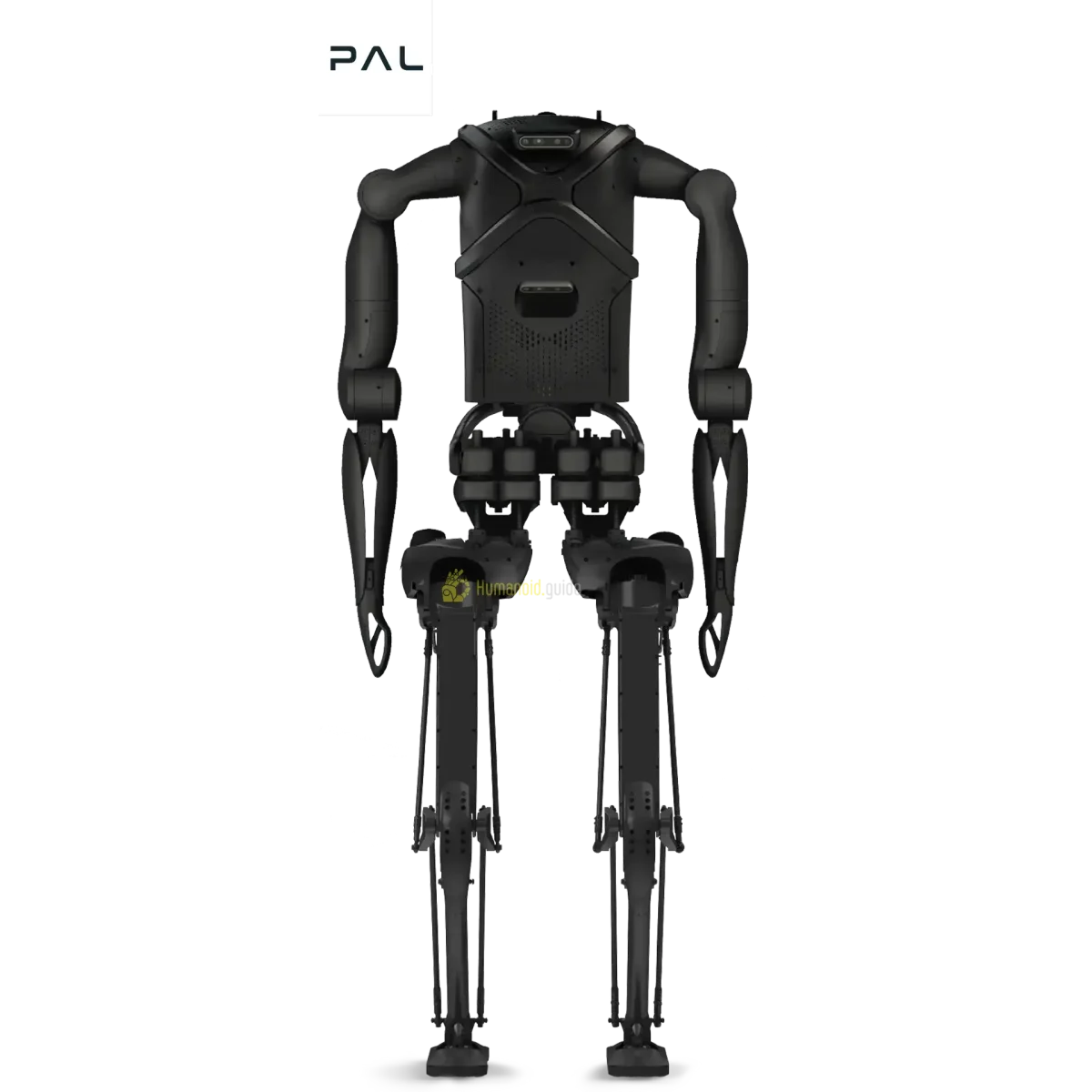
หุ่นยนต์คล้ายมนุษย์

Kangaroo — สเปก ราคา และแหล่งจำหน่าย (2026)

The PAL Robotics Kangaroo is a bipedal humanoid robot made by PAL Robotics in Barcelona, Spain. Price: undisclosed (pre-order). Key specs: 28 degrees of freedom, 6-hour battery life, 4.5 km/h max walking speed, and 20 kg payload. It is a pre-order prototype from PAL Robotics, with no commercial availability yet, though pre-orders are being accepted for future delivery.

💰ราคา
€100,000,
📅ผลิตครั้งแรก
2025
🌍แหล่งกำเนิด
ES
📏ความสูง
160 cm
⚖️น้ำหนัก
40 kg
🦾องศาอิสระ
28
🏃ความเร็วสูงสุด
4.5 km/h
📦น้ำหนักบรรทุก
20 kg
🔋แบตเตอรี่
6 hours
🛒สถานะการวางจำหน่าย
สั่งซื้อล่วงหน้า

What is the Kangaroo?

The Kangaroo is a bipedal humanoid robot developed by PAL Robotics, a Spanish robotics company headquartered in Barcelona. Unveiled in 2024, it stands 160 cm tall and weighs 40 kg, making it one of the lighter full-scale humanoids. The robot features 28 degrees of freedom and a distinctive inverted knee joint design for dynamic locomotion and agile turning. It is built on an open-source software stack including Linux, Ubuntu, and ROS, targeting academic and applied research. The Kangaroo carries up to 20 kg and walks at a maximum speed of 4.5 km/h with a 6-hour battery life. As a pre-order prototype, it reflects PAL Robotics' accumulated experience from earlier platforms like REEM-C and TALOS, emphasizing mobility and programmability for laboratories and early-adopter industrial applications.

Specifications

Here are the full technical specifications.

SpecValue
Height160 cm
Weight40 kg
Degrees of freedom28
Battery life6 hours
Max speed4.5 km/h
Payload20 kg
Price (new)Undisclosed (contact manufacturer)
Price (used range)N/A (no used units yet)

Price & Value

New MSRP: Undisclosed (contact manufacturer)

Used range: N/A (pre-order only; no used units exist as of 2026)

PAL Robotics has not publicly disclosed a price for the Kangaroo, consistent with its early prototype stage. Pricing is expected to align with the company's previous humanoids: the REEM-C was offered at roughly €100,000, while the TALOS research platform exceeded €400,000. If the Kangaroo enters serial production at a volume similar to REEM-C, it could land in the low-six-figure range. Competitive pressure from Fourier's GR-2 and UBTECH's Walker S, which have begun shipping, may push PAL to offer aggressive pre-order incentives. Because no units have reached customers, depreciation and used-market dynamics are unknown; early adopters will likely treat Kangaroo as a long-term research investment. Total cost of ownership will hinge on maintenance contracts and on-site support availability through PAL's Barcelona hub.

Who Is It For?

Best for: - University robotics labs needing a lightweight bipedal platform with 28 DOF for dexterous manipulation and walking studies. - Researchers focusing on dynamic locomotion with an inverted knee design that enables rapid turning and stair climbing. - Industrial R&D teams evaluating humanoids for light material handling tasks up to 20 kg without heavy safety guarding.

Not for: - Heavy manufacturing or assembly lines requiring payloads above 20 kg — the Kangaroo is not rated for high-load carrying. - Organizations seeking an immediately available, off-the-shelf humanoid — Kangaroo is still a pre-order prototype with no field-proven deployment.

Alternatives & Comparison

In the early-stage bipedal humanoid market, the Kangaroo competes against other prototypes and newly commercial alternatives aiming to prove viability in research and light industry.

ModelPriceAvailableKey Difference
Fourier GR-2UndisclosedpreorderGreater DOF (60) and higher payload, but heavier and less established ROS integration.
UBTECH Walker S~$150,000 (est.)yesCommercially shipping with proven industrial deployments and enterprise support.
Tesla OptimusUndisclosedpreorderTesla's manufacturing scale ambition and AI-driven vision system, but no delivery timeline.

Verdict: For researchers who value a lightweight body, strong ROS/Ubuntu ecosystem, and an innovative leg design, the Kangaroo is the most agile and open platform among pre-order humanoids. The UBTECH Walker S is the safest bet for organizations needing a shipping product with industrial track record, while Tesla's Optimus and Fourier's GR-2 offer higher payloads but remain speculative. Until PAL Robotics announces formal pricing and delivery dates, the Kangaroo is best suited for well-funded labs willing to co-develop with the manufacturer.

Use Cases & Capabilities

Academic Research and Education

The Kangaroo serves as a flexible platform for university labs studying full-body humanoid control. Its 28 DOF and ROS compatibility allow researchers to implement and test algorithms for walking, grasping, and human-robot interaction. The inverted knee design provides a unique testbed for comparing locomotion strategies. With a 6-hour battery, students can run extended experiments without frequent recharging. PAL's open-source toolchain lowers the barrier for curriculum integration.

Dynamic Locomotion Development

Engineers exploring agile bipedal movement will appreciate the Kangaroo's 4.5 km/h top speed and inverted knee joints that enable quick direction changes. The lightweight 40 kg body reduces inertia, making it safer to test dynamic maneuvers like jumping or rapid step recovery. PAL's simulation models and ROS-based control stack allow simulation-to-reality transfer. This use case targets labs advancing legged locomotion beyond traditional ZMP-based walking.

Light Industrial Material Handling

With a 20 kg payload, the Kangaroo can transport tools or components in warehouses and labs. Its bipedal form navigates spaces designed for humans, moving between workstations without floor modifications. The 6-hour runtime supports a full shift of intermittent tasks, and the Linux/ROS backbone enables integration with existing MES or WMS software. While not yet hardened for heavy industrial environments, it is suitable for small-batch logistics.

Human-Robot Interaction (HRI) Studies

The Kangaroo's humanoid shape and non-threatening height (160 cm) make it a natural candidate for HRI experiments. Researchers can program gestures and speech dialogues using ROS middleware, while the robot's 20 kg strength allows it to give physical demonstrations like object handovers. Its quiet operation and smooth motion (thanks to low gear backlash) improve participant comfort. PAL's previous social robots provide a strong software foundation for HRI applications.

SLAM and Navigation Testing

The Kangaroo can be equipped with LiDAR, depth cameras, and IMU sensors to perform simultaneous localization and mapping (SLAM) in indoor environments. Its 4.5 km/h walking speed enables rapid coverage of large areas, and the 6-hour battery supports long-duration mapping sessions. The ROS navigation stack simplifies customization, and the robust odometry from the leg kinematics enhances map accuracy. This use case appeals to labs developing navigation algorithms for bipedal platforms.

History & Background

PAL Robotics was founded in 2004 in Barcelona, Spain, initially focusing on service robots before moving into humanoids. Early bipeds included REEM (2008), REEM-C (2016), and the TALOS high-torque research platform (2017). The Kangaroo was first announced in 2024 as a next-generation agile biped, incorporating lessons from TALOS's joint actuation and REEM-C's lightweight frame. Its defining feature—inverted knee joints—was inspired by biomechanics to improve dynamic stability and energy efficiency. A prototype was demonstrated at robotics events in 2025, generating academic interest. As of 2026, the Kangaroo remains a pre-order product, with limited prototypes in early-access partner labs. PAL Robotics continues to refine its ROS-based software stack and expects to open general orders once reliability trials conclude. The company maintains all manufacturing and support from its Barcelona headquarters.

Buying Used — What to Check

Verify battery health Lithium-ion packs degrade over time; after 500+ cycles, runtime may fall below 5 hours.

Inspect joint backlash The inverted knee design relies on precise gearing; excessive play can cause walking instability.

Confirm ROS version and software updates Compatibility with the latest ROS 2 Long-Term Support releases is critical for ongoing research.
คำถามที่พบบ่อย

PAL Robotics has not disclosed a price for the Kangaroo as of 2026. It is currently offered on a pre-order basis, and interested parties must contact the manufacturer directly for a quote. Based on PAL's previous bipedal platforms, costs could range from €100,000 to over €400,000 depending on configuration.
The Kangaroo is designed for bipedal locomotion, light payload carrying (up to 20 kg), and human-robot interaction research. It can walk at up to 4.5 km/h, operate for 6 hours on a single charge, and execute dexterous tasks with 28 degrees of freedom. Its ROS-based software enables custom autonomous behaviors.
The Kangaroo is available for pre-order only. It has not entered full commercial production. PAL Robotics is shipping early units to research partners and expects to open wider orders once reliability testing is complete. Lead times have not been published.
The UBTECH Walker S is a ~$150,000 commercially available humanoid with proven industrial deployments and higher payload. The Kangaroo is lighter (40 kg vs. 55 kg), has fewer DOF (28 vs. 60+), and uses an inverted knee design for agility. The Kangaroo is preferred for open research due to its ROS/Ubuntu stack, while Walker S targets enterprise buyers needing immediate availability.
Height: 160 cm, Weight: 40 kg, Degrees of Freedom: 28, Battery Life: 6 hours, Max Speed: 4.5 km/h, Payload: 20 kg. It runs on Linux/Ubuntu/ROS and features inverted knee joints for dynamic locomotion.
The Kangaroo is manufactured by PAL Robotics, S.L., a Spanish company founded in 2004 and headquartered in Barcelona. PAL Robotics has a track record of humanoid robots including REEM, REEM-C, and TALOS.
The Kangaroo's battery lasts up to 6 hours per charge under typical operating conditions. The battery is Li-ion and integrated into the torso; quick-swap capability has not been confirmed. Charging time is approximately 2-3 hours.
Currently, the Kangaroo is deployed in academic research labs, government-funded robotics programs, and forward-looking R&D departments of industrial companies. Applications include locomotion studies, light logistics, and humanoid navigation testing.

PAL KANGAROO in 3D

Loading the 3D model…
Drag to rotate · click the model, then scroll or pinch to zoom · click a part to inspectSwipe sideways to turn · pinch to zoom · tap a part to inspect3D model credit and licence

PAL KANGAROO supply chain

Point at or select a step to light up its chain: bright lines are its direct links, softer lines the rest of the path from raw material to robot.

Swipe sideways to follow the whole chain.

ExtractionRefiningMaterialsComponentsModulesRobotsCompaniesPAL: 'custom linear actuators with integrated force sensors' and 'in-house electronics for motor control and sensor acquisition'.PAL's own arm (pal_sea_arm); PAL says its TIAGo Pro Arm has a 100% EU supply chain.PAL's own gripper package (pal_pro_gripper).Mined copper is smelted and refined.Primary aluminium from smelters.Bauxite is refined to alumina for aluminium.6061 aluminium contains 0.8–1.2% magnesium.6061 aluminium contains 0.40–0.8% silicon.Silicon metal is made from silica in natural forms such as quartzite (USGS).Silicon metal can be refined further into ultra-high-purity semiconductor-grade silicon, called polysilicon (USGS). Chips are made on wafers: thin slices of crystalline silicon (Wikipedia).Magnesium is recovered from dolomite, serpentine, magnesium-bearing evaporite minerals and brines (USGS).In wire-bond packaging, fine gold or copper wire connects each die to its leadframe or substrate. ASE is gradually replacing gold wire with copper to cut material cost, though gold wire is still one of its main materials.Steel is made from iron ore: US mines shipped 98% of their usable iron ore to the steel industry (USGS).isel rolls its ball screws from CF 53 steel and induction-hardens them (HRC 60±2).ATI cuts some six-axis transducers (Mini45) from high-yield-strength stainless steel.ATI machines other six-axis transducers (Gamma) from high-strength aircraft aluminium.Sony makes its CMOS image sensors in its own production facilities in Japan (Nagasaki, Kumamoto). SIA/BCG count optoelectronics and sensors in one fab group with discrete and analog chips (DAO), apart from logic.Bosch makes its MEMS sensors in its own fabs in Reutlingen and Dresden; a MEMS sensor is a MEMS element plus an evaluation chip (ASIC).A MEMS sensor is packed in a semiconductor housing, such as an LGA package (Bosch).Mined nickel ore and concentrate go to smelters and refineries. In Indonesia, laterite ore is processed into nickel pig iron and ferronickel for stainless steel, or into battery intermediates such as mixed hydroxide precipitate (IEA); the US Eagle Mine's concentrate is exported to smelters (USGS).Stainless steel is the biggest use of nickel, 66% of demand in 2025 (Cobalt Institute). In the US, stainless and alloy steels and nickel alloys take more than 85% of nickel use (USGS). The world made 64.2 Mt of stainless steel in 2025 (worldstainless), against about 1,900 Mt of raw steel (USGS).89.8% of the world's plastics in 2024 were made from fossil feedstock (Plastics Europe).Plastic shells in front of the knee joints protect Kangaroo in a fall (PAL engineers' paper).Solder is the largest use of tin, 51% of world tin use in 2023 (International Tin Association; in the US solder took 11%, USGS). The common lead-free alloy SAC305 is 96.5% tin (AIM).Tin-lead solder is nearly half lead (PubChem), but the electronics industry has moved toward lead-free solders (USGS): 92% of solder for electronics was lead-free in 2023 (ITA).The lead-free alloy SAC305 contains 3% silver (AIM). In the US, brazing and solder took 3% of silver (USGS).The lead-free alloy SAC305 contains 0.5% copper (AIM).FR-4 laminate is woven fibreglass cloth with an epoxy binder (Wikipedia), and fibreglass is made from silica sand (Covia).A thin layer of copper foil is laminated to one or both sides of an FR-4 panel; these are called copper-clad laminates (Wikipedia; ChinaBaogao).FR-4 epoxy resin systems typically use bromine to resist fire (Wikipedia); a grade of the brominated flame retardant TBBPA is used to make epoxy resins for circuit boards (Wikipedia). Brominated flame retardants are one of bromine's two leading uses (USGS).Barite is used to make barium carbonate, which goes into dielectrics (Wikipedia). Barium titanate, the dielectric ceramic used in capacitors, can be made by heating barium carbonate with titanium dioxide (Wikipedia).Barium titanate, the ceramic in high-capacitance MLCCs, can be made by heating barium carbonate with titanium dioxide (Wikipedia); titanium dioxide comes from ilmenite and rutile (USGS).99% of MLCCs made worldwide use base-metal electrodes of nickel or copper; the industry moved from palladium and silver to cut cost (NASA, 2015). TDK replaced palladium electrodes with nickel in 1993 (Wikipedia).Platinum-group metals are used in multilayer ceramic capacitors (USGS). High-reliability MLCCs use palladium-silver electrodes (NASA, 2015).High-reliability MLCCs use precious-metal electrodes of palladium and silver (NASA, 2015).Connector contacts are copper alloys: beryllium copper is called the best copper alloy for contacts, connectors and cables (Wikipedia), and phosphor bronze (copper-tin-phosphorus) can replace it (USGS).Copper-clad laminate is the core material of circuit boards (ChinaBaogao); FR-4 is a common material for printed circuit boards (Wikipedia).Parts are soldered onto bare boards: Adafruit's BNO055 board is a "breakout PCB", and the Raspberry Pi Zero 2 W brief warns against damage to the printed circuit board.SAC305 lead-free solder is made for soldering printed circuits, by wave, hand and SMT reflow soldering (Conro; AIM).MLCCs store and release charge and absorb noise in phones, home appliances and IoT devices (Murata). The Raspberry Pi's RP3A0 package includes the decoupling capacitors that smooth its supply voltage (Raspberry Pi).Boards carry connectors: the Raspberry Pi Zero 2 W brief speaks of the board and its connectors, and Waveshare's servo adapter has a USB-C connector and a power connector.Two OmniVision OV9282 image sensors in the D430 depth module and an OmniVision OV2740 colour sensor (datasheet).Built-in IMU: a BMI055 or, in a later version, a BMI085 (datasheet).Brass is copper and zinc: CW614N free-cutting brass is about 39% zinc. In the US, brass and bronze are the second use of zinc after galvanized steel.Brass is mostly copper: 57–59% in CW614N free-cutting brass.Free-cutting brass such as CW614N holds 2.5–3.5% lead so it machines cleanly; lead-free brasses exist.XT30 battery plugs (G1 harness, Open Duck Mini) have gold-plated brass contacts.Antimony is used in circuit boards to cut flammability further. A review lists two studies of scrap PC boards, parts and solder still on, with 0.45% and 1.97% antimony, so the share in the laminate alone is not known.PAL's paper: 'the linear actuators in Kangaroo are based on ball-screws'.PAL: the actuators have integrated force sensors.PAL develops its own electronics for motor control and sensor acquisition.PAL's paper: each linear actuator is a ball screw driven by an electric motor, with an encoder on the motor side; PAL does not name the motor type.PAL: Intel i7 processors.The Orientus combines temperature-calibrated accelerometers, gyroscopes and magnetometers.Magnet wire is drawn from rod of pure electrolytic copper: Elektrisola starts from 8 mm rod with at least 99.90% copper, and most magnet wire is fully annealed, electrolytically refined copper (Elektrisola; Wikipedia).Small DC and brushless motors' coils are wound from magnet wire, usually copper (Wikipedia); maxon says its coreless windings are enamelled copper wire, a copper core with lacquer insulation (maxon). Nidec does not say what wire its coils use.ASML's DUV machines, 'the workhorses of the industry', print the majority of layers in chips, older-generation chips included (ASML annual report 2025).PAL Robotics makes the KANGAROO (research humanoid).The frame, shells and covers that make up the PAL KANGAROO's body.12 linear actuators in the legs, six per leg (PAL's paper).14 arm actuators with PAL's 7-joint arms, 7 per arm (PAL's file); PAL also offers 4- or 5-joint arms (PAL's page).The waist's 2 joints, roll and yaw (PAL).A parallel gripper on each arm (PAL's featured configuration).One battery: 15 Ah, 63 V, 976 Wh (PAL).Two Intel i7 PCs: control and multimedia (PAL).Four RealSense D435i depth cameras (PAL's datasheet and file).PAL's description sets up an Advanced Navigation Orientus IMU in the torso by default (a MicroStrain is the option).PAL's own electronics for motor control and sensor reading, on a 2 kHz EtherCAT control loop (PAL). PAL also lists onboard and wireless emergency buttons rated SIL 2 and PL d, and user-panel outputs of 12 V/5 A and 71.4 V/2 A beside its 63 V battery; which boards provide these is not stated.Quartz and silica sandQuartz and silica sandMagnesium ores and brinesMagnesium ores and brinesOil, gas and coal(plastics feedstock)Oil, gas and coal (plastics feedstock)Steel (gear, bearing andstainless grades)Steel (gear, bearing and stainless grades)Lithography machines (chipprinting)Lithography machines (chip printing)Mature-node chipfabrication (28 nm and…Mature-node chip fabrication (28 nm and older; analog and sensor chips)Aluminium alloysAluminium alloysCopper smelting andrefiningCopper smelting and refiningAlumina refining andaluminium smeltingAlumina refining and aluminium smeltingCopper miningCopper miningBauxite miningBauxite miningIron ore miningIron ore miningMagnesium smeltingMagnesium smeltingSilicon metal smeltingSilicon metal smeltingChip packaging and test(OSAT)Chip packaging and test (OSAT)Ball screwsBall screwsSmall precision motors (DCand BLDC)Small precision motors (DC and BLDC)Processors (CPUs and SoCs)Processors (CPUs and SoCs)Image sensorsImage sensorsIMUs (motion sensors)IMUs (motion sensors)Force/torque sensorsForce/torque sensorsPAL KANGAROOPAL KANGAROOPAL RoboticsPAL RoboticsNickel miningNickel miningNickel smelting andrefiningNickel smelting and refiningTitanium minerals(ilmenite and rutile)Titanium minerals (ilmenite and rutile)Engineering plastics (ABS,PC, nylon, PEEK)Engineering plastics (ABS, PC, nylon, PEEK)Tin miningTin miningLead miningLead miningSilver miningSilver miningPalladium mining(platinum-group metals)Palladium mining (platinum-group metals)Antimony miningAntimony miningBromine (from brines)Bromine (from brines)Barite mining (barium)Barite mining (barium)Solder (tin alloys:lead-free SAC and…Solder (tin alloys: lead-free SAC and tin-lead)Copper-clad laminate (FR-4glass-fibre epoxy board…Copper-clad laminate (FR-4 glass-fibre epoxy board material)Printed circuit boards(bare boards)Printed circuit boards (bare boards)Multilayer ceramiccapacitors (MLCC)Multilayer ceramic capacitors (MLCC)Connectors and wiringharnessesConnectors and wiring harnessesElectronics assembly(circuit boards with part…Electronics assembly (circuit boards with parts soldered on)RealSense D435i depthcameraRealSense D435i depth cameraStructure: PAL KANGAROOStructure: PAL KANGAROOZinc miningZinc miningBrass (copper-zinc alloy)Brass (copper-zinc alloy)Copper magnet wire(enamelled)Copper magnet wire (enamelled)PAL linear actuator(KANGAROO legs)PAL linear actuator (KANGAROO legs)PAL arm actuator (KANGAROOarms)PAL arm actuator (KANGAROO arms)PAL waist drive (KANGAROO)PAL waist drive (KANGAROO)PAL parallel gripper(KANGAROO)PAL parallel gripper (KANGAROO)KANGAROO battery pack (15Ah, 63 V, 976 Wh)KANGAROO battery pack (15 Ah, 63 V, 976 Wh)KANGAROO computers (2 ×Intel i7)KANGAROO computers (2 × Intel i7)Advanced NavigationOrientus IMU and AHRSAdvanced Navigation Orientus IMU and AHRS

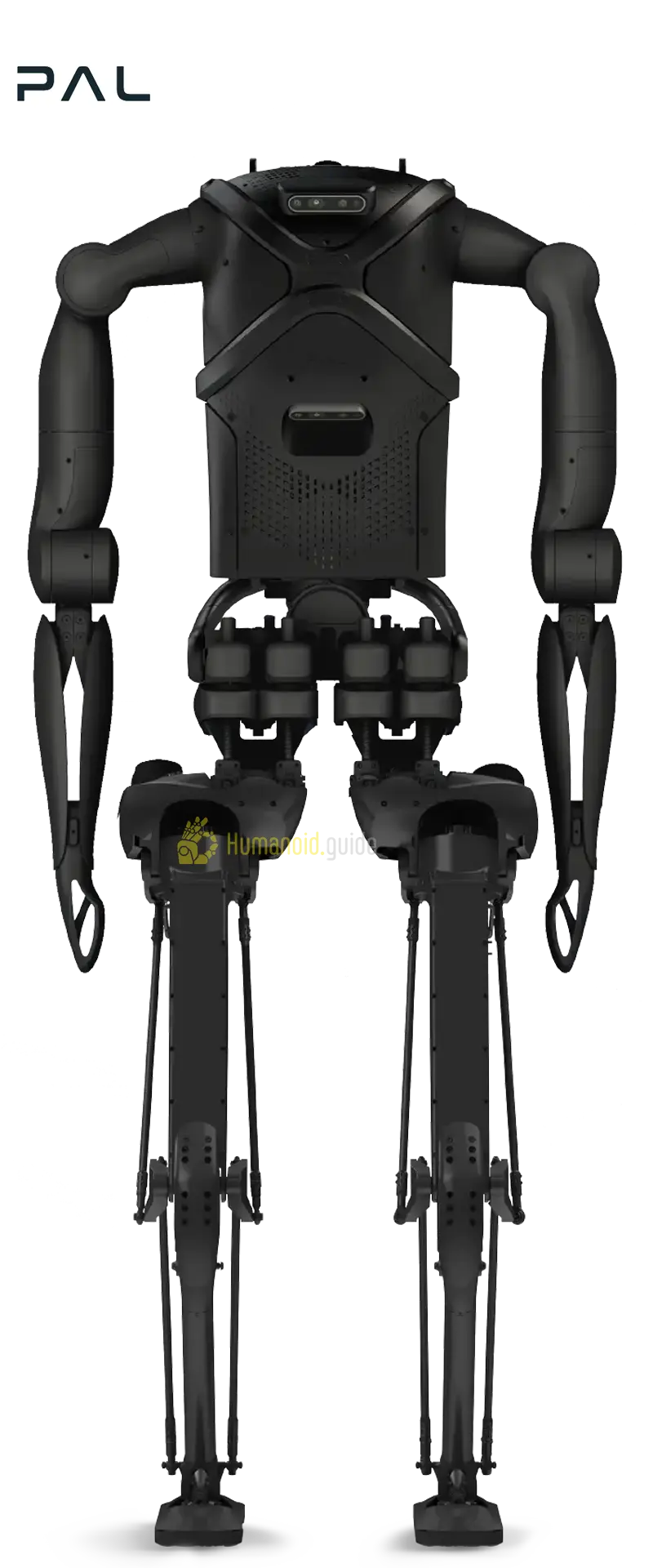
รูปภาพ2

Kangaroo photo 1
Kangaroo photo 2