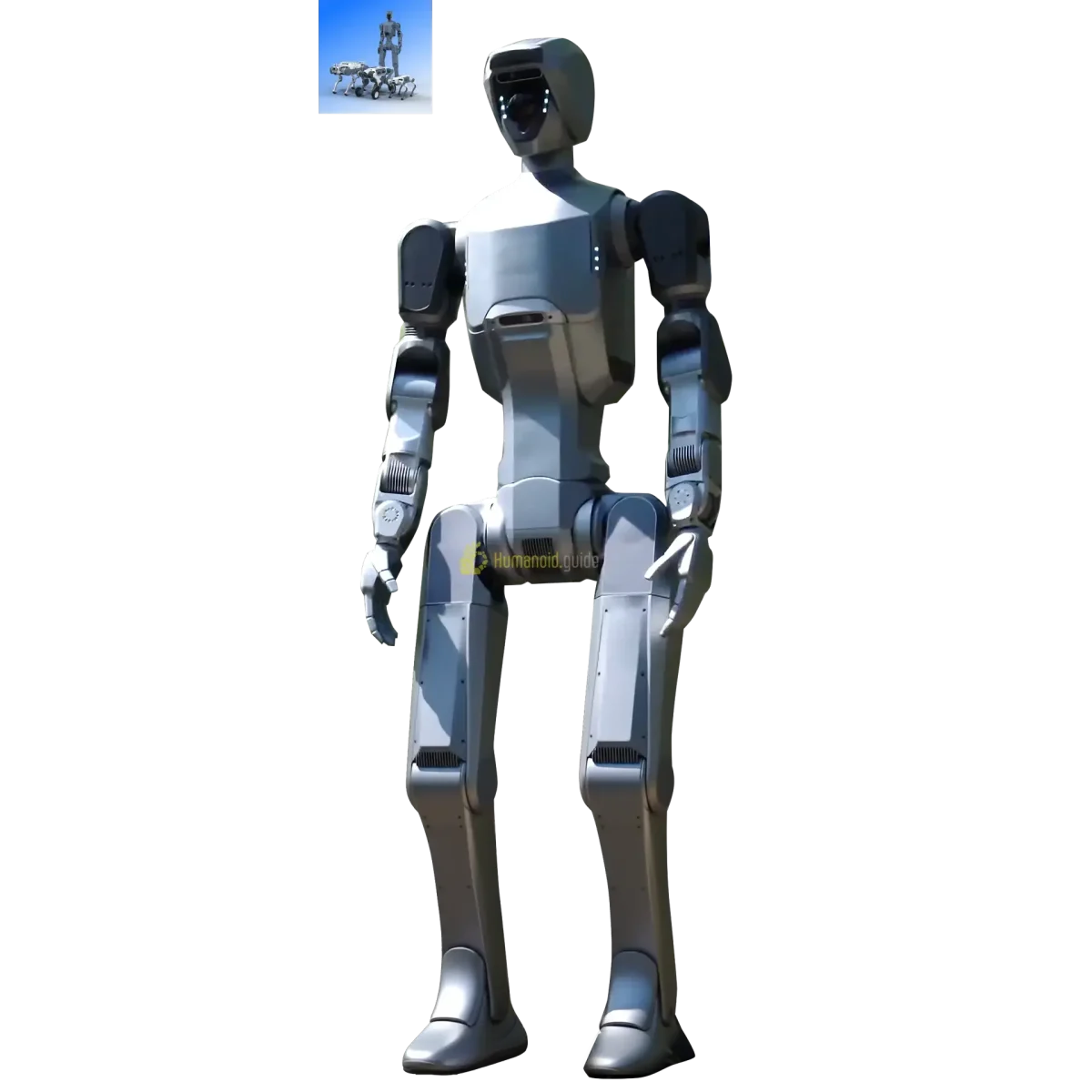
หุ่นยนต์คล้ายมนุษย์

Deep Robotic DR02 — สเปก ราคา และแหล่งจำหน่าย (2026)

The Deep Robotics DR02 is a humanoid robot made by Deep Robotics in Hangzhou, China. Price: Undisclosed (contact manufacturer). Key specs: height 175 cm, weight 65 kg, max speed 5.4 km/h, 10 kg payload. Battery life and degrees of freedom are not publicly disclosed. It is a prototype unveiled in 2024, currently in development for industrial inspection, security, and research.

💰ราคา
$16,000
📅ผลิตครั้งแรก
2025
🌍แหล่งกำเนิด
CN
📏ความสูง
175 cm
⚖️น้ำหนัก
65 kg
🏃ความเร็วสูงสุด
5.4 km/h
📦น้ำหนักบรรทุก
10 kg
🛒สถานะการวางจำหน่าย
สำหรับองค์กรเท่านั้น

What is the Dr02?

The Deep Robotics DR02 is a full-body humanoid robot developed by Deep Robotics, a robotics company founded in 2017 and headquartered in Hangzhou, China. Standing 175 cm tall and weighing 65 kg, the DR02 targets industrial inspection, security patrol, and research applications. It features a 275 TOPS compute unit, IP66 all-weather protection, and in-house joint actuators (J60, J80, J100 series). With a payload capacity of 10 kg and a maximum walking speed of 5.4 km/h (1.5 m/s), the DR02 can navigate human-centric environments. The robot remains a prototype as of 2024, with no commercial release date announced, though demonstration videos show basic locomotion and manipulation capabilities.

Specifications

Here are the full technical specifications.

SpecValue
Height175 cm
Weight65 kg
Degrees of freedomNot specified
Battery lifeNot specified
Max speed5.4 km/h
Payload10 kg
Price (new)Undisclosed (contact manufacturer)
Price (used range)N/A (pre-commercial)

Price & Value

New MSRP: Undisclosed (contact manufacturer)

Used range: N/A (pre-commercial)

Since the DR02 is a prototype with no public pricing, cost remains undisclosed. In comparison, other humanoid robots like the Unitree G1 have announced prices around $16,000, while Tesla Optimus is expected to cost under $20,000. If the DR02 targets industrial deployments, its pricing will likely compete in the mid-five-figure range, but no official estimate has been provided. The DR02’s unique all-weather IP66 rating and in-house joint design may command a premium over less rugged rivals. Potential buyers should contact Deep Robotics for enterprise pricing and understand that support, training, and integration costs will add to the total cost of ownership. Enterprises evaluating the DR02 should also consider early adopter premiums and potential software licensing fees as the platform matures.

Who Is It For?

Best for: - Industrial inspection and security patrol requiring all-weather humanoid presence (IP66 rated, 275 TOPS compute) - Research labs exploring humanoid locomotion and manipulation (10 kg payload, in-house joint actuators) - Logistics and warehousing environments needing human-like mobility and interoperability (175 cm height, 5.4 km/h walking speed)

Not for: - Budget-conscious users expecting sub-$50,000 humanoids (DR02 pricing expected to be enterprise-level) - Applications requiring long continuous runtime (battery life not disclosed, likely limited) - Tasks demanding high-speed movement (max speed only 5.4 km/h)

Alternatives & Comparison

The Deep Robotics DR02 enters a competitive landscape of emerging humanoid robots. Below we compare it to key alternatives in the industrial and research humanoid market.

ModelPriceAvailableKey Difference
Unitree G1$16,000yesLowest-price humanoid, but no IP rating for outdoor use
Tesla Optimus Gen 2~$20,000 (est.)preorderStrong AI integration and Tesla ecosystem, but not yet publicly available
Fourier GR-2UndisclosedpreorderIndustrial humanoid with high DOF, similar early stage and enterprise focus
Agility Robotics Digit~$250,000 (est.)yesProven bipedal logistics platform, but higher cost and limited manipulation

Verdict: For industrial inspection in harsh environments, the DR02’s IP66 rating is unmatched among humanoids, making it the top pick for outdoor patrol. Tesla Optimus offers a strong AI ecosystem but lacks ruggedness. Unitree G1 is dramatically cheaper but unsuitable for outdoor industrial use. Fourier GR-2 shares the DR02’s enterprise focus but is still in early development. Buyers seeking a proven platform should wait for the DR02’s commercial release or consider Agility Digit for logistics applications.

Use Cases & Capabilities

Industrial Inspection

The DR02 can navigate factory floors, refineries, and construction sites, equipped with 275 TOPS compute for real-time anomaly detection. Its IP66 rating allows operation in rain and dust, extending deployment to outdoor environments. With a payload of 10 kg, it can carry sensors or tools for detailed inspections. The bipedal form factor enables access to areas designed for human workers, such as stairs and narrow walkways, potentially improving inspection frequency and accuracy.

Security Patrol

As a humanoid sentinel, the DR02 can perform autonomous patrols of warehouses, data centers, and critical infrastructure. Its human-like appearance may serve as a deterrent, while its all-weather capability ensures 24/7 operation in external perimeters. The 275 TOPS edge computing supports on-board video analytics without relying on cloud connectivity, reducing latency for threat detection. The robot can also communicate with security personnel via integrated audio systems, enhancing situational awareness.

Research and Education

Universities and R&D labs can leverage the DR02’s open architecture and high compute power for humanoid locomotion and manipulation experiments. Its in-house joint actuators provide a platform for studying motor control algorithms and hardware scalability. The IP66 design allows fieldwork studies in variable conditions, broadening research applicability. However, unconfirmed battery life and lack of commercial availability may limit long-term dual-use projects until a production model is released.

Logistics and Warehousing

The DR02’s 175 cm stature and 10 kg payload allow it to handle small-package picking and light material transport in human-centric warehouses. Its all-weather capability means it can operate in unheated or semi-outdoor logistics hubs. Integration with warehouse management systems via the 275 TOPS compute edge could enable autonomous order fulfillment. Nevertheless, the slow walking speed of 5.4 km/h may not match the throughput of conveyor-based automation, making it best suited for low-volume, high-complexity tasks.

History & Background

Deep Robotics was founded in 2017 in Hangzhou, China, initially focusing on quadruped robots like the Jueying X20 for industrial inspection. The company revealed its first humanoid, the DR02, in 2024 as a full-scale prototype, building on its experience with dynamic locomotion and environmentally sealed designs. The DR02 integrates custom J60, J80, and J100 joint actuators to achieve bipedal movement and basic manipulation. Demonstration videos have shown the robot walking at 1.5 m/s and performing simple tasks. As of mid-2025, the DR02 remains in development, with no commercial launch date, though Deep Robotics continues to iterate on the platform for eventual enterprise deployment. The company’s established presence in industrial quadruped markets provides a foundation for the DR02’s eventual productization.

Buying Used — What to Check

Verify battery condition Battery life is undisclosed; early prototypes may have degraded or experimental battery packs.

Confirm IP66 integrity Seals and gaskets may wear over time, compromising all-weather protection and potentially damaging internal electronics.

Check joint firmware and actuator revision Prototype actuators may require specific firmware updates for reliable operation; outdated versions could cause control instability.
คำถามที่พบบ่อย

Pricing for the DR02 is currently undisclosed. As a prototype, it is not yet commercially available. Interested enterprises should contact Deep Robotics directly for potential research or evaluation pricing.
The DR02 can walk at up to 5.4 km/h, carry a 10 kg payload, and is designed for industrial inspection, security patrol, and research tasks. Its 275 TOPS compute enables on-board AI processing, and its IP66 rating allows operation in rain and dust.
No, the DR02 is a prototype unveiled in 2024 and is not yet commercially available. No release date or pre-order process has been announced. It remains in development.
The DR02 offers an all-weather IP66 rating, which Tesla Optimus currently lacks, making it better suited for outdoor industrial use. Optimus is expected to cost under $20,000 with strong AI integration, while DR02 pricing is undisclosed but likely enterprise-tier. Both are pre-commercial, but Optimus has more public visibility and a clearer path to production.
Height: 175 cm, weight: 65 kg, payload: 10 kg, max speed: 5.4 km/h, compute: 275 TOPS, IP66 protection. Degrees of freedom and battery life are not publicly specified.
Deep Robotics, founded in 2017 and headquartered in Hangzhou, China, manufactures the DR02. The company is also known for its Jueying series of industrial quadrupeds.
Battery runtime has not been officially published. No figures are available, though operating temperature range is -20°C to 55°C, suggesting some robustness. Charging time and swap capability are also unknown.
Target industries include industrial inspection, security, and logistics. The robot is designed for patrol, inspection, and light material handling. Research institutions are also expected to be early adopters once available.

DEEP Robotics DR02 Pro in 3D

Loading the 3D model…
Drag to rotate · click the model, then scroll or pinch to zoom · click a part to inspectSwipe sideways to turn · pinch to zoom · tap a part to inspect3D model credit and licence

DEEP Robotics DR02 Pro supply chain

Point at or select a step to light up its chain: bright lines are its direct links, softer lines the rest of the path from raw material to robot.

Swipe sideways to follow the whole chain.

ExtractionRefiningMaterialsComponentsModulesRobotsCompaniesDEEP designs its own motors, reducers, drivers and joint modules and assembles its core parts itself (DEEP; prospectus).Mined copper is smelted and refined.Camera units are built around image sensors (CMOS image sensors from makers such as Sony and OmniVision).Silicon metal is made from silica in natural forms such as quartzite (USGS).Silicon metal can be refined further into ultra-high-purity semiconductor-grade silicon, called polysilicon (USGS). Chips are made on wafers: thin slices of crystalline silicon (Wikipedia).Memory is made on silicon wafers (Micron lists silicon wafers among its key materials); wafer silicon is refined from silicon metal (USGS).In wire-bond packaging, fine gold or copper wire connects each die to its leadframe or substrate. ASE is gradually replacing gold wire with copper to cut material cost, though gold wire is still one of its main materials.Primary gallium is recovered mainly as a byproduct of processing bauxite (USGS).Gallium arsenide wafers are used to make optoelectronic devices, including laser diodes and photodetectors (USGS).Ouster's lidars fire light from VCSEL (vertical-cavity surface-emitting laser) arrays; Hesai says its LiDAR products depend on lasers.Ouster's lidars detect the returning light on a CMOS sensor chip with single-photon avalanche diode (SPAD) detectors; Hesai calls semiconductor chips a key component.Sony makes its CMOS image sensors in its own production facilities in Japan (Nagasaki, Kumamoto). SIA/BCG count optoelectronics and sensors in one fab group with discrete and analog chips (DAO), apart from logic.Bosch makes its MEMS sensors in its own fabs in Reutlingen and Dresden; a MEMS sensor is a MEMS element plus an evaluation chip (ASIC).A MEMS sensor is packed in a semiconductor housing, such as an LGA package (Bosch).Micron makes its memory in its own fabs; most of its 2026 DRAM output came from Taiwan. SIA/BCG: DRAM capacity is highly concentrated in South Korea.Micron's manufacturing runs from wafer fabrication through assembly and test, with subcontractors for some steps.Mined nickel ore and concentrate go to smelters and refineries. In Indonesia, laterite ore is processed into nickel pig iron and ferronickel for stainless steel, or into battery intermediates such as mixed hydroxide precipitate (IEA); the US Eagle Mine's concentrate is exported to smelters (USGS).Solder is the largest use of tin, 51% of world tin use in 2023 (International Tin Association; in the US solder took 11%, USGS). The common lead-free alloy SAC305 is 96.5% tin (AIM).Tin-lead solder is nearly half lead (PubChem), but the electronics industry has moved toward lead-free solders (USGS): 92% of solder for electronics was lead-free in 2023 (ITA).The lead-free alloy SAC305 contains 3% silver (AIM). In the US, brazing and solder took 3% of silver (USGS).The lead-free alloy SAC305 contains 0.5% copper (AIM).FR-4 laminate is woven fibreglass cloth with an epoxy binder (Wikipedia), and fibreglass is made from silica sand (Covia).A thin layer of copper foil is laminated to one or both sides of an FR-4 panel; these are called copper-clad laminates (Wikipedia; ChinaBaogao).FR-4 epoxy resin systems typically use bromine to resist fire (Wikipedia); a grade of the brominated flame retardant TBBPA is used to make epoxy resins for circuit boards (Wikipedia). Brominated flame retardants are one of bromine's two leading uses (USGS).Barite is used to make barium carbonate, which goes into dielectrics (Wikipedia). Barium titanate, the dielectric ceramic used in capacitors, can be made by heating barium carbonate with titanium dioxide (Wikipedia).Barium titanate, the ceramic in high-capacitance MLCCs, can be made by heating barium carbonate with titanium dioxide (Wikipedia); titanium dioxide comes from ilmenite and rutile (USGS).99% of MLCCs made worldwide use base-metal electrodes of nickel or copper; the industry moved from palladium and silver to cut cost (NASA, 2015). TDK replaced palladium electrodes with nickel in 1993 (Wikipedia).Platinum-group metals are used in multilayer ceramic capacitors (USGS). High-reliability MLCCs use palladium-silver electrodes (NASA, 2015).High-reliability MLCCs use precious-metal electrodes of palladium and silver (NASA, 2015).Connector contacts are copper alloys: beryllium copper is called the best copper alloy for contacts, connectors and cables (Wikipedia), and phosphor bronze (copper-tin-phosphorus) can replace it (USGS).Copper-clad laminate is the core material of circuit boards (ChinaBaogao); FR-4 is a common material for printed circuit boards (Wikipedia).Parts are soldered onto bare boards: Adafruit's BNO055 board is a "breakout PCB", and the Raspberry Pi Zero 2 W brief warns against damage to the printed circuit board.SAC305 lead-free solder is made for soldering printed circuits, by wave, hand and SMT reflow soldering (Conro; AIM).MLCCs store and release charge and absorb noise in phones, home appliances and IoT devices (Murata). The Raspberry Pi's RP3A0 package includes the decoupling capacitors that smooth its supply voltage (Raspberry Pi).Boards carry connectors: the Raspberry Pi Zero 2 W brief speaks of the board and its connectors, and Waveshare's servo adapter has a USB-C connector and a power connector.Brass is copper and zinc: CW614N free-cutting brass is about 39% zinc. In the US, brass and bronze are the second use of zinc after galvanized steel.Brass is mostly copper: 57–59% in CW614N free-cutting brass.Free-cutting brass such as CW614N holds 2.5–3.5% lead so it machines cleanly; lead-free brasses exist.XT30 battery plugs (G1 harness, Open Duck Mini) have gold-plated brass contacts.Antimony is used in circuit boards to cut flammability further. A review lists two studies of scrap PC boards, parts and solder still on, with 0.45% and 1.97% antimony, so the share in the laminate alone is not known.MEMS microphones are silicon chips: the diaphragm is etched into a silicon wafer (Wikipedia). Pollen's HAT uses a MEMS microphone.Each joint has a driver, whose temperature it reports to DEEP's SDK; DEEP buys drivers (¥1,314.01 each on average, Jan–Jun 2026) and PCBA under framework contracts.A protection board: the battery reports its level, voltage, current and protection state to DEEP's SDK.Two processors: an 'industrial-grade 64-bit octa-core processor' and, on the Pro, an 'AI processor' (DEEP); both computers run Ubuntu on ARM64.16 GB of memory with the octa-core processor (DEEP).The computers are circuit boards with their chips soldered on; DEEP buys its main control modules at ¥1,558.26 each on average (Jan–Jun 2026, all its robots).DUV machines, which ASML also makes, print most of the layers in microchips, and ASML's EUV machines (the NXE:3800E) are being adopted by advanced DRAM makers (ASML annual report 2025).ASML's DUV machines, 'the workhorses of the industry', print the majority of layers in chips, older-generation chips included (ASML annual report 2025).The frame, shells and covers that make up the DR02's body (DEEP's 3D model and photos).31 joint motors on the DR02 Pro (6 per leg, 7 per arm, 3 in the waist, 2 in the neck) and 21 on the DR02 (DEEP).One swappable 20 Ah (1,440 Wh) battery (DEEP).An 8-core 64-bit industrial processor (16 GB + 128 GB) and, on the Pro, an AI processor of up to 275 TOPS (DEEP); DEEP's SDK calls them the AOS and the NOS.A LiDAR in the head (DEEP); its maker is not named. DEEP buys its LiDARs from Ronghui Positioning (Beijing) under a framework contract (all its robots).Three Intel RealSense D435 depth cameras on the DR02 Pro (DEEP's SDK), and a wide-angle camera on both versions (DEEP).Two IMUs, in the head and the pelvis: DEEP's SDK reads 'head and base IMU' data.A microphone array and speaker (DEEP).A microphone array and speaker (DEEP).Power and data ports (72 V and Gigabit Ethernet on both versions; 24 V, USB 3.0 and UART also on the Pro). DEEP's humanoid-joint patent, which does not name DR02, routes cables past the hip joint, one each for the waist joints, each leg, the front and rear cameras and the gyro; it is made for cables with extra protective layers for outdoor use, up to about 7 mm thick.DEEP Robotics makes this robot.Quartz and silica sandQuartz and silica sandGallium recovery (aluminabyproduct)Gallium recovery (alumina byproduct)Lithography machines (chipprinting)Lithography machines (chip printing)Mature-node chipfabrication (28 nm and…Mature-node chip fabrication (28 nm and older; analog and sensor chips)Memory chip fabrication(DRAM)Memory chip fabrication (DRAM)Laser diodes (VCSEL andedge-emitting)Laser diodes (VCSEL and edge-emitting)Copper smelting andrefiningCopper smelting and refiningCopper miningCopper miningBauxite miningBauxite miningSilicon metal smeltingSilicon metal smeltingChip packaging and test(OSAT)Chip packaging and test (OSAT)Processors (CPUs and SoCs)Processors (CPUs and SoCs)Memory chips (DRAM /LPDDR)Memory chips (DRAM / LPDDR)Image sensorsImage sensorsIMUs (motion sensors)IMUs (motion sensors)Cameras and depth camerasCameras and depth camerasLiDARLiDARNickel miningNickel miningNickel smelting andrefiningNickel smelting and refiningTitanium minerals(ilmenite and rutile)Titanium minerals (ilmenite and rutile)Tin miningTin miningLead miningLead miningSilver miningSilver miningPalladium mining(platinum-group metals)Palladium mining (platinum-group metals)Antimony miningAntimony miningBromine (from brines)Bromine (from brines)Barite mining (barium)Barite mining (barium)Solder (tin alloys:lead-free SAC and…Solder (tin alloys: lead-free SAC and tin-lead)Copper-clad laminate (FR-4glass-fibre epoxy board…Copper-clad laminate (FR-4 glass-fibre epoxy board material)Printed circuit boards(bare boards)Printed circuit boards (bare boards)Multilayer ceramiccapacitors (MLCC)Multilayer ceramic capacitors (MLCC)Connectors and wiringharnessesConnectors and wiring harnessesElectronics assembly(circuit boards with part…Electronics assembly (circuit boards with parts soldered on)Zinc miningZinc miningBrass (copper-zinc alloy)Brass (copper-zinc alloy)MicrophonesMicrophonesSmall speakersSmall speakersDEEP Robotics DR02DEEP Robotics DR02Structure: DEEP RoboticsDR02Structure: DEEP Robotics DR02DEEP Robotics DR02 jointmodulesDEEP Robotics DR02 joint modulesDR02 battery pack (72 V,20 Ah)DR02 battery pack (72 V, 20 Ah)DR02 computers (AOS andNOS)DR02 computers (AOS and NOS)DEEP RoboticsDEEP Robotics

รูปภาพ2

Deep Robotic DR02 photo 1
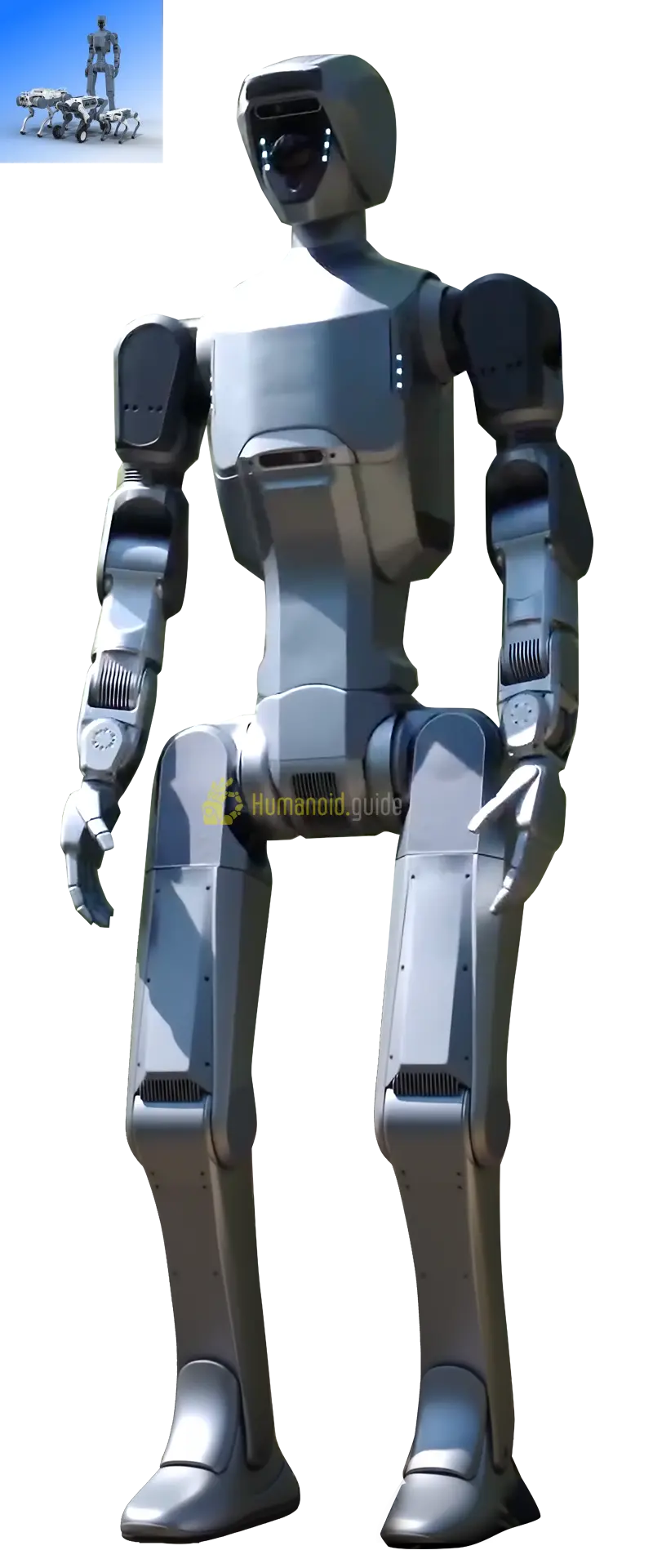
Deep Robotic DR02 photo 2