หุ่นยนต์คล้ายมนุษย์

Booster Robotics T1 — สเปก ราคา และแหล่งจำหน่าย (2026)

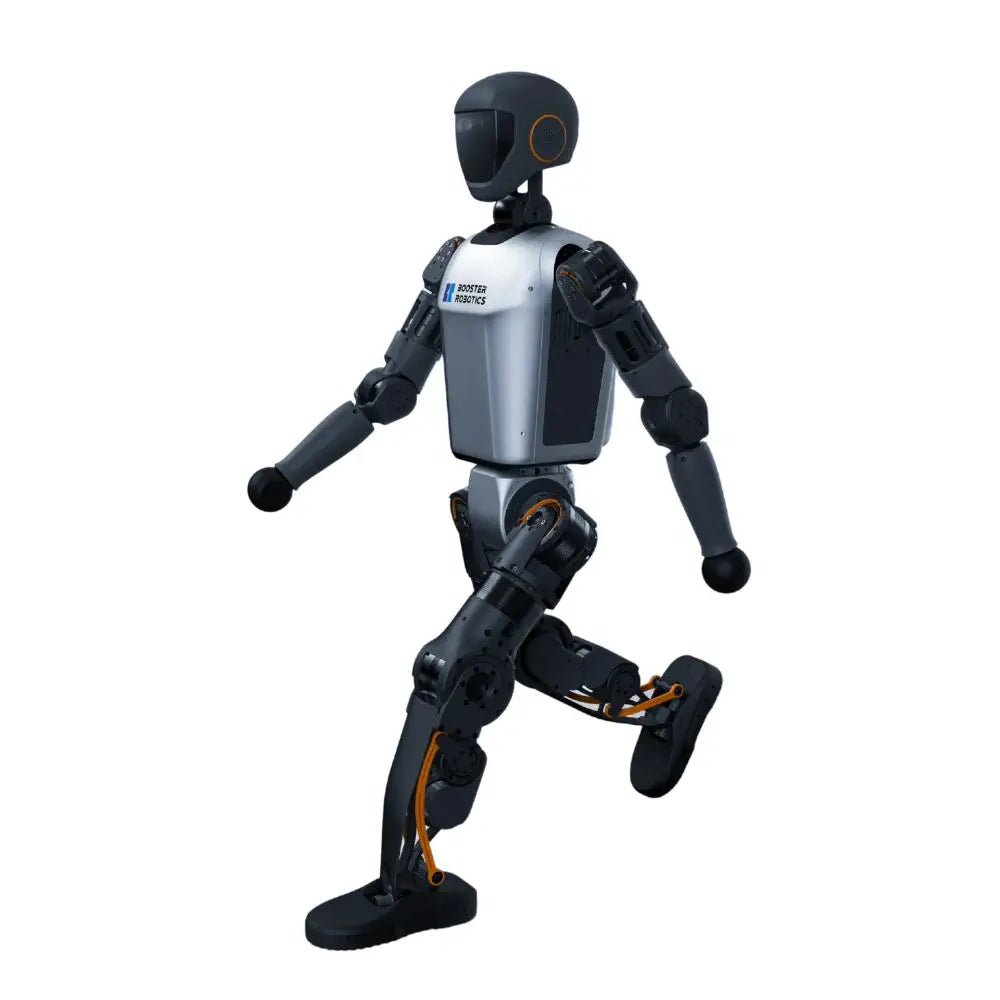
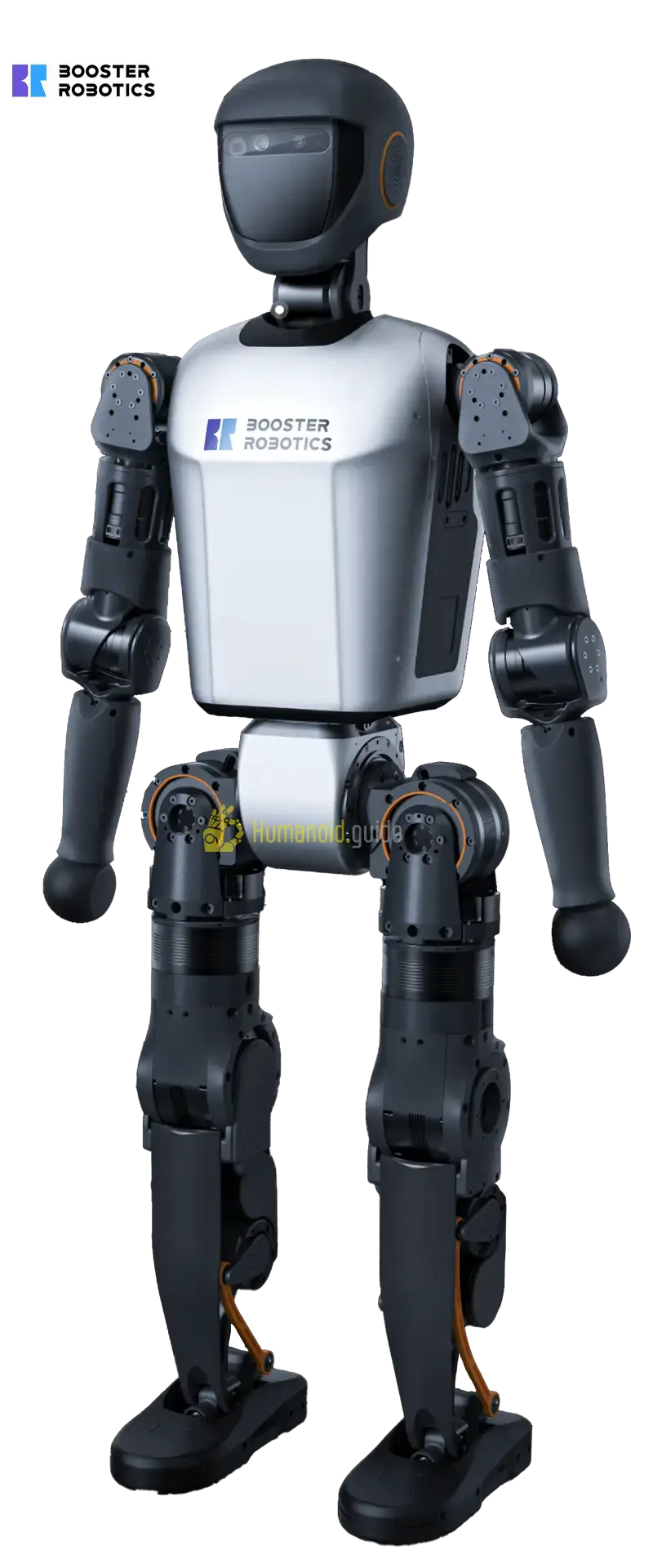
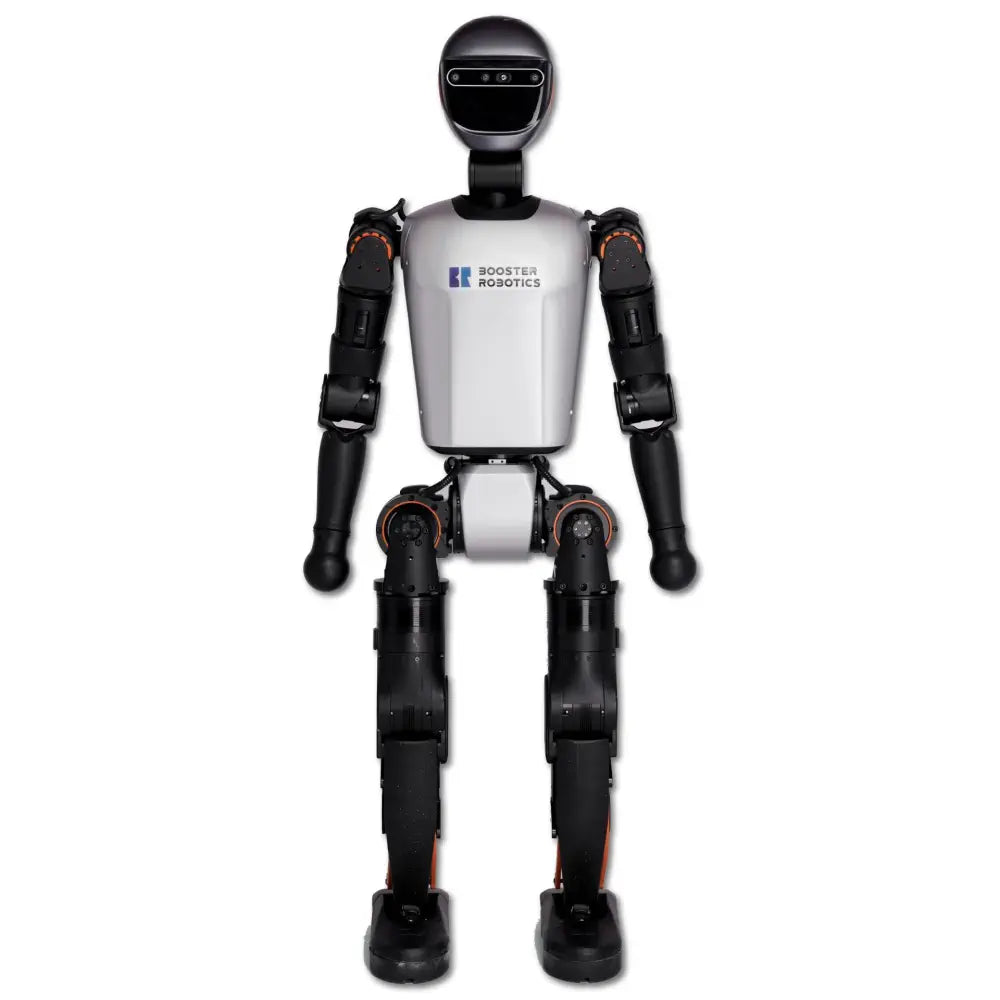
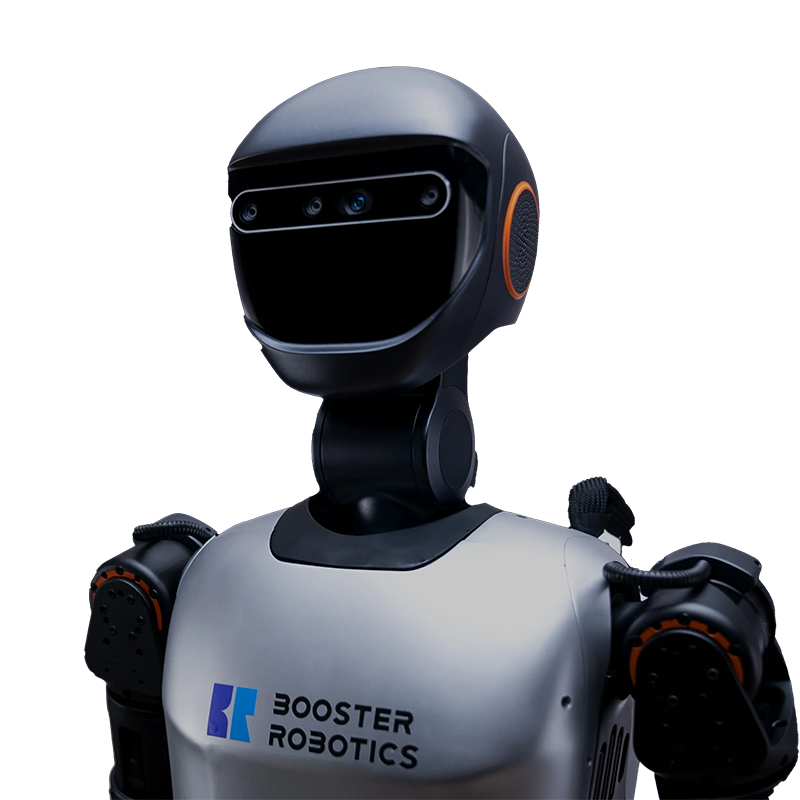
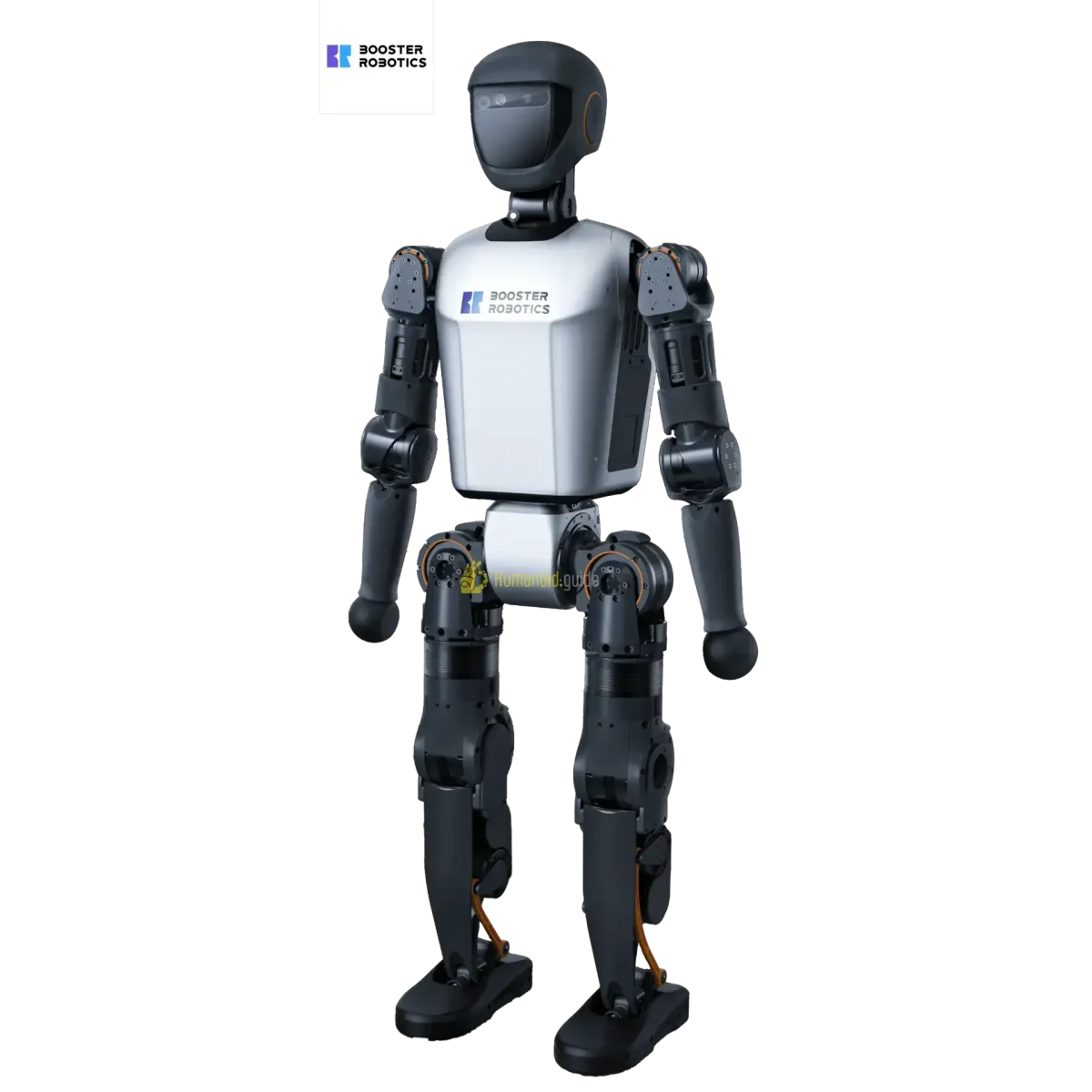
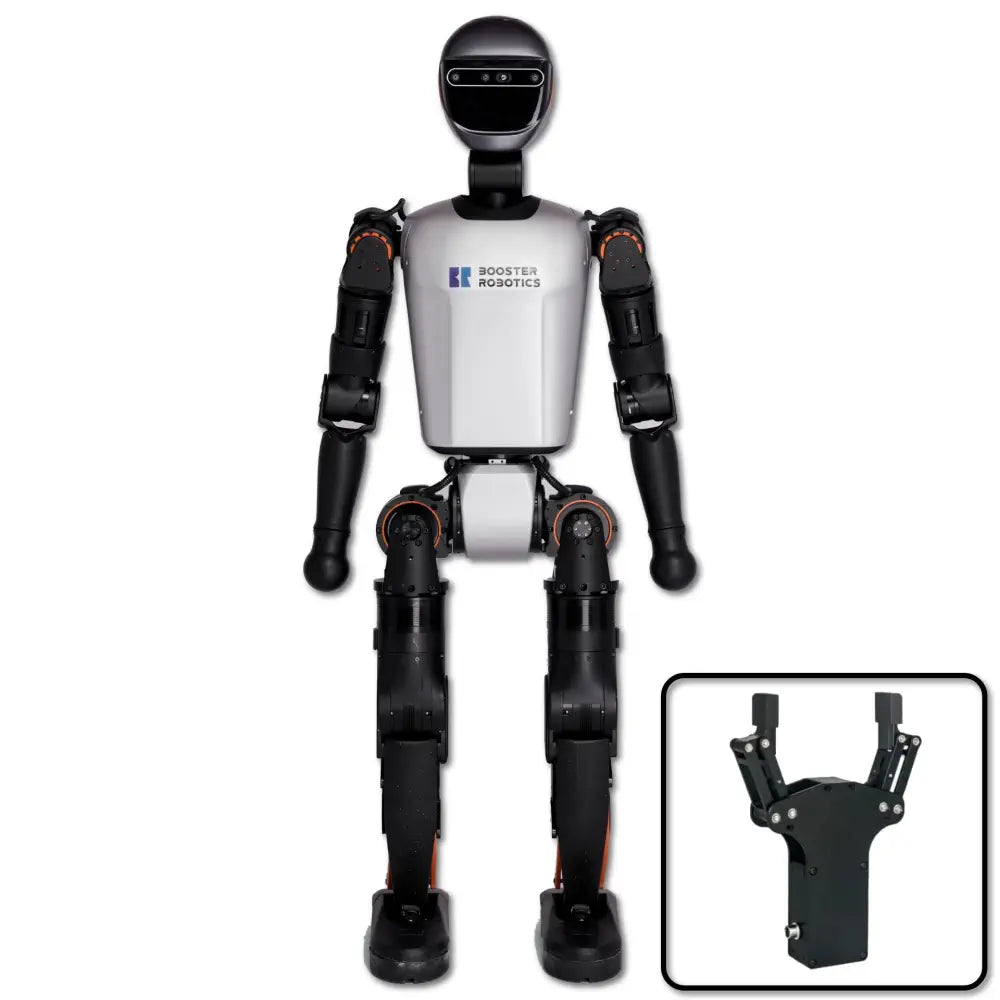
The Booster T1 is a small, agile humanoid robot made by Booster Robotics in China. Price: around $22,000. Key specs: 118 cm tall, 30 kg, 23 degrees of freedom, 2-hour battery life, and a max speed of 18 km/h. Optimized for walking and running, it is a popular choice for research labs and humanoid soccer teams. It is available for pre-order from select distributors.

💰ราคา
$22,000
📅ผลิตครั้งแรก
2024
🌍แหล่งกำเนิด
CN
📏ความสูง
118 cm
⚖️น้ำหนัก
30 kg
🦾องศาอิสระ
23
🏃ความเร็วสูงสุด
18 km/h
📦น้ำหนักบรรทุก
3 kg
🔋แบตเตอรี่
2 hours
🛒สถานะการวางจำหน่าย
สั่งซื้อล่วงหน้า

What is the Booster T1?

The Booster Robotics T1 is a compact, athletic humanoid robot from China, designed for high-dynamic motions like walking and running. Standing at 118 cm tall and weighing 30 kg, it packs 23 degrees of freedom and can reach speeds up to 18 km/h. With a price of around $22,000, it targets education, research, and humanoid soccer applications. Its open platform and SDK support make it a budget-friendly alternative to larger humanoids like the Fourier GR1 or Unitree G1, particularly for labs needing a lightweight, agile platform for dynamic motion studies. It is currently available for pre-order.

Specifications

Here are the full technical specifications.

SpecValue
Height118 cm
Weight30 kg
Degrees of freedom23
Battery life2 hours
Max speed18 km/h
Payload3 kg
Price (new)$22,000
Price (used range)N/A

Price & Value

New MSRP: $22,000

Used range: N/A

At $22,000, the Booster T1 undercuts most dynamic humanoids, making it a compelling alternative to the $16k Unitree G1, which is slower, and the $150k Fourier GR1, which is heavier but more capable. Its open platform and SDK reduce long-term software costs, and its modular construction may simplify repairs. Resale value is uncertain given the early stage, but early units may depreciate quickly as more polished competitors emerge. For labs with limited budgets, the T1 offers an unmatched speed-to-price ratio. However, total cost of ownership should factor in potential battery replacements and the limited manufacturer support. Overall, it is one of the most affordable running humanoids available in 2026.

Who Is It For?

Best for: - University robotics labs needing a low-cost, high-dynamic humanoid for locomotion research - Humanoid soccer teams in RoboCup leagues requiring a fast, agile player - Educators teaching advanced robot motion planning with hands-on access

Not for: - Heavy industrial tasks due to 3 kg arm payload limitation - Applications needing long-duration autonomy (2-hour battery) - Projects requiring human-like hand dexterity (hands not fully specified)

Alternatives & Comparison

The Booster T1 competes with other budget humanoid robots in the research and sports market. While it emphasizes speed and agility, alternatives offer different trade-offs.

ModelPriceAvailableKey Difference
Unitree G1$16,000yesLower price, more general-purpose, not sports-optimized.
Fourier GR1$150,000yesLarger, heavier, higher payload, not optimized for soccer.

Verdict: For researchers needing a low-cost, fast-running humanoid, the Booster T1 is the clear winner, offering unmatched speed per dollar. However, labs needing stronger manipulation or heavier payloads should consider the Fourier GR1. The Unitree G1 provides similar affordability but lacks the T1's athletic edge, making it better for general-purpose studies.

Use Cases & Capabilities

Humanoid Soccer

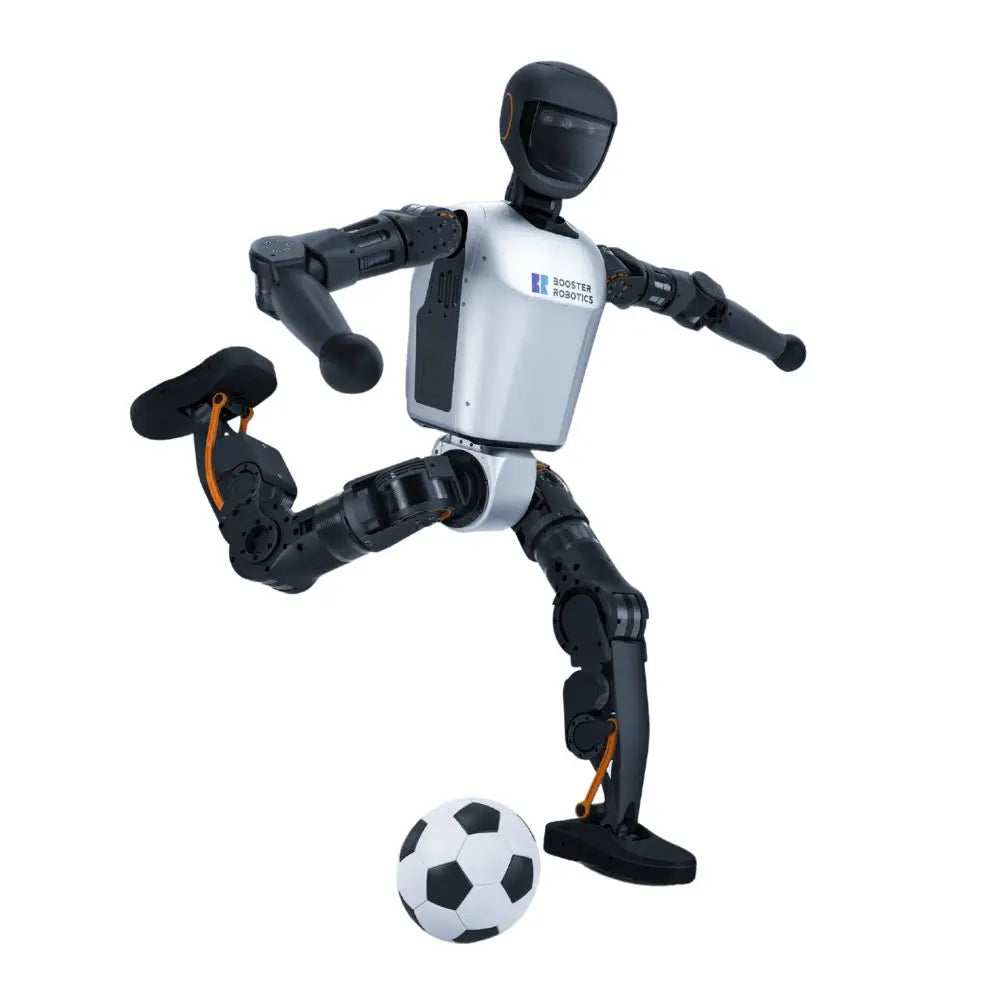
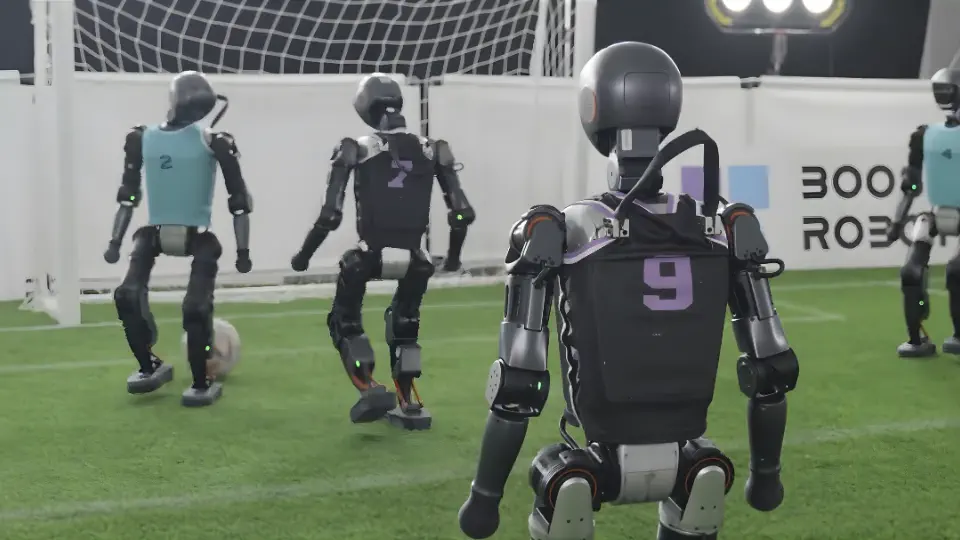
The Booster T1's lightweight 30 kg build and 18 km/h top speed make it a standout choice for humanoid soccer leagues like RoboCup. Its 23 DOF allow human-like running and kicking motions, while fall-resistant design helps it recover quickly after tackles. The open SDK and ROS compatibility enable teams to fine-tune gait algorithms and strategic plays. With a 2-hour battery life, it can complete a full match with pauses for charging. Early adopters report improved scoring potential compared to heavier bots.

Dynamic Locomotion Research

Researchers studying bipedal walking and running can leverage the T1 as an affordable, high-speed testbed. Its 5 m/s max speed and dynamic motion capability are exceptional at this price point. The robot's open platform allows full access to motor control and sensor data, enabling the development of novel balance and push-recovery algorithms. Labs can implement reinforcement learning directly on the hardware without the high cost of larger humanoids. However, the limited 2-hour battery may require frequent recharging during extended experiments.

Developer Education

The Booster T1 serves as a hands-on teaching tool for robotics and AI students. Its low cost and open SDK lower the barrier for universities to operate multiple units simultaneously. Students can program gaits, integrate computer vision for obstacle avoidance, and experiment with full-body control. The robot's compact size and safe composite materials make it suitable for classroom environments. Despite limited documentation, the active community around humanoid soccer provides learning resources.

Sports Science

In biomechanics and sports engineering, the T1 can serve as a humanoid model for studying athletic performance. Its running speeds and joint articulation mimic human sprinting, offering a physical platform for testing footwear, surface interactions, or motion efficiency. Researchers can instrument the robot with external sensors to measure ground reaction forces. The robot's open-source nature allows custom modifications for specific research questions. However, payload limitations restrict the addition of heavy instrumentation.

History & Background

Booster Robotics, a Chinese startup, launched the T1 humanoid in 2024, targeting the research and sports robotics market. The company has kept a low profile, with minimal public information about its founding team or facilities. The T1's first public appearance was at robotics competitions and through reseller listings in 2024. Unlike many humanoid companies focusing on industrial applications, Booster emphasized athletic performance—walking, running, and agility—at an aggressive price. As of 2026, the robot is available for pre-order, with initial units shipped to university labs and RoboCup teams. Booster Robotics has not announced any newer models or variants, suggesting the T1 remains their flagship product. The company maintains a sparse online presence, with only a basic landing page and no social media updates.

Buying Used — What to Check

Verify warranty and support Pre-order units may lack full manufacturer support or have limited warranty coverage.

Check for custom modifications Used T1 units may have been modified for specific experiments, potentially altering performance.

Confirm battery health Battery degradation could significantly reduce runtime below the advertised 2 hours.
คำถามที่พบบ่อย

$22,000, according to reseller listings. Pricing may vary based on region and order size. Pre-order availability is through distributors like MERA Robotics.
It is designed for dynamic walking, running, and agile motions for research and humanoid soccer. With a top speed of 18 km/h, it can compete in RoboCup leagues. Its open SDK allows developers to program custom gaits.
Yes, it is available for pre-order through select distributors. Lead times are not publicly specified, but early units have shipped to research partners.
The Booster T1 is more athletic and faster (18 km/h vs Unitree G1's walking speed of ~5 km/h) but is less general-purpose. The Unitree G1 is cheaper at $16,000 and supports more manipulation tasks.
Height 118 cm, weight 30 kg, 23 DOF, max speed 18 km/h, battery life 2 hours, payload 3 kg.
Booster Robotics, a Chinese company. Little is publicly known about the company; its website is boosterobotics.com. The T1 was first revealed in 2024.
The battery lasts about 2 hours under normal use. Actual runtime depends on activity intensity. The battery is not user-swappable.
Primarily education and research, especially university labs studying dynamic locomotion and RoboCup teams. Some sports research institutions have also shown interest.
The manufacturer has not provided a safety rating, but its low weight and fall-resistant design reduce risk. It is recommended for controlled laboratory or field environments.

Booster T1 in 3D

Loading the 3D model…
Drag to rotate · click the model, then scroll or pinch to zoom · click a part to inspectSwipe sideways to turn · pinch to zoom · tap a part to inspect3D model credit and licence

Booster T1 supply chain

Point at or select a step to light up its chain: bright lines are its direct links, softer lines the rest of the path from raw material to robot.

Swipe sideways to follow the whole chain.

ExtractionRefiningMaterialsComponentsModulesRobotsCompaniesBooster develops the T1's joint motors itself ('custom-developed Booster Robotics motor', Bipedal Robotics; 'Booster Robotics Integrated Joints', RoboCup teams); where they are made is not published.Lithium compounds (carbonate, chloride, hydroxide) are produced from mined lithium.Lithium is produced from brine and mineral operations.Mined copper is smelted and refined.Primary aluminium from smelters.Bauxite is refined to alumina for aluminium.6061 aluminium contains 0.8–1.2% magnesium.6061 aluminium contains 0.40–0.8% silicon.A lithium-ion cell has a cathode (positive electrode), typically a metal oxide or phosphate. IEA tracks the 2025 mix of LFP and nickel-based cathodes in electric-car batteries.Camera units are built around image sensors (CMOS image sensors from makers such as Sony and OmniVision).Silicon metal is made from silica in natural forms such as quartzite (USGS).Silicon metal can be refined further into ultra-high-purity semiconductor-grade silicon, called polysilicon (USGS). Chips are made on wafers: thin slices of crystalline silicon (Wikipedia).Magnesium is recovered from dolomite, serpentine, magnesium-bearing evaporite minerals and brines (USGS).In wire-bond packaging, fine gold or copper wire connects each die to its leadframe or substrate. ASE is gradually replacing gold wire with copper to cut material cost, though gold wire is still one of its main materials.Primary gallium is recovered mainly as a byproduct of processing bauxite (USGS).Gallium arsenide wafers are used to make optoelectronic devices, including laser diodes and photodetectors (USGS).Ouster's lidars fire light from VCSEL (vertical-cavity surface-emitting laser) arrays; Hesai says its LiDAR products depend on lasers.Ouster's lidars detect the returning light on a CMOS sensor chip with single-photon avalanche diode (SPAD) detectors; Hesai calls semiconductor chips a key component.Sony makes its CMOS image sensors in its own production facilities in Japan (Nagasaki, Kumamoto). SIA/BCG count optoelectronics and sensors in one fab group with discrete and analog chips (DAO), apart from logic.Bosch makes its MEMS sensors in its own fabs in Reutlingen and Dresden; a MEMS sensor is a MEMS element plus an evaluation chip (ASIC).A MEMS sensor is packed in a semiconductor housing, such as an LGA package (Bosch).Mined cobalt is refined further into chemicals or metal (Cobalt Institute). In 2025 DR Congo's export restrictions left refiners short of cobalt hydroxide feed and forced some to limit production, though world refined output still rose 5% to 240 kt (Cobalt Institute).Cobalt sulphate, the largest refined cobalt product, is typically used in NCM (NMC) batteries, and cobalt tetroxide often in LCO batteries (Cobalt Institute). Cobalt-free substitutes that use iron and phosphorus (LFP) held a significant market share in China (USGS).Mined nickel ore and concentrate go to smelters and refineries. In Indonesia, laterite ore is processed into nickel pig iron and ferronickel for stainless steel, or into battery intermediates such as mixed hydroxide precipitate (IEA); the US Eagle Mine's concentrate is exported to smelters (USGS).Battery cathodes need nickel sulphate, made from Class I nickel metal or from intermediates such as mixed hydroxide precipitate and nickel matte (IEA). LFP (lithium iron phosphate) cathodes contain no nickel.Lithium-ion cathodes are lithium compounds, generally a layered oxide (such as lithium cobalt oxide), a phosphate (lithium iron phosphate) or a spinel (lithium manganese oxide). Batteries took an estimated 88% of world lithium in 2025 (USGS).Natural graphite flakes must be made into spherical particles, purified to over 99.95% carbon and coated before they can be used in lithium-ion battery anodes (IEA). Natural graphite is now a small part of anode supply: under 8% of China's 2025 anode shipments (GGII), and about 14% worldwide in 2022 (Rystad).Synthetic graphite is made by calcining and graphitising petroleum coke or needle coke at nearly 3,000 °C (IEA). It was 92.7% of China's 2025 anode shipments (GGII).The negative electrode (anode) of a conventional lithium-ion cell is typically graphite. IEA's 2025 data on electric-car battery anodes show only graphite and silicon-doped graphite.89.8% of the world's plastics in 2024 were made from fossil feedstock (Plastics Europe).Solder is the largest use of tin, 51% of world tin use in 2023 (International Tin Association; in the US solder took 11%, USGS). The common lead-free alloy SAC305 is 96.5% tin (AIM).Tin-lead solder is nearly half lead (PubChem), but the electronics industry has moved toward lead-free solders (USGS): 92% of solder for electronics was lead-free in 2023 (ITA).The lead-free alloy SAC305 contains 3% silver (AIM). In the US, brazing and solder took 3% of silver (USGS).The lead-free alloy SAC305 contains 0.5% copper (AIM).FR-4 laminate is woven fibreglass cloth with an epoxy binder (Wikipedia), and fibreglass is made from silica sand (Covia).A thin layer of copper foil is laminated to one or both sides of an FR-4 panel; these are called copper-clad laminates (Wikipedia; ChinaBaogao).FR-4 epoxy resin systems typically use bromine to resist fire (Wikipedia); a grade of the brominated flame retardant TBBPA is used to make epoxy resins for circuit boards (Wikipedia). Brominated flame retardants are one of bromine's two leading uses (USGS).Barite is used to make barium carbonate, which goes into dielectrics (Wikipedia). Barium titanate, the dielectric ceramic used in capacitors, can be made by heating barium carbonate with titanium dioxide (Wikipedia).Barium titanate, the ceramic in high-capacitance MLCCs, can be made by heating barium carbonate with titanium dioxide (Wikipedia); titanium dioxide comes from ilmenite and rutile (USGS).99% of MLCCs made worldwide use base-metal electrodes of nickel or copper; the industry moved from palladium and silver to cut cost (NASA, 2015). TDK replaced palladium electrodes with nickel in 1993 (Wikipedia).Platinum-group metals are used in multilayer ceramic capacitors (USGS). High-reliability MLCCs use palladium-silver electrodes (NASA, 2015).High-reliability MLCCs use precious-metal electrodes of palladium and silver (NASA, 2015).Connector contacts are copper alloys: beryllium copper is called the best copper alloy for contacts, connectors and cables (Wikipedia), and phosphor bronze (copper-tin-phosphorus) can replace it (USGS).Copper-clad laminate is the core material of circuit boards (ChinaBaogao); FR-4 is a common material for printed circuit boards (Wikipedia).Parts are soldered onto bare boards: Adafruit's BNO055 board is a "breakout PCB", and the Raspberry Pi Zero 2 W brief warns against damage to the printed circuit board.SAC305 lead-free solder is made for soldering printed circuits, by wave, hand and SMT reflow soldering (Conro; AIM).MLCCs store and release charge and absorb noise in phones, home appliances and IoT devices (Murata). The Raspberry Pi's RP3A0 package includes the decoupling capacitors that smooth its supply voltage (Raspberry Pi).Boards carry connectors: the Raspberry Pi Zero 2 W brief speaks of the board and its connectors, and Waveshare's servo adapter has a USB-C connector and a power connector.NVIDIA's Jetson Thor modules are 100 × 87 mm and plug in through a 699-pin board-to-board (B2B) connector (NVIDIA).Brass is copper and zinc: CW614N free-cutting brass is about 39% zinc. In the US, brass and bronze are the second use of zinc after galvanized steel.Brass is mostly copper: 57–59% in CW614N free-cutting brass.Free-cutting brass such as CW614N holds 2.5–3.5% lead so it machines cleanly; lead-free brasses exist.XT30 battery plugs (G1 harness, Open Duck Mini) have gold-plated brass contacts.Antimony is used in circuit boards to cut flammability further. A review lists two studies of scrap PC boards, parts and solder still on, with 0.45% and 1.97% antimony, so the share in the laminate alone is not known.7075 aluminium alloy (RoboCup teams' spec sheets for the T1).Engineering plastics (RoboCup teams' spec sheets for the T1).Each joint has two encoders (Booster: 'Dual Encoder'; absolute plus incremental, a RoboCup team's sheet). The joints' driver boards are not described.Ternary lithium cells in a 13S3P layout (RoboCup teams); the cell maker is not published.A protection board guards against overcharge, over-discharge, short circuits and overheating, balances the cells and drives the power display (spare-battery listing).MEMS microphones are silicon chips: the diaphragm is etched into a silicon wafer (Wikipedia). Pollen's HAT uses a MEMS microphone.ASML's DUV machines, 'the workhorses of the industry', print the majority of layers in chips, older-generation chips included (ASML annual report 2025).Booster Robotics makes this robot.The frame, shells and covers that make up the Booster T1's body.23 joint modules: 6 per leg (hip pitch, roll and yaw, knee, and two ankle motors), the waist's yaw, 4 per arm and 2 in the neck (Booster's 3D model and manual).One 10.5 Ah battery in the torso (Booster). A RoboCup team lists it as a 13S3P ternary lithium pack; 13 cells in series is about 47 V nominal, so about 490 Wh (The authors' arithmetic).An NVIDIA Jetson AGX Orin 32GB (200 TOPS) on both editions in Booster's manual, Basic and Standard; on the Basic it runs both motion control and perception (Booster; manual). A German shop also lists a 100 TOPS T1 Basic.Standard edition: an Intel Core i7-1370P motion-control board ('Express-i7', 6 performance and 8 efficiency cores, 8 GB memory, 512 GB storage).Depth camera in the head: an Intel RealSense D455 on the 'RealSense version'; on the 'Orbbec version' an Orbbec camera the manual calls 'Gemini 2 355L', a name Orbbec does not use. The manual starts it with Orbbec's Gemini 330-series driver, so it is probably a Gemini 335L (Booster's manual). A RoboCup team's T1s use the D455.A 9-axis IMU (Booster); Booster's MuJoCo model puts it at the torso's origin.Optional: a 3D LiDAR in the head, 360° across and 59° up and down (Bipedal Robotics' documentation); not on Booster's own spec list.Circuit boards besides the computers: the circular 6-microphone array (Booster) and the battery's protection board (a spare-battery listing); the power boards are not described.A circular 6-microphone array in the head (Booster).A speaker in the head (Booster).Quartz and silica sandQuartz and silica sandMagnesium ores and brinesMagnesium ores and brinesOil, gas and coal(plastics feedstock)Oil, gas and coal (plastics feedstock)Gallium recovery (aluminabyproduct)Gallium recovery (alumina byproduct)Lithography machines (chipprinting)Lithography machines (chip printing)Mature-node chipfabrication (28 nm and…Mature-node chip fabrication (28 nm and older; analog and sensor chips)Laser diodes (VCSEL andedge-emitting)Laser diodes (VCSEL and edge-emitting)Aluminium alloysAluminium alloysBattery-grade lithiumcompoundsBattery-grade lithium compoundsLithium chemicalconversionLithium chemical conversionCopper smelting andrefiningCopper smelting and refiningAlumina refining andaluminium smeltingAlumina refining and aluminium smeltingLithium miningLithium miningCopper miningCopper miningBauxite miningBauxite miningMagnesium smeltingMagnesium smeltingSilicon metal smeltingSilicon metal smeltingChip packaging and test(OSAT)Chip packaging and test (OSAT)Processors (CPUs and SoCs)Processors (CPUs and SoCs)Image sensorsImage sensorsIMUs (motion sensors)IMUs (motion sensors)Lithium-ion cellsLithium-ion cellsAI compute modulesAI compute modulesCameras and depth camerasCameras and depth camerasLiDARLiDARCobalt miningCobalt miningCobalt refining (chemicalsand metal)Cobalt refining (chemicals and metal)Nickel miningNickel miningNickel smelting andrefiningNickel smelting and refiningNatural graphite miningNatural graphite miningBattery anode graphite(spherical natural and…Battery anode graphite (spherical natural and synthetic)Cathode active material(NMC, NCA, LCO, LFP)Cathode active material (NMC, NCA, LCO, LFP)Titanium minerals(ilmenite and rutile)Titanium minerals (ilmenite and rutile)Engineering plastics (ABS,PC, nylon, PEEK)Engineering plastics (ABS, PC, nylon, PEEK)Tin miningTin miningLead miningLead miningSilver miningSilver miningPalladium mining(platinum-group metals)Palladium mining (platinum-group metals)Antimony miningAntimony miningBromine (from brines)Bromine (from brines)Barite mining (barium)Barite mining (barium)Solder (tin alloys:lead-free SAC and…Solder (tin alloys: lead-free SAC and tin-lead)Copper-clad laminate (FR-4glass-fibre epoxy board…Copper-clad laminate (FR-4 glass-fibre epoxy board material)Printed circuit boards(bare boards)Printed circuit boards (bare boards)Multilayer ceramiccapacitors (MLCC)Multilayer ceramic capacitors (MLCC)Connectors and wiringharnessesConnectors and wiring harnessesElectronics assembly(circuit boards with part…Electronics assembly (circuit boards with parts soldered on)Zinc miningZinc miningBrass (copper-zinc alloy)Brass (copper-zinc alloy)Booster RoboticsBooster RoboticsBooster T1Booster T1Structure: Booster T1Structure: Booster T1Booster T1 joint modulesBooster T1 joint modulesT1 battery pack (13S3P,10.5 Ah)T1 battery pack (13S3P, 10.5 Ah)MicrophonesMicrophonesSmall speakersSmall speakers

รูปภาพ9

Booster Robotics T1 photo 1
Booster Robotics T1 photo 2
Booster Robotics T1 photo 3
Booster Robotics T1 photo 4
Booster Robotics T1 photo 5
Booster Robotics T1 photo 6
Booster Robotics T1 photo 7
Booster Robotics T1 photo 8
Booster Robotics T1 photo 9