Daily average price
Amounts in USD
Description
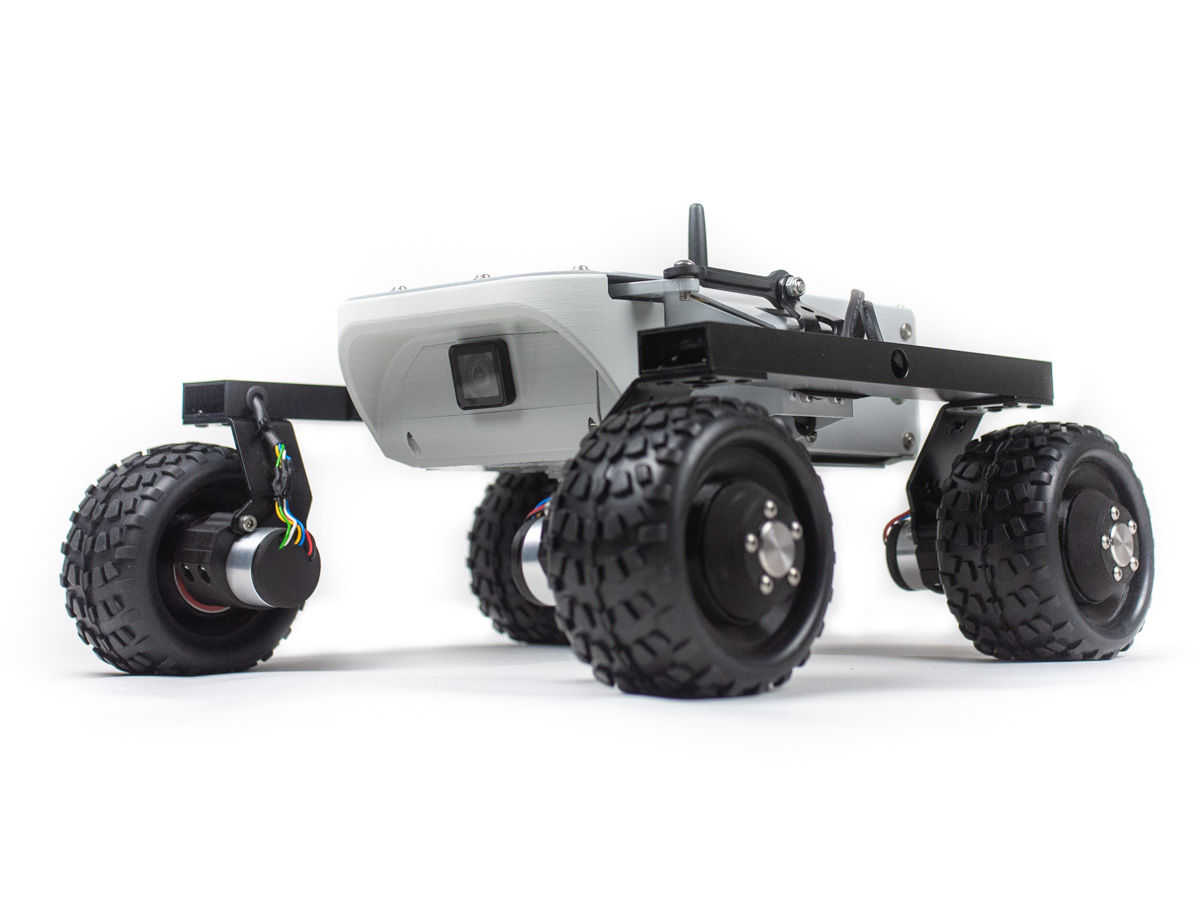
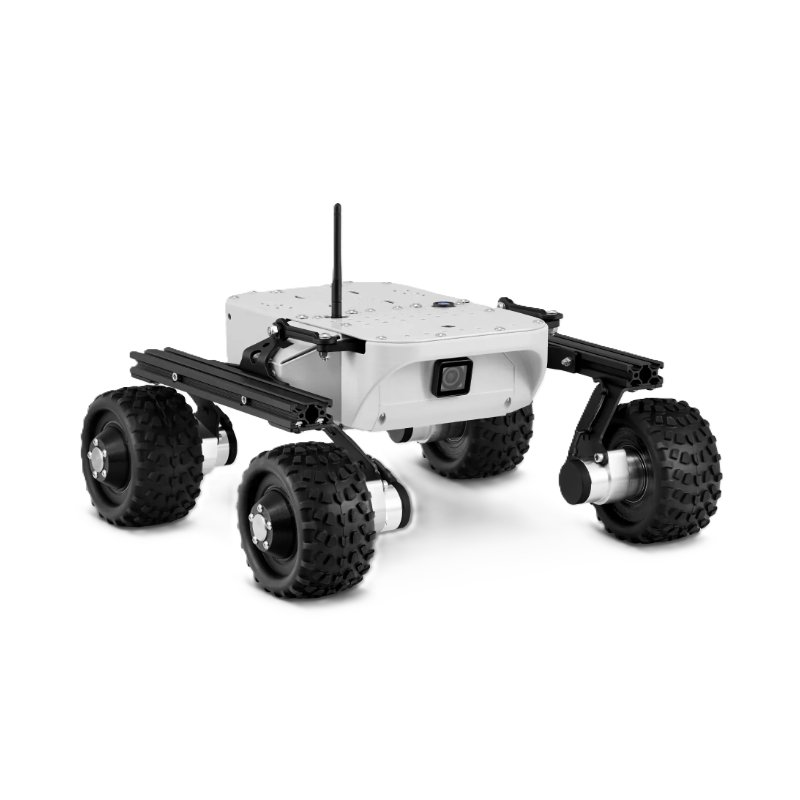
Delve deep inside the Leo Rover robot Leo Rover is a ROS-based open-source mobile robotic platform based on the Raspberry Pi 3 that can handle loads of up to 5 kg. In practice, this means you’re free to customize it with all the accessories you can imagine, including grippers or robotic arms, a camera, sensors, IMUs, etc. The Leo Rover Developer Kit is an opportunity for teachers to offer students a robot in kit form that includes every part needed to assemble using only simple tools. The kit allows you to rapidly assemble the platform, while providing in-depth information on how the robot operates. All you need is a few Allen keys and hex-head flat wrenches, a bench vice and a soldering iron. Leo Rover Developer Kit: develop and improve your robot This is an open-source mobile 4-wheel drive robot in kit form for which you can develop countless add-ons. Anything ranging from 3D printed robotics parts to new robotics apps. There is also a huge community of inventors you can count on to improve your project. The Leo Rover Developer kit will therefore adapt to any educational project, involving for example remote control, intelligent navigation, monitoring and exploration, mobile weather stations, etc. Technical Specifications Size Weight: 6,5 kg Dimensions: 447x433x249 mm Payload capacity: ca. 5 kg Upper platform mounting dimensions Dimensions: 299 x 183 mm Hole grid: 18 x 15 mm Holes: 40 x Φ 7mm + 22 x Φ 5,5mm Performance Estimated maximum obstacle size: 70 mm Protection rating: complies with IP66 (not certified) Run time: Estimated 4 hrs of nominal driving Connection range: Up to 100m (with live video stream) Wheels Motors: 4 x in-hub DC motor with 73.2:1 planetary gearbox and 12 CPR encoder Wheel diameter: 130 mm Tire material: rubber with foam insert (non-pneumatic) Battery Voltage: 11.1 V DC Capacity: 5000 mAh Type: Li-Ion with internal PCM Short-circuit, overcurrent and overdrain safety features Max. current: 8A (total for the whole Rover) Speed Max. linear speed: ca. 0.4 m/s Max. angular speed: ca. 60 deg/s Camera and network Camera Camera resolution: 5 MPx Lens: Fisheye with 170 deg field of view (IR non-filtered; night-vision allowed) Network WiFi 2.4 GHz access point with external antenna WiFi 2.4 GHZ + 5 GHz on internal RPi antennas for connectivity Software Operating system: Ubuntu 20.04 + Robot Operating System Ready-to-go UI located under '10.0.0.1' when using standard Leo Software Image. Open source firmware Electronics RaspberryPi 4B 2GB (or higher) as the main computer LeoCore as real-time microcontroller: STM32F4 (@84MHz, 64KB RAM, 256KB Flash) Connection interfaces Externally available 1x waterproof microUSB socket 1x antenna RP-SMA male socket 1x 3-pin Weipu SP13 12V power socket Internal open interfaces RaspberryPi's: 2x USB, 20x GPIO, RJ45 Ethernet, 1x RPi display port, Bluetooth 5.0 with BLE Controller You need any web-enabled device to access stock UI under '10.0.0.1' in your browser. Device requirements: Windows/Linux/Android/macOS For easier development ROS on your device is highly recommended. FAQ How long does it take to assemble the Rover? It should take you about 8 hours. Do I need to buy anything other than Dev Kit to build the Rover? No, the Kit is designed to include every component needed. The only things you need extra are tools. What tools and knowledge do I need to assemble the Rover? Basic workshop tools like soldering iron, metric hex-head, Philips-head and torx screwdrivers and flat wrenches. In case of knowledge, just basic skills and a lot of patience. Can I write my own software to the Rover? Yes, of course. The Rover is developer-ready. You can learn more on docs.leorover.tech or on Github. The software is open-source and written the way it's easy to navigate. On top of that our team can provide you support in case something is not clear. Is the Rover autonomous? By default Leo Rover is remotely controlled with video streaming and UI ready-to-go. It's not autonomous, but it's autonomy-ready. The software is based on Robot Operating System (ROS) which is known for easiness of autonomy and semi-autonomy features implementation. The simplest way is to add a lidar or streovision camera to enhance the Rover self-navigation and then build your features on top of that. The Rover itself has one front camera and 4 wheel encoders onboard, so it provides video streaming and basic odometry out-of-the-box. Documentation Docs: Leo Rover Knowledge Base Still a work in progress, but it will be much more clear and understandable base of tutorials, assembly manuals and documentation than the original docs. (older): leorover.gitbook.io/leorover/ It's the main source of tutorials, technical documentation and project. You can find assembly instructions there. github: LeoRover If you want to dig deeper in the Rover software, the best way is to check Github repositories readme. Full of information specific to the package. github: fictionlab There is as well another, company-wide repository which may be useful for software not directly related to Leo Rover. Sure worth checking once a while as we tend to build more and more tools over time. ROS wiki: Leo Rover More about ROS packages that we developed for Leo Rover software. Other links Leo Rover Gazebo simulation European Rover Challenge simulation 3D model preview and download Leo Rover public Google Drive Blender environment for visualizations ROS on bootable USB stick to start the development
Price history
One data point per day, averaged by observation date.
Amounts in USD
Averages are computed per UTC day from every recorded offer price.
Fictionlab
5,770.31 €

DRONELINE Drohnen & Roboter
4,080 €
Unitree
3,600 €
Husarion
4,080 €
AgileX
£3,947.50

AgileX
£4,089.75
Direct Drive Tech
£3,600
Trossen Robotics
£3,840
YDLIDAR
£3,630.92

Unitree
$3,995
igus gmbh
4,250 €

AgileX
$3,990
🍪 Cookie preferences
We use cookies to measure performance. Privacy Policy