
Xiaomi delivered 80,856 smart electric vehicles in the first quarter of 2026, pushing cumulative deliveries past 655,000 units since launch. The automotive business now contributes nearly 20% of Xiaomi’s total revenue, underscoring how quickly the smartphone maker has scaled into a major EV player.
- The Numbers: Q1 2026 Results
- How Xiaomi Scaled So Quickly
- Market Implications for China’s EV Landscape
- What This Means for the Industry
- Frequently Asked Questions
- Conclusion
The Numbers: Q1 2026 Results
Xiaomi reported total revenue of RMB 99.1 billion ($13.8 billion) for the first quarter of 2026, according to TechNode. Revenue from its smart electric vehicle, AI, and other innovation businesses reached RMB 19.9 billion ($2.8 billion), accounting for roughly 20% of the company’s top line.
The EV delivery figure of 80,856 units in Q1 marks a significant acceleration from prior quarters. Since the first customer deliveries began on March 28, 2024, cumulative Xiaomi EV deliveries had surpassed 655,000 vehicles by late April 2026.

The company also ramped up research and development spending. R&D expenditures for the quarter totaled RMB 9 billion ($1.25 billion), up 33.4% year-over-year. A substantial portion of that investment is directed toward EV platform development, battery technology, and autonomous driving software.
How Xiaomi Scaled So Quickly
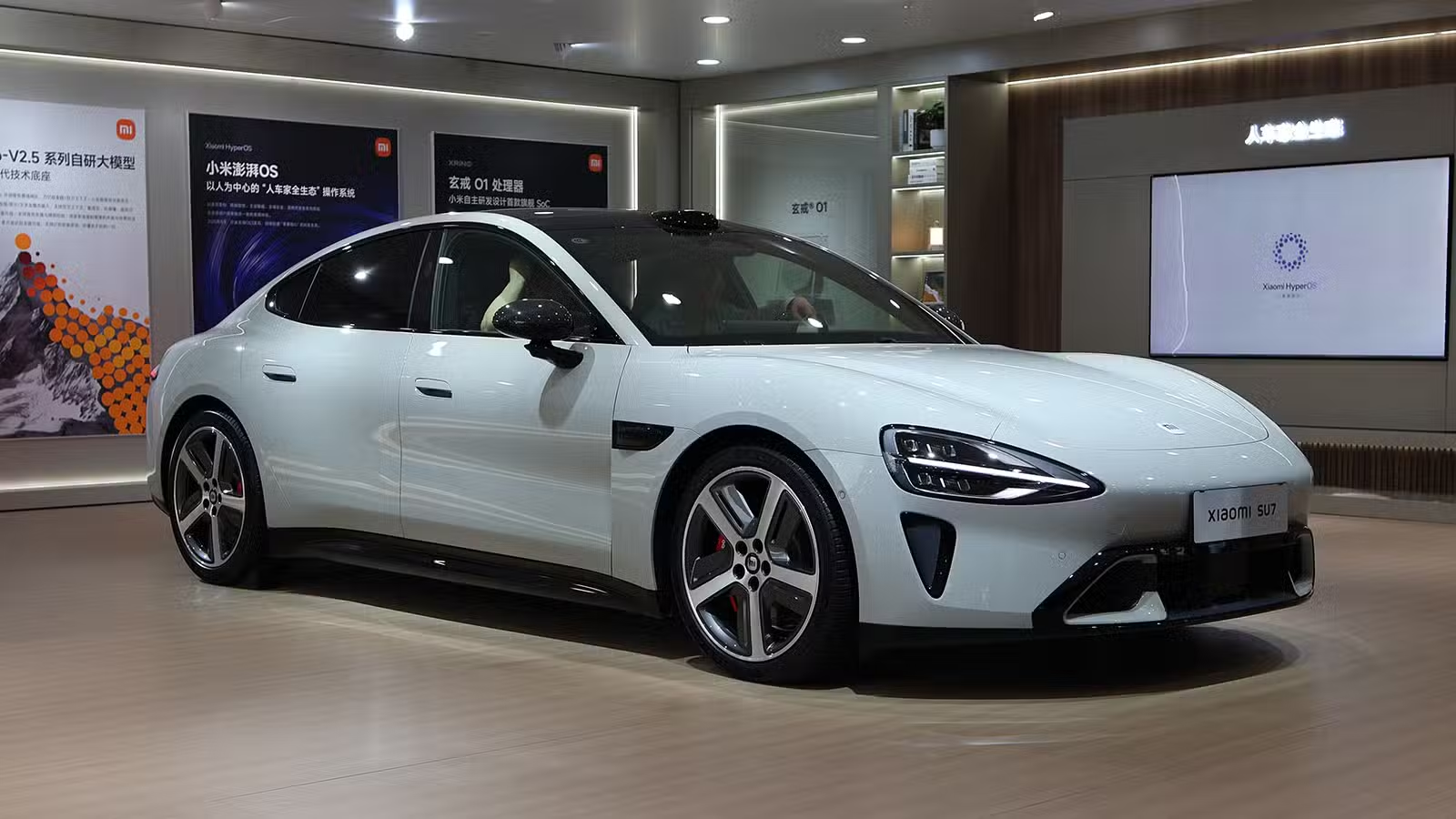
Xiaomi’s EV journey stands out for its breakneck pace. The company announced its automotive ambitions in early 2021, started building a dedicated factory in Beijing, and delivered its first vehicle — the SU7 sedan — just three years later.
Key factors behind the rapid scale-up include:
- Manufacturing capacity: Xiaomi built a purpose-built plant with an initial annual capacity of 300,000 vehicles, then expanded it quickly to meet demand.
- Supply chain leverage: The company’s existing relationships with hundreds of electronics suppliers helped secure components, especially chips and battery cells, during a period of shortages.
- Brand recognition: Xiaomi’s established reputation for high-value consumer electronics translated into strong early-order conversion. The SU7 launched with a starting price of around $30,000, undercutting many competitors while offering premium features.
By the end of 2025, Xiaomi was already producing at an annualized run rate of over 350,000 EVs. The Q1 2026 number of 80,856 confirms that production is continuing to ramp.
Market Implications for China’s EV Landscape
Xiaomi’s rapid ascension reshapes the competitive dynamics in the world’s largest EV market. China’s EV sector is crowded with established players like BYD, Tesla, NIO, XPeng, and Li Auto, as well as scores of smaller startups. Xiaomi entered later than many but has used capital, brand, and scale to climb the rankings quickly.
- BYD remains the dominant volume leader, shipping over 1.5 million pure EVs in 2025.
- Tesla sold about 900,000 China-built vehicles last year.
- Xiaomi now likely sits in the top 10 by quarterly deliveries, closing in on NIO and XPeng.
The smartphone-company-turned-carmaker brings a different playbook: it treats EVs as an extension of its broader ecosystem, integrating the SU7 with Xiaomi’s phones, home devices, and smart assistants. That ecosystem lock-in is a differentiator that traditional automakers lack.
However, the fast scale-up also carries risks. Xiaomi has invested heavily — the EV unit is not yet profitable, and the company has signaled it expects the business to remain in investment mode for another 12-18 months. Margins in China’s EV market are razor-thin, with price wars intensifying.
What This Means for the Industry
Xiaomi’s Q1 results send a clear signal to investors and competitors: a deep-pocketed consumer electronics company can enter automotive and achieve meaningful volume faster than any legacy automaker could build a new brand.
For investors, the performance validates the “smartphone-on-wheels” thesis — that companies with strong software, hardware design, and supply chain expertise can transfer their capabilities to EVs. Xiaomi’s stock rose 4.2% on the earnings release, reflecting optimism that the automotive business will eventually reach profitability at scale.
For competitors, the threat is twofold. First, Xiaomi is willing to price aggressively and absorb losses longer than many startups can. Second, it can use its broader product ecosystem to subsidize the car’s cost — something pure-play EV makers cannot match.
For the broader tech industry, Xiaomi’s success encourages other consumer giants — especially those with hardware and IoT experience — to consider automotive as a growth vector. Apple’s canceled car project now looks like a missed opportunity in hindsight.
Conclusion
Xiaomi’s Q1 2026 results show that the company has successfully transformed from a smartphone maker into a serious EV manufacturer in just over two years of production. With 80,856 vehicles delivered and cumulative sales past 655,000, the automotive business is now a major revenue contributor. The next test will be whether Xiaomi can sustain this momentum, turn the EV unit profitable, and fend off increasingly fierce price competition in China’s crowded market.