
Waymo operates over 3,000 driverless cars across 10+ U.S. cities and dominates the robotaxi narrative. But Nuro — best known for its low-speed delivery bots — is intentionally arriving later with a purpose-built passenger vehicle. Its CEO argues that being a "second mover" lets the company learn from early mistakes, avoid unsustainable hardware costs, and enter a more mature market.
- How does Nuro plan to differentiate from Waymo and Tesla?
- What are the advantages of being a late mover in robotaxis?
- What is Nuro's vehicle design philosophy?
- How does robotaxi market maturity affect Nuro's timing?
- What This Means for the Robotaxi Market
How does Nuro plan to differentiate from Waymo and Tesla?
Nuro is building a vehicle from the ground up for passenger autonomy — not retrofitting a consumer car. The company believes this design approach reduces the cost and complexity of integration while maximizing safety. Unlike Tesla's vision-only FSD or Waymo's sensor-heavy retrofits, Nuro claims its purpose-built architecture allows for a cleaner sensor layout, redundant systems designed from day one, and a vehicle interior built around the absence of a driver. Nuro also partnered with Foretellix, an Israeli simulation company, to validate its autonomy stack at scale before physical deployment. The company's CEO, Dave Ferguson, told The Verge that starting later means Nuro can "exploit the time it takes for the ecosystem to mature, the hardware to commoditize, and the regulatory framework to solidify." This contrasts with Waymo's 10+ year head start and Tesla's iterative hardware approach.
What are the advantages of being a late mover in robotaxis?
Being second avoids the "pioneer tax." Early robotaxi builders spent billions developing custom hardware when LiDAR units cost $75,000+ per sensor. Now, solid-state LiDAR from companies like Luminar and Hesai costs under $1,000. Nuro can spec its sensor suite from mature, mass-produced components. The company also benefits from lessons learned in software: Waymo, Cruise, and others have crashed (sometimes literally) into edge cases that Nuro's simulation partners can now model for free. Regulation is another tailwind: states like California, Texas, and Nevada now have well-defined AV permit processes, whereas early movers had to lobby for rulemaking from scratch. Finally, consumer acceptance is rising — surveys show trust in autonomous vehicles has grown from 25% in 2020 to over 40% in 2025. Nuro enters a world where robotaxis are no longer a science experiment, but a familiar concept.
What is Nuro's vehicle design philosophy?
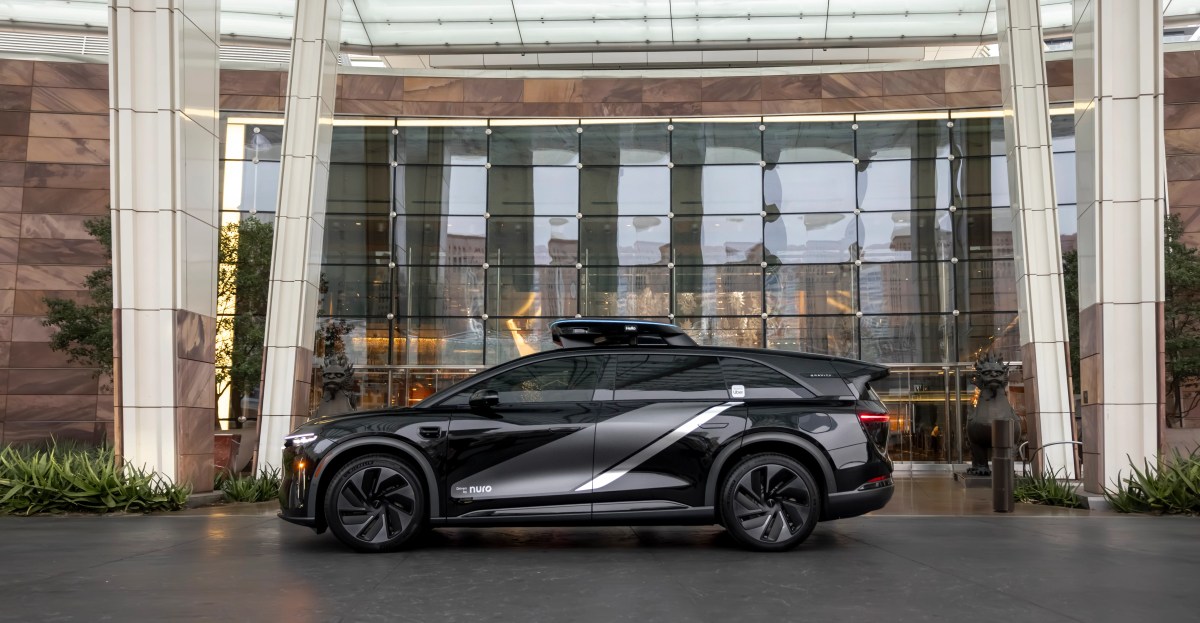
Nuro's passenger vehicle (still unnamed) eschews a steering wheel and pedals entirely. The cabin is designed around a sofa-like rear bench with a large display, creating a "living room on wheels" experience. At just over 12 feet long — shorter than a Mini Cooper — it's sized for urban efficiency, not highway cruising. This compact footprint reduces sensor needs, blind spots, and curb weight. The vehicle's top speed is capped at 45 mph, limiting it to city streets and low-speed zones — the same environment where most robotaxi revenue will be generated. By accepting this speed constraint, Nuro can simplify actuator requirements, reduce battery pack size, and slash material costs. Ferguson calls it "purpose-fit, not over-engineered." The design philosophy mirrors what Nuro learned from its delivery R1/R2 vehicles: smaller, slower, and cheaper fleets can still capture significant market share if the unit economics are right.
How does robotaxi market maturity affect Nuro's timing?
The global robotaxi market is projected to grow from $2 billion in 2026 to over $20 billion by 2030 (Allied Market Research). Yet current deployment is almost entirely in sunny, grid-mapped urban centers. Nuro's strategy banks on the idea that the "easy" geography — Phoenix, San Francisco, Los Angeles — will be conquered by Waymo and Tesla. But the second wave of cities (Austin, Dallas, Miami, Seattle) will open up just as Nuro's vehicle is ready. Financing also improves with time: venture capital for AV companies crashed after Cruise's 2023 accident, but is beginning to return as valuations rationalize. Nuro raised $600 million in its latest round (late 2024) at a significantly lower valuation than during its 2021 peak — a "reset" that Ferguson sees as healthy. Meanwhile, the cost of computing (NVIDIA's next-gen Thor chip), high-bandwidth connectivity, and battery cells are all on downward trajectories. The combination of cheaper inputs, clearer regulations, and proven business models positions Nuro to compete fiercely without the R&D sink that buried earlier startups.
What This Means for the Robotaxi Market
Nuro's late-mover thesis is not antisocial — it's strategic. If it works, it could reshape how capital flows into AV development. Investors might stop demanding "first to market" and start asking "who can achieve unit profitability first?" The implications for other autonomous applications (robo-delivery, autonomous trucks, logistics bots) are clear: jumping early is not always optimal. Waiting for hardware commoditization and regulatory clarity may yield better risk-adjusted returns.
Comparison of Major Robotaxi Strategies
| Company | Vehicle Design | Fleet Scale | Key Advantage |
|---|---|---|---|
| Waymo | Retrofitted cars | 3,000+ (10 cities) | First-mover data lead |
| Tesla | Retrofitted EVs | FSD in 1M+ cars | Global scale, consumer brand |
| Zoox | Purpose-built (L3) | < 100 test vehicles | Custom 4-seater, bidirectional |
| Nuro | Purpose-built (L2) | 0 (target: 2027) | Cost-optimized, late-mover edge |