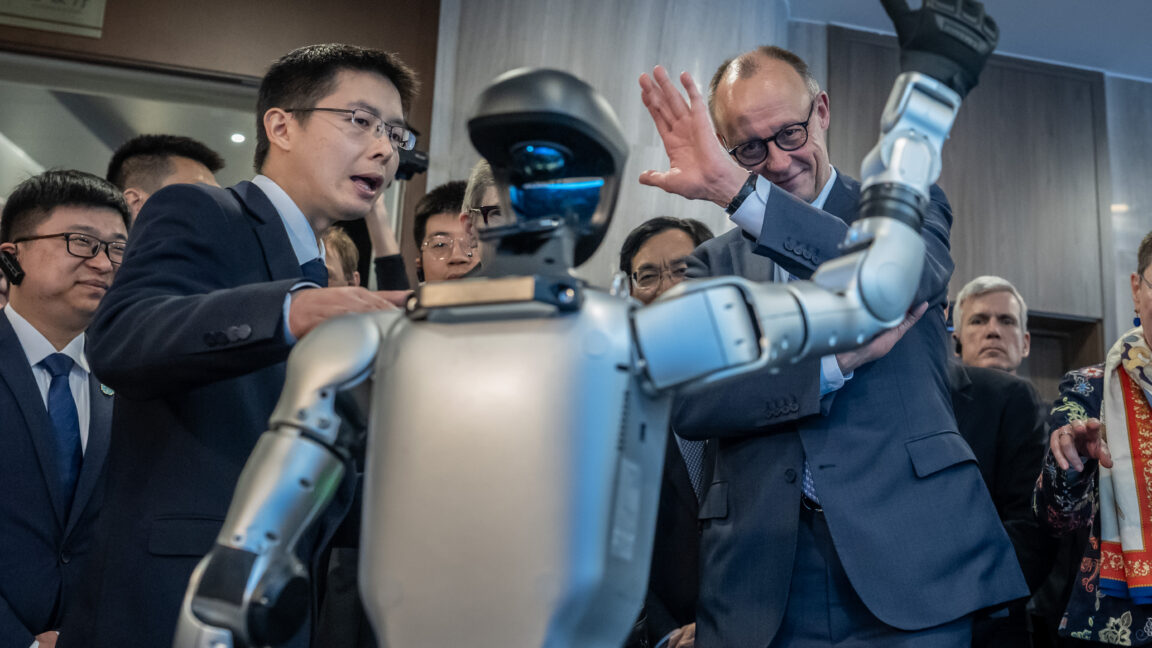
Unitree’s founder Wang Xingxing used intense cost control and extreme micromanagement to drive low-priced humanoid robots, first reported by Arstechnica. Employees at Unitree now queue to run decisions by Wang because the company lacks a formal management structure, as it has already grown to at least 480 employees this year.
Employees and investors described Wang as personally deciding nearly every aspect of corporate strategy and product design, including material colors and individual screw lengths.
One Unitree employee said Wang personally approves expense reimbursements above 100 yuan (approximately $15). Employees claimed Unitree’s incentive system overwhelmingly takes the form of penalties rather than rewards, and one longtime employee said core-staff attrition reached its highest level in Unitree’s history in 2025 and 2026.
Unitree did not provide a response when first asked for comment, then issued a broad statement to other Chinese media describing the claims as substantial misinformation without providing specifics. Wang’s personal control extends from individual screw lengths and material colors to expense reimbursements above 100 yuan.
Hardware engineers attributed Unitree’s cost advantage to design choices and structural engineering. The baseline G1 humanoid robot for developers and researchers sells for $13,500 before shipping, while the R1 for more casual consumers sells for $4,900.
The cost-cutting drive came at the expense of quality control: employees described an extremely high rate of returns for repairs in the early years, although that rate supposedly improved enough for the robots to survive their one-year or six-month warranty periods without breaking down.
Unitree is profitable, but universities and research institutions are its main customers, while industrial uses of humanoid robots are still being tested in smaller pilot deployments.
China’s Ministry of Industry and Information Technology said in July that it expects China to manufacture more than 100,000 humanoid robots in 2026, compared with 14,000 humanoid robots produced worldwide, mostly in China, in 2025. Unitree will compete with AgiBot Robotics and UBTECH to scale manufacturing.
The United States government banned imports of foreign-made robots as of July 28, a decision that prevents US universities and technology companies from buying Unitree’s newest robots for research.