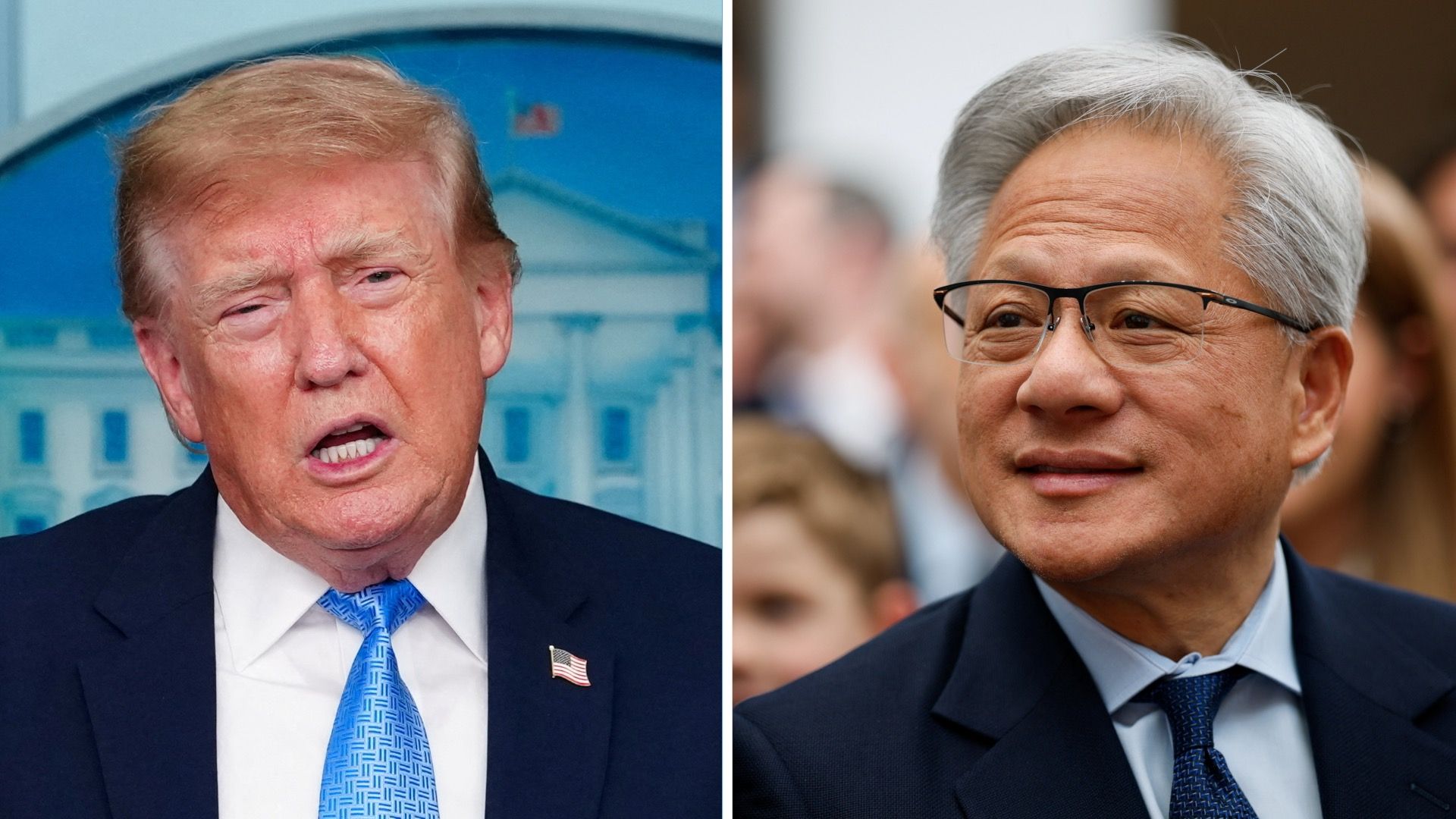
President Donald Trump says the FBI is investigating Nvidia chief executive Jensen Huang’s affair with Alice Huang, alleged to be a Chinese spy, first reported by Bbc. Nvidia has commissioned an independent investigation and says it has no reason to believe the company’s secrets or national security were compromised.
Trump said he spoke with Huang on Monday after reports that the US believed Huang had been targeted in a Chinese espionage campaign. Huang told Trump he had no idea Alice Huang was a spy, and Trump said he believed him.
Trump gave no details about the FBI inquiry or when it began; the FBI declined to comment when contacted by the BBC.
China’s foreign ministry rejected the allegations as entirely groundless and speculative, saying they were intended to smear and malign China. Huang said he would cooperate with Nvidia’s investigation.
Alice Huang, also known as Huang Le, was managing director of Singaporean company Megaspeed, which had dealings with Nvidia. The New York Times reported that US intelligence officials believe she was a spy for Beijing; it said Secretary of State Marco Rubio sent a memo to top Washington officials last spring warning of Jensen Huang’s close relationship with a Chinese spy.
The revelations knocked about $250bn (£190bn) off Nvidia’s value during trading on Monday as its share price fell by about 4%.
Nvidia is a major focus in the AI rivalry between the US and China, and Washington officials treat its exports to Beijing as a national-security matter. Huang has long opposed restrictions on sales to China, arguing that global AI rollout would be better powered by US technology.
The H200, Nvidia’s second most advanced semiconductor, had previously been restricted over concerns that it would give China’s technology industry an edge over the US. In January, the Trump administration said it would allow Nvidia to sell H200 chips to Chinese customers under certain conditions.
Several congressional committees have requested Huang’s appearance at a joint closed-door briefing next week, seeking information on Nvidia’s security protocols against foreign adversary espionage and his interactions with Alice Huang. The request puts company safeguards and Huang’s relationship on the same agenda; it is unclear whether Huang will appear.