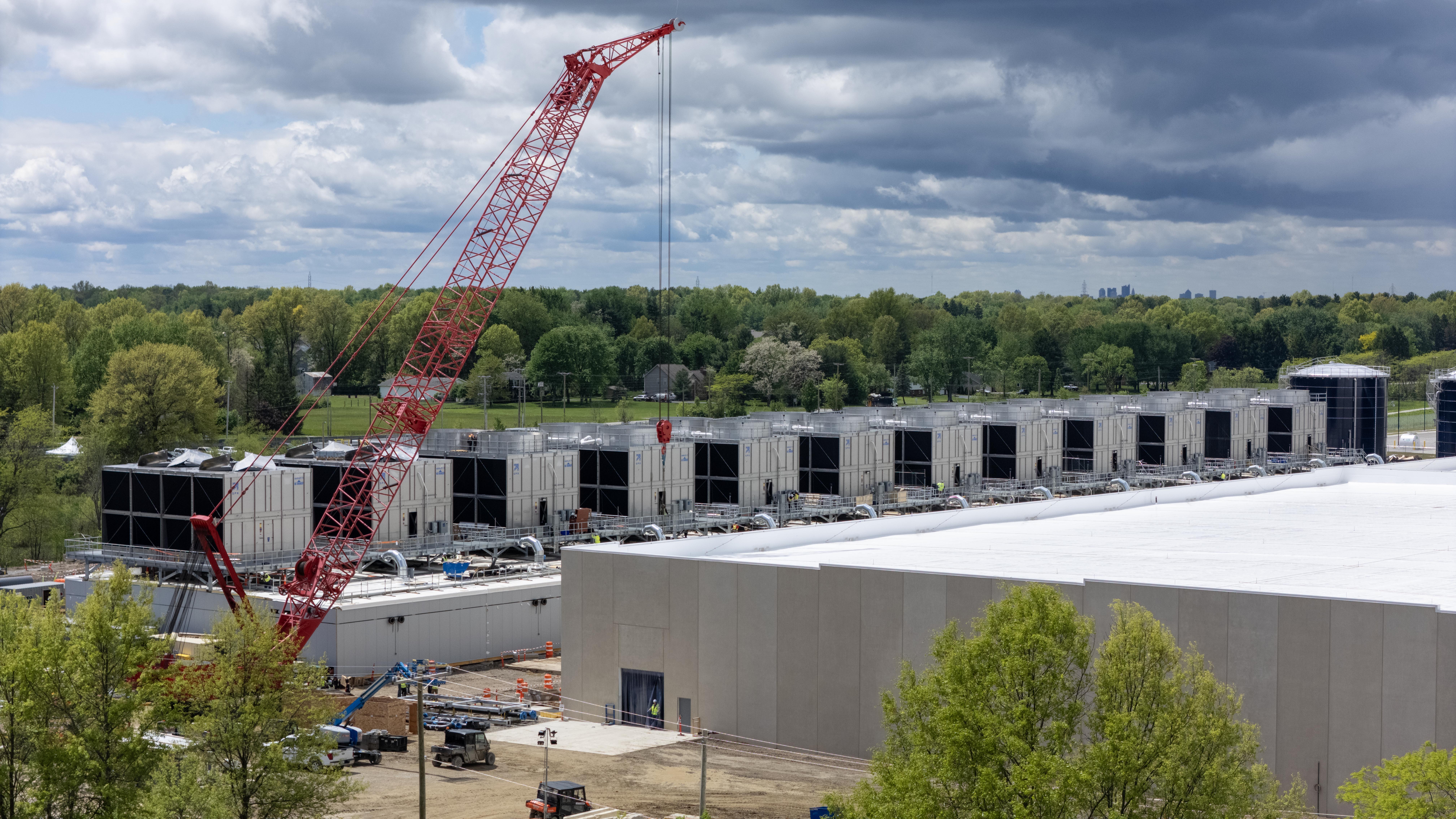

Texas and Ohio data-center campuses are targeting up to 17 gigawatts and 10 gigawatts, respectively, first reported by Businessinsider. Planned capacity is the closest public proxy for how much computing these campuses can support, while the electricity and water needed for servers and cooling can have major implications for local grids and sustainability.
The Texas site is a city-sized campus pursuing up to 17 gigawatts of power capacity. The Ohio project aims for up to 10 gigawatts of data-center capacity, most of which OpenAI has contracted to use.
The listed projects have broken ground and each has at least 1 gigawatt of capacity. For scale, 1 gigawatt of electricity supplied continuously for a year could power roughly 835,000 average American homes.
The two campus targets sit within a broader pipeline: the Pew Research Center says the US has over 1,500 data centers under development, mostly in rural areas, alongside more than 3,000 operating facilities.
The Energy Institute’s 2026 Statistical Review of World Energy puts US data centers’ 2025 electricity use at about 313 terawatt-hours, nearly 40% of global data-center electricity use and more than all of Australia used that year.
Residents affected by data-center developments in Texas and Utah have pushed back over noise, property values and effects on nearby communities. New York has temporarily paused construction of new large-scale AI data centers.
Oracle, SB Energy, SpaceX, Google and Meta are among the leading developers and operators. SpaceX is offering employees a pay bump to temporarily move to data-center sites and help with the buildout.
The 2025 US Data Center Energy Usage Report from Berkeley Lab projects data centers will consume 11.8% of US electricity by 2030, up from about 4.4% in 2023.