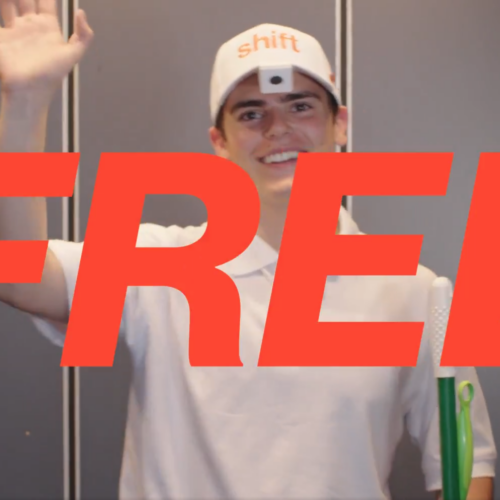
A German startup called MicroAGI is offering New Yorkers free professional home cleaning in exchange for recording the entire process. Cleaners wearing head-mounted cameras will film every swipe, scrub, and fold — turning real apartments into training data for future household robots. It is a controversial shortcut to one of robotics' hardest problems: teaching machines to handle the messy, unpredictable reality of a human home.
- What Is MicroAGI's Free Cleaning Offer?
- Why Is Real-World Cleaning Data So Valuable?
- What Are the Privacy and Ethical Concerns?
- How Does This Compare to Other Robot Training Methods?
- What This Means for Robotics
- Frequently Asked Questions
What Is MicroAGI's Free Cleaning Offer?
MicroAGI, a German startup focused on "accelerating embodied AI" (AI that can act physically in the real world, like robots), launched the Shift app on May 28. The app promises free, trusted professional house cleaning for New York City residents. The catch: cleaners wear first-person cameras to record every action, and the footage is used to train next-generation household robots.
Users book a two-hour appointment through the app, providing their phone number, email, home address, and access instructions. A professional cleaner arrives, films the entire session, and leaves the apartment spotless — at no cost. The company describes the program as a way to gather real-world first-person cleaning footage that would be nearly impossible to obtain through lab simulations or scripted demos.
Why Is Real-World Cleaning Data So Valuable?
Household robots have made remarkable progress in controlled environments — labs with empty floors, identical objects, and predictable lighting. But real homes are chaos. Spills of unknown shape and viscosity. Clutter that changes daily. Pets, children, and unfamiliar furniture layouts. This is known as the simulation-to-reality gap: a robot that performs flawlessly in a virtual environment often fails when faced with the messiness of a real kitchen.
Most home-robot training data comes from three sources: human teleoperation (people manually controlling a robot to do a task), simulation (computer-generated environments), and scripted lab demos. All three lack the natural variability of genuine household cleaning. MicroAGI's approach — filming professional cleaners in real apartments — captures thousands of hours of natural, high-quality demonstrations with all the edge cases that simulations miss: how to wipe a greasy stovetop without smearing, how to avoid knocking over a precariously stacked pile of papers, how to clean under a sofa that has shifted two inches to the left.
What Are the Privacy and Ethical Concerns?
The program raises immediate red flags. Cleaners wear head-mounted cameras that record entire homes — including personal items, documents, children's toys, and potentially sensitive information. MicroAGI's privacy policy states that footage is used for "AI training purposes," but critics question whether residents fully understand the scope of data being collected and how it will be stored, shared, or anonymized.

The company claims all participants sign consent forms and that footage will be de-identified before being used in training datasets. However, de-identification of first-person video is notoriously difficult — a reflection in a mirror, a credit card visible on a counter, or a child's face caught in the background can't easily be erased without degrading the dataset. Privacy advocates are calling for third-party auditing and strict data-retention limits.
MicroAGI has not disclosed how the footage will be used commercially or whether the training data will be made publicly available. If the company develops a commercial robot product, residents who provided free data would receive no compensation beyond the one-time cleaning.
How Does This Compare to Other Robot Training Methods?
Different approaches to collecting household robot training data have trade-offs in cost, quality, privacy risk, and scalability.
| Method | Data Quality | Privacy Concern | Cost | Scalability |
|---|---|---|---|---|
| Lab demos (scripted) | Low (too clean) | None | High | Low |
| Simulation (e.g., Habitat) | Medium | None | Low | Very High |
| Human teleoperation (human drives robot) | High | High | High | Low |
| MicroAGI's filmed cleaning (human wears camera) | Very High | Very High | Free (for data) | High |
| YouTube video scraping | Variable | Medium | Low | Very High |
MicroAGI's method offers unusually high data quality at zero cash cost to the startup, but with significant privacy exposure. Simulation-based training, by contrast, produces infinite data with zero privacy risk, but often fails to transfer to real-world conditions.
What This Means for Robotics
MicroAGI's free-cleaning program is a stark illustration of the central bottleneck in home robotics: data scarcity. While warehouse automation companies can afford to run thousands of scripted robot demos in controlled facilities, household robots must handle infinite variations of real clutter. Filming professional cleaners is an efficient — and ethically fraught — way to bypass the simulation gap.
For robot developers, the model raises a strategic question: can you build a home robot without collecting real-world data from actual homes? Several companies are betting on simulation-heavy approaches (like Meta's Habitat platform), others on teleoperation at scale (like Physical Intelligence's HI-RT training). MicroAGI's bet is that raw, unfiltered human demonstrations are the only path to robust generalization — and that privacy concerns can be managed through consent and anonymization.
For consumers, the offer may be tempting: a free deep cleaning valued at $100–$200 in exchange for allowing cameras into your home. But the long-term value of that data — a robot that can clean your home autonomously — could be enormous. The question is whether MicroAGI will share that future value with the data suppliers, or keep it for itself.
Conclusion
MicroAGI's free cleaning offer is a clever, controversial solution to the data bottleneck that has held back home robotics for decades. By paying for data with labor instead of cash, the startup gains access to the messy, realistic footage that labs can't produce and simulations can't replicate. But the privacy trade-off is real, and the ethics of using unpaid consumer data to train a future commercial product remain unresolved. For now, New Yorkers get spotless apartments — and robots get a crash course in real-world chaos.