
A single robotic arm can now load raw material, transfer it between machines, inspect the finished part, and debur the edges — all without a human touching a workpiece. With the U.S. manufacturing sector facing an estimated 1.9 million unfilled positions by 2033, factories are rapidly moving beyond simple loading automation to fully integrated robotic cells that run entire production sequences unattended.
- Why CNC Machine Tending Is Changing
- How Industry Leaders Are Integrating Robotics With CNC
- What Does a Robotic CNC Cell Actually Cost?
- What This Means for Buyers
- Frequently Asked Questions
Why CNC Machine Tending Is Changing
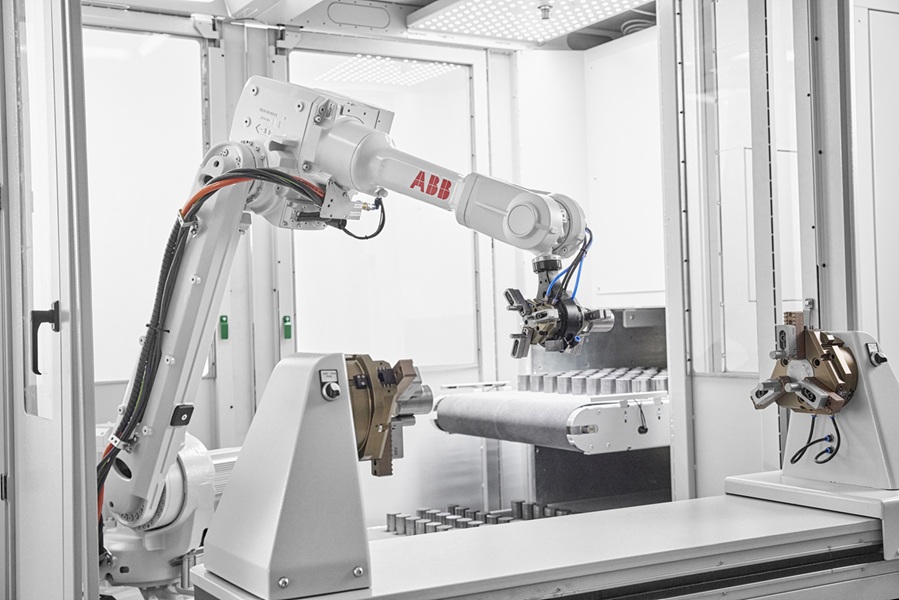
For years, automation in CNC (Computer Numerical Control) machining environments meant a dedicated robot performing one task: load part, remove part. Modern integrations look radically different. A robotic arm now manages part orientation, in-process inspection, deburring, and inter-machine transfer within the same automated cell. This shift removes entire labor-dependent process segments from the production chain.
The primary driver is a severe and worsening labor gap. A Deloitte study found that up to 1.9 million of the 3.8 million manufacturing positions that need to be filled by 2033 could go unfilled due to skills shortages. Shops simply cannot find the machinists needed to run second and third shifts.
The capital utilization math is equally compelling. CNC machines are among the most expensive assets on a factory floor, yet manually tended cells typically operate at 40% to 60% utilization because they stop when operators take breaks, switch shifts, or go home. Robotic cells routinely push utilization past 97% by enabling lights-out manufacturing — running material changes autonomously overnight and through weekends.
How Industry Leaders Are Integrating Robotics With CNC
According to The Robot Report, manufacturers are moving from pilot programs to full-scale deployment, and the companies leading that charge offer a clear picture of where robotic CNC integration stands today. The common thread is a shift from single-task automation to orchestrated cell control — the robot now manages the entire workflow.
FANUC's Turnkey Approach
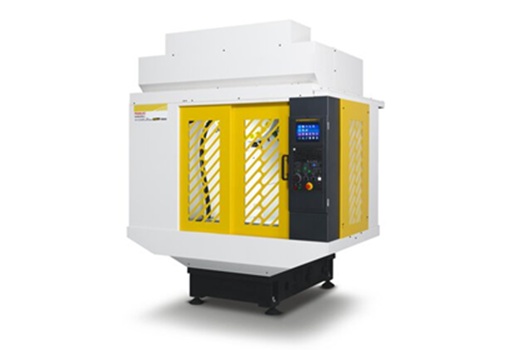
FANUC designs robotic arms to work directly with its own ROBODRILL vertical machining centers. In 2024, the company unveiled the ROBODRILL α-D28LiB5ADV Plus Y500 with the R-50iA controller, which features an embedded vision system for part recognition and placement verification. The tightly integrated stack means the robot and CNC machine speak the same language natively.
A case study from APT Manufacturing Solutions documented a 33% efficiency gain on a FANUC-tended ROBODRILL line. Output climbed from 100 to more than 150 parts per eight-hour shift, with return on investment (ROI) achieved in 33 weeks.
Universal Robots and Collaborative Machine Tending
Universal Robots built its cobot (collaborative robot) lineup specifically to work alongside people without safety caging — a critical factor for small-to-midsize shops with limited floor space. Toolcraft, a Seattle machine shop, deployed the UR5e cobot on a three-operation CNC task for a medical device component.
The UR5e's 30-micron repeatability (the ability to return to the same position within 30 millionths of a meter) enabled multi-threaded parts to be accurately placed across three sequential fixtures. The result was a 23% reduction in production costs and a 43% increase in throughput.
KUKA's Precision-First Strategy
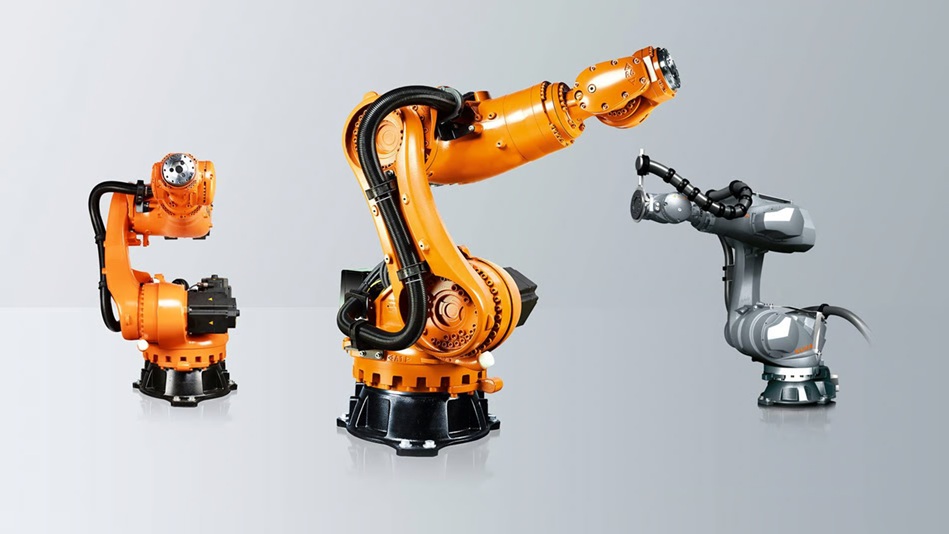
KUKA has built its reputation on high-payload, high-precision systems for demanding industrial environments. Its KUKA.CNC software allows robots to be programmed in G-code — the same programming language CNC operators already know. This eliminates the need for a separate robotics specialist.
The KR Quantec Nano has been deployed in CNC tending cells that use automated tool changers, probes, and 3D scanners for in-process measurement. In aerospace and defense applications, any deviation in part placement propagates directly into dimensional error in the finished component.
ABB's Standardized Flex Loading
Deployment complexity has historically been one of the biggest barriers to robotic CNC integration. ABB's FlexLoader M addresses this with a pre-engineered, modular tending cell available in six configurations for lathes, mills, and machining centers. Installation averages one to two days.
A built-in wizard introduces new workpieces in under five minutes, and changeover between programmed parts takes under one minute. ABB reports machine utilization exceeding 97% with the FlexLoader M, compared to 40% to 60% in manually operated environments.
RoboDK's Simulation and Offline Programming
Every major robot manufacturer uses a different proprietary programming language, which makes multi-brand integration complex. RoboDK bypasses this entirely with a brand-agnostic simulation and offline programming platform that supports over 500 robot arms from a single interface.
Operators can program, simulate, and generate robot programs without interrupting production. An integrated Python API allows for custom toolpath generation, and native G-code import means a CNC programmer can generate a robot program without learning a new language. This dramatically reduces the engineering overhead traditionally required for robotic cell deployment.
What Does a Robotic CNC Cell Actually Cost?
System costs for a robotic CNC tending cell generally range from $50,000 for a simple cobot setup to more than $150,000 for a multi-machine industrial system. Payback periods typically fall between 12 and 18 months, with some documented cases — like the FANUC ROBODRILL line — hitting ROI in 33 weeks.
| Cell Type | Price Range | Typical Payback | Machine Utilization |
|---|---|---|---|
| Entry-level cobot cell | $50k – $80k | 12 – 18 months | 70 – 80% |
| Mid-range industrial cell | $80k – $150k | 18 – 24 months | 80 – 90% |
| Multi-machine cell | $150k – $300k+ | 12 – 18 months | 90 – 97% |
| Manual operation | N/A | N/A | 40 – 60% |
The five-year ROI on a typical mid-range cell is estimated at 200% to 400%, driven primarily by the jump in machine utilization and the elimination of rework from inconsistent manual handling.
What This Means for Buyers
The shift from single-task to full-cell automation changes the buying equation. Here is what to consider before investing:
Know your integration path. A turnkey system from FANUC or ABB's FlexLoader M minimizes deployment risk and gets you running in days. A software-defined approach like RoboDK plus a generic industrial arm gives you more flexibility if you run multiple machine brands.
Prioritize lights-out capability. The highest ROI comes from running CNC machines 24/7. If your robotic cell cannot handle material changes, part inspection, and error recovery autonomously, you are leaving the biggest financial gain on the table.
Factor in the labor landscape. A robotic cell that costs $80,000 and pays back in 18 months is a compelling investment when the alternative is leaving a $500,000 CNC machine idle for 40% of its available hours because you cannot staff a second shift.
For shops exploring their options, browsing used industrial robots adaptable for CNC tending can provide a lower-cost entry point while still delivering the utilization gains that make the economics work.
Conclusion
The robotic CNC cell has evolved from a single-task loader into a fully autonomous production unit. Driven by a deepening labor shortage and the operational leap from 50% to 97% machine utilization, this integration is reshaping the economics of machining. For manufacturers facing the 1.9 million unfilled job gap, the question is no longer whether to adopt full-cell automation, but how quickly they can deploy it.