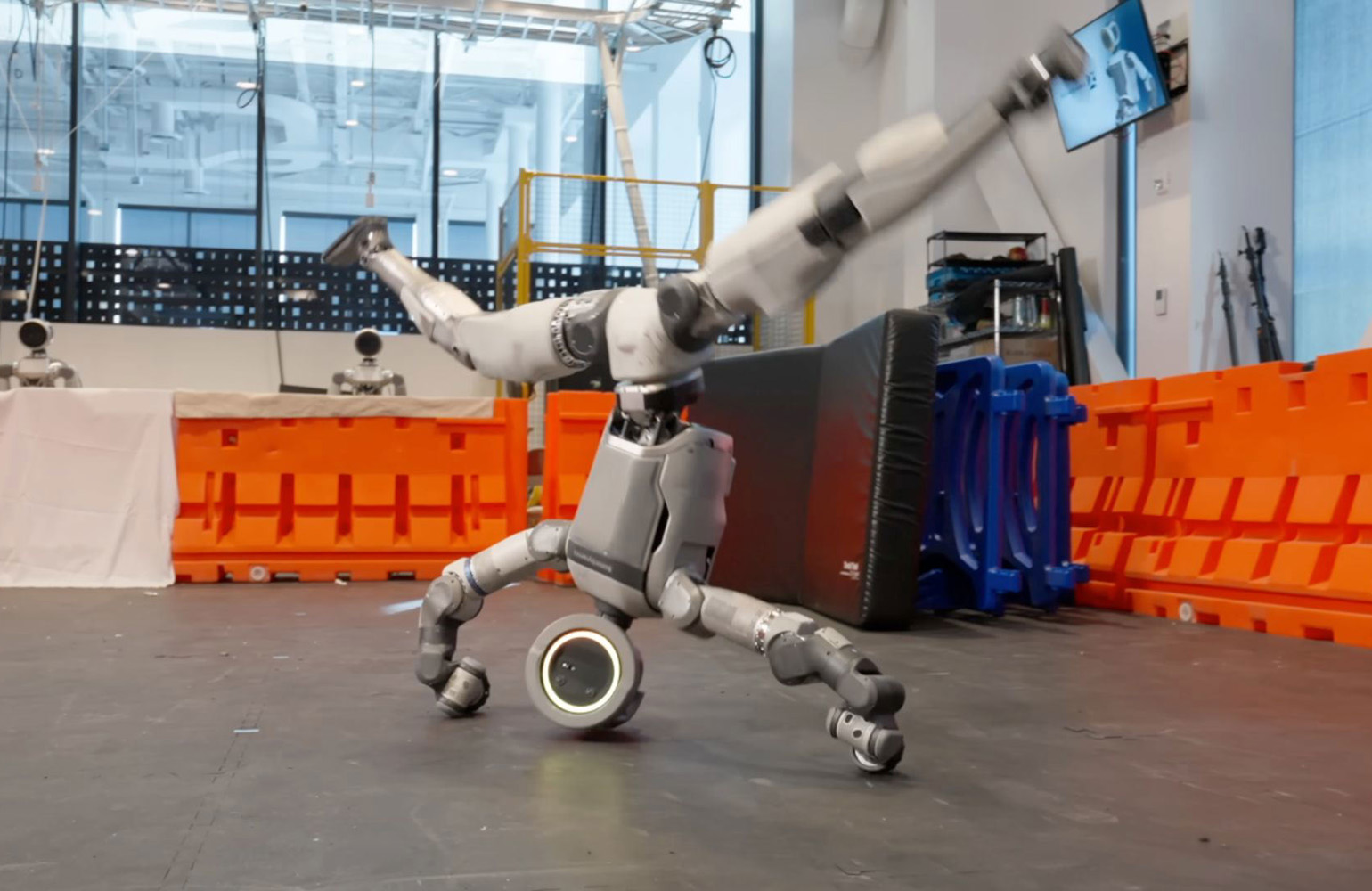

Vishay Precision Group innovation director Ron Zukerman argues that robot makers should design around specific workflows, a position first reported by Therobotreport. His examples show how a sensor and hardware setup suited to precise automotive connector insertion can differ sharply from equipment for repeated pallet packing, while existing facilities designed for people can make human-compatible designs useful.
A bipedal robot asked to insert an automotive pin faces 20 µm clearance and 5 N mating force, requiring contact-force resolution below 0.1 N and control bandwidth fast enough to detect jamming before a pin bends. Bulk pallet packing instead needs heavy payload capacity, structural rigidity and the ability to endure 1 million cycles without baseline mechanical drift.
A single compromise force sensor could make precise insertion difficult while leaving a platform short on durability for continuous heavy lifting. That puts form factor downstream of two constraints: the work and the building.
Zukerman says tests using a calculation to maintain contact force at ±0.2 N can reduce connector scrap from 1.2% to 0.5%, with estimated annual savings of approximately $450,000 per assembly line. He argues strain-based sensing should be part of the architecture from the start, rather than a late bill-of-materials choice.
Greenfield sites can be designed around a task. Zukerman says specialized non-humanoid robots almost always prove better there on unit economics, speed and energy efficiency, with legged and wheeled robots more reliable for their assigned tasks.
Existing brownfield plants can have narrow aisles, stairs, floor grating and doorways designed for people. In those settings, human-compatible forms can avoid retrofits that would cost millions of dollars.
Commercial viability also depends on sustained operation: full fleet deployment must withstand at least 10,000 cycles per shift amid thermal variation and near-zero tolerance for drift. Zukerman points to mean time between interventions, cost per unit of work, redeployment time and safety incidents per operating hour as measures of value.
He calls the second purchase order a better test of business utility than a one-time demonstration.