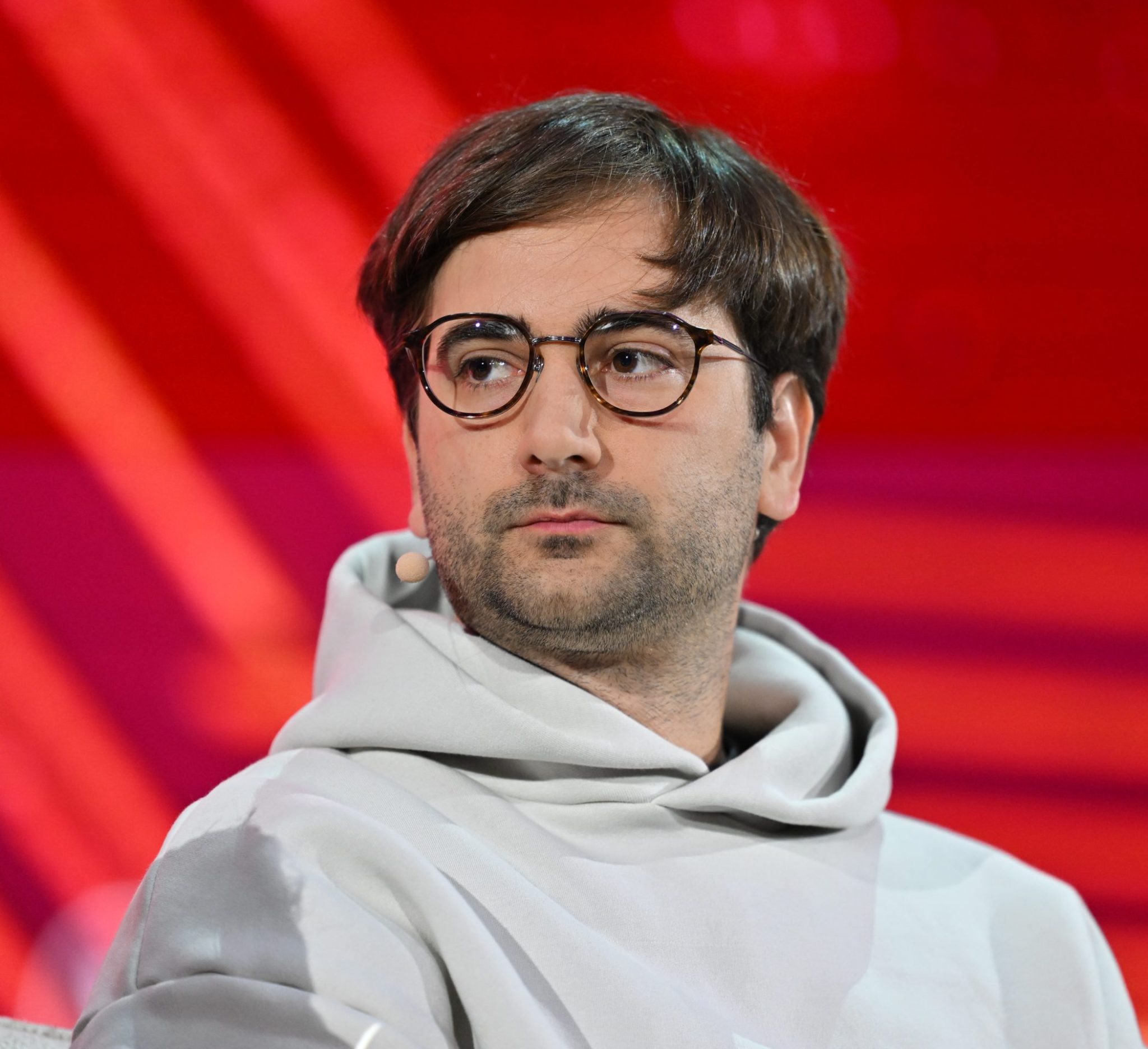

OpenAI is consolidating its flagship ChatGPT and developer tool Codex into a single 'super app' in a bid to prove it’s more than a chatbot company. The strategic shift comes as the AI lab prepares for a potential trillion-dollar IPO and faces intensifying competition from rival Anthropic.
- What Happened: The Super App Plan
- Why It Matters: More Than a Chatbot
- Competitive Context: Anthropic and the Enterprise Shift
- What This Means for the Industry
- What's Next: IPO and Beyond
What Happened: The Super App Plan
OpenAI is turning ChatGPT into an all-purpose AI interface that brings its key products together. Thibault Sottiaux, former head of Codex, has been promoted to oversee the company’s core product platform for consumer, business, and developer customers. At the VivaTech conference in Paris, Sottiaux told Fortune that the company plans to evolve ChatGPT from a conversational tool into a personal assistant that remembers user preferences and improves over time.
The end goal is a single, highly capable agent that handles everything from answering quick questions to planning complex trips and booking travel arrangements, or even creating custom apps to help a child learn trigonometry. The plan calls for merging ChatGPT and Codex into one unified agentic experience. Product strategy now falls under OpenAI president Greg Brockman, with Nick Turley—previously head of ChatGPT—moving to lead enterprise industries.
This consolidation has led to the shutdown of side projects, including Sora, OpenAI’s AI video product, discontinued in April. The company also pulled back from expensive infrastructure commitments, halting plans for Stargate data center projects in the U.K. and Norway.
Sottiaux, who was instrumental in building Codex, said the tool has evolved beyond coding. “Codex has evolved now to a place where it is very general, and it is not specific to code anymore,” he said. “We’re working on using all of that and bringing that directly to ChatGPT, so that it can benefit a very broad user base.”
Previous attempts at agentic products, such as Operator, largely failed to take off. Sottiaux acknowledged the tool was too early: the models weren’t ready to parse ambiguous instructions or operate with sufficient permissions. Advances in accuracy and intent-following now make a unified agent viable, he argued.
Why It Matters: More Than a Chatbot
OpenAI’s push comes at a pivotal time. The company is eyeing a trillion-dollar IPO while trying to convince investors that it offers more than a consumer chatbot. The super app is partly meant to signal that OpenAI can compete across consumer and enterprise use cases—a critical distinction as its valuation is debated in public markets.
The concept of a super app is common in China and Southeast Asia, where platforms like WeChat and Alipay bundle messaging, payments, food delivery, ride-hailing, and commerce into a single destination. Western tech companies have largely failed to replicate that model, partly because users in the U.S. and Europe are accustomed to switching between specialized apps.
OpenAI’s vision differs. Sottiaux described it as building a “personal AGI”—a unified interface that grows more capable and personalized over time. “It’s about bringing more capabilities in one very simple unified interface that enables you to communicate, steer, and supervise your personal AGI,” he said.
Competitive Context: Anthropic and the Enterprise Shift
OpenAI is also trying to sharpen its case against Anthropic in the enterprise market—a fight that has shifted slightly in Anthropic’s favor over the past year. According to Ramp’s May 2026 AI Index, which tracks actual corporate spending across thousands of companies, Anthropic now holds 34.4% of U.S. business adoption compared to OpenAI’s 32.3%. That marks the first time Anthropic has crossed ahead.
The reversal was driven largely by Claude Code, Anthropic’s autonomous coding tool. ChatGPT, launched in late 2022 as a conversational chatbot, has been viewed as more consumer-focused—a perception OpenAI is now working to change.
Sottiaux says the company does not see a hard divide between consumer and enterprise use cases when it comes to the new product. “We think that fundamentally the technology doesn’t look that different,” he said, adding that the same system can be useful in both personal and work settings by “connecting the right context, connecting the right tools, and then taking actions in a way that minimizes risk in order to deliver value.”
Meanwhile, Microsoft is working on its own super app that would connect GitHub Copilot, its Copilot chat function, the Cowork productivity tool, and a new agentic workflow capability into a single app, with plans to launch by the end of summer. Elon Musk has also long held ambitions to turn X into a super app spanning communication, media, and commerce.
What This Means for the Industry
OpenAI’s super app push has implications for investors, competitors, and the broader tech industry. For investors, the consolidation signals that OpenAI is serious about building a durable revenue base beyond consumer subscriptions. The company’s ability to win enterprise contracts will be a key factor in justifying its trillion-dollar valuation, especially as competitors like Anthropic and Microsoft gain ground.
For the AI market, this move accelerates a trend toward horizontal platforms that offer an all-in-one interface rather than vertical, task-specific tools. Large enterprise buyers have typically been wary of such platforms, preferring integrations that slot neatly into existing systems. OpenAI will need to demonstrate that its super app can deliver specialized value without sacrificing depth.
The IPO wave—with SpaceX, OpenAI, and Anthropic all targeting combined valuations exceeding $3.6 trillion—underscores how quickly the AI sector is moving toward public markets. OpenAI’s super app narrative could be a critical differentiator when courting institutional investors.
What's Next: IPO and Beyond
OpenAI has not announced an official IPO timeline, but the company’s product reorganization and cost-cutting measures suggest it is preparing for increased scrutiny from public market investors. The shutdown of Sora and pullback from Stargate data center projects indicate a focus on financial discipline.
The super app is expected to roll out incrementally, with ChatGPT gaining new Codex-powered capabilities in the coming months. The enterprise sales team, now under Nick Turley, will likely target large companies looking for a unified AI assistant.
Sottiaux’s promotion and the streamlined leadership structure under Greg Brockman suggest that OpenAI is betting big on this vision. If successful, the super app could redefine how consumers and businesses interact with AI—and how Wall Street values an AI company.
Conclusion
OpenAI’s bet on a super app represents a strategic shift from a product portfolio to a unified agentic platform. By merging ChatGPT and Codex, the company aims to convince investors, enterprise buyers, and users that it can be the interface for both simple queries and complex tasks. Whether the strategy can overcome the historical resistance to all-in-one platforms in Western markets remains to be seen—but it’s central to OpenAI’s case for its trillion-dollar future.