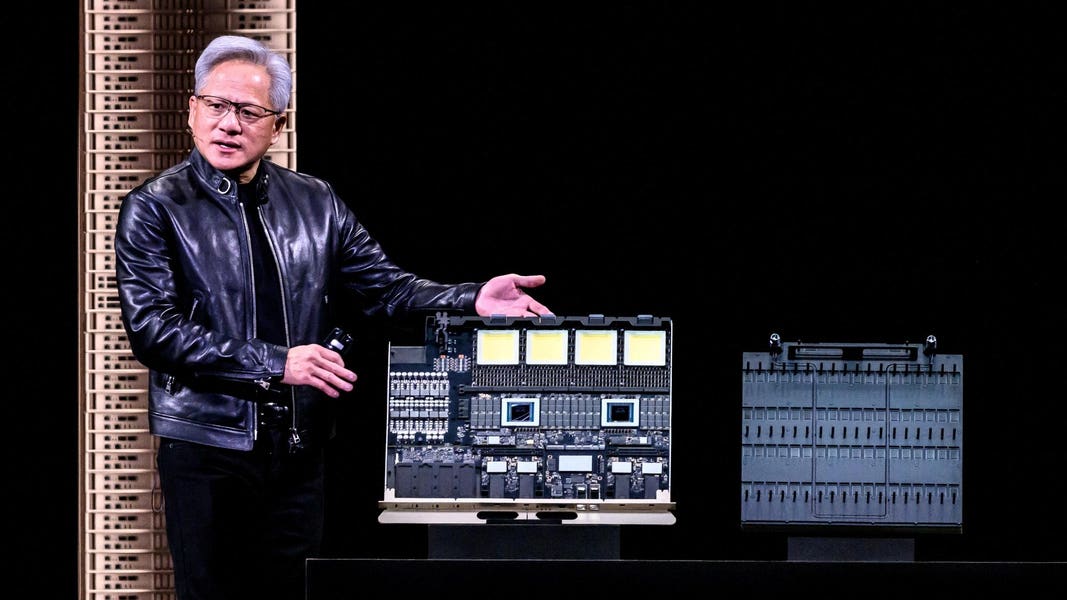

Nvidia and six financial firms have announced financing platforms intended to raise more than $500 billion in outside capital for AI data centers, a plan first reported by Forbes. The plan would test whether fast-aging AI hardware can be financed like durable infrastructure when resale value falls before debt is repaid, especially as newer chip generations arrive.
The announcement covers memorandums of understanding, not signed contracts. Each project needs a final agreement; no timeline or capital split has been disclosed, and $500 billion is a target for capital raised over time, not Nvidia revenue, a single fund or one customer.
Nvidia says investors will assess deals independently, weighing customer demand, hardware use, cash generation and secondhand value. Likely borrowers include AI labs, enterprises and cloud companies that rent computing.
The collateral question
Residual value is what the equipment is worth if a customer walks away; the financing also depends on customer cash flow. Huang says Nvidia may offer residual-value support for up to 25% of an opportunity case by case, but has not explained the terms or who takes the first loss; it is not a guarantee.
Rental income does not prove resale value. Huang cited a one-year H100 rental rate rising from about $1.70 an hour in October 2025 to $2.35 in March 2026, while Silicon Data’s tracking put the median price to rent an H100 from a big cloud near $9.34 an hour in the second half of 2024 and about $6.26 a year later.
Amazon shortened some servers and networking gear’s useful life from six years to five effective January 1, 2025, citing faster technology development in AI and machine learning. The company said the change added about $1.4 billion to 2025 depreciation and cut net income by roughly $1 billion, mostly at AWS; Amazon did not write down Nvidia chips, and its filing does not name them.
Investor Michael Burry estimated in November 2025 that big cloud firms were understating AI depreciation by about $176 billion from 2026 through 2028, an estimate rather than a reported loss. Nvidia says A100 chips from 2020 still draw multi-year commitments that can stretch useful life toward a decade; no first project has been named, leaving the eventual contracts as the financing test.