
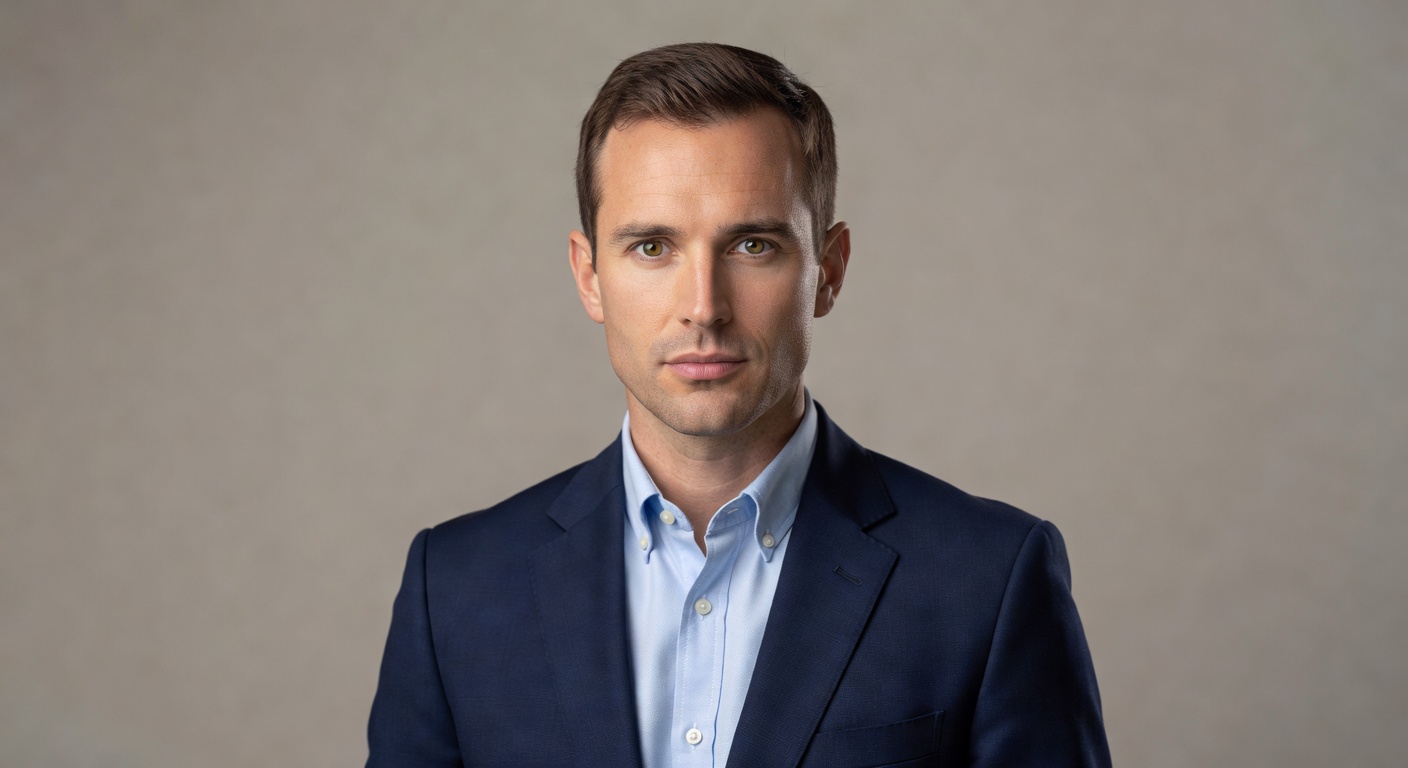
Thinking Machines, the AI startup founded by former OpenAI CTO Mira Murati, launched its first AI model today. The model, designed for real-time human interaction, incorporates architectural principles seen in Chinese competitors like DeepSeek. The company previously raised $2 billion at a $12 billion valuation, signaling significant investor appetite for Murati’s vision.
- What Happened: The Launch of Thinking Machines’ First Model
- Why It Matters: The Chinese Influence on AI Architecture
- Market Implications: The $2 Billion Bet
- Competitive Context: Murati vs. OpenAI and the Rest
- What’s Next for Thinking Machines
What Happened: The Launch of Thinking Machines’ First Model
Thinking Machines unveiled its debut model, which the company says excels at maintaining coherent, low-latency conversations while using a fraction of the compute power of comparable models from U.S. labs. According to the Financial Times, the model leverages a “mixture-of-experts” architecture that activates only relevant sub-networks per query — a technique popularized by Chinese AI labs like DeepSeek and Qwen.

The model is currently available via API and a limited consumer chat interface. Murati described the release as “the first product from a company built to keep human intelligence in the loop, not replace it.” The launch comes less than 18 months after Thinking Machines emerged from stealth with a $2 billion funding round — one of the largest AI seed rounds ever.
Why It Matters: The Chinese Influence on AI Architecture
The model’s design borrows heavily from the latest generation of Chinese large language models, which have prioritized efficiency over raw scale. DeepSeek’s V3 and R1 models showed that careful routing of compute through activated expert modules could match or exceed the performance of monolithic models like GPT-4 while costing far less to train and run.
Thinking Machines’ adoption of this approach marks a notable shift in the Western AI playbook. Most U.S. frontier labs — OpenAI, Anthropic, Google DeepMind — invest billions in massive training runs and clusters of tens of thousands of GPUs. By contrast, Chinese labs have focused on architectural innovations that squeeze more performance per watt. Murati’s team is betting that the same principles can give Thinking Machines a cost and speed advantage without sacrificing quality.

“We studied what DeepSeek and Qwen did and asked: why can’t we do that with better data and better alignment?” said a Thinking Machines engineer in a technical blog post accompanying the launch. The result is a model that reportedly handles 50-token-context windows with sub-200ms response times, making it suitable for real-time voice and chat applications.
Market Implications: The $2 Billion Bet
Investors have clearly bought into Murati’s pitch. The $2 billion round, led by Sequoia Capital and Andreessen Horowitz, valued Thinking Machines at $12 billion before it had shipped a single product. That valuation now faces its first test with a live model that must prove it can attract developers and enterprise customers.
The pricing strategy is aggressive: Thinking Machines charges $0.15 per million input tokens and $0.60 per million output tokens — roughly half the price of OpenAI’s GPT-4o and one-third the cost of Anthropic’s Claude 3.5 Sonnet. If the model delivers comparable quality, it could pressure incumbents to lower prices or risk losing market share in the fast-growing API segment.
Enterprise adoption, however, will depend on reliability, safety features, and the ecosystem of tools surrounding the model. Thinking Machines launched with integrations for LangChain, LlamaIndex, and major cloud providers, but it lacks the enterprise sales infrastructure of OpenAI or Google.
Competitive Context: Murati vs. OpenAI and the Rest
Murati’s departure from OpenAI in late 2023 was one of the most consequential leadership exits in the industry. As CTO, she oversaw the development of GPT-4 and ChatGPT. Now she is competing directly against her former employer — as well as Anthropic, Mistral, and Google.
The timing is tricky. OpenAI recently released GPT-4o with native voice and image reasoning, and Anthropic launched Claude 3 Opus with industry-leading benchmarks. Meanwhile, open-source alternatives like Meta’s Llama 3 and Mistral’s Mixtral continue to improve, narrowing the gap with proprietary models.

Thinking Machines’ differentiation lies in its architecture and its founder’s brand. Murati remains one of the most respected figures in AI safety and engineering. The company has marketed its model as “thinking-first, not scale-first,” appealing to developers frustrated by the cost and latency of monolithic models. Whether that message can win over enterprise buyers remains to be seen.
What’s Next for Thinking Machines
The company plans to release a fine-tuning framework within weeks, allowing customers to adapt the base model to specialized domains like legal, medical, and finance. A reasoning-heavy variant, internally called TM-R, is expected later this year.
Thinking Machines is also expanding its team, with job postings for roles in data engineering, safety research, and developer relations. The company reportedly has a cash runway of several years, giving it time to iterate on the model and build out its enterprise go-to-market.
The biggest near-term risk is that competitors rapidly copy the efficiency gains in Thinking Machines’ model. If OpenAI or Anthropic adopt mixture-of-experts architectures more broadly, the cost advantage could evaporate. But for now, Murati’s team has shipped a credible first product — and sent a signal that the Chinese AI playbook can work in the West.
What This Means for the Industry
Thinking Machines’ debut validates the thesis that architectural innovation, not raw spend, can drive the next wave of AI performance. For investors, it raises a question: should they back capital-intensive training runs or leaner, more efficient designs? For competitors, the pressure to optimize inference costs just intensified. Pricing wars in the API market are likely to accelerate.
The model’s reliance on techniques pioneered in China also underscores the global nature of AI research. Despite geopolitical tensions, ideas flow across borders. U.S. labs that dismiss Chinese innovations risk missing the next paradigm.
For enterprise customers, more options and lower prices are a clear win. But the ultimate test will be whether Thinking Machines can maintain quality as it scales — and whether Murati can build a company that endures beyond the hype of its launch.
Conclusion
Mira Murati’s Thinking Machines has officially entered the arena with a first AI model that blends proven techniques from Chinese labs with the safety-first ethos of its founder. The $2 billion raise and $12 billion valuation set sky-high expectations, but the product itself — cheaper, faster, architecturally lean — makes a strong opening argument. Whether it reshapes the competitive landscape or remains a fascinating footnote will depend on adoption, iteration, and the speed of the incumbents’ responses.