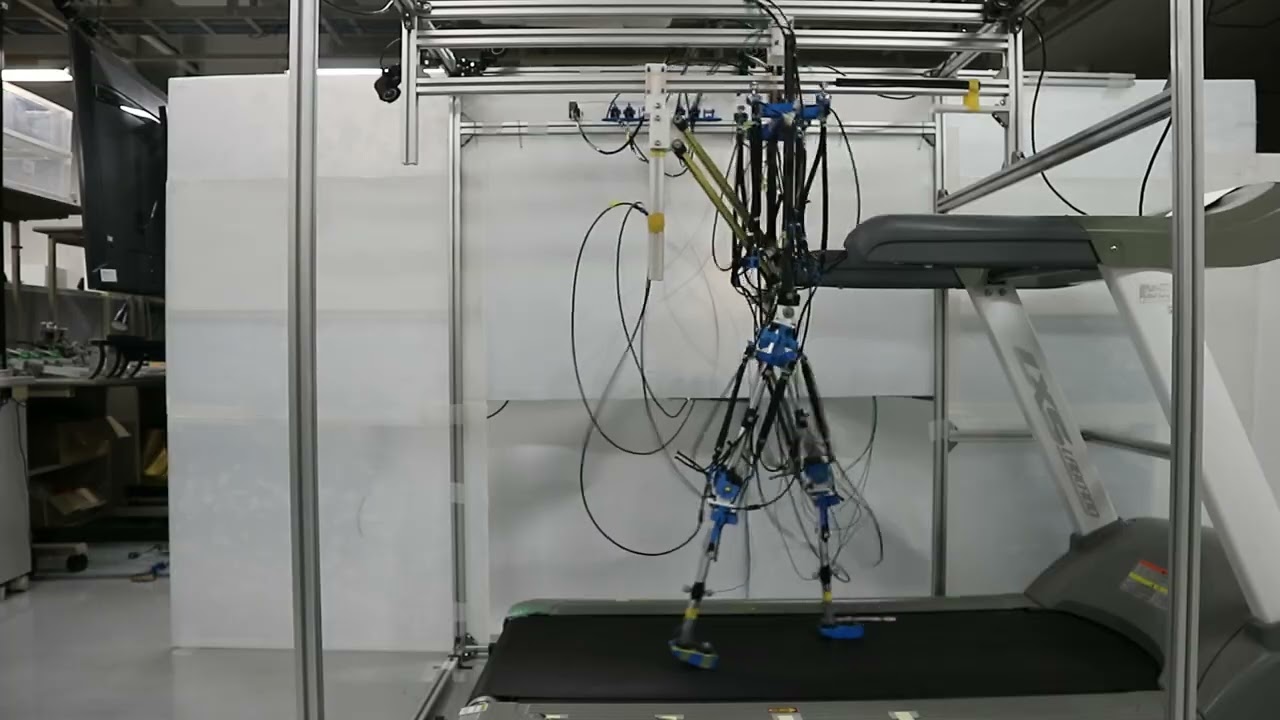

Tohoku University researchers developed an electronics-free reflex module that reproduced a robot’s knee-jerk response and, with higher-level control, generated bipedal walking, first reported by Techxplore. The design places sensing, computation and actuation in the robot’s physical structure instead of relying on electronic sensors to monitor artificial muscles, which can add system complexity, computational demands and power use.
The module mechanically detects when an artificial muscle stretches beyond a set threshold, then contracts it in response. Inspired by muscle spindles, sensory structures in human muscles, the mechanism can also adjust its activation threshold.
The team reproduced the patellar tendon reflex in a musculoskeletal robot. In people, a tap below the kneecap causes the quadriceps to contract.
For walking, a higher-level control system adjusted the module’s activation threshold according to movement phase. The robot then generated bipedal walking.
Reflex implementations in musculoskeletal robots typically use electronic sensors to monitor artificial-muscle state; those components can increase system complexity, computational demands and power consumption. The module instead combines sensing, computation and actuation in its physical structure.
That division leaves the stretch response to the robot’s mechanics while the higher-level system supplies gait-phase adjustment. The approach could provide a foundation for musculoskeletal robots with lower system complexity, computational demands and power consumption.
The team plans to combine mechanical reflex modules with minimal electronic control to develop robots with many more artificial muscles.