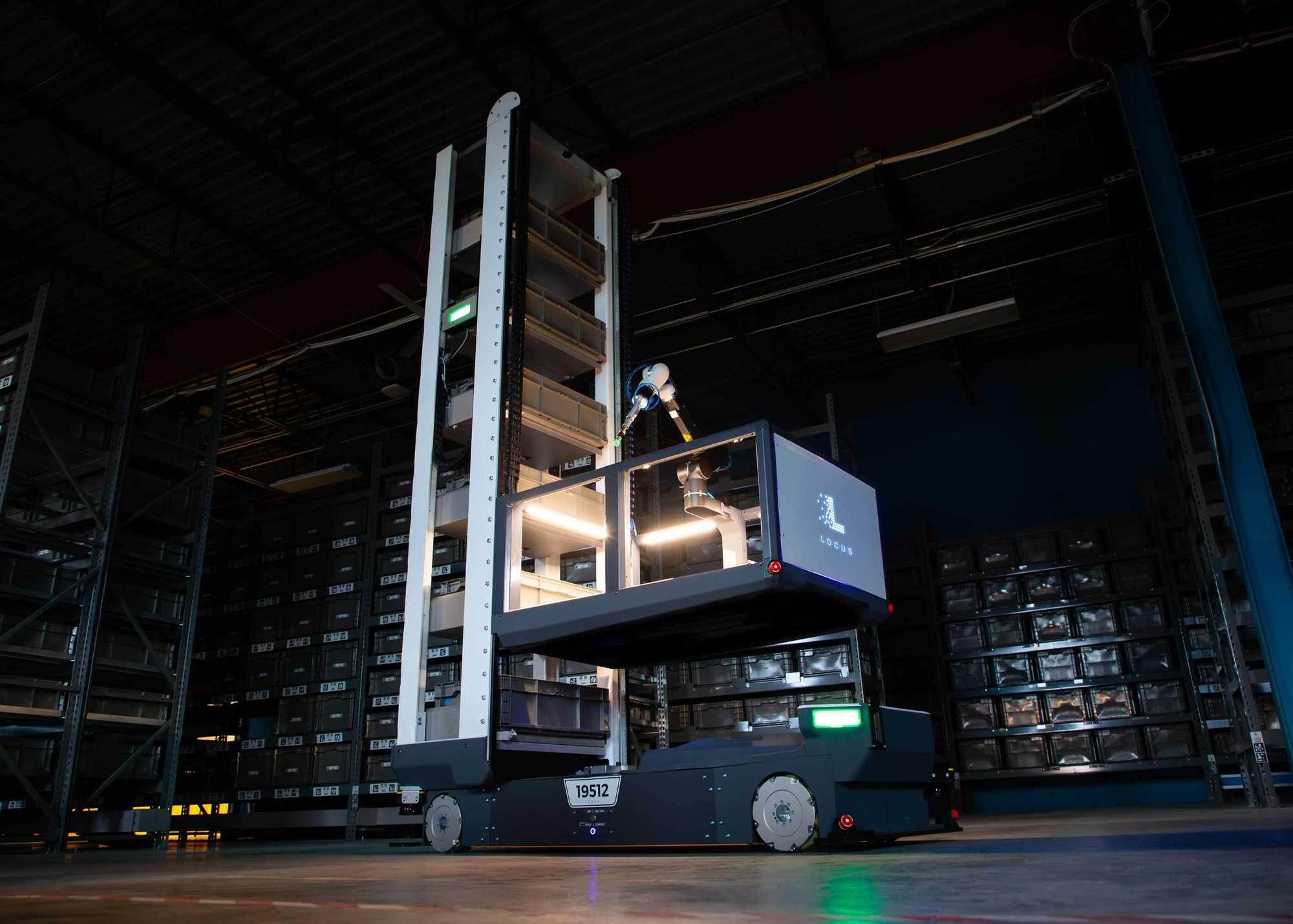

Locus Robotics has acquired Nexera Robotics, bringing AI-driven grasping intelligence into the Locus Array autonomous fulfillment platform. The deal combines Nexera's patented soft-membrane gripper — validated through tens of millions of picks — with Locus's existing AMR fleet, directly targeting the manipulation bottleneck that has limited automated warehouse fulfillment at enterprise scale.
- What is the NeuraGrasp Technology Locus Acquired?
- How Does Locus Array Benefit from AI-Driven Grasping?
- Why Does Mobile Manipulation Matter for Warehouse Automation?
- What This Means for Warehouse Buyers
- Frequently Asked Questions
What is the NeuraGrasp Technology Locus Acquired?
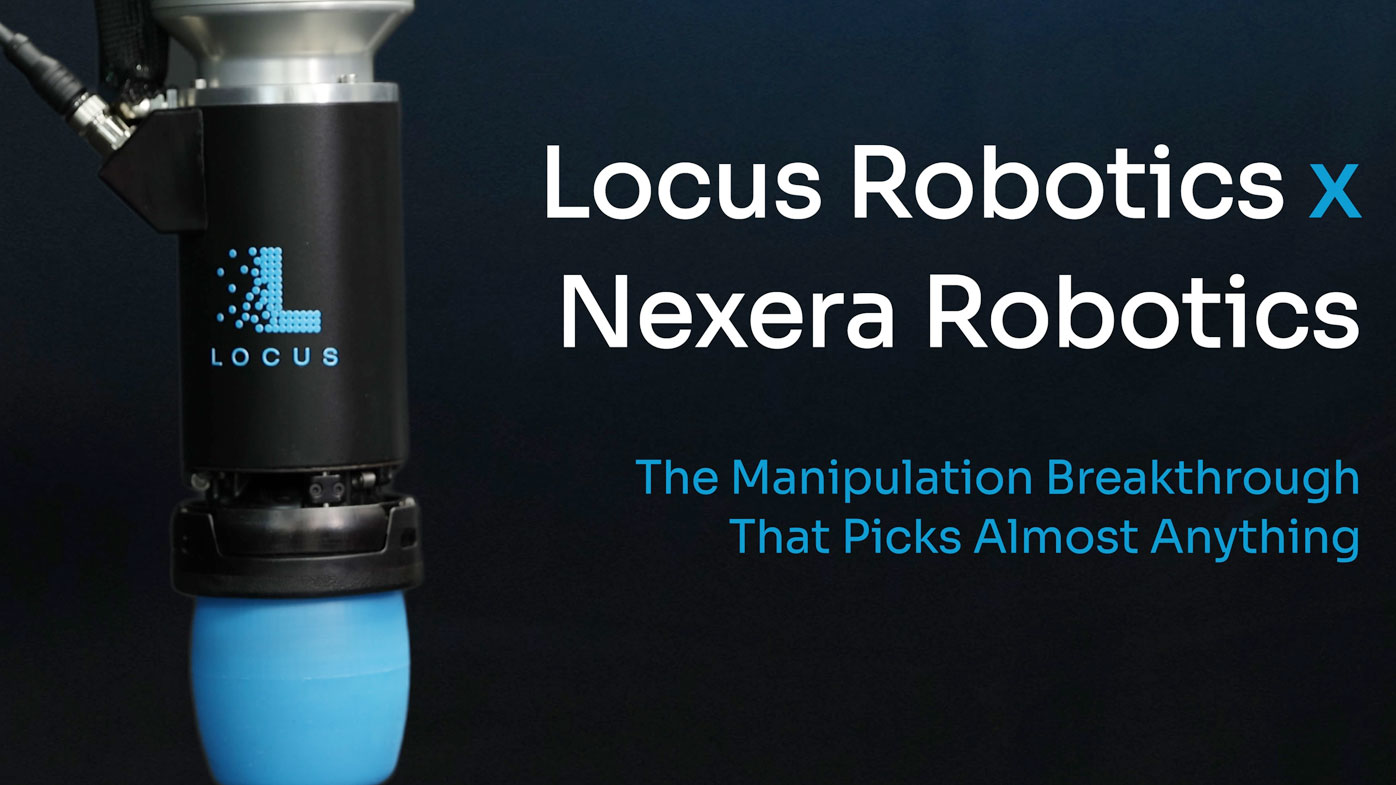
NeuraGrasp is a robotic end-effector system that combines AI-driven grasping intelligence, onboard sensory inputs, computer vision, and a patented soft membrane structure to dynamically adapt to each item's physical characteristics. Developed over five years through six generations of refinement, it handles variations in shape, surface texture, material, porosity, and weight without manual end-effector changes.
The technology stands apart from traditional suction or jaw grippers by eliminating the need for tool changers between SKU types. According to the companies, NeuraGrasp has been validated through thousands of hours and tens of millions of picks across the broadest SKU testing with commercial partners. "Being able to efficiently grasp millions of SKU types with both speed and precision is where the next decade of value gets created," Rick Faulk, CEO of Locus Robotics, stated in the acquisition announcement.
| Capability | Traditional Suction Gripper | Traditional Jaw Gripper | NeuraGrasp |
|---|---|---|---|
| Porous items | Poor | Good | Reliable |
| Irregular shapes | Failure | Limited | Adaptive |
| Surface texture range | Narrow | Moderate | Full range |
| Item weight variation | Limited | Good | Broad |
| Changeover time | Manual minutes | Manual minutes | Zero |
How Does Locus Array Benefit from AI-Driven Grasping?
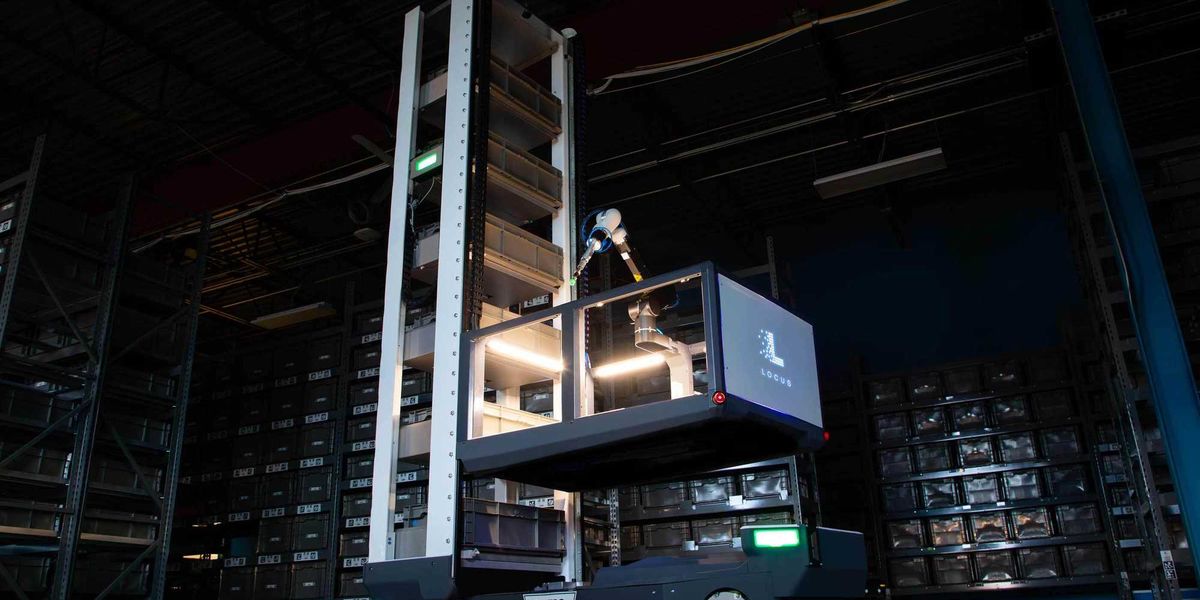
The Locus Array system — a robots-to-goods autonomous fulfillment platform that combines piece-picking technology with AMRs for in-aisle picking and other workflows — gains the ability to handle a dramatically wider range of products without mechanical reconfiguration. NeuraGrasp becomes the manipulation layer for Array, enabling the system to pick items it previously could not manage reliably.
Roy Belak, CEO of Nexera Robotics, described the integration rationale: "We built NeuraGrasp to solve the manipulation challenges that have held robotic picking back for years. Joining Locus Robotics gives us the platform, scale, and customer base to bring this breakthrough technology into the high-velocity fulfillment environments it was designed for." Locus launched Array at the recent MODEX conference, and the Nexera acquisition accelerates its path to handling the full SKU diversity found in real warehouse operations — from polybags to irregular consumer goods to fragile items.
Why Does Mobile Manipulation Matter for Warehouse Automation?
Mobile manipulation — the combination of autonomous mobility with dexterous grasping — has been widely identified as the next frontier in warehouse robotics. Most current AMR deployments handle transport only: robots move bins or shelves, but humans still perform the actual picking. Mobile manipulation closes that gap, allowing a single robot to navigate to a location, identify items, grasp them, and place them in the correct destination.
"Being able to efficiently grasp millions of SKU types with both speed and precision is where the next decade of value gets created," Faulk noted. The industry-wide cost of manual picking in fulfillment centers is estimated at billions of dollars annually, and every percentage point of automation directly improves throughput and labor economics. For Locus, adding Nexera's capabilities positions the Array system to compete with the emerging wave of humanoid robots and stationary robotic arms that vendors are racing to deploy in warehouse settings.
What This Means for Warehouse Buyers
For logistics operators evaluating automation investments, this acquisition signals that AI-driven mobile manipulation is moving from pilot scale to commercial deployment. Key implications for buyers:
Total cost of ownership improves as one system handles SKU diversity that previously required multiple end-effector types or manual intervention. Labor substitution ratios increase because the same robot platform can both transport and pick, reducing the number of separate automation systems needed per facility.
For buyers currently operating Locus AMRs or evaluating the Array system, the Nexera integration means access to a picking capability that handles porous items, irregular geometries, and variable textures — the SKU categories that have historically required human operators. This matters most for e-commerce fulfillment, grocery logistics, and general merchandise distribution, where item variability is highest.
Buyers comparing against used industrial robots or used cobots for sale should weigh whether a fully integrated mobile manipulation system like Array offers better deployment speed than stitching together separate AMR and arm systems. The zero-changeover gripper design is a specific cost advantage for facilities processing more than 50 distinct SKU types per hour — the threshold where manual gripper swaps start degrading throughput measurably.