
Humanoid robots improve at RoboCup, but their task fit remains a question

Humanoid robots improve at RoboCup, but their task fit remains a question

2 min read•Nov 11, 2026•
Ben Harris
Ben Harris

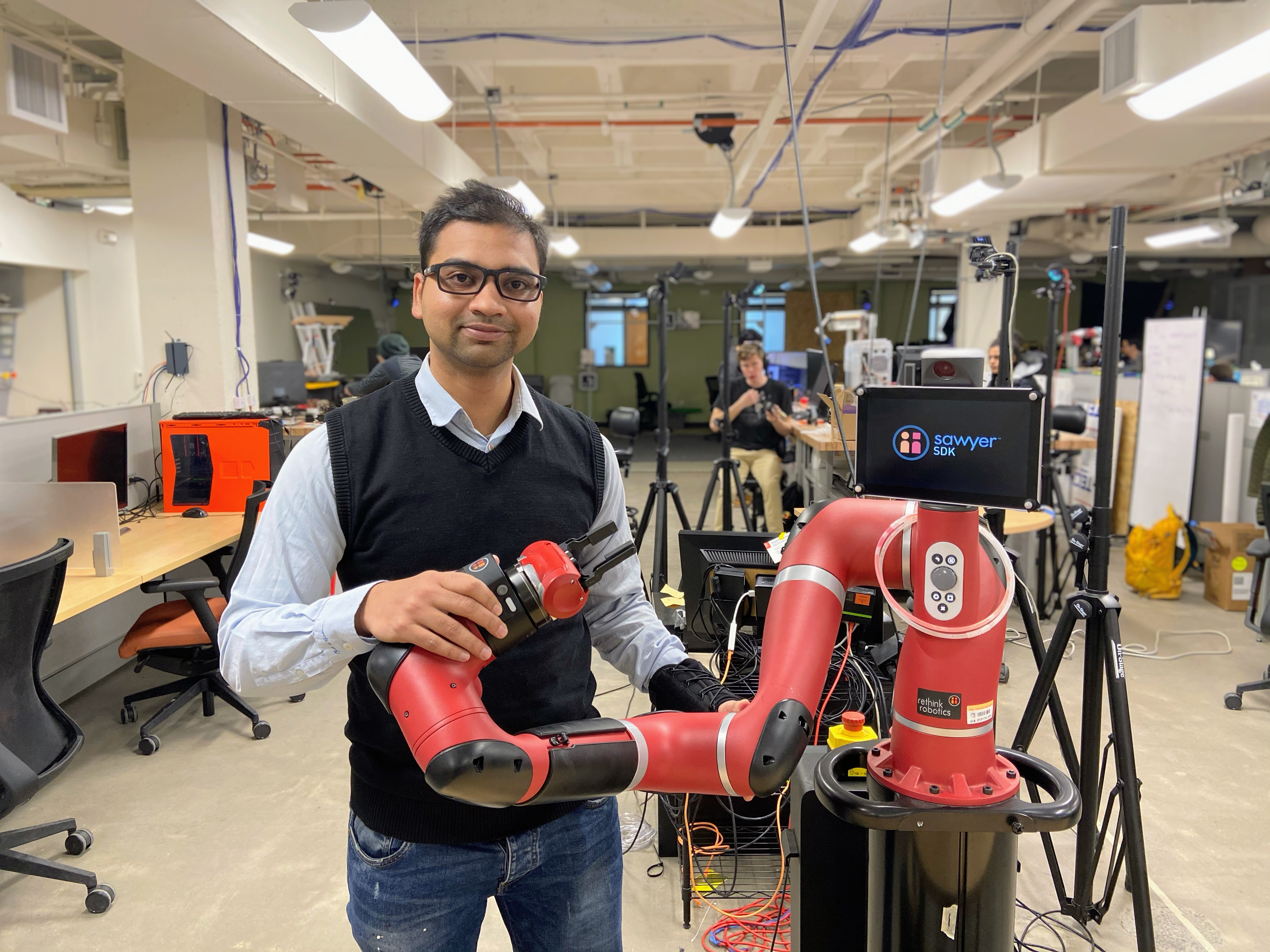
Humanoid robots at RoboCup have become less prone to falling and can be deployed without people following them, first reported by Robohub. But researchers said humanoid robots are rarely the best choice for applications today, and that a wheeled robot can be simpler for basic tasks such as moving a block.

This year’s international competition had 55 humanoid robot soccer teams and a demonstration game of 11 vs 11. Biswas said the trustees’ annual match against the robots, once trivial, is becoming less easy for them.

Biswas linked the gains to better hardware, algorithmic advances and training methods. Most modern humanoids use learned controllers for walking, including models trained in simulation and transferred to the real world.

RoboCup has simplified its soccer leagues and plans to have only humanoid league soccer in 2028. Biswas said integrating control and perception in one robot is worth exploring from a scientific perspective.

RoboCup’s soccer plans center on humanoids, while Biswas’s block-moving example favors a wheeled base. For a position-based task such as moving a block, he said a wheeled robot is better because its stable base and fewer degrees of freedom make planning easier; a humanoid adds forces, velocities and accelerations.

Biswas said the best advances are over-optimized for specific scenarios, and that these solutions are not robust or general-purpose; he raised a different brush or lighting as examples of changes to test. Hauert said videos can show robots that are remotely controlled or finely tuned, not machines ready for an unfamiliar environment.

Dechter said a humanoid might create a better psychological impression in healthcare assistance, while Hauert saw a possible role for humanoids in caring settings if they are not deceptive. Hauert said people may expect more from humanoids because of their form, and that less-capable cartoon-like robots might be safer in those settings.

Biswas said teleoperation, in which a human controls a robot to produce training data, is useful but insufficient on its own to deliver general-purpose robots. He argued that task complexity grows combinatorially and compared the data-collection push with self-driving companies’ earlier belief that HD maps alone would solve driving.

RoboCup’s challenge to defeat the human world champions by 2050 is, Biswas said, an open conjecture.

AI datacentre plans include 181GW of proposed on-site gas power

Plans for AI datacentres in the US, UK and mainland Europe include 181GW of proposed on-site gas-fired capacity, first reported by Theguardian. BloombergNEF estimates the planned rollout could emit about 345m metric tonnes of carbon dioxide equivalent a year in the US if it goes ahead, as grid-connection delays drive developers to seek power on site.

The proposed capacity is almost four times Great Britain’s total peak electricity demand, and 90% of planned on-site gas-fired power stations are in the US. BloombergNEF’s estimate for annual US emissions is equivalent to the greenhouse gas emissions from about 72.8m fossil fuel cars.

Mark Daly, BloombergNEF’s head of datacentres and emerging tech, said AI’s economics make speed to power one of the most important priorities in defining constraints on datacentre developers. He said the climate outcome also depends on how quickly grids connect facilities and whether power systems add cleaner generation alongside demand.

Developers have claimed their gas-fired power supplies would be temporary while they wait for grid connections. Daly said the economics could encourage developers to continue generating energy once the plants are online, creating a longer-term fossil-fuel lock-in risk. BloombergNEF says connecting new datacentres to the grid is the more sustainable option, and faster connections are crucial to limiting emissions and that risk.

Planned UK datacentres made more than 100 inquiries in 2024-5 to connect to gas as a result of delays securing access to the electricity grid, according to Future Energy Networks, the representative body for UK gas networks. Wapseys Wood in Buckinghamshire and Quest Park in Bedfordshire are seeking to build their own on-site gas-fired power stations after long waits for grid access.

On-site fossil-fuel generation is likely to be repeated at many more UK sites after chancellor John Healey gave datacentres the green light to build and run temporary fossil-fuel power stations while waiting for grid connections, as part of a so-called datacentre covenant.

BloombergNEF projected AI datacentre electricity demand would almost quadruple by 2035 to 2,354 terawatt-hours, equivalent to 7% of global electricity demand.