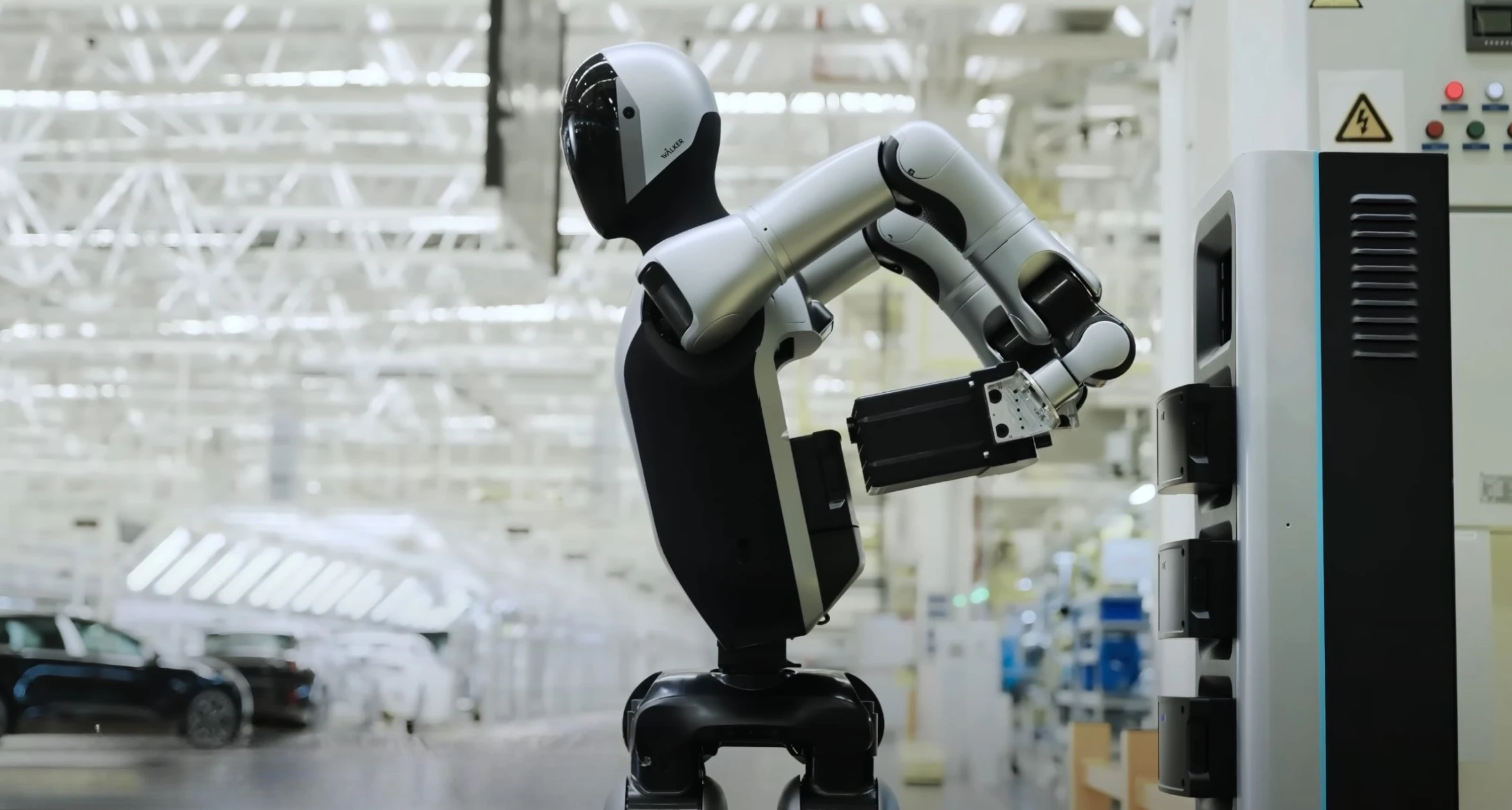

Humanoid robot battery demand is forecast to reach 10.5 GWh by 2037, first reported by Roboticsandautomationnews. The forecast comes as NMC-based lithium-ion batteries remain the common choice, while solid-state and lithium-sulfur alternatives promise higher energy density but face production or cycle-life barriers that could delay their use in humanoid robots.
Today, NMC-based lithium-ion batteries are the most common chemistry used in humanoids. They balance energy density with fast-charge potential, good cycle life and technological maturity that puts them at or close to commercialization.
Raising nickel content in NMC cathodes can improve energy density and reduce reliance on costly, supply-constrained cobalt. Their widespread use in other applications leaves NMC batteries in ample supply for current humanoid growth, while LFP cathodes do not provide enough energy density for humanoids’ general demands.
Solid-state batteries offer energy density of ~400-500+ Wh/kg. Replacing flammable liquid electrolyte with solid electrolyte improves cell safety, while removing the separator can allow tighter material packing and higher volumetric energy density. That could leave more room for active material in a humanoid’s battery, storing more energy and extending operating capacity.
Mass production is not due to begin until the end of the 2020s. Scalable production of reliable solid electrolytes and contact between electrodes and solid electrolyte remain problems, leaving humanoid adoption some years away.
The contrast is clear: NMC combines current supply and maturity, while emerging chemistries offer energy-density potential with different adoption barriers. Lithium-sulfur cells pair a lithium-metal anode with a carbon/sulfur cathode, offering high theoretical energy density and a possible way to lower battery costs with abundant, cheap sulfur.
Poor cycle life and an inability to withstand fast charging limit lithium-sulfur batteries. Both are linked to the polysulfide-shuttle, a process that depletes active material over successive cycles and means more frequent battery-pack replacements. Commercialization is not expected until the early 2030s, and lithium-sulfur is expected to make up only a small part of the market by 2037.