
GitHub Copilot switched to a usage-based pricing model in April, and as the new billing system takes effect today, developers are reporting extreme sticker shock over how quickly their monthly AI credits are consumed. The change highlights the steep inference costs behind AI coding assistants and could fundamentally reshape how developers rely on these tools.
- What Happened
- Why GitHub Made the Switch
- User Reactions: Shock and Anxiety
- Market Implications for AI Coding Tools
- What This Means for the Industry
- Frequently Asked Questions
- Conclusion
What Happened
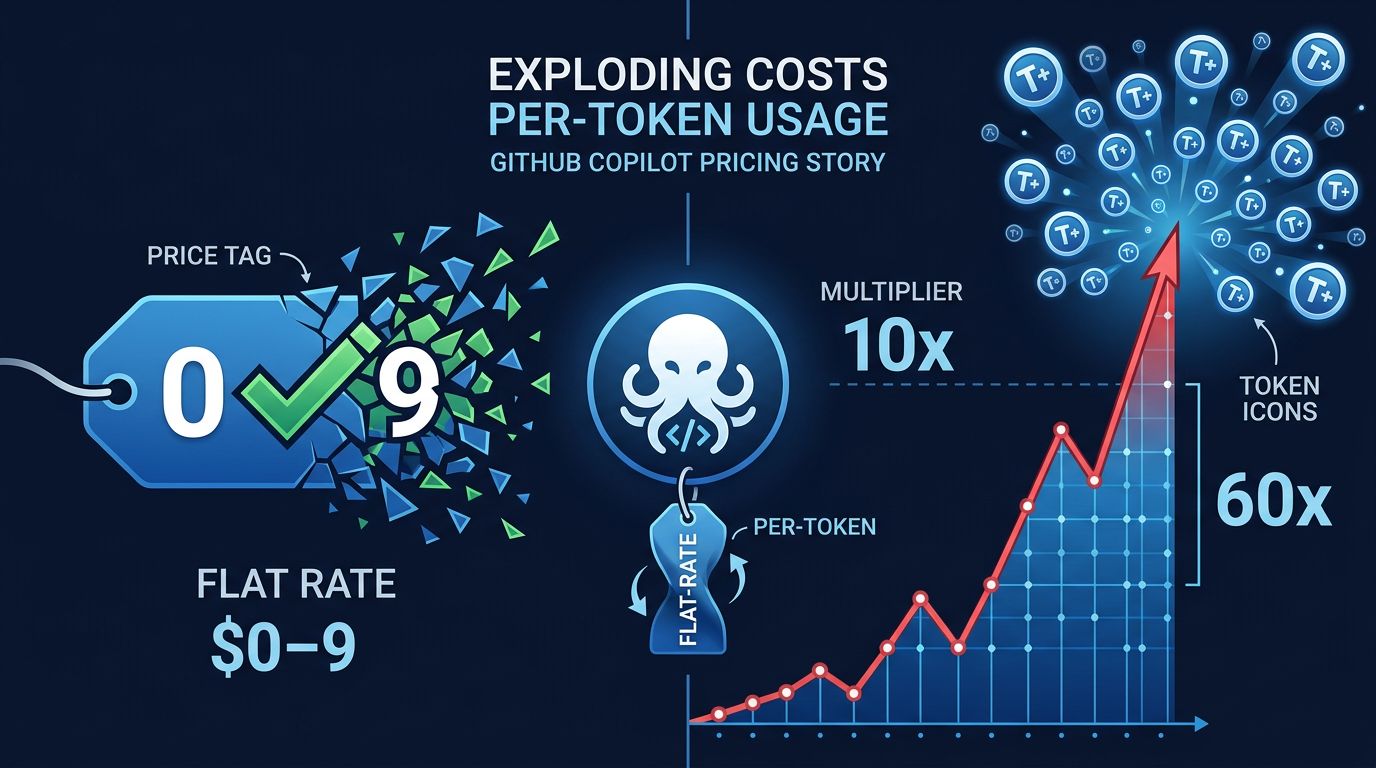
GitHub announced in April that it would replace its previous request-based billing system for Copilot with a usage-based model that charges users for consumed “AI credits.” As that system went live today, many subscribers discovered that their typical usage pattern now exhausts their monthly allowance far more quickly than expected.
Across social media and developer forums, users shared screenshots and personal data showing that a single intensive day of coding with Copilot could consume 50% or more of their monthly credit cap. Some reported that they used up an entire month’s quota in less than 24 hours.
Under the old pricing, GitHub Copilot allocated a set number of “requests” and “premium requests” per tier. The company argued that this system lacked fairness because “a quick chat question and a multi-hour autonomous coding session [could] cost the user the same amount,” forcing GitHub to absorb escalating inference costs.
Why GitHub Made the Switch
GitHub’s rationale for the change is straightforward: running large language models at scale is expensive. Under the old model, heavy users effectively received a subsidy from the platform, while light users paid the same flat fee. The new usage-based pricing aligns cost with consumption, making the business model more sustainable.
In a post on the GitHub blog, the company explained that “absorbing much of the escalating inference cost” behind heavy usage was no longer viable. By moving to credits, GitHub can tie revenue directly to the computational resources each user consumes.
However, the pricing structure has caught many developers off guard. GitHub provides a cost-estimation tool that calculates what a user’s previous monthly usage would have cost under the new plan. Multiple users shared estimates showing their typical usage would have generated bills in the thousands of dollars — far exceeding the flat monthly fee they had been paying.
User Reactions: Shock and Anxiety
Developer forums and social media platforms lit up today as Copilot subscribers compared notes. One user on Hacker News wrote: “I thought I was a heavy user, but I didn’t realize I was using that much. My estimate was over $1,200 for last month. That’s just not sustainable for an individual dev.”
Others noted that the new pricing could force them to change how they interact with Copilot altogether. Instead of letting the AI suggest code continuously as they type, some plan to disable it during routine work and only enable it for specific, high-value tasks. This behavioral shift could undermine GitHub’s goal of making Copilot an always-on assistant.
Freelance developers and small teams appear to be hardest hit. For enterprise clients with deep pockets, the increase may be manageable, but for solo practitioners or small startups, the sudden cost escalation could push them to seek alternatives such as open-source models or competing services from Amazon, Google, or other vendors.
Market Implications for AI Coding Tools
GitHub Copilot is the dominant player in the AI-assisted coding market, but its pricing move creates an opening for competitors. Amazon’s CodeWhisperer and Google’s Gemini Code Assist both offer generous free tiers with per-user pricing that hasn’t yet shifted to usage-based models. If Copilot’s sticker shock drives users away, these rivals could gain significant traction.
The move also signals a broader industry trend. As AI model providers attempt to monetize their services at scale, usage-based pricing is becoming the norm. OpenAI, Anthropic, and Microsoft themselves have introduced or expanded credit-based billing for their API products. Developers may need to budget for AI tools as they do for cloud compute — with the understanding that heavy usage comes with real costs.
However, the backlash underscores a fundamental tension: users want unlimited AI assistance at a flat fee, but the underlying infrastructure costs grow linearly with usage. GitHub’s move is a test case for whether the market will accept usage-based pricing for AI coding assistants or whether it will trigger a retreat to alternative models.
What This Means for the Industry
For investors and tech observers, GitHub Copilot’s pricing pivot provides a rare look at the true cost of running AI at the user level. The inference costs behind large language models remain high enough that even a well-funded platform like GitHub (backed by Microsoft) cannot afford to treat them as a fixed overhead.
- For developers: Budget planning for AI tools becomes essential. Relying on Copilot for hours of daily autonomous coding could be prohibitively expensive without an enterprise plan.
- For competitors: The backlash offers a window. Vendors that can offer predictable pricing — or that can run smaller, cheaper models locally — may attract defectors.
- For the broader AI market: This event normalizes usage-based billing for AI assistants. Expect similar moves from other AI productivity tools as they confront the same cost realities.
The episode also raises questions about the long-term viability of flat-rate subscriptions for AI-powered features. If inference costs continue to fall, usage-based charging may become unnecessary. But for now, the economics point toward more granular billing.
Conclusion
GitHub Copilot’s shift to usage-based pricing has provoked immediate backlash from developers who find the new cost structure far more expensive than expected. The move reveals the true infrastructure expense of large language models and forces a difficult trade-off between unlimited AI assistance and sustainable pricing. How the market responds — whether through adoption, alternatives, or adaptation — will shape the next phase of AI-assisted development.