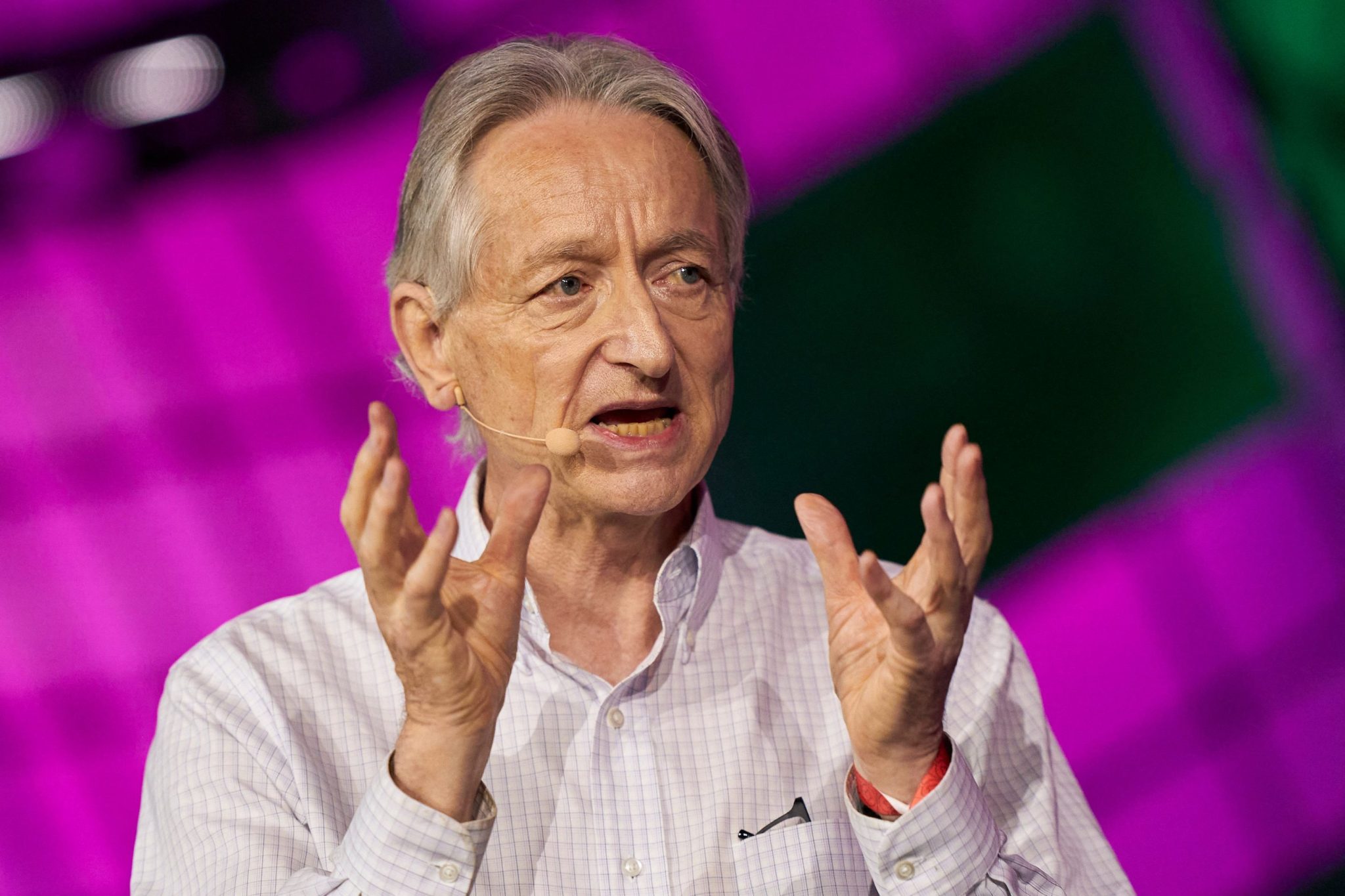

Geoffrey Hinton says AI is likely to cause massive unemployment, in a warning first reported by Fortune. He argues that AI systems sold as cheaper substitutes for human labor could leave millions of workers behind, while the number of new roles may not come close to matching the jobs eliminated during the transition.
Elon Musk believes most humans will not have to work at all in less than 20 years, and Hinton has described such predictions as plausible and likely. Nvidia CEO Jensen Huang predicts every job will be transformed and likely lead to a four-day workweek.
Hinton made the warning during a November 2025 discussion with Sen. Bernie Sanders at Georgetown University. He tied it to the roughly trillion dollars being invested in data centers and chips, saying one of the main sources of that money will be selling AI that can do workers’ jobs much more cheaply.
The economics of that push are also under scrutiny: Hinton has said the industry is driven less by scientific progress than by short-term profits. OpenAI, the maker of ChatGPT, is not expected to turn a profit until at least 2030 and may need more than $207 billion to support its growth, according to HSBC estimates published in November 2025.
The trade-off is plain: Hinton links AI investment to systems that do workers’ jobs more cheaply, while new roles may fall well short of those eliminated.
Sanders’ October 2025 report, based partly on estimates generated by ChatGPT, warned that nearly 100 million U.S. jobs could be displaced by automation. Workers in fast food, customer service and manual labor face some of the highest risks, while accounting, software development and nursing could also see significant cuts.
Sen. Mark Warner warned that disruption could hit young people first and hardest, potentially driving unemployment among recent college graduates as high as 25% in the next two to three years. He said failing to put guardrails on AI after doing nothing on social media would be a mistake.
Hinton has acknowledged that AI will create new jobs, but he does not expect them to approach the number eliminated. His broader caution is that the next year or two may be visible, while 10 years out offers no clear view of what will happen.