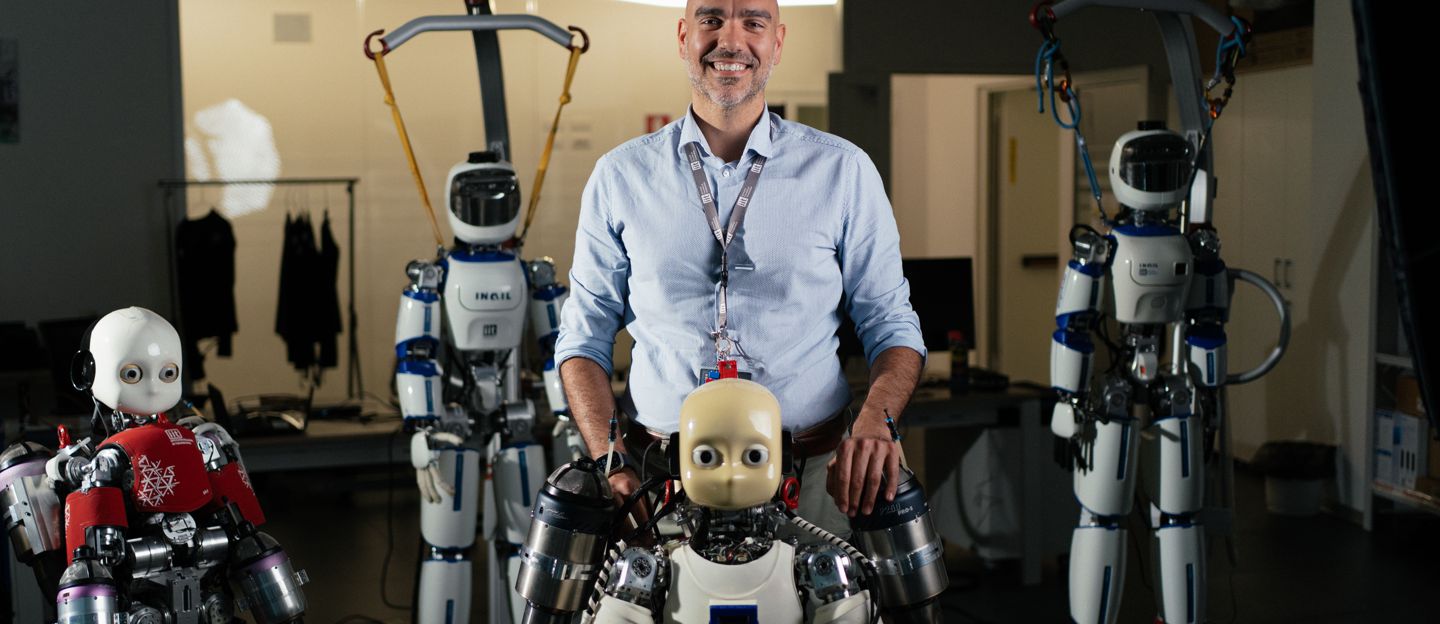

Generative Bionics plans a 5,000-square-metre humanoid-robot training facility in Italy, first reported by Roboticsandautomationnews. The planned site would pair Gene.01 humanoid robots working in recreated industrial settings with digital-twin simulations, allowing tasks to be repeated across thousands of variations before trained models and robot systems are validated on physical robots.
The facility is scheduled to become operational by the fourth quarter of 2027. Generative Bionics says it will be Europe’s largest physical AI training facility for humanoid robots.
The company plans for fleets of Gene.01 robots to perform tasks continuously in recreated industrial environments, generating physical data for training World Action Models and validating robot systems. Digital twins of those environments and robot configurations would let tasks be repeated across thousands of variations in layouts, objects, materials, operating conditions and potential failure modes.
Models trained and tested in simulation would then return to physical robots for validation, in a continuous development cycle Generative Bionics describes as real-to-sim-to-real. The plan puts physical data and digitally varied conditions into one training-and-validation loop.
AMD will provide computing infrastructure based on its Helios rack-scale architecture. The companies say the systems will process physical and synthetic data, train physical AI models and run large numbers of digital-twin simulations in parallel.
The partnership builds on AMD Ventures’ participation in Generative Bionics’ €70 million seed funding round; AMD computing technology is also used on board Gene.01. The wider network is planned to include a second facility elsewhere in Europe and a third serving global markets.