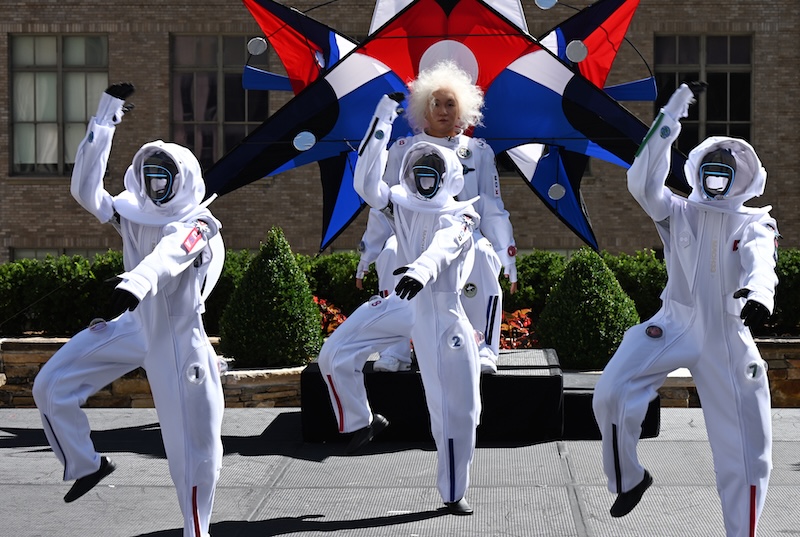

Galaxy Corporation staged a synchronized K-pop performance involving 16 humanoid robots in Times Square, New York, first reported by Roboticsandautomationnews. The company said the demonstration was intended to show how humanoid robots could be incorporated into live entertainment and public performances as it expands its activities in physical AI and robotics.
Galaxy described the Times Square event as a K-pop “Peace Flash Mob,” held as part of activities marking the United Nations International Day of Peace. Galaxy Corporation is a South Korean entertainment technology company.
At Rockefeller Center, Galaxy presented Schofield Stein, a humanoid robot modeled on CEO Schofield Choi. The robot appeared alongside Choi in a staged conversation about human-robot interaction and said it was there to live alongside people, not replace them.
The New York event included the robot performance, a staged conversation about human-robot interaction and the introduction of “Soul AI.” Galaxy describes Soul AI as a concept for developing AI and robots that incorporate human values and empathy alongside intelligence and physical capabilities.
Choi said Galaxy’s focus is how people and increasingly capable robots will interact as the technology becomes more widely deployed. He said robots may be part of everyday life by 2035, when his son is 15, just as smartphones are today.
Choi said he hopes his son will not grow up fearing robots, but will see them standing beside him, helping, protecting and living alongside him. A Times Square “Peace Hug Challenge” featured Choi’s son embracing one of the humanoid robots.
Galaxy says it plans further projects combining entertainment, cultural content and advanced robotics as it expands its activities in physical AI.