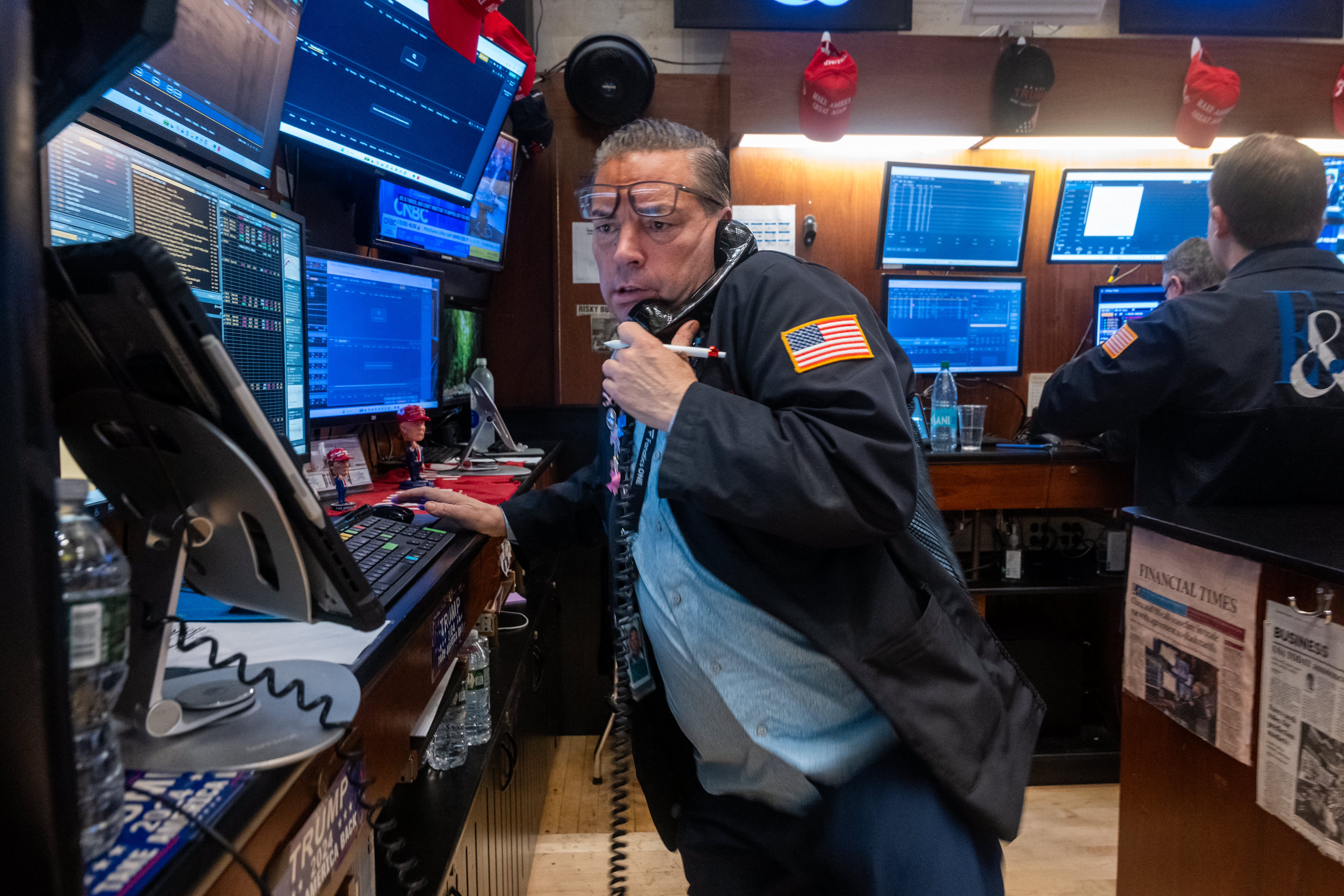

U.S. stocks shed roughly $3 trillion in market value on Thursday as chip shares plunged, in a reversal first reported by Fortune. The selloff followed the Dow’s strongest post-midterm performance in 44 years on Wednesday, and the index was heading for its worst second trading day after a midterm in records dating to 1896.
By early Thursday afternoon, the Nasdaq was down 5.2%, the S&P 500 3.8%, and the Dow 2.9%, or more than 1,500 points. The Philadelphia Semiconductor Index was down about 9.75% in an intraday snapshot and briefly fell as much as 11%, putting it on track for its steepest daily loss since March 2020; AMD and Micron each lost roughly 15%, while Nvidia fell almost 9%.
Wednesday’s rally had lifted the Dow 1,569 points, or 3%, and the S&P 500 1.6% to 7,688.62. Oil fell more than 8%, as investors appeared to hope a divided government would mean steadier policy.
The two-day reversal was sharp, but not uniform: four of the S&P 500’s 11 sectors rose Thursday, including consumer staples, up 1.5%, and Berkshire Hathaway hit an all-time high. The market’s uneven response had already appeared Wednesday, when Vistra plunged 14% and Vertiv fell 13% on fears of data-center moratoriums, while Nvidia slipped 3% and some of the biggest technology companies that pay for the build-out rose.
The election included 41 ballot measures regarding slower data-center buildouts, and most passed, especially in Ohio. Texas was the main source of worry: Gina Hinojosa, who campaigned for an immediate moratorium on new data centers, beat Republican Gov. Greg Abbott. Wells Fargo estimated 27% of planned data-center gigawatts are in Texas.
Abbott paused new data-center permits in September pending a grid audit, and his pause on grid connections already freezes data-center permits. Hinojosa likely will not need a new law to extend the moratorium.