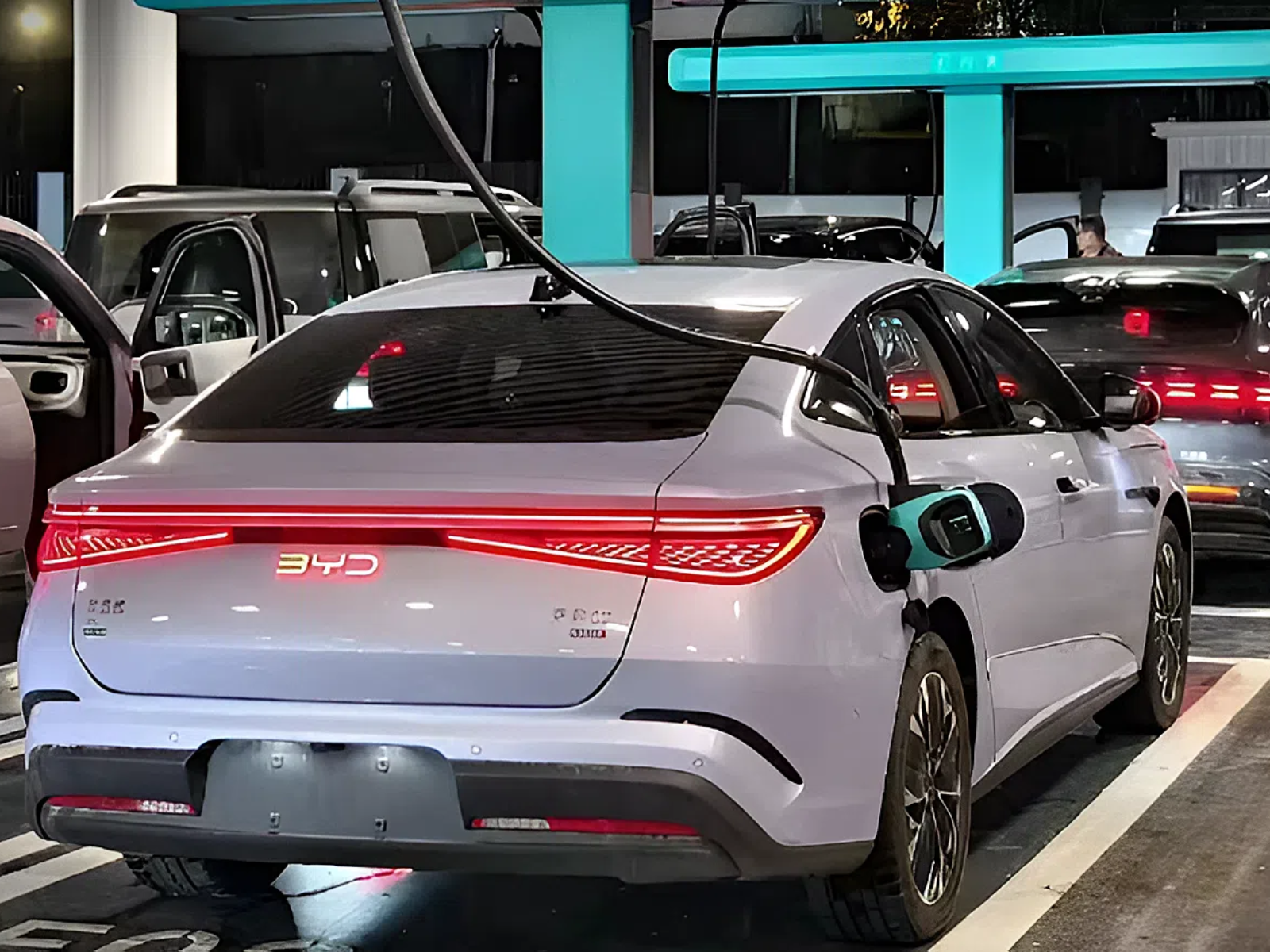

BYD combines solar power and a robotic arm in new EV charging system

BYD combines solar power and a robotic arm in new EV charging system

2 min read•Nov 11, 2026•
Alex Thornton
Alex Thornton

BYD has introduced an integrated EV charging system combining solar power and a robotic charging arm, first reported by Electrek. Once the vehicle is parked, the system pairs automated plug-in handling with charging that BYD says can take a battery from 10% to 70% in five minutes, without the driver touching the cable.

The system was launched in Abu Dhabi and combines solar generation, battery storage, Flash Charging and robotic charging. BYD describes it as the world’s first solution to bring those four elements together; its Solar-Storage-Charging (SSC) system captures energy from the sun, stores it and distributes it as needed.

BYD gives a nine-minute charging time from 10% to 97%. The robotic arm automatically locates the vehicle’s charging port, opens its cover, plugs in and removes the connector when the session ends.

Combined with BYD’s Automated Valet Parking, the system extends automation beyond driving and parking to charging, according to the company. Once the vehicle is parked, the driver does not need to handle the cable.

The setup links the energy side of charging, through solar generation and storage, with the physical connection handled by the arm. BYD says the SSC system can operate independently off-grid using solar power. Its solar division does business in over 100 countries and regions, and BYD says it has over 16 years of experience in the solar industry.

The system is part of BYD’s wider Flash Charging rollout. The company plans to deploy 6,000 Flash Charging stations globally by the end of 2027.

AI datacentre plans include 181GW of proposed on-site gas power

Plans for AI datacentres in the US, UK and mainland Europe include 181GW of proposed on-site gas-fired capacity, first reported by Theguardian. BloombergNEF estimates the planned rollout could emit about 345m metric tonnes of carbon dioxide equivalent a year in the US if it goes ahead, as grid-connection delays drive developers to seek power on site.

The proposed capacity is almost four times Great Britain’s total peak electricity demand, and 90% of planned on-site gas-fired power stations are in the US. BloombergNEF’s estimate for annual US emissions is equivalent to the greenhouse gas emissions from about 72.8m fossil fuel cars.

Mark Daly, BloombergNEF’s head of datacentres and emerging tech, said AI’s economics make speed to power one of the most important priorities in defining constraints on datacentre developers. He said the climate outcome also depends on how quickly grids connect facilities and whether power systems add cleaner generation alongside demand.

Developers have claimed their gas-fired power supplies would be temporary while they wait for grid connections. Daly said the economics could encourage developers to continue generating energy once the plants are online, creating a longer-term fossil-fuel lock-in risk. BloombergNEF says connecting new datacentres to the grid is the more sustainable option, and faster connections are crucial to limiting emissions and that risk.

Planned UK datacentres made more than 100 inquiries in 2024-5 to connect to gas as a result of delays securing access to the electricity grid, according to Future Energy Networks, the representative body for UK gas networks. Wapseys Wood in Buckinghamshire and Quest Park in Bedfordshire are seeking to build their own on-site gas-fired power stations after long waits for grid access.

On-site fossil-fuel generation is likely to be repeated at many more UK sites after chancellor John Healey gave datacentres the green light to build and run temporary fossil-fuel power stations while waiting for grid connections, as part of a so-called datacentre covenant.

BloombergNEF projected AI datacentre electricity demand would almost quadruple by 2035 to 2,354 terawatt-hours, equivalent to 7% of global electricity demand.