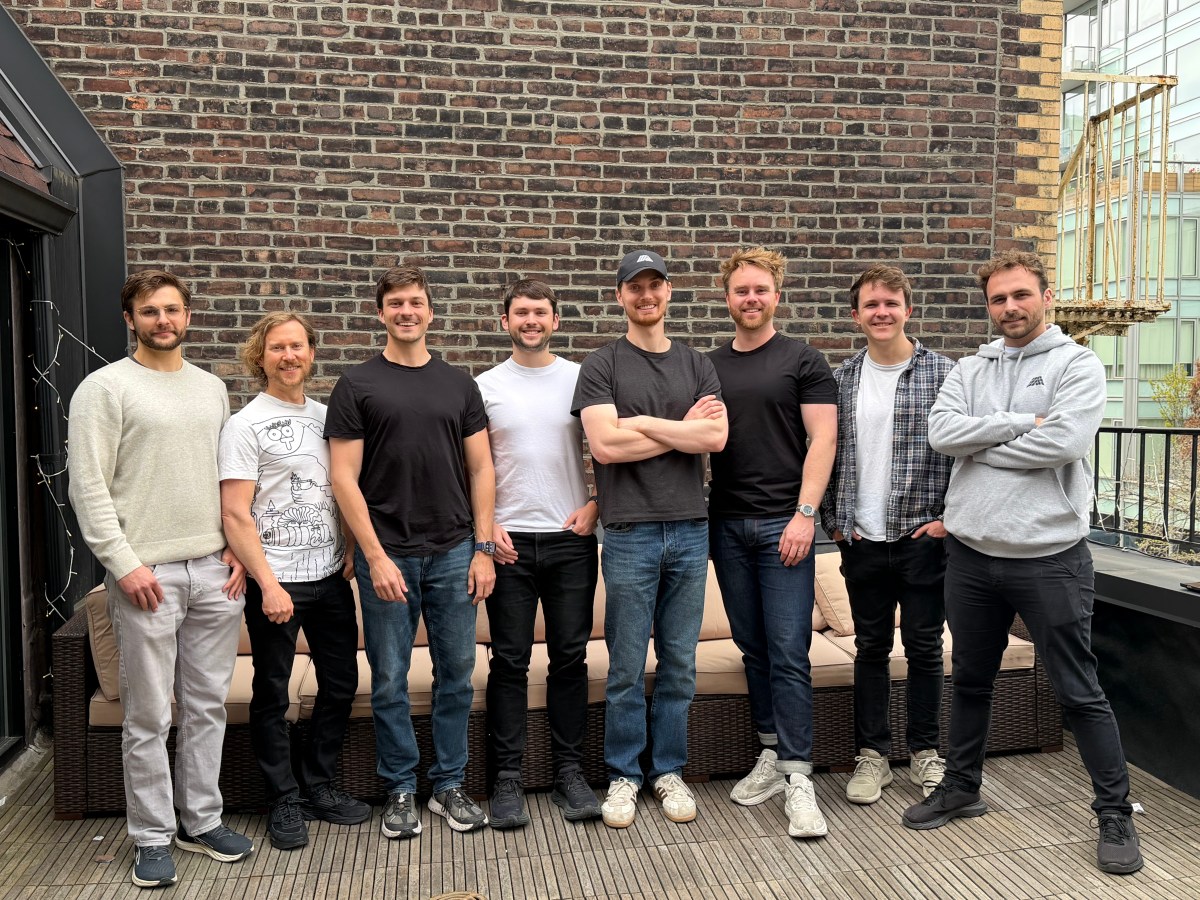

Antioch has secured an $8.5 million seed round to develop simulation tooling aimed squarely at the next generation of robot builders — positioning itself as the IDE-style developer experience that physical AI has been missing. As humanoid robots and autonomous systems move from research labs into production environments, the simulation platforms that train and validate them are becoming critical infrastructure.
- What Is Antioch and What Problem Does It Solve?
- How Does Antioch Compare to NVIDIA Isaac and Other Simulation Platforms?
- Why Developer Experience Is the Battleground for Physical AI
- What This Means for Robotics
- Frequently Asked Questions
What Is Antioch and What Problem Does It Solve?
Antioch is building simulation infrastructure designed to lower the entry barrier for teams developing physical AI systems — robots, autonomous machines, and embodied AI agents that must operate reliably in the real world. The core problem it targets: existing simulation tools were built for large, well-resourced robotics teams, not the leaner startups and independent builders that are now entering the space in significant numbers.
According to TechCrunch, the company raised its $8.5M seed round with the explicit goal of making simulation as accessible and developer-friendly as modern software coding tools — hence the "Cursor for physical AI" framing. Cursor, for context, is the AI-assisted code editor that dramatically lowered the friction of software development by wrapping complex tooling in an intuitive interface. Antioch is betting the same pattern will play out in robotics.
The problem is real. Building a simulation environment for a robot today typically requires deep expertise in physics engines, sensor modeling, rendering pipelines, and data generation workflows. Teams at Boston Dynamics or Agility Robotics have entire departments handling this. A five-person startup building a warehouse picking robot does not. That gap — between what simulation demands and what most builders can provide — is exactly the wedge Antioch is targeting.
How Does Antioch Compare to NVIDIA Isaac and Other Simulation Platforms?
Antioch is positioning itself as the developer-experience layer, not a physics engine replacement. Where NVIDIA Isaac Sim offers enterprise-grade simulation backed by Omniverse's USD-based scene composition and PhysX physics, it carries a corresponding complexity and resource ceiling. Antioch appears to be targeting the workflow layer — making it faster to go from robot concept to validated simulation without needing a team of simulation engineers.
Here's how the major platforms currently stack up:
| Platform | Primary User | Physics Engine | Key Strength | Primary Limitation |
|---|---|---|---|---|
| NVIDIA Isaac Sim | Enterprise teams | PhysX / Warp | Photorealistic rendering, GPU-accelerated training | High setup complexity, hardware requirements |
| MuJoCo | Researchers / RL teams | Native | Precise contact dynamics, open source | Minimal tooling, steep learning curve |
| Gazebo / ROS 2 | Academic / open-source builders | ODE / Bullet | Ecosystem integration, free | Aging architecture, limited visual fidelity |
| Webots | Education / prototyping | ODE | Accessible, cross-platform | Not production-grade |
| Genesis (CMU) | Research (generalist) | Custom | Speed (430,000× real-time), multi-physics | Early stage, limited production tooling |
| Antioch | New-gen robot builders | TBD | Developer experience, accessibility | Unproven at scale, early stage |
The analogy to Cursor is illuminating but breaks down at a critical point: simulation fidelity is physically consequential in a way that code editing is not. If Cursor makes a bad suggestion, a developer catches it before deployment. If a simulation platform introduces systematic physics errors — what the field calls the sim-to-real gap — robots trained in it may fail unpredictably in the physical world. Whether Antioch's developer-friendly abstraction layer maintains rigorous fidelity underneath is the central technical question its seed round will need to answer.
Why Developer Experience Is the Battleground for Physical AI
The robotics industry is undergoing a structural shift that makes Antioch's timing significant. For most of the past decade, robot development was dominated by a small number of well-capitalized companies with the resources to build custom toolchains. The emergence of foundation models for robotics — systems like Google DeepMind's RT-2, Physical Intelligence's π0, and OpenAI's rumored robotics efforts — is now enabling smaller teams to build capable robot systems by fine-tuning general-purpose policies rather than engineering every behavior from scratch.
This democratization of robot capability creates a new population of builders who need simulation infrastructure but lack the expertise or headcount to operate enterprise tools. It's the same dynamic that drove the explosion of developer tools in cloud computing: AWS made infrastructure accessible, which created demand for Terraform, Vercel, and eventually Cursor itself.
The physical AI stack is developing its own equivalent layers:
- Foundation models (the "OS layer") — π0, OpenVLA, RT-2
- Training infrastructure — simulation platforms, data pipelines
- Deployment and orchestration — robot middleware, fleet management
- Developer tooling — the layer Antioch is targeting
Whoever owns the developer tooling layer in a high-growth ecosystem tends to capture outsized value. GitHub didn't write any code; it made the people who do write code dramatically more productive. The question is whether physical AI's development cycle is mature enough for that abstraction layer to take hold — or whether simulation is still too physics-dependent and domain-specific to commoditize in the way software development tools have been.
NVIDIA clearly believes the market is real: its continued investment in Isaac Sim and the Isaac Lab reinforcement learning framework signals that simulation tooling is a strategic priority, not just a nice-to-have. Antioch is essentially betting it can out-execute on developer experience where NVIDIA optimizes for performance ceiling.
What This Means for Robotics
For robot builders evaluating simulation platforms, Antioch's entry is a signal worth watching, even if $8.5M seed funding is early-stage by any measure. The more significant implication is structural: the simulation layer of the physical AI stack is attracting dedicated venture capital, which means more tooling options and, eventually, more competition on developer experience across the board.
Practically speaking:
- Teams evaluating simulation platforms today should benchmark not just physics fidelity and rendering quality, but workflow efficiency — how long from environment setup to usable training data. This is where challenger platforms like Antioch intend to compete.
- The sim-to-real gap remains the defining technical challenge. No amount of developer experience improvement eliminates the need for real-world validation. Budget for both simulation infrastructure and hardware-in-the-loop testing regardless of which platform you choose.
- NVIDIA Isaac remains the safest enterprise choice for teams with GPU compute access and staffing to run it. MuJoCo retains its edge for pure reinforcement learning research. Antioch is a watch-and-evaluate rather than a deploy-now recommendation at this stage.
If you're in the market for the physical systems that simulation platforms are built to train and validate, browse humanoid robots on Robot Overflow or explore the used industrial robots currently available — understanding your target hardware is the prerequisite for choosing the right simulation environment.