Anthropic commits $3.4B to secure gas-fired data center generators

Anthropic commits $3.4B to secure gas-fired data center generators

Live•Nov 13, 12:30 AM•2 min read•
Alex Thornton
Alex Thornton

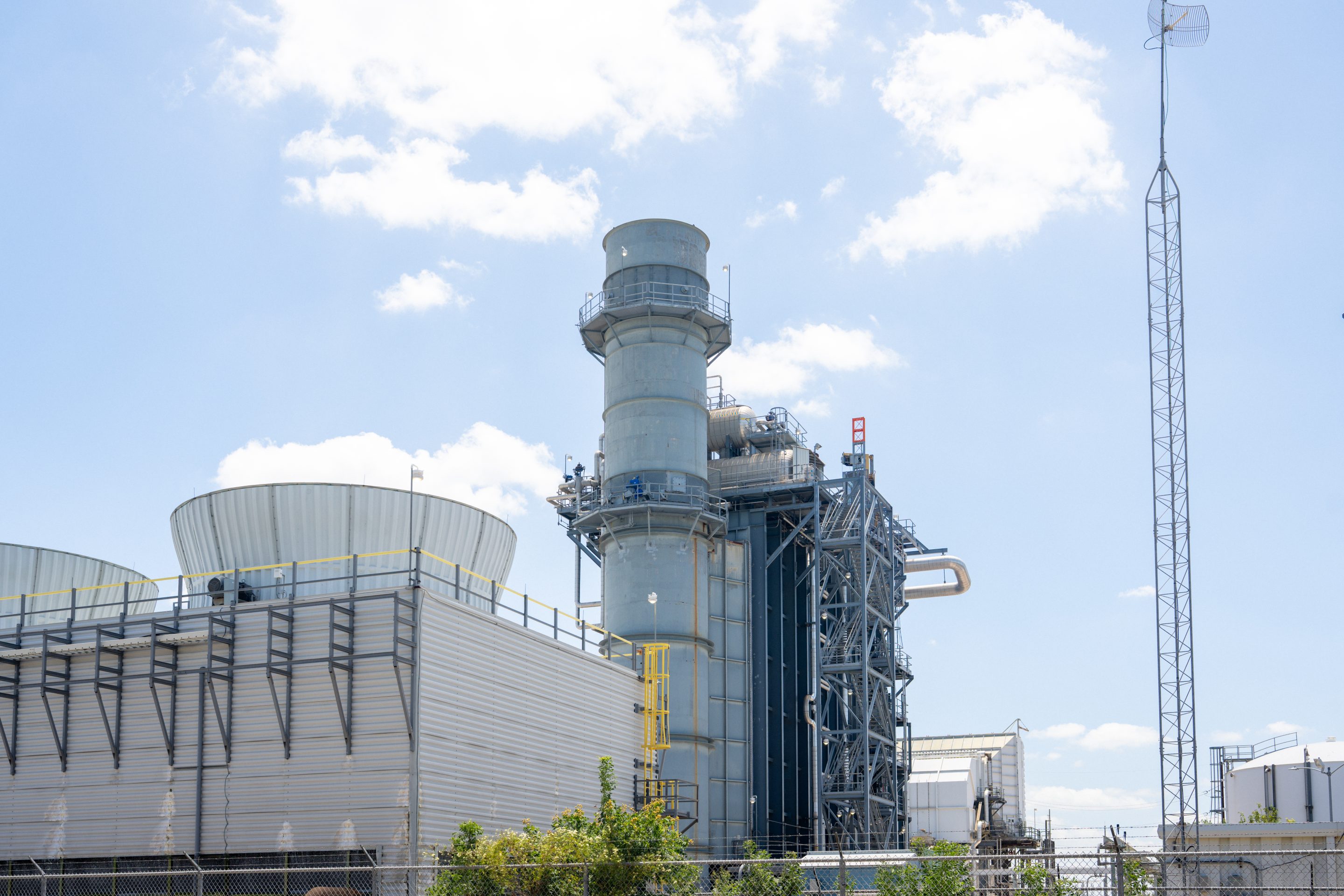
Anthropic is committing $3.4 billion to secure gas-fired generators for its data center operations, in a deal first reported by Fortune. The deal comes as Anthropic prepares for an IPO and seeks computing capacity for its AI models, while its filing warns natural-gas dependence could expose some planned facilities to volatile prices, pipeline constraints and supply disruptions.

The transaction covers 1.7 gigawatts of heavy-duty natural gas generators from OnePWR Solutions. Anthropic is taking over generator commitments OnePWR had previously made with Caterpillar, and the agreement includes engineering and construction capabilities needed to install the equipment.

The Financial Times described the transaction as the largest direct investment in power-generation equipment by an AI company.

Anthropic’s September S-1 describes Anthropic Direct, which lets it lease chips directly and place them in dedicated data centers on its behalf. The filing says the arrangement separates commitments for data-center capacity from commitments for the compute infrastructure inside those centers.

Data centers require longer lead times but represent a smaller fraction of total compute costs, the filing says, allowing Anthropic to secure capacity early and defer larger accelerator investments until its specific compute needs are more certain. That sequencing flexibility sits alongside a separate cost caveat: Anthropic may need to purchase long-lead-time power generation at prices above market rates.

The S-1 disclosed approximately $900.9 billion in aggregate committed spending on computing and infrastructure, including purchase commitments and lease agreements. About $451.6 billion is expected to be spent before 2030, while most remaining commitments extend through 2045. Another $70.7 billion is due within the 12 months following Sep. 30, according to the amended S-1 filed in November.

Anthropic disclosed that some planned data center facilities rely on dedicated natural gas-fired generation, exposing the company to fluctuations, pipeline capacity constraints and disruptions to natural gas supplies. It expects increased competition for natural gas supply and pipeline capacity in jurisdictions where behind-the-meter and on-site arrangements are feasible under applicable regulatory frameworks.

The generators are expected to become available in the next two years.

Six Chinese AI models carry Blackwell initialization fingerprints

Six models from DeepSeek, Moonshot AI, MiniMax and Ant Group carry weight patterns matching NVIDIA Blackwell GPU configurations, first reported by Unemploymentlabs. The evidence points to Blackwell-compatible initialization for those models, but it does not establish where the chips were located, how access was obtained or whether export controls were violated.

The six models are DeepSeek-V4-Flash and V4-Pro, Moonshot AI’s Kimi K3 and K3.1-Pro, MiniMax-M3, and Ant Group’s Ling-3.1-flash. V4-Flash and MiniMax-M3 match the 148-SM B200/B300 layout; the other four match the 152-SM GB200/GB300 layout.

The fingerprints come from initialization patterns preserved in publicly released weights. Recovering the seed and GPU thread layout identifies the hardware that generated starting values, not necessarily every accelerator used later.

Earlier Hopper fingerprints appear in DeepSeek-V3, Kimi K2.5, MiniMax-M2.7 and Ling-3.0-flash. Kimi K2.7-Code is an intermediate case: its Hopper-era weights include a small part matching B200/B300. Blackwell-matching releases include DeepSeek-V4 in April 2026, MiniMax-M3 in June, Kimi K3 in July, Ling-3.1-flash in October and Kimi K3.1-Pro in November.

The release sequence shows a shift in initialization fingerprints across four labs, not proof that entire training runs used Blackwell.

The strongest evidence for the six models ranged from 49 to 1,385 sigma, while the weakest individual test reached 20 sigma. A specially configured AMD MI300X can reproduce the layouts; for V4-Flash, 363 of 377 values that differed between AMD and NVIDIA matched NVIDIA, and none matched AMD. The same test could not settle the other five models, though an AMD explanation is considered very unlikely.

Run estimates for five models put each at roughly 500 to 3,000 Blackwell GPUs over two to three months, assuming the hardware that initialized a model also trained it. At roughly $70,000 per GPU, the largest cluster would cost $150 million to $200 million, and the five final runs together more than half a billion dollars; total lab spending on export-controlled GPUs is likely in the billions.

A U.S. license is required to export these Blackwell chips to China, and none has been reported.

The newest readable models from Alibaba (Qwen), Zhipu (GLM), Tencent, Xiaomi and StepFun still matched Hopper. Meituan says LongCat-2.0 was trained entirely on AI ASIC superpods, and its released weights showed no NVIDIA fingerprint.