

Agility Robotics, the maker of the Digit humanoid robot, announced plans to go public through a merger with Churchill Capital Corp XI, a SPAC (special purpose acquisition company that raises money from investors to acquire a private company). The deal could raise up to $620 million to accelerate production of its robots, which are already working in warehouses and factories for customers like Toyota and Mercado Libre. This marks the first major humanoid robot company to go public, signaling that the industry is moving from research labs into real commercial operations.
- How Much Money Is Agility Raising and Where Will It Go?
- What Is the Digit Robot and Who Is Already Using It?
- Why Is This IPO a Milestone for Humanoid Robotics?
- What Does "Cooperative Safety" Mean and Why Does It Matter?
- What This Means for Buyers
- Frequently Asked Questions
How Much Money Is Agility Raising and Where Will It Go?
The SPAC merger is expected to provide up to $620 million in gross proceeds, which includes a combination of cash from Churchill Capital Corp XI's trust and a fully committed $250 million PIPE (private investment in public equity, where institutional investors buy shares at a fixed price ahead of the IPO). After the deal closes, the combined company will trade on the New York Stock Exchange under the ticker symbol "AGLT".
Agility plans to use the funds for four specific priorities:
- Fulfilling existing customer orders — Companies like Schaeffler, GXO, and Toyota have already placed orders for Digit robots, and the cash will help deliver on those commitments.
- Scaling production of Digit v5 — The latest version of the robot includes improvements in dexterity, battery life, and safety systems. Mass production requires factory floor space and supply chain investment.
- Expanding commercial deployments — Moving from pilot programs to large-scale installations across manufacturing, distribution, and logistics sites.
- Advancing the integrated platform — Continued investment in the AI software, safety systems, and enterprise tools that run on top of the robot hardware.
| Use of Funds | Estimated Allocation |
|---|---|
| Customer order fulfillment | ~25% |
| Digit v5 production scaling | ~35% |
| Deployment expansion | ~25% |
| Platform R&D | ~15% |
The $1 trillion addressable market that Agility cites covers U.S. manufacturing, distribution, and logistics environments — a figure the company's management estimates based on the number of physically demanding jobs that remain unfilled.
What Is the Digit Robot and Who Is Already Using It?
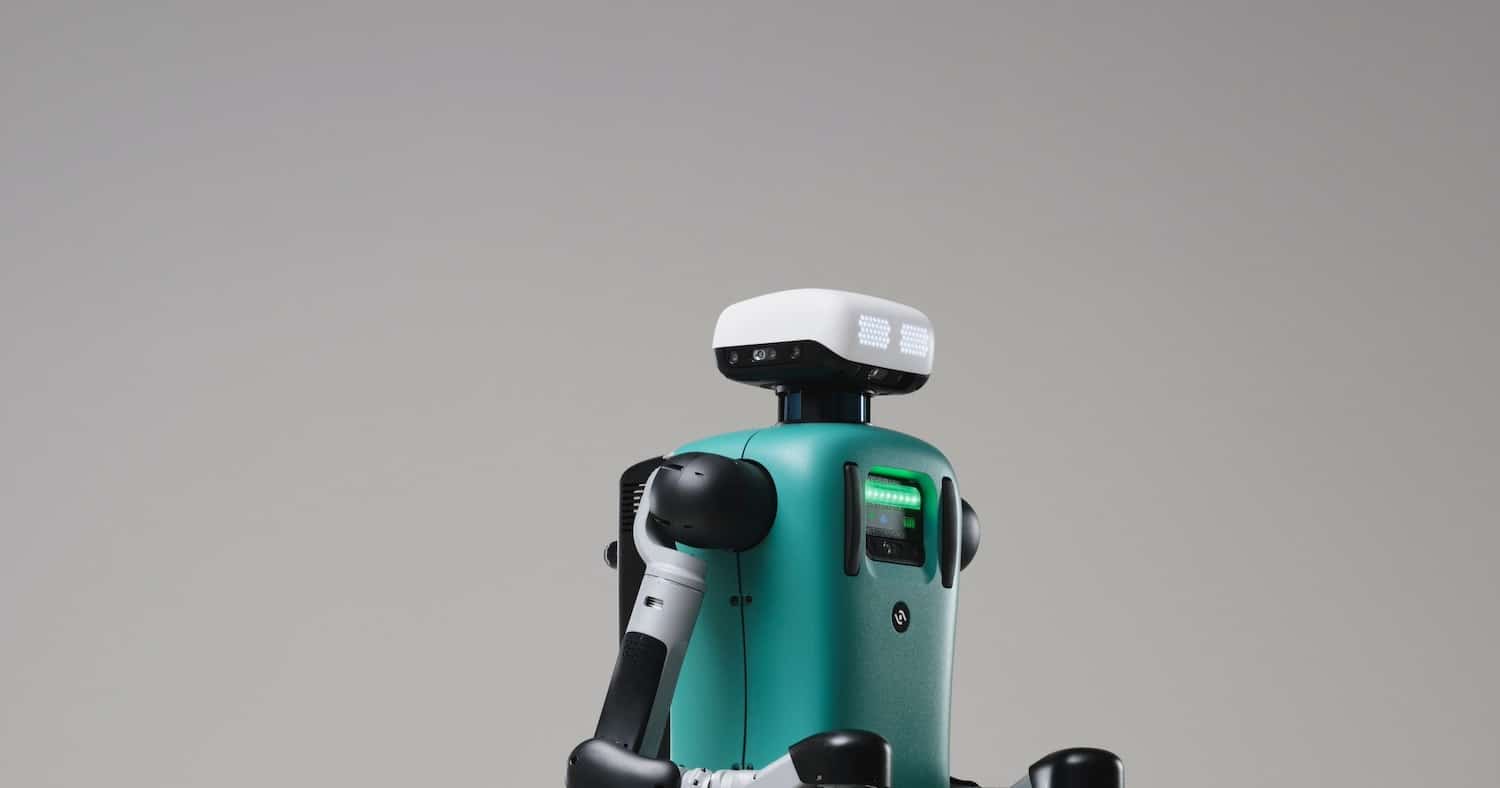
Digit is a general-purpose humanoid robot designed to work alongside people in environments built for humans — warehouses, factories, and distribution centers. It stands roughly 5'9" (175 cm) tall, weighs about 140 pounds (64 kg), and can carry payloads up to 35 pounds (16 kg). The robot uses two legs for walking and two arms with grippers for manipulation, allowing it to navigate stairs, kneel, and reach shelves that traditional wheeled robots cannot access.
Current commercial deployments include:
- Schaeffler — The German industrial manufacturer is using Digit for material handling in a bearing production facility.
- GXO Logistics — The world's largest pure-play logistics company is testing Digit for tasks like unloading trailers and sorting packages.
- Toyota Motor Manufacturing Canada — Digit is assisting with component handling in an automotive assembly plant.
- Mercado Libre — The Latin American e-commerce giant is using Digit to automate repetitive tasks in its fulfillment centers.
All current deployments operate with humans and robots in physically separated zones — Digit works in areas where people do not enter while it is active. But Agility's long-term goal is "cooperative safety," where robots can safely work directly alongside human coworkers in dynamic, shared spaces.

Why Is This IPO a Milestone for Humanoid Robotics?
Agility's public listing is the first time a dedicated humanoid robot company has gone public. Previous robotics IPOs have focused on industrial arms (ABB, Fanuc) or warehouse automation (Symbotic). A pure-play humanoid company entering public markets is a new signal for the industry.
The significance can be seen in three dimensions:
1. Capital access. Private fundraising for humanoid startups has surged — Figure AI raised $1.4 billion, Apptronik raised $350 million, and 1X raised $100 million from OpenAI. But public markets offer a deeper pool of capital and allow a broader base of investors to participate. Agility's $620 million raise is comparable to Figure's total private funding.
2. Commercial validation. Going public requires a credible revenue story, which implies Agility has traction beyond prototypes. The company has named specific customers and is shipping production units, not just demo robots.
3. Peer pressure. Public listing puts a valuation and a quarterly earning clock on the company. It forces financial discipline and transparency. Competitors still private will face pressure to show similar commercial progress.
| Company | Total Funding (Public + Private) | Stage | Primary Robot |
|---|---|---|---|
| Agility Robotics | $620M (via SPAC) | Going public | Digit |
| Figure AI | $1.4B | Private | Figure 02 |
| Apptronik | $350M | Private | Apollo |
| 1X | $100M | Private | Eve / NEO |
| Tesla Optimus | Internal | R&D | Optimus Gen 3 |
Notably, Agility is the only one of the major humanoid players with named enterprise customers already using the robots in production environments.
What Does "Cooperative Safety" Mean and Why Does It Matter?
Today, most humanoid robots operate in "segregated" workspaces — the robot has its own area, and humans stay out. This is the norm for industrial robotic arms with safety cages. But the entire value proposition of humanoid robots is that they can work in spaces designed for humans, at the same pace, without costly infrastructure changes.
Cooperative safety refers to the ability of a robot to detect humans in its vicinity and react in real time — slowing down, stopping, or rerouting its motion to avoid collisions. This requires:
- Advanced sensor fusion — Cameras, lidar, force-torque sensors, and thermal cameras working together.
- Low-latency AI processing — The robot must decide how to move safely in milliseconds.
- Certifiable safety architectures — Systems that can pass regulatory approvals (e.g., ISO 10218 for collaborative robots).
Agility believes that achieving cooperative safety is "the critical requirement for broad humanoid adoption." Without it, humanoids remain limited to the same fenced-off areas as traditional industrial robots, which defeats their purpose as flexible, human-like co-workers. If Agility can solve this, it opens a market far larger than the current segregated deployments.
What This Means for Buyers
For companies considering humanoid robots for their warehouses, factories, or logistics operations, the Agility IPO has several practical implications:
- Price and availability. The influx of capital should help Agility scale production faster, potentially reducing unit costs and lead times. Digit v5 pricing hasn't been publicly disclosed, but analysts estimate a per-unit cost between $150,000 and $250,000 in the near term, with the goal of reaching $50,000–$100,000 at scale.
- Rental vs. purchase options. Agility may offer Robots-as-a-Service (RaaS) models to lower upfront costs. Buyers should evaluate total cost of ownership including maintenance, software licenses, and safety integration.
- Risk reduction. Going public increases transparency around financial health, product roadmap, and customer satisfaction. Public companies must disclose material risks, which gives buyers a clearer picture.
- Competitive alternatives. With Agility going public, competitors may accelerate their own commercial rollouts. Buyers should compare Digit with options from Figure, Apptronik, or Unitree's H1. For less complex tasks, traditional AMRs or cobots may still offer better ROI.
Action step: Companies interested in Digit should contact Agility directly for trials. For side-by-side comparisons of humanoid platforms, see the humanoid robots for sale on Robot Overflow.
Conclusion
Agility Robotics going public is a watershed moment for the humanoid robot industry. The $620 million injection gives it a clear path to scale Digit production, fulfill customer orders, and work toward true cooperative safety — the technical bottleneck that will determine whether humanoids can move from fenced-off workspaces to the open factory floor. For buyers and suppliers alike, this IPO marks the transition of humanoid robots from prototype curiosity to commercially viable workforce augmentation tools.