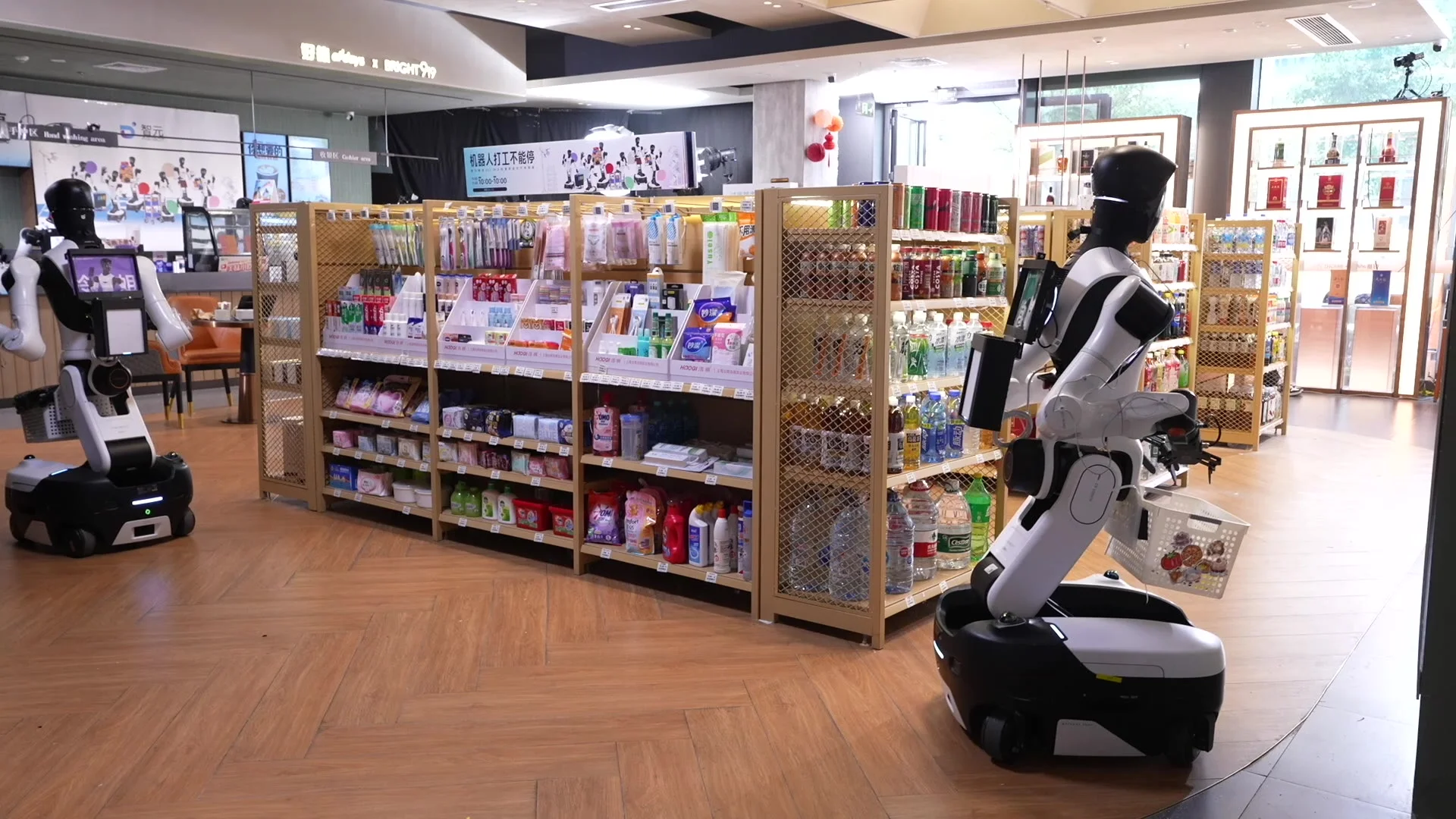

Six AGIBOT G2 robots completed 1,730 tasks during a 24-hour trial at a Shanghai convenience store, first reported by Therobotreport. Four of the six passed the final performance assessment, while the trial tested whether the robots could handle customer-facing work and changing store conditions over an extended operating period in a working store.
The robots completed 683 customer-service interactions, 369 product pickups and deliveries, 147 coffee orders, 126 breakfast servings, 277 shelf inspections and restocking tasks, and 128 table-cleaning tasks. Their assigned duties also included checkout and hot food service.
The trial covered the lunchtime rush, evening peak hours, overnight operations and the following morning’s breakfast rush. Assessors considered time on duty, task completion, customer feedback, response times and the ability to handle unexpected situations; two robots did not meet all the criteria.
Practical tests asked the robots to distinguish regular from sugar-free Coca-Cola, return rearranged chewing-gum packs to their correct shelf positions, and navigate around a person and box blocking an aisle. The tally and pass rate describe different outcomes: the six robots completed 1,730 tasks, but two did not meet all assessment criteria.
During the trial, G2 robots used real-time visual information to identify misplaced merchandise and return it to designated shelf positions. One robot assigned to restocking detected shelf gaps and replenished products without a specific prompt; another distinguished spills from countertop patterns and selected cleaning tools.
The trial also tested Genie Master, AGIBOT’s embodied AI agent framework, which coordinated the six robots and connected task planning, execution and feedback through the Embodied Execution Protocol (EEP). Execution results returned to the framework for analysis and troubleshooting. Successful and unsuccessful attempts could inform long-term memory, while effective adjustments could be converted into training data.
AGIBOT plans to continue testing its robots in additional roles and real-world environments, using operational feedback to improve reliability, task execution and adaptability.