
Researchers have developed a scalable Behavior Foundation Model (BFM) for humanoid robots that slashes whole-body control errors by over 82% in global motion tasks. By coordinating a new motion-tracking learning paradigm, strategic data synergy, and a purpose-built transformer architecture, this approach sets a new standard for general-purpose humanoid control.
What the Researchers Built
The team built a scalable Behavior Foundation Model (BFM) — a deep learning system that learns to control a humanoid robot by imitating millions of whole-body motion references. Unlike previous controllers that treat locomotion, manipulation, and posture as separate problems, this BFM reformulates all humanoid control tasks as a unified problem of reproducing integrated whole-body behaviors in a global coordinate frame.
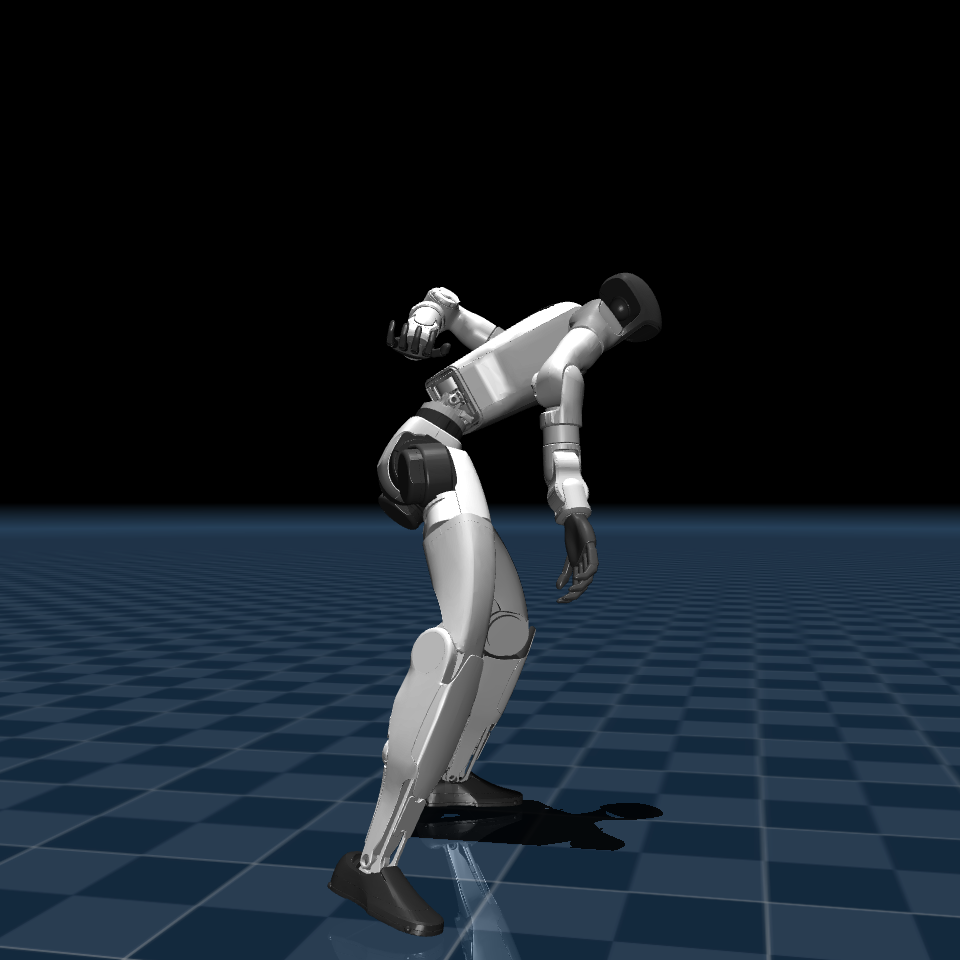
The model, called the Humanoid Transformer, processes sequences of joint angles, body poses, and control signals to output motor commands in real time. Training relies on a careful mix of simulation rollouts (where the robot practices its own generated motions) and a diverse library of reference motions captured from humans or designed procedurally. The result is a single neural network that can walk, reach, squat, and recover from disturbances — all without task-specific fine-tuning.
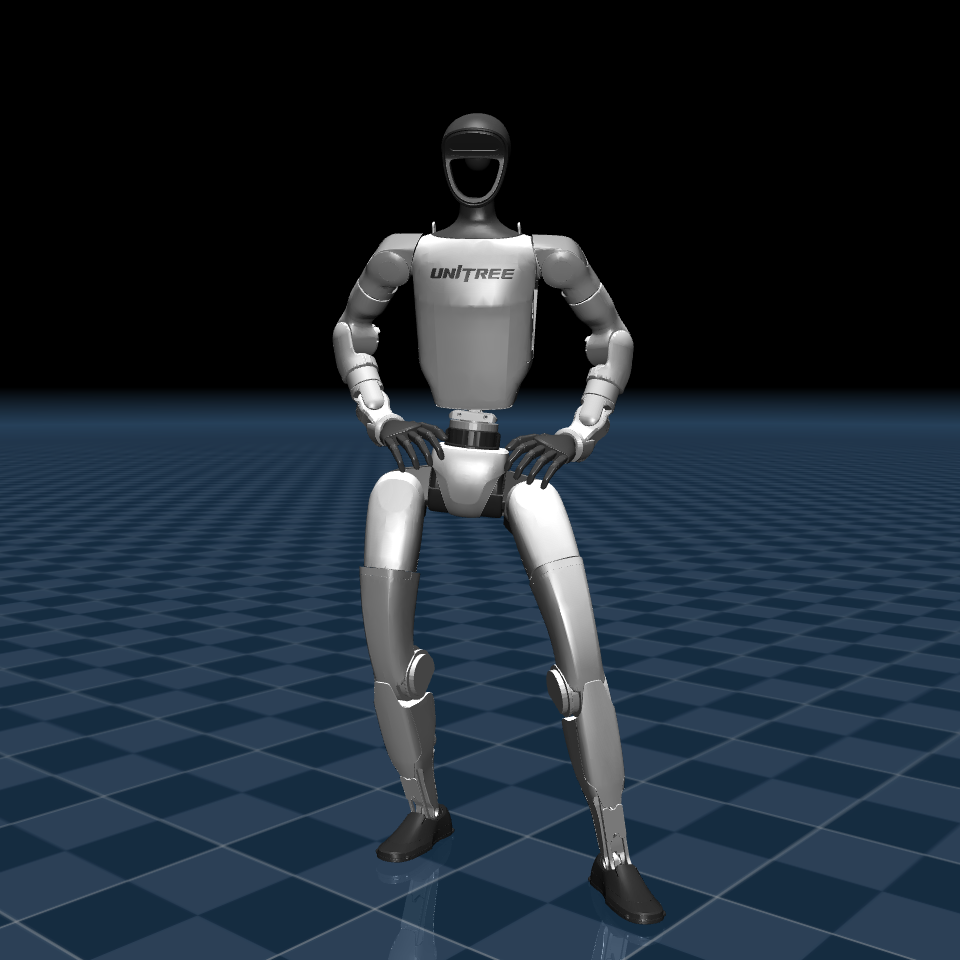
The researchers validated their approach in both simulated and real-world environments, using a full-size humanoid platform for the hardware tests.
Key Results
The BFM achieves dramatic improvements over existing humanoid controllers:
| Metric | Improvement vs. Previous Controllers |
|---|---|
| Mean Per-Keypoint Position Error (MPKPE) – Local Mode | >10% reduction |
| Mean Per-Keypoint Position Error (MPKPE) – Global Mode | 82% reduction |
| Task Generalization (simulation) | Zero-shot transfer to new motion sequences |
| Real-World Deployment | Successful reproduction of diverse full-body behaviors |
The global mode improvement is especially significant — it means the robot can track whole-body movements (like a human walking or dancing) with nearly 5× less positional error than prior methods. The local mode improvement, while smaller, still represents a meaningful boost for fine-grained joint control.
In simulation, the model generalizes to unseen motion references without any retraining, a capability that prior controllers lacked. Real-world tests confirmed that the same model trained in simulation transfers effectively to physical hardware.
How It Works
The BFM architecture rests on three coordinated design choices:
- Motion tracking as a unified learning problem – Instead of treating different humanoid tasks (walking, reaching, balancing) as separate policy learning problems, the researchers frame everything as "tracking a global whole-body motion reference." The reference motion is a time series of keypoint positions in 3D space (head, torso, arms, legs, etc.). The model must output joint torques that make the robot's actual keypoints match the reference. This simple reformulation allows a single policy to handle locomotion, manipulation, and posture.
- Strategic data synergy – Training data comes from two sources: on-policy rollouts generated during training (the robot tries to follow a motion and the resulting (state, action) pairs are recorded) and an offline dataset of diverse reference motions. The researchers found that the key is not just having lots of data, but balancing the quantity of on-policy rollouts with the diversity of reference motions. Too much on-policy data causes overfitting; too much diversity without practice causes poor tracking. They discovered an optimal ratio that yields the best generalization.
- Humanoid Transformer – A transformer-based neural network that processes temporal sequences of robot states and reference motions. It uses causal masking (predicts actions based only on past and present information) and a novel attention mechanism that encourages the emergence of structured representations: the network automatically learns to separate body parts into meaningful groups (e.g., left arm, right leg) without explicit supervision. This structured representation is what enables strong generalization.
The model is trained in simulation using reinforcement learning (the on-policy rollouts) and supervised imitation learning (matching the reference motions). After training, the policy runs in real time on the robot's onboard computer.
Why This Matters for Robotics
Humanoid robots hold immense promise for factories, warehouses, and households, but control remains a bottleneck. Today's humanoids often move stiffly, fall easily, or require separate controllers for each task. This BFM points toward a future where a single model handles everything — walking over uneven terrain, picking up boxes, and recovering from pushes.
For warehouse robots and used industrial robots, the ability to generalize without retraining could slash deployment costs. A humanoid that can learn from diverse motion data and adapt to new tasks on the fly is far more practical than one that needs expert programmers for each job.
The 82% reduction in global tracking error means humanoids can finally perform dynamic, whole-body movements with the fluidity needed for real-world interaction — whether assembling parts on a line or assisting in elderly care. This work also validates browse humanoid robots on Robot Overflow are rapidly approaching commercial viability.
Limitations and Open Questions
The paper focuses on motion tracking and task generalization in controlled environments. Real-world unstructured settings — with variable lighting, obstacles, and dynamic crowds — are not yet tested. The model also requires a predefined reference motion; it cannot yet plan its own motions from high-level goals.
Sim-to-real transfer, while demonstrated, may not scale to every humanoid hardware platform. The current architecture is compute-intensive, potentially limiting deployment on low-cost robots. Finally, the optimal synergy between on-policy and offline data may change with robot morphology or motion library composition — the recipe is not yet universal.
Frequently Asked Questions
What is a Behavior Foundation Model (BFM)? A BFM is a large neural network trained on vast amounts of behavioral data (robot motions) to produce a general-purpose controller that can handle many tasks without retraining.
How does the Humanoid Transformer differ from standard transformers? It uses a causal attention mechanism and learns structured representations of body parts, which helps the model generalize across different motions and environments.
Can this model be used on any humanoid robot? It was tested on one specific full-size humanoid. While the architecture is agnostic, retraining with the robot's kinematics and dynamics would be required for other platforms.
What is MPKPE and why does the 82% reduction matter? Mean Per-Keypoint Position Error measures how far the robot's actual body keypoints are from the target motion. An 82% reduction means the robot follows human-like motions nearly perfectly — critical for tasks like dancing, carrying objects, or interacting with people.
Conclusion
Scaling Behavior Foundation Models through coordinated learning paradigms, data strategies, and transformer architectures delivers a step-change in humanoid control performance. The 82% reduction in global tracking error shows that BFM's are not just a theoretical idea — they are a practical path toward general-purpose humanoids.