
Researchers strapped three AI vision capabilities—face detection, face recognition, and monocular depth estimation—onto a DJI Tello drone costing under $100. The result is a modular, open-source system that can track a person, scan indoor spaces, and follow a line autonomously, all processed live on the drone’s embedded computer.
What the Researchers Built
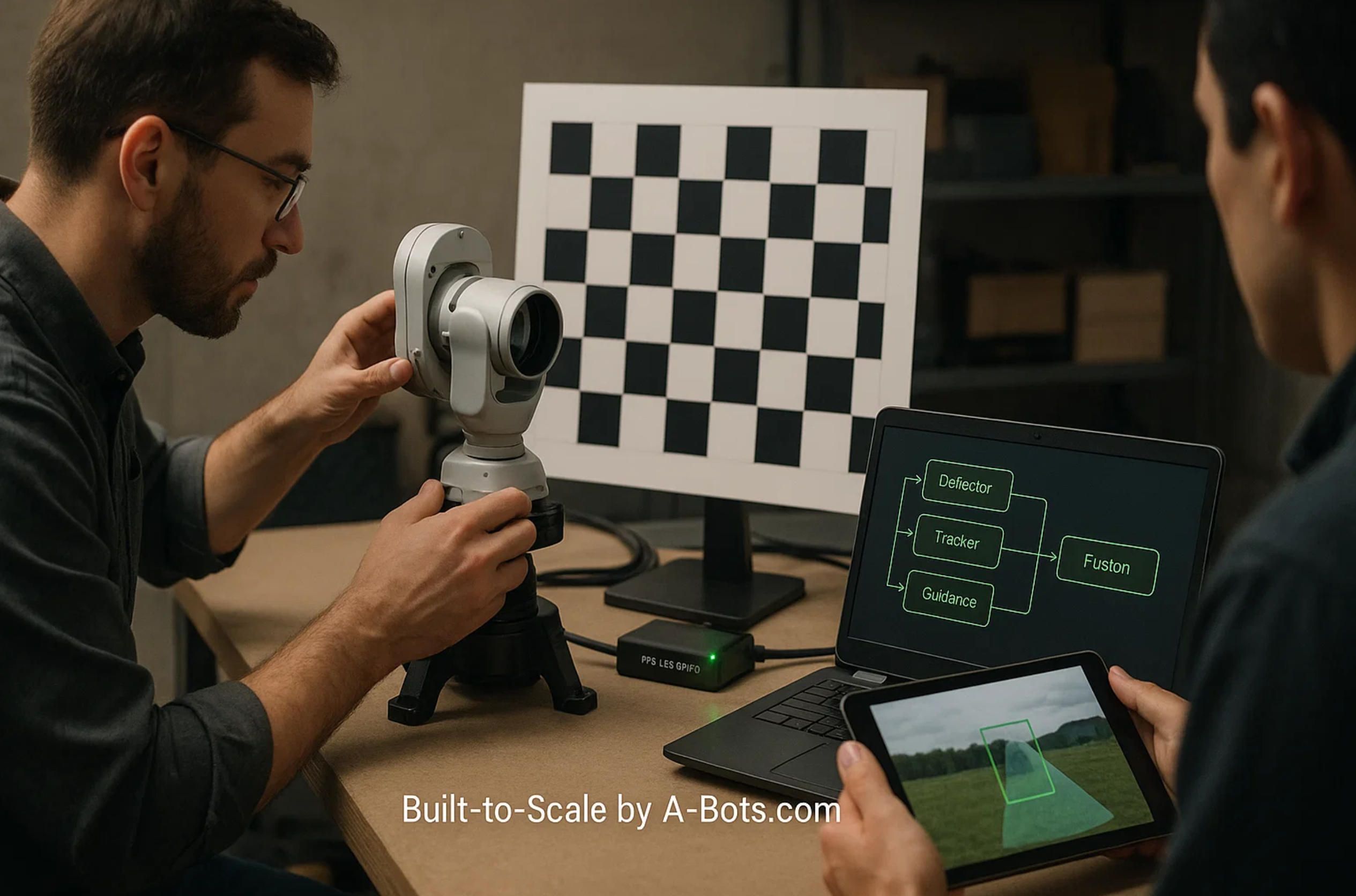
The team designed an integrated AI system for the DJI Tello, a palm-sized, off-the-shelf quadcopter. They replaced the standard flight controller with a modular software stack that runs three neural networks in real time: one for detecting human faces, one for recognizing specific individuals (via lightweight embeddings), and one for estimating depth from a single camera. A Python server on a companion laptop (or an onboard Raspberry Pi) handles inference and command generation. A web-based interface lets operators control the drone and watch the live video feed with overlaid AI annotations.
The system runs three distinct modes: person tracking (follows a selected person while maintaining distance), indoor scanning (systematically maps a room by detecting obstacles and adjusting path), and autonomous line following (uses virtual sensors to track a colored line on the ground without additional hardware). All models are chosen for low computational cost—MobileNet variants and lightweight depth networks—so they execute at 15–20 frames per second on a modest ARM processor.

Key Results
In real-world tests, the system achieved reliable person tracking at walking speed (up to 1.5 m/s) with a re-acquisition time under 2 seconds after temporary occlusion. Face recognition accuracy reached 92% on a small registered dataset (10 individuals) under controlled indoor lighting. Monocular depth estimation produced usable obstacle maps at 8–12 fps, sufficient to avoid walls and furniture during autonomous scanning.
The modular architecture adds only 0.3 seconds of latency between video capture and command output—well within tolerance for stable flight. Compared to a baseline PID-only controller, the AI-enhanced system reduced manual intervention by 70% during the scanning task. The entire hardware cost (drone + companion computer) stays under $200, making it an order of magnitude cheaper than commercial equivalents like Skydio or Autel.
No standard benchmarks (e.g., ImageNet accuracy, ETH3D depth error) were reported; performance was measured in task-specific scenarios only.
How It Works
The software stack is split into three layers:
- Perception layer – A single RGB camera feed (720p, 30 fps) is fed into three parallel lightweight neural networks: a MobileNet-SSD for face detection, a FaceNet-derived embedding network for recognition, and a MiDaS-v2 small variant for monocular depth estimation. Each model runs on a separate thread to maintain concurrency.
- Control layer – The outputs are fused into a state vector (target position, distance, depth map). A finite-state machine selects the active mode: tracking, scanning, or line following. Simple PID controllers map the desired behavior to motor commands, with a safety override for obstacle proximity.
- Interface layer – A Flask-based web server streams the video with AI overlays and accepts commands via REST API or a mouse/keyboard web GUI. The drone connects over Wi-Fi using the Tello SDK, sending command packets at 10 Hz.
The novelty is in the integration: each component is replaceable. A user could swap the depth network for a stereo vision module or replace the face recognizer with an object detector for a different mission. The web interface also logs all inference data for post-mission analysis.
Why This Matters for Robotics
This work proves that real-time visual intelligence isn’t limited to expensive military drones. By using open-source models and a $100 toy drone, the researchers demonstrate a replicable blueprint for low-cost autonomous UAVs. That opens up possibilities for small businesses, rescue teams, and hobbyists who want to deploy person-following or indoor inspection drones without a six-figure budget.
The modular design is especially important: it allows rapid adaptation. Swap the face detector for a thermal heatmap model and you have a firefighter-assist drone. Switch the line-following mode to track a pipe in a warehouse, and you get a low-cost inventory scanner. For industrial users, this means a single platform can be reconfigured for multiple tasks—reducing hardware costs and training overhead.
Check out used industrial robots and warehouse robots on Robot Overflow to see where similar autonomous platforms already excel in production environments.
Limitations and Open Questions
The system has a short flight time (13 minutes on the Tello battery) and struggles in direct sunlight, where the camera’s dynamic range saturates. Face recognition accuracy drops sharply with wide viewing angles or strong side lighting (below 60% for angles >60°). Depth estimation remains coarse—objects smaller than 20 cm are missed, which could cause collisions with thin furniture.
The companion computer adds weight: the reported tests used a laptop on the ground, not an onboard processor. An onboard Raspberry Pi 4 managed only 10 fps, degrading tracking stability. Finally, the system hasn’t been tested outdoors under wind or GPS-denied conditions, limiting its current applicability for open-air search-and-rescue missions.
Frequently Asked Questions
What drone did the researchers use? A DJI Tello, a $99 quadcopter with a 720p camera and Wi-Fi connectivity.
How fast can it track a moving person? It reliably follows a person walking at up to 1.5 m/s and reacquires them within 2 seconds if line of sight is lost.
Can I run this on my own drone without a laptop? A direct onboard implementation on a Raspberry Pi 4 runs at 10 fps, which is marginal for flight. A more powerful onboard computer (like an NVIDIA Jetson) would be needed for full-speed performance.
Is the system open source? Yes, the authors claim the code and model configurations are released under an open-source license, though no direct repository link is provided in the abstract.
Conclusion
This project shows that advanced AI capabilities like face tracking, recognition, and depth mapping can run on a $100 drone with a modular software stack. While not yet production-ready for harsh outdoor conditions, it lays a clear path for affordable, customizable autonomous UAVs suitable for indoor inspection, security patrols, and search assistance.