
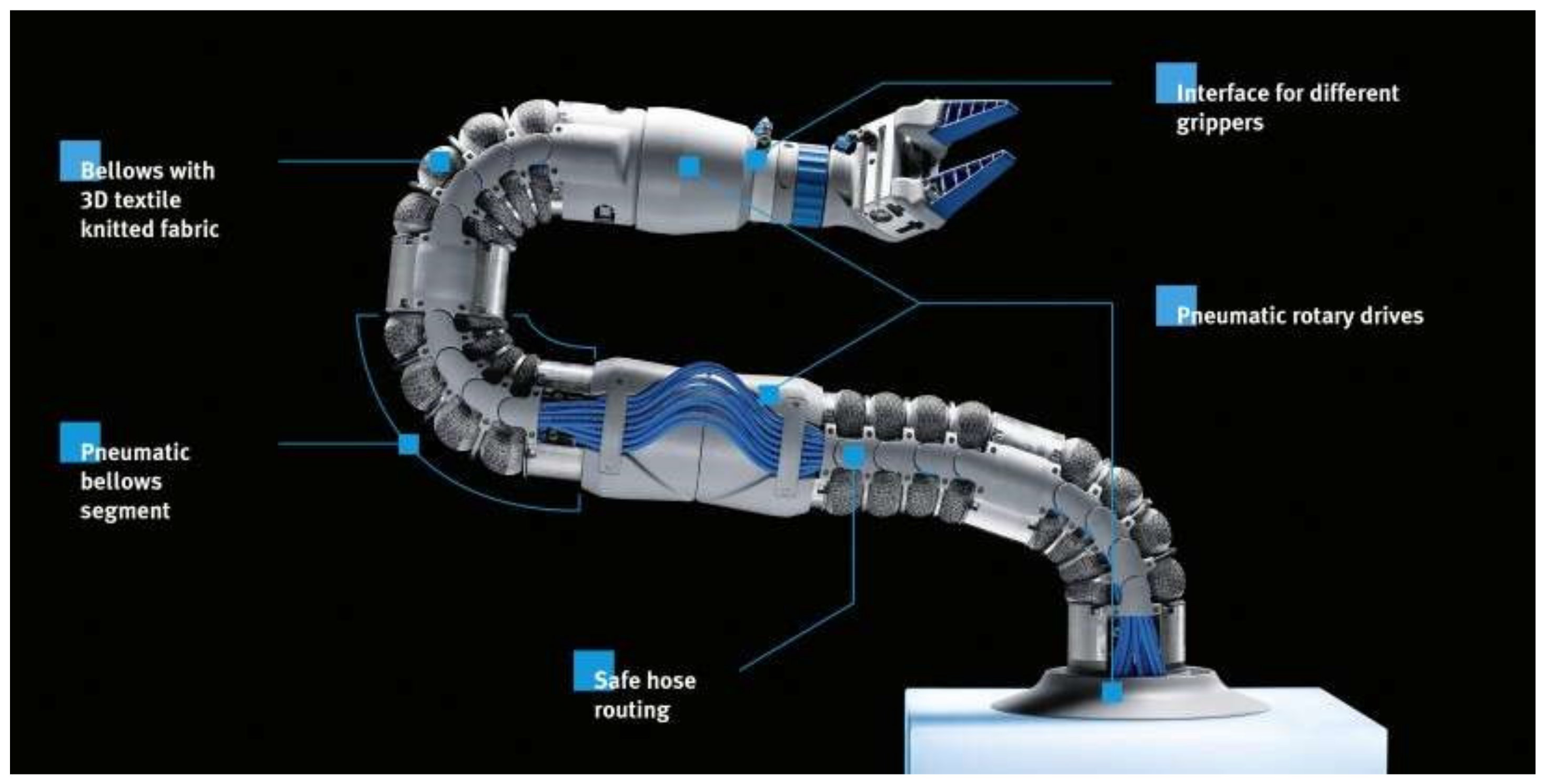
Complex soft pneumatic actuators can fail even when their outer shape looks correct: leaks, blocked channels, weak bonds, or poor compliance can make a robot unusable. Mohammed Abboodi’s manufacturing study compares several fabrication routes and shows why fused deposition modeling (FDM) is the most adaptable option when printing paths, wall structure, and support-free geometry are deliberately optimized for airtight performance.
What Did the Researchers Build and Test?
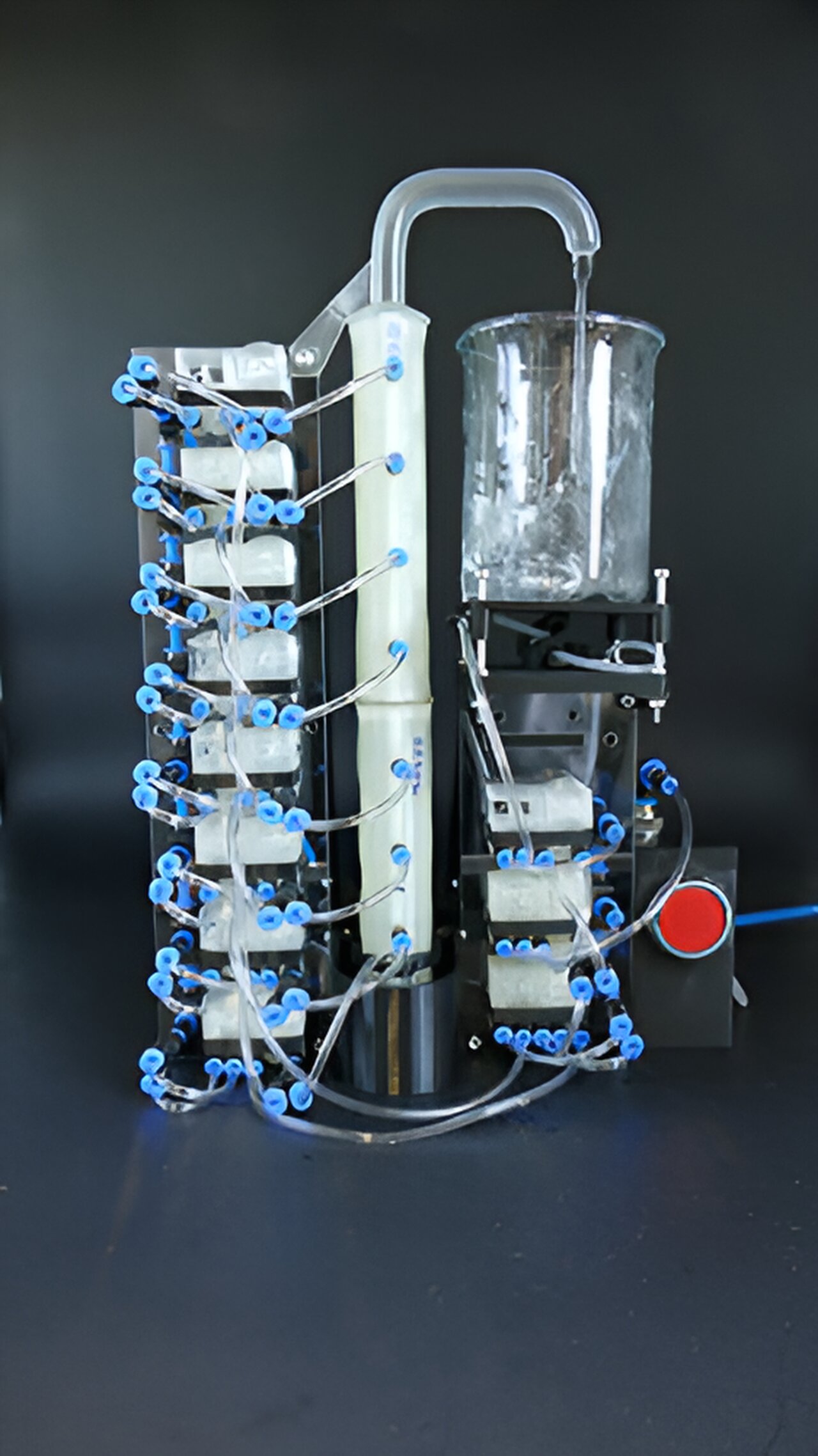
The study did not introduce a single robot. It created a manufacturing evaluation framework for complex soft pneumatic actuators: flexible structures that deform when air pressure enters internal chambers. These actuators can power grippers, artificial muscles, valves, and other mechanisms, but their enclosed channels make fabrication and inspection difficult.
The evaluation moved through four stages: process screening, baseline fabrication, failure analysis, and process improvement. That sequence separates a process’s built-in limitations from defects caused by machine settings, material handling, or fabrication workflow. The tested routes included heat-shrink forming, silicone casting, powder-based additive manufacturing, liquid-based additive manufacturing, and FDM.
Each route was judged against the same practical requirements: geometric fidelity, compliance, structural integrity, and airtightness. Geometric fidelity means the finished part matches the intended chamber and channel layout. Compliance means it remains flexible enough to deform under pressure. Structural integrity means it survives handling and pressurization, while airtightness means the internal air stays inside the intended passage.
The central manufacturing question was not simply which process can make the most intricate shape. It was which process can produce the entire actuator architecture without inaccessible cavities, trapped material, unreliable interfaces, or defects that prevent sealing.
What Were the Key Results?
FDM emerged as the most adaptable fabrication route because its dominant defects could be progressively reduced through process optimization. That result does not mean FDM automatically produces airtight actuators. It means the process offered the clearest path for correcting manufacturing problems while preserving complex actuator geometry.
The other methods faced more fundamental obstacles. Heat-shrink forming struggled to reproduce detailed geometry accurately. Silicone casting depended heavily on mold accessibility and the reliability of bonded interfaces. Powder-based methods risked leaving residual material trapped inside enclosed passages, where it could be difficult or impossible to remove. The investigated digital light processing system was constrained by the properties of its material and by the post-processing steps required after printing.
One of the most important findings concerned wall design. Airtightness depended not only on nominal wall thickness, but also on the architecture of the extrusion paths used to create that wall. In other words, a thicker wall is not automatically a better seal if the deposited material leaves an unfavorable path for air to escape.
The study also identified support-free geometry as a major design advantage. When internal surfaces cannot be reached for cleaning or finishing, an actuator must be designed to avoid manufacturing supports and inaccessible post-processing requirements.
How Does the Manufacturing Evaluation Work?
The evaluation begins by matching actuator architecture to the capabilities and failure modes of each fabrication process. A complex pneumatic actuator typically contains enclosed air channels, thin flexible walls, connection ports, bends, and deformable chambers. Every feature creates a manufacturing requirement: channels must remain open, walls must remain continuous, joints must seal, and the final structure must still flex.
Process screening identifies whether a method can physically create the required geometry. Baseline fabrication then reveals what happens under ordinary or initial settings. Failure analysis examines the actual defect rather than treating every unsuccessful part as evidence that the entire process is unsuitable. Process improvement tests whether the defect can be reduced through changes to the manufacturing approach.
For FDM, the deposited material forms the actuator through successive extrusion paths. Those paths determine how neighboring lines connect, how corners are filled, and whether small gaps create leakage routes. The study therefore treats extrusion-path architecture as part of the actuator’s functional design, not merely as a machine setting.
The same logic applies to internal accessibility. Powder-based fabrication can create enclosed passages but leave loose material behind. Casting can produce flexible silicone parts, yet mold removal and bonded seams become critical constraints. Digital light processing can create detailed shapes, but its resin behavior and post-processing requirements affect whether the finished actuator remains suitable for repeated deformation.
This process-first approach produces a design-for-manufacturing workflow:
- Define the actuator’s chambers, channels, flexibility, and sealing requirements.
- Identify which fabrication routes can reach and reproduce those features.
- Build baseline parts and document their failure modes.
- Improve correctable defects through process and geometry changes.
- Select the route whose limitations best match the actuator architecture.
Why Does This Matter for Robotics?
Soft pneumatic actuators are attractive because they can produce compliant motion. Instead of relying entirely on rigid links and precise joints, a soft mechanism can bend, grip, or conform to an object. That makes the technology relevant to delicate handling, wearable devices, adaptive grippers, rehabilitation equipment, and robots that interact directly with people.
However, an actuator that leaks slowly, contains blocked channels, or fails at a bonded interface is difficult to deploy. It can consume more compressed air, respond inconsistently, or lose force during operation. Manufacturing defects also make quality control harder because the problem may be hidden inside the actuator rather than visible on its surface.
The findings give robot designers a practical way to make better process decisions earlier. A team developing a compliant end effector should not select a fabrication method based only on resolution or material cost. It should also consider whether internal passages can be cleaned, whether seams can be trusted, and whether the process can produce reliable walls without adding inaccessible supports.
For teams comparing complete robot platforms, the same principle applies at the system level. Browse humanoid robots on Robot Overflow to see how different platforms approach compliant interaction, or review used cobots for sale when evaluating robots for flexible production tasks. The actuator study is especially relevant when a platform requires custom grippers, adaptive tooling, or soft contact surfaces.
What Are the Limitations and Open Questions?
The abstract reports a comparative process evaluation, but it does not provide measured leakage rates, dimensional errors, pressure limits, cycle life, production speed, or cost comparisons. As a result, FDM is best understood as the most adaptable route in the investigated evaluation, not a universal replacement for casting, resin printing, or powder-based manufacturing.
The results also depend on the specific materials, machines, geometries, and post-processing workflows tested. Another FDM system or flexible material could behave differently, while a different casting or digital light processing setup could address some of the reported problems. Further work should quantify airtightness over repeated actuation, compare manufacturing throughput, and test how optimized actuators perform inside complete robotic systems.
Frequently Asked Questions
Why are complex soft pneumatic actuators difficult to manufacture?
They must combine accurate geometry, flexible deformation, structural strength, and airtight internal passages. Enclosed channels also make inspection, cleaning, and post-processing difficult.
Which manufacturing method performed best in the evaluation?
FDM was identified as the most adaptable route because its main defects could be progressively reduced through process optimization.
Does a thicker actuator wall guarantee airtightness?
No. Airtightness also depends on the arrangement of extrusion paths and how those paths join to form the wall.
When should a manufacturer choose another process?
Another method can make sense when its strengths match the actuator architecture, such as a casting workflow with accessible molds or a printing method that avoids trapped internal material.
Conclusion
The study shows that manufacturing is a central part of soft pneumatic actuator design, not a final production detail. FDM offers the most adaptable route in this evaluation, provided extrusion paths, internal access, and support-free geometry are designed around airtight operation.