
Venture capital in the U.S. reached an all-time high in the first half of this year, with firms deploying $412.7 billion — a figure that already exceeds the entire 2025 total by 30%. But beneath the headline, the market is splitting into two worlds: a small number of AI giants absorbing nearly all the capital, and a vast crowd of startups fighting for scraps.
- The Record-Shattering Numbers
- AI’s Dominance and the Mega-Deal Squeeze
- Exit Concentration: SpaceX as the Center of the Universe
- The Mid-Tier Startup Purgatory
- IPO Pipeline Pressure — OpenAI and Anthropic on Deck
- What This Means for the Industry
- Frequently Asked Questions
- Conclusion
The Record-Shattering Numbers
According to a midyear report from PitchBook and the National Venture Capital Association, cited by Fortune, U.S. venture capital investments in the first six months of the year totaled $412.7 billion. That is the largest sum ever recorded in a half-year period and marks a dramatic acceleration from previous highs.
The overall number might suggest a booming, healthy ecosystem. But a deeper look reveals a market that is anything but broad-based. Kyle Stanford, director of U.S. venture capital research at PitchBook, described the environment as "split into two very distinct areas."
"This market is split into two very distinct areas," Stanford said. "The trends we're seeing now are going to continue for a long time, because the capital is there for the top companies. The top-line figures show a very strong, but also very concentrated market."
AI’s Dominance and the Mega-Deal Squeeze
The concentration is staggering. 86% of all venture dollars went to AI-related companies. Even more striking, 91% of all capital flowed into deals of $100 million or larger. That leaves a tiny sliver of funding for everything else — biotech, climate tech, enterprise SaaS, and traditional startups.
The result is a market where the biggest AI players — names like OpenAI, Anthropic, and xAI — vacuum up rounds that sometimes exceed $10 billion, while earlier-stage or non-AI companies struggle to raise even modest sums. The term "trickle-down venture capital" has become ironic: despite a flood of money, almost none reaches the lower tiers.
Exit Concentration: SpaceX as the Center of the Universe
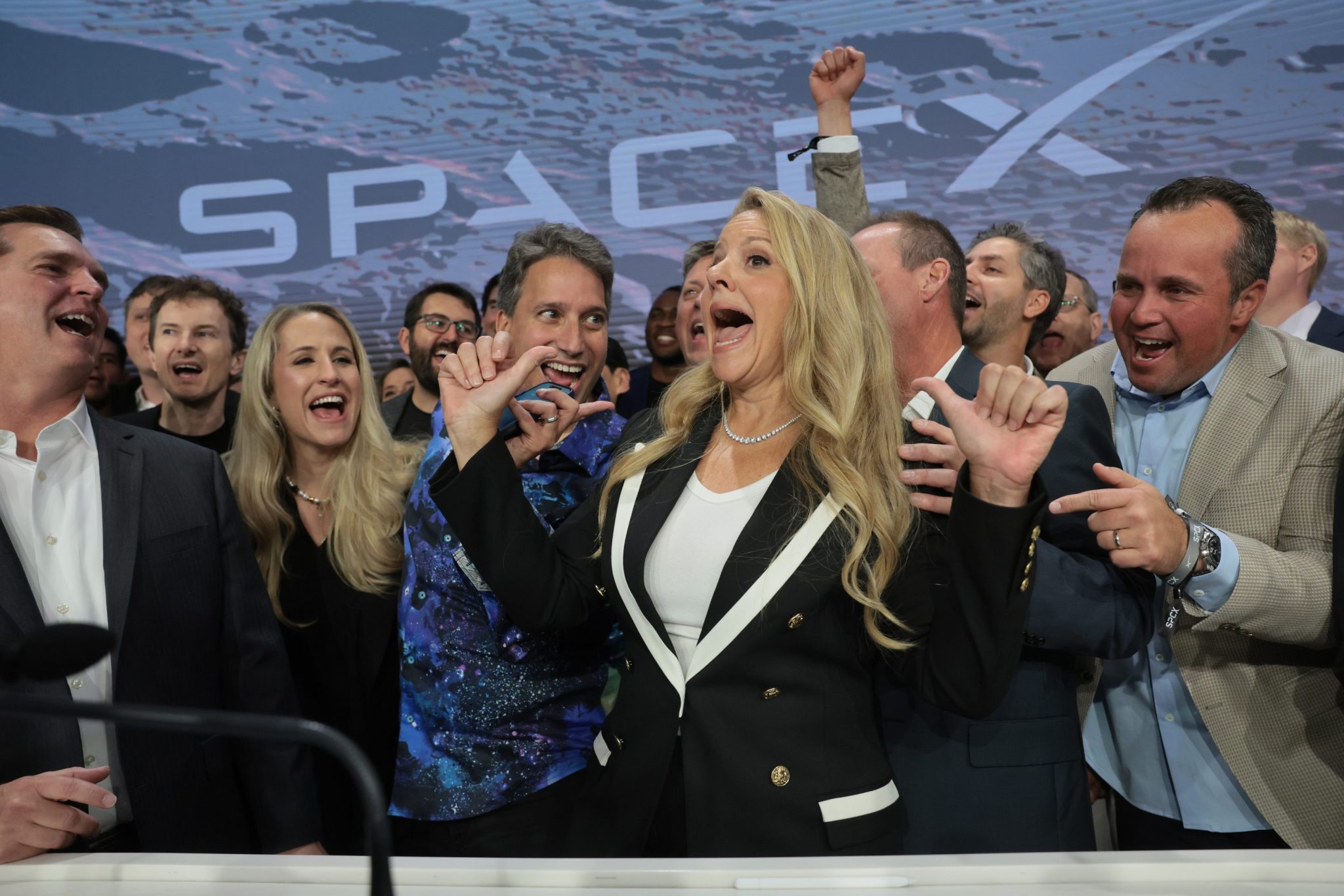
The exit picture is equally lopsided. Total exit value in the first half of the year reached $2.2 trillion, a figure that superficially looks healthy. But nearly all of that came from a single company: SpaceX accounted for $1.7 trillion of exit value through its recent IPO. Another $250 billion came from xAI, which is also tied to SpaceX leadership. An additional $60 billion is expected next quarter from Cursor, another company connected to the same orbit.
"SpaceX is the center of the universe for VC," Stanford said. "It’s where everything has gone through."
This extreme dependency on a handful of massive exits means that the venture capital asset class, as a whole, is performing well only because of a few extraordinary outcomes. For most portfolio companies, liquidity remains elusive.
The Mid-Tier Startup Purgatory
Companies that would have been IPO darlings a decade ago — profitable unicorns with solid growth but not tied to the AI hype cycle — now find themselves in a difficult position. Many haven't raised an equity round since last year or earlier, and their IPO ambitions are on hold.
"There are mid-tier companies sitting there, saying 'theoretically we could go public in a good year,'" Stanford explained. "But right now, you have to fight, narratively and practically. You have to fight for the B-squad of all the investment banks to underwrite your IPO, because everyone's A-squad is on SpaceX, Anthropic or OpenAI."
The investment banking talent crunch illustrates how deeply the concentration runs. Banks allocate their best teams to the biggest deals, leaving middle-market IPOs under-resourced and underpriced. For companies like Strava and other off-trend stalwarts, the path to public markets has become narrower.
IPO Pipeline Pressure — OpenAI and Anthropic on Deck
The next major test for the venture market will be the IPOs of OpenAI and Anthropic. OpenAI is reportedly eyeing a listing this year, though rumors suggest a possible push to next year. Anthropic is also expected to go public.
Stanford argues the market needs at least one of them to list soon.
"Broadly, the market needs one of them to go public this year to see what everyone is investing in," he said. "You hear tidbits, but I think everyone's really looking for someone to say: 'Here are my books, this is the cost of AI, this is what everyone needs to know.' Then, you can start to see a recalibration of the market."
If both delay, questions will intensify — not just about the two AI giants, but about the venture firms that have poured historic sums into them without a clear exit timetable.
What This Means for the Industry
The hyper-concentration of venture capital has significant implications for investors, startups, and the broader tech ecosystem.
For investors: Fund returns are increasingly driven by a tiny number of mega-deals. Any fund that missed SpaceX, OpenAI, or Anthropic is likely underperforming. This raises questions about diversification and risk. LPs may need to rethink allocation strategies.
For competitors: Startups without an AI angle face a funding environment that is more hostile than the aggregate numbers suggest. Many will need to extend runways, consider acquisitions, or pivot. The "AI or bust" dynamic creates strong pressure to reframe business models.
For the tech industry broadly: The concentration of capital and exits in AI means that other sectors — climate, biotech, enterprise, hardware — could see slower innovation cycles. Talent and capital flow to the hottest space, leaving gaps elsewhere.
Conclusion
Venture capital has never been larger — but it has never been more concentrated. $412.7 billion in deployment, 86% of it in AI, 91% in deals over $100 million, and nearly all exit value from a single company: the numbers paint a picture of a market that is both booming and brittle. The industry now waits for OpenAI and Anthropic to go public, hoping their books will validate the massive bets placed on them. Until then, the rest of the startup ecosystem operates in the shadow of a few giants.