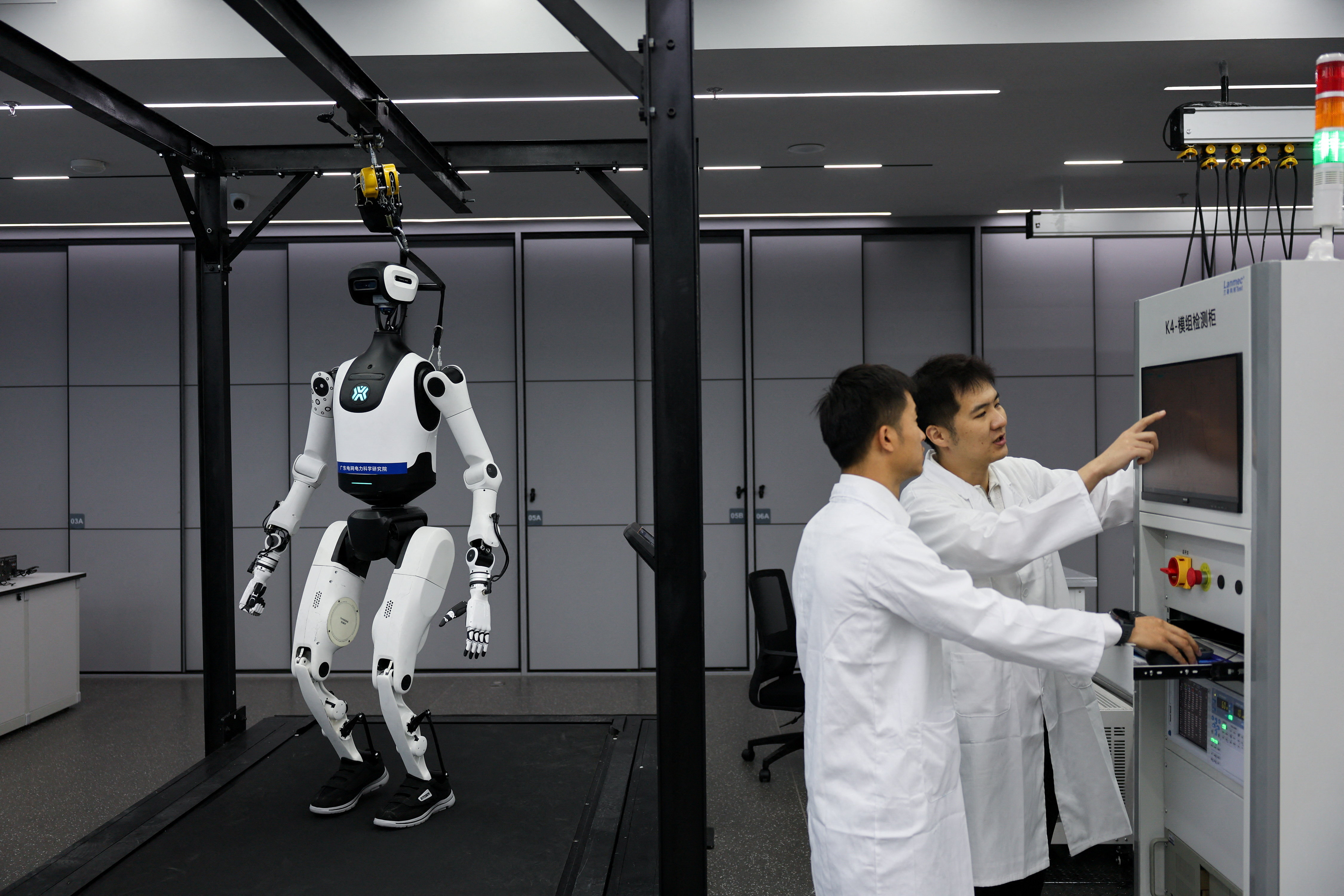

The U.S. Federal Communications Commission (FCC) has banned foreign-made humanoid and quadruped robots from American soil, citing national security risks. The sweeping order blocks Chinese-manufactured platforms like Unitree's H1 and Go2 — meaning every robot that walks on two or four legs could now be subject to government review before entering the country.
- What Exactly Did the FCC Ban?
- Which Robots and Companies Are Affected?
- Why Did the U.S. Government Take This Step?
- What Are the Immediate Market Consequences?
- What This Means for Buyers and Investors
- Frequently Asked Questions
What Exactly Did the FCC Ban?
The FCC's ruling prohibits the import, sale, and operation of foreign-manufactured humanoid robots (bipedal machines designed to mimic human form and movement) and quadruped robots (four-legged walking machines) within the United States. The ban applies specifically to equipment deemed to pose "an unacceptable risk to the national security of the United States," invoking the same regulatory authority previously used against Chinese telecommunications equipment from Huawei and ZTE.
The order classifies these robots as "covered communications equipment" under the FCC's Secure Networks Act authority, granting the agency power to revoke existing equipment authorizations and deny new ones for foreign adversaries. This effectively means any humanoid or quadruped robot with a wireless communication module — which is essentially all modern robots — could be blocked if manufactured by a company linked to China, Russia, or other designated foreign adversaries.
The ruling was published in the Federal Register and takes effect immediately, with a 30-day grace period for compliance and removal of existing inventory from distribution channels. Violations carry penalties of up to $200,000 per day per device.
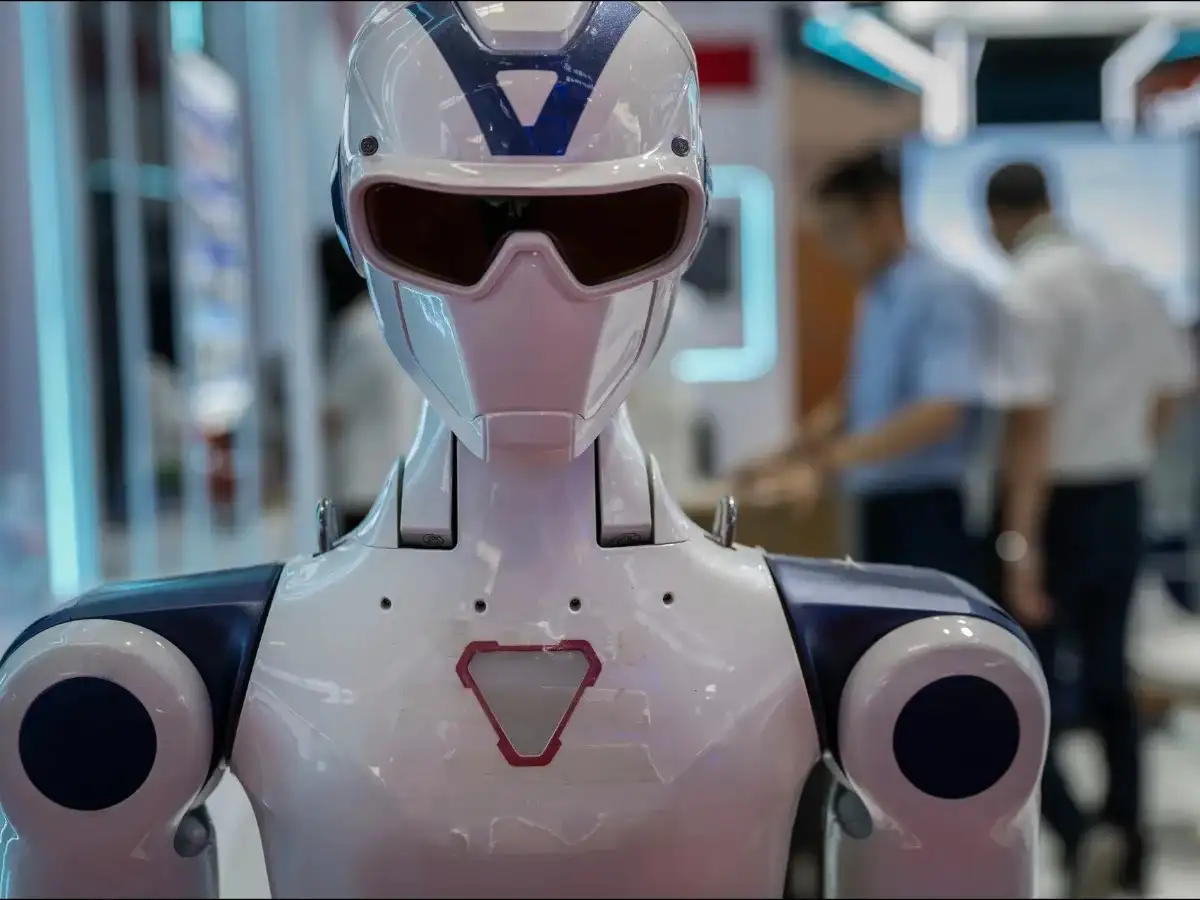
Which Robots and Companies Are Affected?
| Company | Robot Models | Category | Impact |
|---|---|---|---|
| Unitree | H1, G1, H1-2 | Humanoid | Banned — all sales blocked |
| Unitree | Go1, Go2, B2, B2-W | Quadruped | Banned — all sales blocked |
| Agility Robotics | Digit (early models) | Humanoid | Under review — partial components may be affected |
| Xiaomi | CyberOne, CyberDog | Humanoid / Quadruped | Banned |
| LimX | P1, W1 | Humanoid / Quadruped | Banned |
| EngineAI | SE01, PM01 | Humanoid | Banned |
The ban most directly hits Unitree Robotics, the dominant Chinese manufacturer that has shipped tens of thousands of the Go2 quadrupeds for research, education, security, and industrial inspection in the U.S. Unitree's $1,600 Go2 was the cheapest entry point into quadruped robotics, making it a staple in university labs and small businesses.
Agility Robotics' Digit — a humanoid designed for warehouse logistics — faces a more complex situation. While Agility is a U.S.-based company, some early Digit units incorporated components from Chinese supply chains. The company has confirmed it is working with the FCC to certify compliance.
Why Did the U.S. Government Take This Step?
The FCC's rationale centers on three interconnected threats:
Data collection and surveillance. Humanoid and quadruped robots are increasingly equipped with high-resolution cameras, LiDAR (laser-based 3D mapping sensors), microphones, and wireless transmitters. A robot roaming a factory floor or research lab can capture floor plans, equipment layouts, personnel movements, and even proprietary manufacturing processes. The government's concern is that this data could be transmitted back to servers in China, enabling industrial espionage at an unprecedented physical scale.
Supply chain dependency. The U.S. semiconductor and robotics industries rely on components sourced globally. The ruling argues that Chinese-manufactured robots represent a vector for compromised hardware — embedded chips, sensors, or firmware that could be remotely activated for sabotage or intelligence gathering.
Strategic technology leakage. Humanoid robots are a frontier technology with direct military applications — from autonomous logistics to reconnaissance. The government views widespread deployment of Chinese humanoids in U.S. critical infrastructure as a long-term national security vulnerability.
"This is not about any single company or incident," an FCC spokesperson told Forbes. "It is about the systemic risk of allowing machines with cameras, microphones, and wireless connectivity — built under the direction of a foreign government — to operate freely in American facilities."
What Are the Immediate Market Consequences?
The ban creates an immediate supply vacuum. Unitree has been the price leader for both humanoid and quadruped robots, with platforms like the Go2 ($1,600), B2 ($10,000), and the H1 humanoid (approximately $90,000) representing the lowest-cost options in their categories.

For buyers who already own banned robots: The 30-day grace period does not require removal of existing units, but future service, software updates, and replacement parts from the manufacturer will likely become unavailable or illegal to import. This creates a stranded-asset risk for universities, research labs, and companies that invested in Unitree fleets.
For buyers considering a purchase: The alternative options — Boston Dynamics' Spot ($74,500 base) or ANYmal ($150,000+) — cost 5 to 50 times more than comparable Chinese units. This price shock could slow adoption of quadruped and humanoid robotics in the U.S. market by 12 to 24 months.
For supply chains: U.S.-based robotics companies that relied on Chinese components must now source alternatives from Taiwan, South Korea, or domestic suppliers — a transition that could add 15-30% to manufacturing costs and delay product launches.
For used market prices: Expect a sharp spike in prices for pre-owned Boston Dynamics Spot robots and used Agility Digits, as buyers seek compliant alternatives to newly banned Chinese models.
| Robot Model | Pre-Ban Price | Current Used Market Estimate | Availability |
|---|---|---|---|
| Unitree Go2 | $1,600 | N/A (banned) | None |
| Boston Dynamics Spot | $74,500 | $55,000-$70,000 | Limited — rising prices expected |
| ANYmal C | $150,000+ | $100,000-$130,000 | Available — production constrained |
| Unitree H1 | $90,000 | N/A (banned) | None |
| Figure 02 | Not yet priced | N/A | Pre-order only |
What This Means for Buyers and Investors
If you already own a Unitree robot: Verify its classification under the new rules. The ban applies to import and new sales — existing units may be grandfathered, but you should secure any spare parts and software licenses immediately. Expect your warranty and support to effectively end within 30 days.
If you're shopping for a quadruped: The Boston Dynamics Spot is now effectively the only widely available commercial option in the U.S. at scale, but expect lead times to stretch. Consider leasing rather than buying if you need a robot within 6 months. Browse available quadruped robots for sale on Robot Overflow to compare compliant alternatives.
If you're evaluating humanoid robots for warehouse or manufacturing use: This ban creates opportunity for U.S. and allied humanoid makers like Figure, Tesla (Optimus), and Apptronik. These platforms are not yet shipping at volume, but the disappearance of Chinese competition accelerates their business cases. Compare upcoming humanoid robots for sale on Robot Overflow for pre-order and early access options.
If you're an investor: The regulatory risk premium on robotics stocks just increased. Companies with exposed Chinese supply chains will face margin pressure. Conversely, U.S.-based component suppliers — motors, sensors, actuators — gain pricing power. Watch for earnings revisions from robotics parts manufacturers in the next quarter.
If you're an integrator or systems builder: Diversify your hardware supply immediately. The ban may expand to service robots, delivery robots, or cleaning robots — especially those with Chinese mainboards or wireless modules. Maintain a "sanctions-compatible" parts list as part of your procurement process.
Conclusion
The FCC's ban on Chinese humanoid and quadruped robots is the most significant regulatory event in the robotics industry since drone sanctions. It reshapes the competitive landscape overnight, removing the lowest-cost option from the U.S. market and forcing buyers, researchers, and investors to recalibrate their strategies around domestic and allied supply chains. For the next 12 to 18 months, expect higher prices, longer lead times, and a scramble for compliant alternatives — followed by a wave of investment into U.S. robotics manufacturing capacity.