Tesla driver crashes into parked patrol vehicle, seriously injuring two officers

Tesla driver crashes into parked patrol vehicle, seriously injuring two officers

2 min read•Oct 17, 2026•
James Okafor
James Okafor

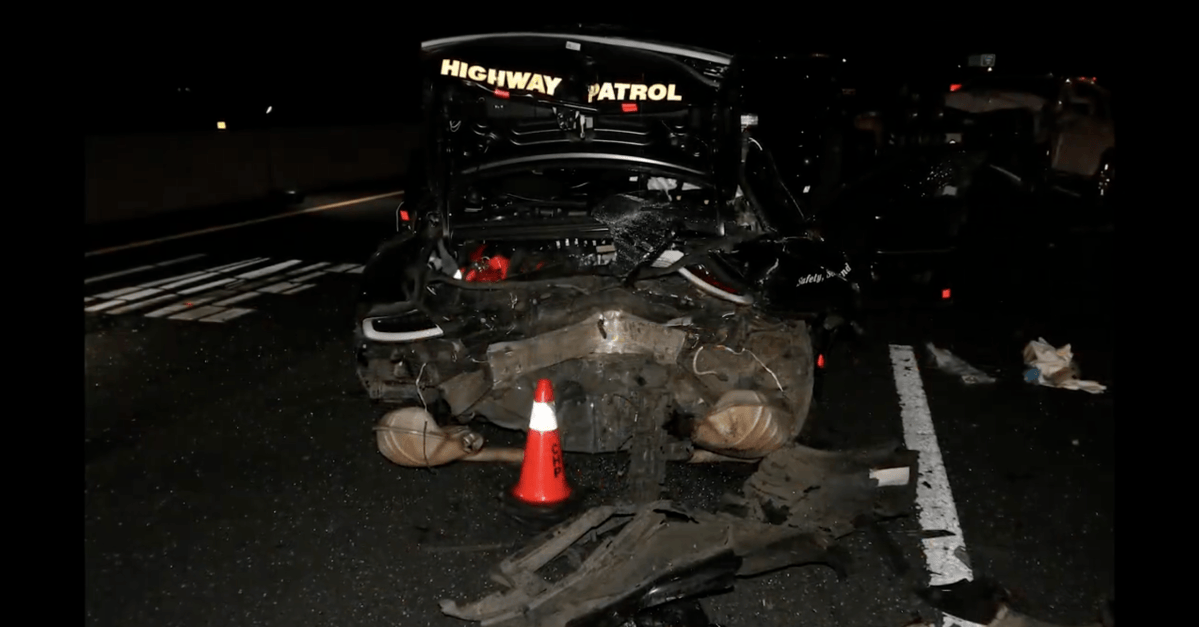
A Tesla driver who said he was asleep while using a driver-assist mode crashed into a parked patrol vehicle in an incident first reported by The Verge. CHP says two officers were seriously injured and taken to a hospital after the crash, which happened amid flares, cones and emergency lights at the scene of an earlier accident.

Video released by CHP shows the Tesla speeding past flares, cones and emergency lights at the scene of an earlier accident before hitting the back of a parked patrol vehicle.

CHP warned that, despite its name, full self-driving is not fully autonomous, and said the technology does not relieve drivers of their responsibility to safely operate their vehicles.

After numerous collisions with parked emergency vehicles, NHTSA launched an investigation into Tesla’s Autopilot software in 2021. The agency eventually issued a report finding that the driver-assist features did not do enough to keep drivers engaged, linking them to hundreds of crashes and dozens of deaths when both the system and driver failed to respond.

The incident puts CHP’s emphasis on driver responsibility beside NHTSA’s separate finding about driver engagement.

Tesla released an update for Autopilot in 2023, adding more controls and alerts to prompt drivers to be in full control of the car when Autosteer is enabled. NHTSA then opened another investigation into whether those changes went far enough.

Plug-in vehicles reach 32% of global registrations in September

Plug-in vehicles reached 32% of global registrations in September, first reported by Cleantechnica. Battery-electric vehicles accounted for 23% of registrations and set a record at 1.54 million, up 8% year over year, while plug-in hybrids fell 9%; year to date in 2026, BEVs were up 12% and PHEVs down 10%.

Global plug-in registrations rose 3% year over year to around 2.16 million in September, close to the all-time record of 2.17 million set last December.

Year to date, plug-in registrations were up 4% year over year: BEVs grew 12%, while PHEVs fell 10%. Their combined share for 2026 stood at 25%, with BEVs at 18% and PHEVs at 7%. The overall growth rate therefore hides a clear split between the two categories.

The Tesla Model Y led the model rankings with a record 165,000 registrations, up 17% year over year. Tesla Model 3 came second with 65,000, enough to move ahead of Geely Xingyuan and BYD Song despite a 4% annual decline.

BYD Song finished fourth at 54,519 registrations, up 19% and the fastest growth rate among the top five. An export push and the new-generation Ultra body helped lift the model.

At the make level, Tesla had a record 232,000 registrations, up 9% year over year. Toyota reached 61,332 for its fourth record in a row, finishing ahead of Volkswagen’s year-best 58,000 to become September’s best-selling legacy make.