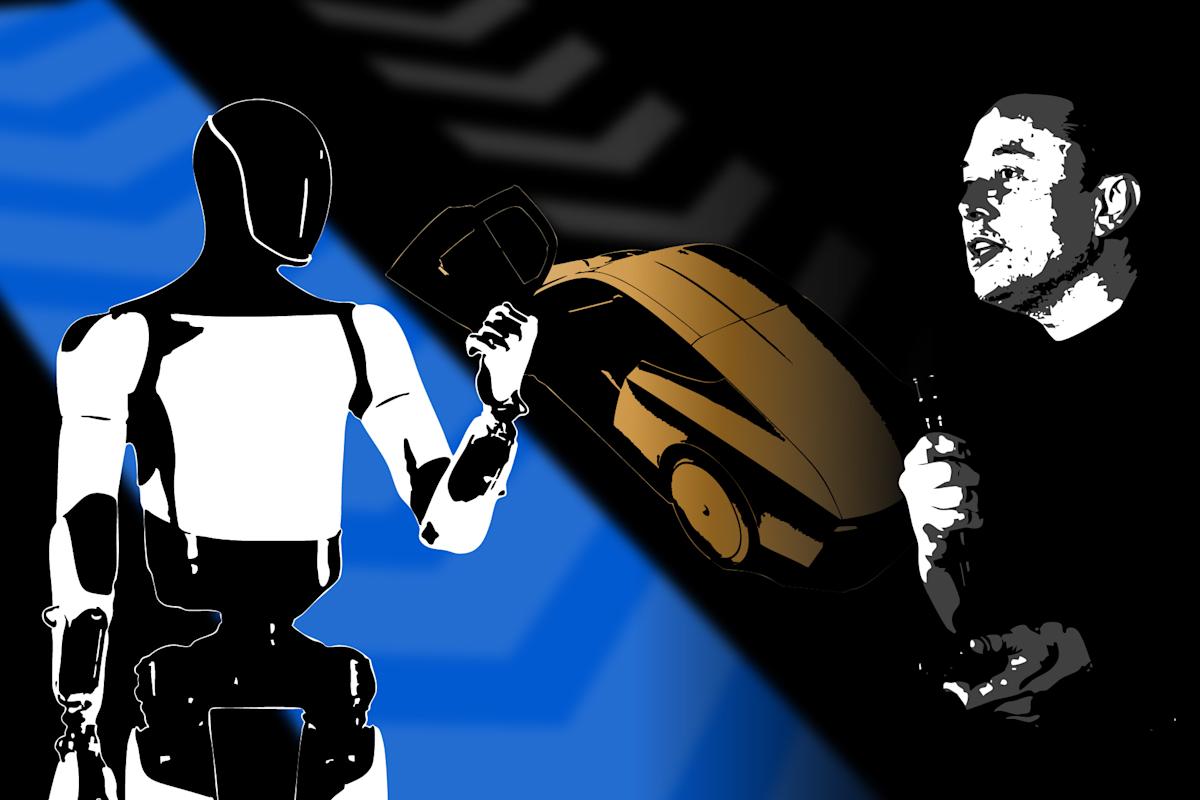
Tesla is failing to meet its own target of producing 5,000 Optimus humanoid robots by year-end, according to a report from TechCrunch. The shortfall raises hard questions about whether any humanoid manufacturer — Tesla, Figure, or 1X — can bridge the enormous gap between prototype performance and factory-scale production.
- How Far Behind Is Tesla on Optimus Production?
- What Is Causing the Optimus Production Shortfall?
- How Does Tesla Compare to Figure and 1X in Humanoid Scaling?
- What This Means for Robotics Buyers and the Humanoid Market
- Frequently Asked Questions
How Far Behind Is Tesla on Optimus Production?
Tesla set a public target of manufacturing at least 5,000 Optimus units within the current production cycle. According to TechCrunch, the company is not on track to hit that number. While Tesla has not released an official production count, reports suggest output remains well short of that threshold — meaning the gap between ambition and execution is not marginal.
This matters beyond Tesla's balance sheet. The 5,000-unit target was never just a production milestone — it was a proof-of-concept for the entire humanoid robot industry's core claim: that general-purpose robots can be manufactured at meaningful scale, not just assembled in small batches for demos and controlled pilots. Missing it quietly resets expectations across the sector.
For context, producing 5,000 humanoid robots in a year would represent a dramatic leap. Boston Dynamics, after more than a decade of development, has shipped fewer than 1,000 Spot quadruped robots in total across its commercial lifetime. Five thousand Optimus units in a single year would have been an industry-defining achievement.
What Is Causing the Optimus Production Shortfall?
Humanoid robot manufacturing failures almost always trace back to the same cluster of problems: actuator supply chains, assembly complexity, and software readiness. Tesla's situation appears to involve all three.
Optimus relies on custom-designed linear actuators — the electromechanical joints that give the robot its dexterity. These are not commodity components. Each unit requires precision manufacturing tolerances that standard automotive supply chains are not equipped to deliver at volume. Unlike electric vehicles, where Tesla has spent over a decade building supplier ecosystems for motors, battery cells, and electronics, the humanoid actuator supply chain is nascent. There are simply no established Tier 1 suppliers building these parts at scale.
Assembly complexity compounds the problem. A humanoid robot has roughly 28 degrees of freedom across its body — each joint requiring individual calibration, wiring, and software validation before it can be integrated into a functional unit. Tesla's Fremont facility is optimised for high-volume, highly repetitive automotive assembly. Humanoid robots, at current production volumes, require a fundamentally different approach: closer to low-volume aerospace manufacturing than car production.
The Software Dependency Problem
There is a less visible bottleneck that often gets overlooked in manufacturing post-mortems: software readiness gates hardware production. Tesla's Optimus relies on end-to-end neural network inference — the same AI-first philosophy as its Full Self-Driving system. Before a robot ships, it needs a validated software stack that can perform its intended tasks reliably.
If the software isn't ready for a given task profile, the hardware sitting in inventory has no deployment path. This creates a dangerous dynamic where physical units pile up — or alternatively, where production is deliberately throttled because shipping non-functional robots would be worse for the programme than missing a production target.
How Does Tesla Compare to Figure and 1X in Humanoid Scaling?
Tesla is not alone in struggling to scale. The entire humanoid robot sector is running into the same manufacturing wall, just at different unit counts.
| Company | Robot | Publicly Stated Target | Reported Status | Primary Deployment |
|---|---|---|---|---|
| Tesla | Optimus Gen 2 | 5,000 units (near-term) | Behind target | Internal Tesla factories |
| Figure | Figure 02 | Undisclosed | BMW pilot (small batch) | Automotive assembly |
| 1X Technologies | NEO | Undisclosed | Early pilots | Warehouse / domestic |
| Agility Robotics | Digit | 10,000/year capacity claim | Ramping | Amazon fulfilment |
| Apptronik | Apollo | Undisclosed | GXO partnership | Logistics |
The table reveals a consistent pattern: every major humanoid company is operating in pilot-scale territory, with claimed capacities that outpace confirmed deployments by a wide margin. Figure's partnership with BMW generated significant media attention, but the actual number of Figure 02 units on the factory floor remains in the low double digits at best. Agility Robotics' claimed 10,000-unit annual capacity at its "RoboFab" facility in Salem, Oregon, is a theoretical throughput — not a reflection of current orders or shipments.
What distinguishes Tesla's situation is the specificity and publicity of its commitment. Elon Musk has repeatedly cited Optimus as Tesla's most important product, with projections suggesting millions of units annually within a few years. The 5,000-unit near-term target was the first concrete waypoint on that roadmap. Missing it publicly, even if the shortfall is modest, recalibrates those longer-range projections in ways that matter to investors and enterprise buyers evaluating whether to build Optimus into their automation planning.
1X Technologies, perhaps the most technically conservative of the major humanoid companies, has avoided setting aggressive public production targets — which may prove to be the smarter communications strategy, even if it generates less market excitement.
What This Means for Robotics Buyers and the Humanoid Market
For enterprise buyers evaluating humanoid robots, Tesla's production shortfall is a useful data point but not a disqualifying signal. The honest assessment is that no humanoid robot vendor can currently offer the supply certainty that procurement teams need for large-scale deployment planning. Every humanoid purchase today is, to some degree, a strategic bet on a vendor's roadmap.
The practical implications break down by buyer profile:
Early adopters and research institutions are least affected. They are buying access to the technology and the development relationship, not volume supply. A 200-unit delay at Tesla does not change the value of a pilot programme.
Enterprise buyers planning automation at scale should treat any vendor's production targets as indicative rather than contractual. The humanoid market is not yet mature enough to support the kind of supply chain commitments that, say, a cobot purchase from Universal Robots would involve. If you are building a business case around humanoid robot deployment at 50+ units, the current advice is to run pilots in parallel with multiple vendors rather than committing to a single platform.
The competitive window for incumbents like ABB, Fanuc, and KUKA remains open. Traditional used industrial robots and cobots offer something humanoids currently cannot: predictable supply, proven reliability data, and established service networks. The productivity gap between a well-deployed cobot arm and a humanoid robot performing a comparable task is still significant for most structured manufacturing applications.
For buyers specifically interested in the humanoid category, you can browse humanoid robots on Robot Overflow to compare current-generation platforms and track availability.
The deeper story here is about the industrialisation gap — the distance between robotics as an engineering achievement and robotics as a manufactured product. Tesla is discovering what every hardware company eventually learns: making one robot is hard, making five thousand identical robots is an entirely different problem.