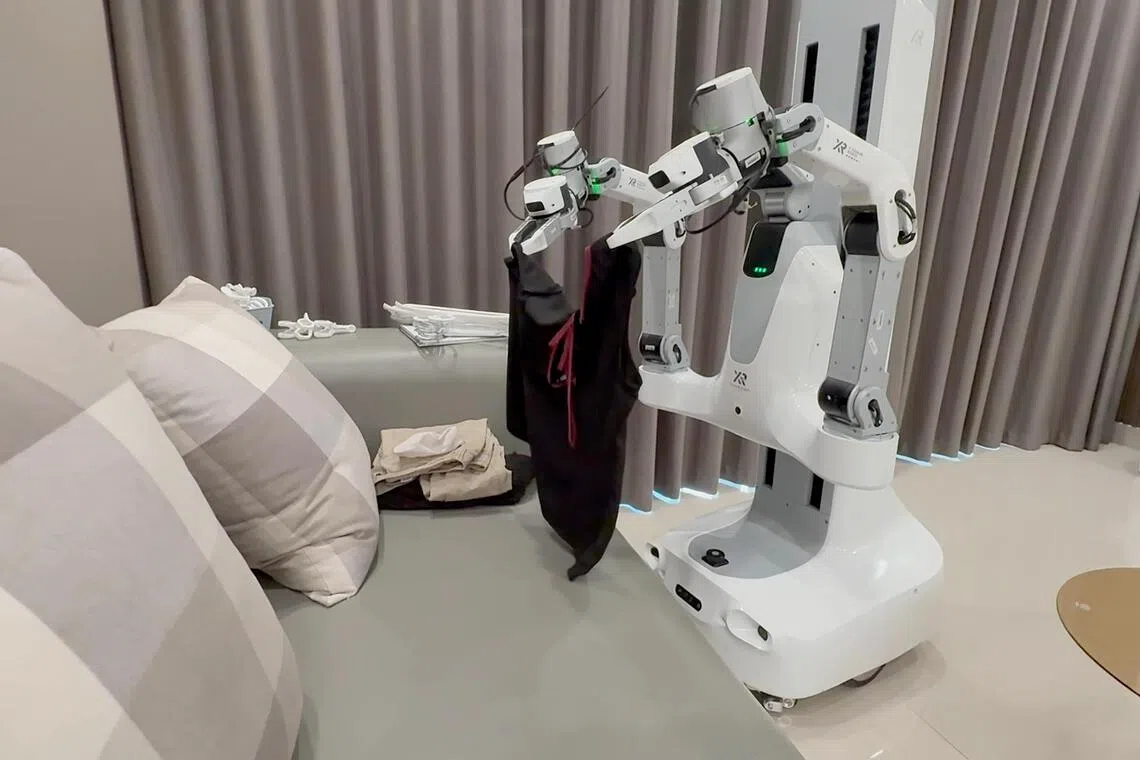
Tau Robotics is sending humanoid robots into San Francisco homes for cleaning, with some tasks still guided remotely by human pilots, first reported by Technologyreview. Each cleaning generates data Tau wants to use to train more independent robots, while the current service remains slow and some tasks still depend on human guidance.
Making beds and folding laundry use kinematic guidance: a human pilot performs the motions, and sensors transmit them to the robot. Cofounder Cornelia Weinzierl said vacuuming and mopping can already happen without human help.
The service is also a training exercise: tasks that require a pilot’s movements produce especially valuable examples for Tau’s models.
At the time of booking, one robot cost $30 for an hourlong cleaning; Tau now charges $60 per weekly cleaning with two robots or $100 for a one-time visit. The company charges less than might be expected because the data is valuable to it, but the robots are thorough and slow, so even the $30 hour was not a bargain.
One visit ended before the booked hour after the robot repeatedly stalled. Weinzierl later said she had learned from a colleague that heat shut down the equipment the remote controller used to monitor the robot, leaving it unable to clean without remote assistance.
A later cleaning went more smoothly: the robot got up the stairs with little assistance and cleaned the kitchen and toilet. Its toilet-wand head fell off three times, but the robot managed to reattach it.
If Tau or competitors succeed in training robots to clean autonomously and inexpensively, people could lose their livelihoods. The United States is a long way from policies to support people left unemployed by AI. Weinzierl has argued that cleaning has high turnover and a high risk of injury.
Tau has completed only a couple hundred cleanings so far. Weinzierl said the company is starting to consider someday deploying robots for mold remediation and home health care, jobs she described as dangerous or physically challenging.