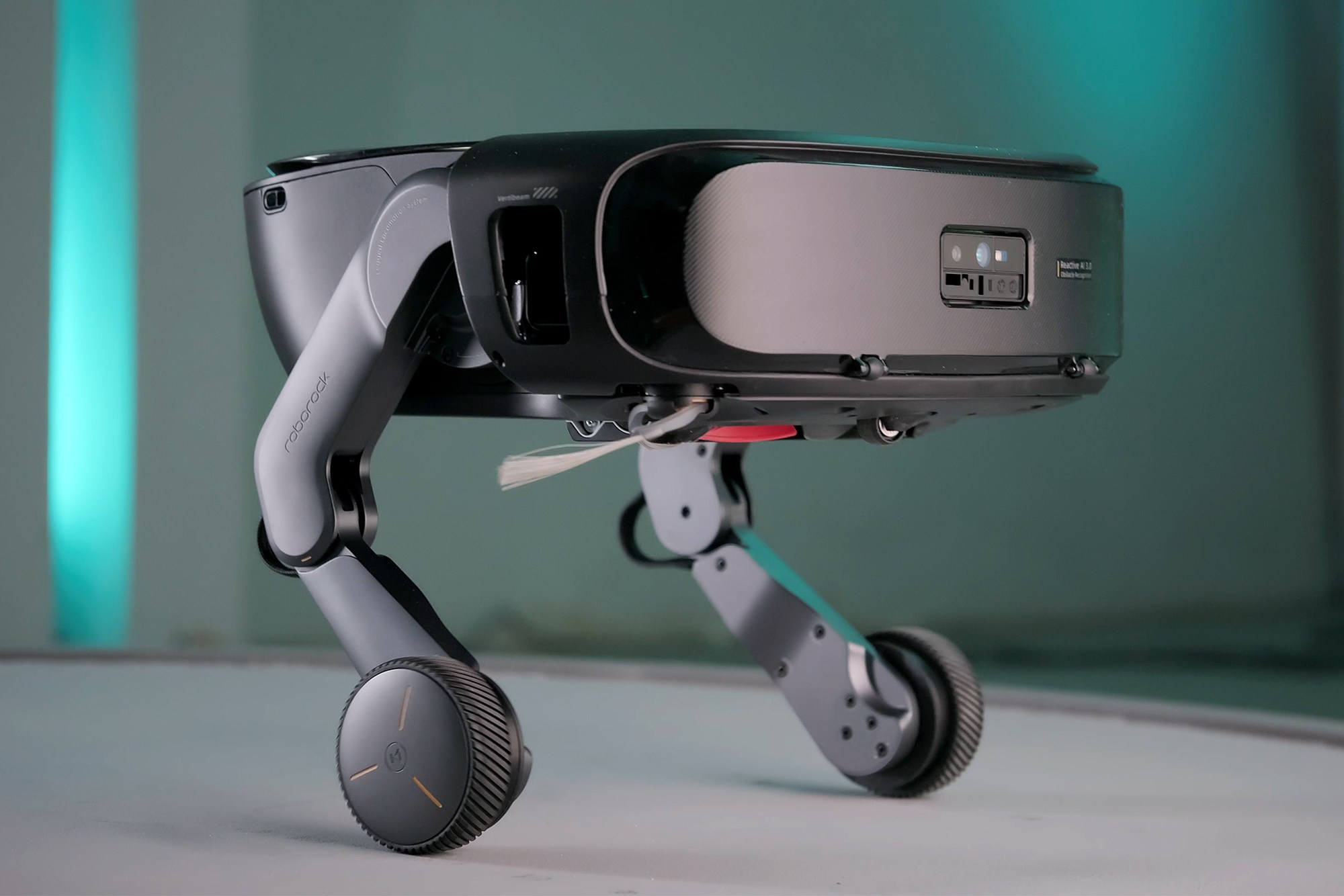

SwitchBot doubles suction in its tiny $400 K11+ Pro robot vacuum

SwitchBot doubles suction in its tiny $400 K11+ Pro robot vacuum

2 min read•Sep 24, 2026•
Maya Patel
Maya Patel

SwitchBot has released the $400 Robot Vacuum K11+ Pro, doubling its predecessor’s suction to 12,000Pa, as first reported by Gizmodo. The compact self-emptying machine keeps the previous model’s 9.8-inch width and 3.6-inch height, while its unchanged $400 price leaves the extra suction as the main change in the new model.

The K11+ Pro’s 12,000Pa rating should improve performance, although suction is not the only factor in a robot vacuum. Amazon-listed specifications give it 120 minutes of battery life from a 3,500mAh battery, compared with 150 minutes for the K11+; the battery is 300mAh larger.

The numbers present a mixed upgrade: suction and battery capacity rise, while listed runtime falls and the dimensions and price stay the same.

Otherwise, the K11+ Pro has the same core setup: a tangle-resistant rubber roller brush, a two-prong spinning side brush and LDS mapping and navigation. SwitchBot says it emits 45 decibels while working, roughly as quiet as a suburban home. The robot self-empties into a dustbag that SwitchBot says can last up to 90 days, and it is Matter-compatible.

The K11+ Pro’s 9.5 x 10-inch dock should be easier to place than the mini-fridge-sized docks used by conventional robot vacuums. The robot’s small body could also reach between chair legs and under squat furniture that would stop standard robot vacuums, generally about twice as wide, potentially suiting apartments or smaller houses if it works well.

iRobot’s smaller Roomba Mini, measuring 9.5 x 9.8 inches and available in pink, was released in Europe and other non-U.S. countries earlier this year. In the U.S., SwitchBot is the only tiny robovac option. The K11+ Pro is available on SwitchBot’s website and Amazon.

Arizona appeals court vacates manslaughter sentence after AI video

An Arizona appeals court vacated the 10.5-year sentence of Gabriel Horcasitas while upholding his manslaughter conviction, first reported by Nytimes. The case returns to Maricopa County Superior Court for resentencing without the video, after judges found that it presented scripted statements as if the victim himself were speaking in court.

The three-judge panel said the video generated a likeness of Christopher Pelkey’s voice and appearance but did not reflect actual events. It found that allowing and relying on the video made the sentencing fundamentally unfair, and noted that no prior Arizona case had addressed the admissibility of such a depiction at sentencing.

The judges said a victim’s right to speak cannot override a defendant’s right to be sentenced on accurate, reliable information. They said the video collapsed the distinction between the family’s belief about what Pelkey would have said and Pelkey’s own voice and opinions.

The ruling distinguishes family members speaking about Pelkey from a generated likeness that appeared to speak for him.

Pelkey’s sister, Stacey Wales, presented the video during Horcasitas’s sentencing alongside victim-impact statements from family and friends. Wales wrote the script and said her husband and the couple’s longtime business partner helped create the video using Pelkey’s voice from a YouTube video and his face and torso from a funeral-service poster.

Judge Todd F. Lang praised the video as genuine, then imposed the maximum sentence of 10.5 years, more than the nine years prosecutors had sought.

Wales said nobody intended to make the court believe Pelkey was alive or that he had recorded the video before his death. She said she disagreed with the ruling and argued that families use slide shows, collages, hypothetical conversations and poetry to convey grief.

Wales compared the AI video with photography, saying it took 15 years of landmark cases around the 1860s before photography was widely accepted in courts.

The case returns to Maricopa County Superior Court for a new sentencing hearing without the AI-generated video.