SpaceX and Tesla talks target a December merger announcement

SpaceX and Tesla talks target a December merger announcement

Live•Nov 13, 04:30 AM•2 min read•
Ben Harris
Ben Harris

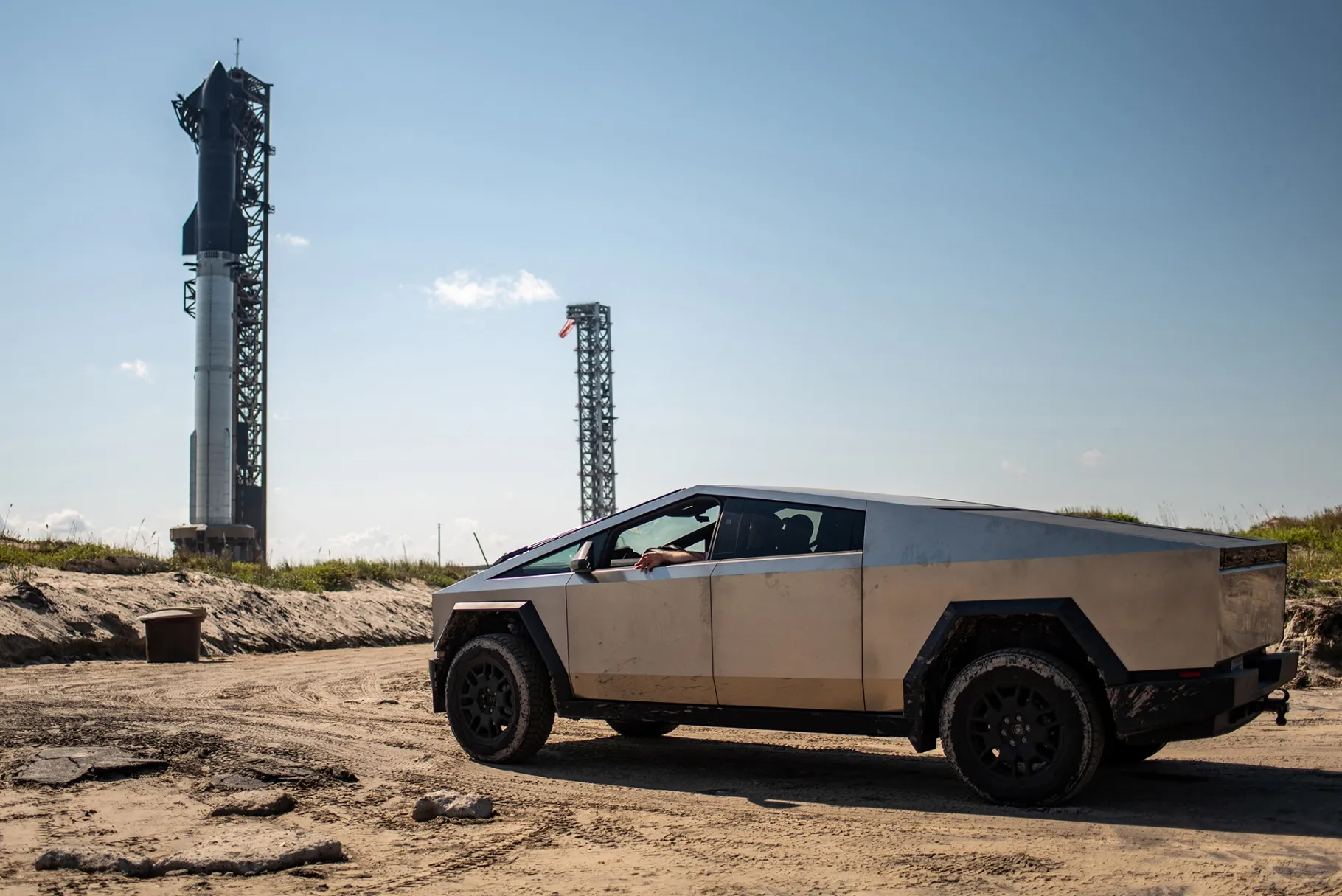
SpaceX and Tesla could announce a merger as soon as December, first reported by Electrek. Negotiations cover price, control and how many SpaceX shares Tesla investors would receive, while early 2027 remains possible; at Tesla’s December 3 shareholder meeting, directors who would sign off on the deal are up for re-election.

SpaceX is valued at over $1.9 trillion after its June IPO, while Tesla sits around $1.5 trillion. The proposed structure has SpaceX absorbing Tesla, not the reverse.

A completed deal would be the largest merger ever, surpassing Vodafone’s $183 billion takeover of Mannesmann in 2000, long the record for a single deal. SpaceX’s roughly $250 billion purchase of xAI earlier this year would also be dwarfed.

Musk owns about 20% of Tesla but controls roughly 85% of SpaceX’s voting power through super-voting shares, according to SpaceX’s S-1. A share exchange would move Tesla shareholders from one-share-one-vote to a company where Musk’s control is effectively locked in.

The terms put two questions together: what Tesla investors receive and what voting structure they enter.

Under the change-in-control terms in Musk’s 2025 CEO award, operational milestones drop out, the market-cap test runs at the deal price and earned shares vest immediately. Based on the share count in Tesla’s proxy, a deal valuing Tesla at $2 trillion, about a 33% premium to where it trades now, would clear the first market-cap tranche; 286 million restricted shares from his 2018 package also accelerate on a change in control.

Bloomberg reports that ring-fencing Tesla’s China business is a main obstacle. A JPMorgan analyst said SpaceX’s defense and government work and Tesla’s China footprint are at odds for regulators and shareholders.

Both boards have formed special committees to explore a merger, Musk confirmed. Tesla’s December 3 ballot includes re-election votes for Musk, chair Robyn Denholm and JB Straubel to terms through 2029, plus say-on-pay and auditor votes; early 2027 remains on the table.

Six Chinese AI models carry Blackwell initialization fingerprints

Six models from DeepSeek, Moonshot AI, MiniMax and Ant Group carry weight patterns matching NVIDIA Blackwell GPU configurations, first reported by Unemploymentlabs. The evidence points to Blackwell-compatible initialization for those models, but it does not establish where the chips were located, how access was obtained or whether export controls were violated.

The six models are DeepSeek-V4-Flash and V4-Pro, Moonshot AI’s Kimi K3 and K3.1-Pro, MiniMax-M3, and Ant Group’s Ling-3.1-flash. V4-Flash and MiniMax-M3 match the 148-SM B200/B300 layout; the other four match the 152-SM GB200/GB300 layout.

The fingerprints come from initialization patterns preserved in publicly released weights. Recovering the seed and GPU thread layout identifies the hardware that generated starting values, not necessarily every accelerator used later.

Earlier Hopper fingerprints appear in DeepSeek-V3, Kimi K2.5, MiniMax-M2.7 and Ling-3.0-flash. Kimi K2.7-Code is an intermediate case: its Hopper-era weights include a small part matching B200/B300. Blackwell-matching releases include DeepSeek-V4 in April 2026, MiniMax-M3 in June, Kimi K3 in July, Ling-3.1-flash in October and Kimi K3.1-Pro in November.

The release sequence shows a shift in initialization fingerprints across four labs, not proof that entire training runs used Blackwell.

The strongest evidence for the six models ranged from 49 to 1,385 sigma, while the weakest individual test reached 20 sigma. A specially configured AMD MI300X can reproduce the layouts; for V4-Flash, 363 of 377 values that differed between AMD and NVIDIA matched NVIDIA, and none matched AMD. The same test could not settle the other five models, though an AMD explanation is considered very unlikely.

Run estimates for five models put each at roughly 500 to 3,000 Blackwell GPUs over two to three months, assuming the hardware that initialized a model also trained it. At roughly $70,000 per GPU, the largest cluster would cost $150 million to $200 million, and the five final runs together more than half a billion dollars; total lab spending on export-controlled GPUs is likely in the billions.

A U.S. license is required to export these Blackwell chips to China, and none has been reported.

The newest readable models from Alibaba (Qwen), Zhipu (GLM), Tencent, Xiaomi and StepFun still matched Hopper. Meituan says LongCat-2.0 was trained entirely on AI ASIC superpods, and its released weights showed no NVIDIA fingerprint.